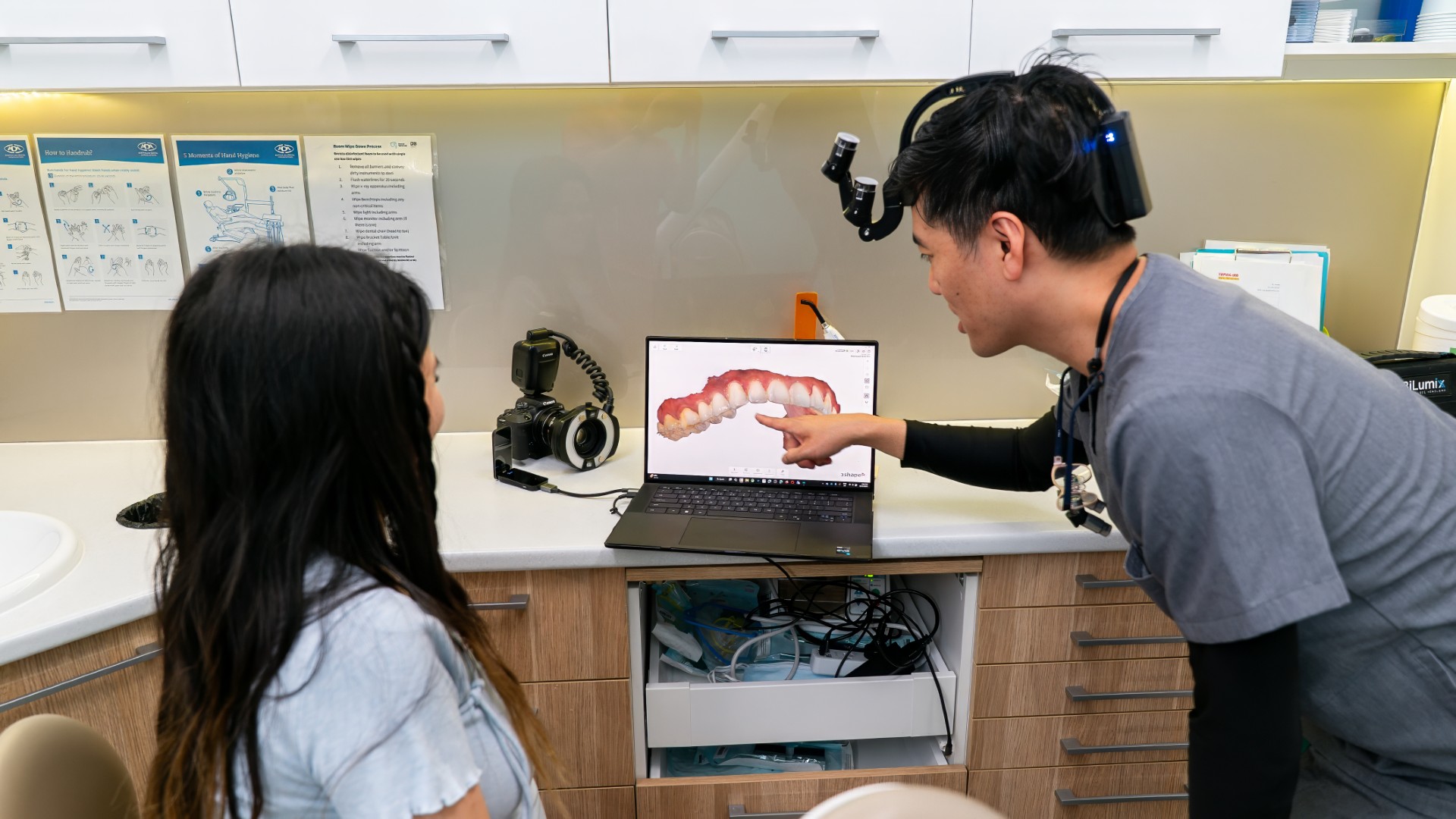
A thyroid condition that is well controlled on treatment is not usually a reason to avoid dental implants, while thyroid levels that are not yet under control are settled with your GP or endocrinologist before implant surgery is planned. A systematic review of 11 studies concluded that people with thyroid disorders can be treated with dental implants with survival rates similar to people without them, with a mean survival of about 92.6%. The studies were small and none recorded how well each thyroid was controlled, so what matters most is where your levels sit today.
Written by Dr James Tran, BDent (University of Sydney), MICOI, GradDip (Oral Implants), general dentist at Lumi Dental in Melrose Park.
The short version
- An underactive thyroid (often Hashimoto's) and an overactive one (most often Graves') both change how fast bone renews itself.
- Treated hypothyroidism has not been linked with more implant failures in the studies available, although one small study recorded more bone loss around implants after the first year.
- An overactive thyroid that is not yet controlled is a reason to wait, because surgery and the adrenaline in many local anaesthetics can strain the heart.
- The single rule: stable levels on treatment, plan as usual; unstable or untested levels, see your doctor first.
- Bring a recent thyroid blood test, a full medicines list and your GP or endocrinologist's details. Your thyroid medicine is not changed by the dentist.
- How thyroid conditions affect the gums, tongue and saliva is covered in our article on thyroid disease and oral health; this one is about implants.
How thyroid hormone affects the bone around an implant
An implant stays in place because the jawbone grows onto its surface and keeps renewing around it. Our article on how dental implants fuse to bone explains that process. Thyroid hormone sets the pace of that renewal.
A review in the European Thyroid Journal describes two directions. In hypothyroidism, bone turnover slows, with less removal of old bone and less laying down of new bone. In thyrotoxicosis, the remodelling cycle shortens and the two phases fall out of step, so more bone is lost than replaced. The review estimates a loss of about 10% of mineralised bone per cycle in that state. healthdirect puts it plainly: when thyroid hormone levels are too high, the body may break down old bone faster than it builds new bone, raising the risk of osteoporosis.
That is why your dentist cares about the numbers on your blood test.
What studies report for an underactive thyroid
In the best-known study, Attard and Zarb at the University of Toronto followed 27 women with primary hypothyroidism who were taking replacement medicine, matched against 29 women without it. There was no statistical difference in implant failures between the groups. The hypothyroid group did have more soft tissue complications after the first surgery and more bone loss around the implants after the first year of loading. The authors concluded that controlled hypothyroidism does not appear to rule out implants.
A larger record review from the University at Buffalo looked at 635 patients with 1,480 implants and found the opposite pattern for bone: bone loss around implants was lower in people with hypothyroidism, at about 0.53 mm a year compared with 1.63 mm a year in those without it.
The two studies disagree on bone levels, but neither found more failures. The systematic review notes that none of the pooled studies recorded how well the thyroid had been controlled. In my experience that is the information that changes a plan, which is why I ask for it.
An overactive thyroid: why timing matters more
Most implant research is about underactive thyroid. Only two studies in the systematic review reported hyperthyroidism separately, with a mean implant survival of about 93% in small numbers of patients.
The bigger concern with an overactive thyroid is the day of surgery itself. A case report in the Journal of Dental Anesthesia and Pain Medicine notes that people with thyrotoxicosis are sensitive to adrenaline, which is included in many dental local anaesthetics, and that it can raise blood pressure and heart rate or trigger an irregular rhythm. It describes thyroid storm as an emergency linked with untreated hyperthyroidism, which needs assessment before dental treatment.
Implant placement is elective surgery, so if your levels are not yet controlled the usual step is to wait until your GP or endocrinologist confirms they are stable. If an overactive thyroid has also affected your heart rhythm, our guide to dental implants with a heart condition covers the extra checks.
The single rule: settle the levels first, then plan the implant
If your thyroid is stable on treatment, start with the usual implant assessment: an examination, a 3D scan of the bone and a talk about gums, bite and cleaning. If your levels are unknown, newly changed or not controlled, start with your doctor and a blood test.
| Thyroid situation | What it can affect | Usual next step |
|---|---|---|
| Underactive, treated and stable | Slower bone turnover; small studies show no rise in implant failure | Plan as usual with a recent blood test on file |
| Underactive, untreated or newly diagnosed | Slower healing and tiredness; levels may still be moving | GP or endocrinologist first, then plan once levels settle |
| Overactive, treated and stable | Bone density may have been affected while levels were high | Plan with a GP letter; ask about any bone density results |
| Overactive, not yet controlled | Heart rate and rhythm, reaction to adrenaline, faster bone loss | Elective surgery waits until your doctor confirms control |
| After thyroidectomy | Often leaves the thyroid underactive, needing replacement hormone | Treat as underactive and stable once levels are steady |
| After radioactive iodine | Thyroid may become underactive; saliva may be reduced | Check current levels and look for signs of a dry mouth |
Long-term thyroid medicine, bone density and osteoporosis medicines
The European Thyroid Journal review notes that thyroid hormone replacement, and even variation within the normal range, tracks with lower bone density and may be associated with a higher risk of fracture, particularly after menopause.
This does not make your thyroid medicine a problem for an implant. Your doctor manages the dose; your dentist needs to know if you have been told your bones are thin. If you take a bone-strengthening medicine, that matters more than the thyroid itself; our article on dental implants and osteoporosis medication covers it in detail.
Hashimoto's, Graves' and other autoimmune conditions
healthdirect describes both Hashimoto's disease and Graves' disease as autoimmune conditions, where the immune system acts on the thyroid. If you also live with another autoimmune condition, such as rheumatoid arthritis or Sjögren's syndrome, it may bring its own considerations, including long-term steroids or a dry mouth. Our article on dental implants with autoimmune conditions or long-term steroids sets those out, so list every diagnosis, not only the thyroid one.
After thyroid cancer treatment: radioactive iodine and saliva
For differentiated thyroid cancer, the standard treatment described in a review in Oral Diseases is removal of the thyroid followed by radioactive iodine. The iodine also collects in the salivary glands, and the review reports that chronic symptoms of reduced saliva occur in roughly 16% to 54% of people in different studies. healthdirect notes that radioactive iodine used for an overactive thyroid can also leave the gland underactive over time.
A dry mouth matters because saliva helps keep plaque in check, and plaque around an implant can inflame the gum and bone. Mention any dryness at the consult so cleaning and review visits can be planned around it. Radiotherapy to the head and neck is a different situation with its own planning.
What the team asks for before planning
- A thyroid function blood test from the past few months.
- A list of every medicine and supplement you take, including any bone medicines.
- Your GP or endocrinologist's name, and any recent letters or bone density results.
I usually find one short letter to your doctor answers most questions before a surgery date is set.

How we approach this at Lumi Dental
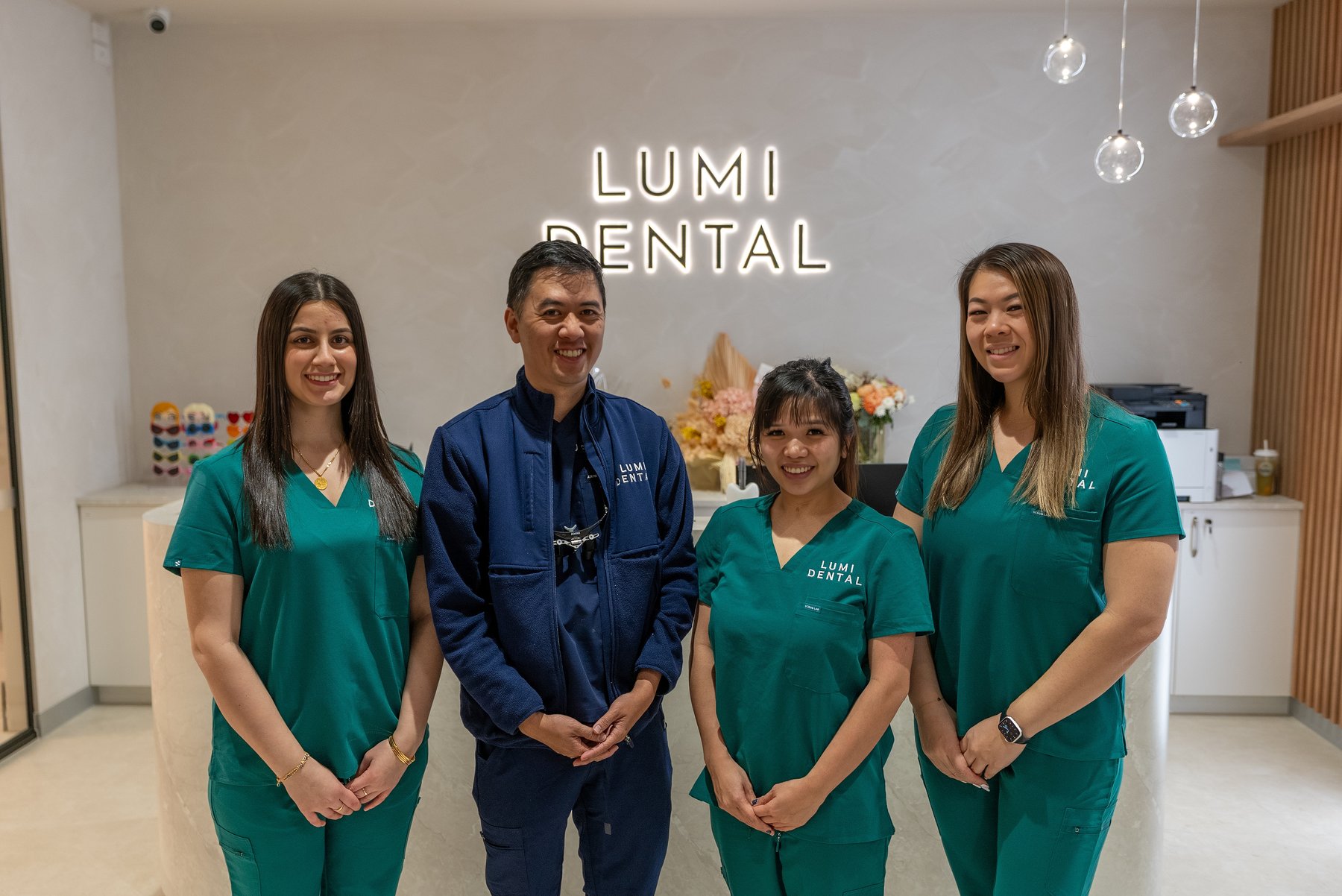
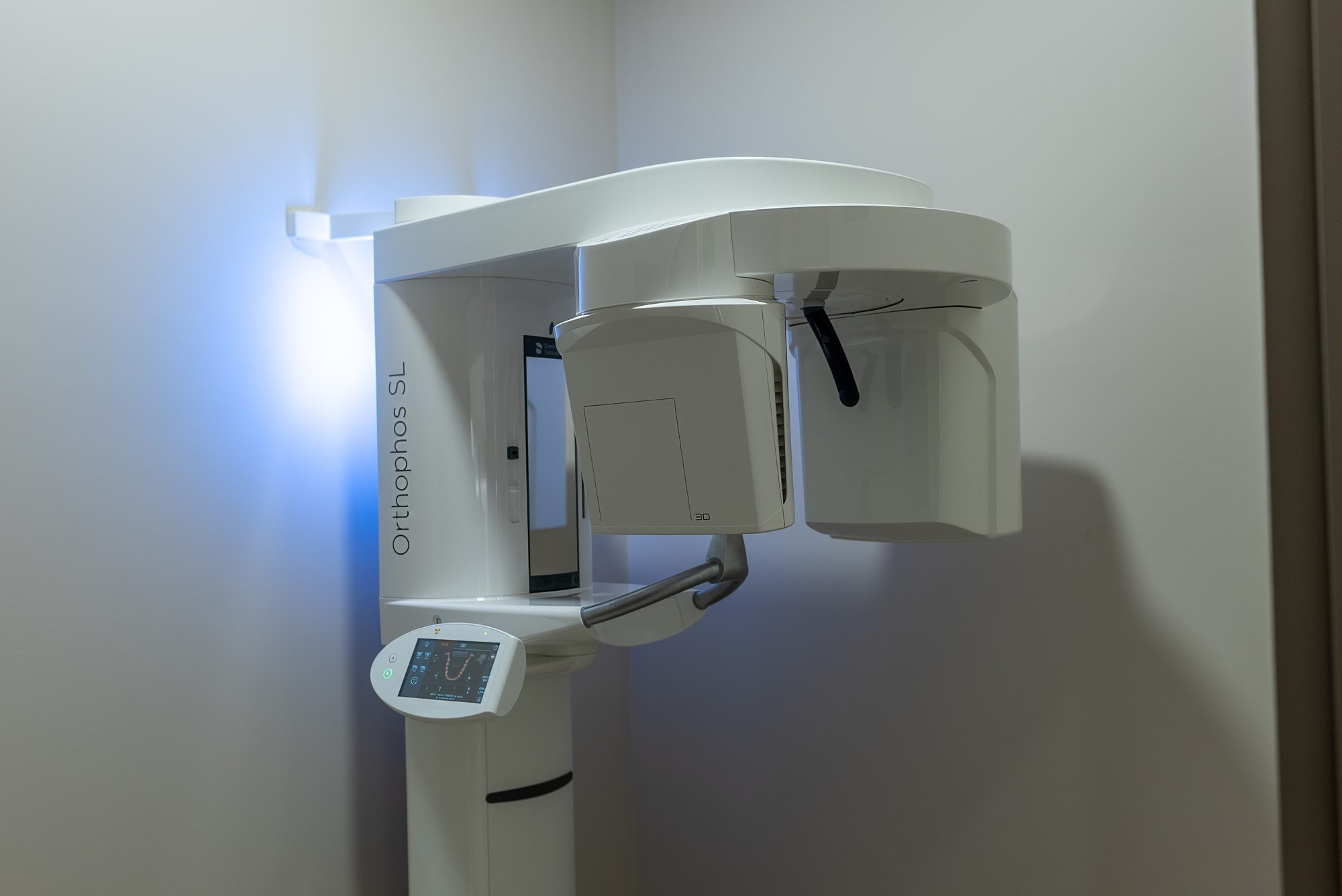
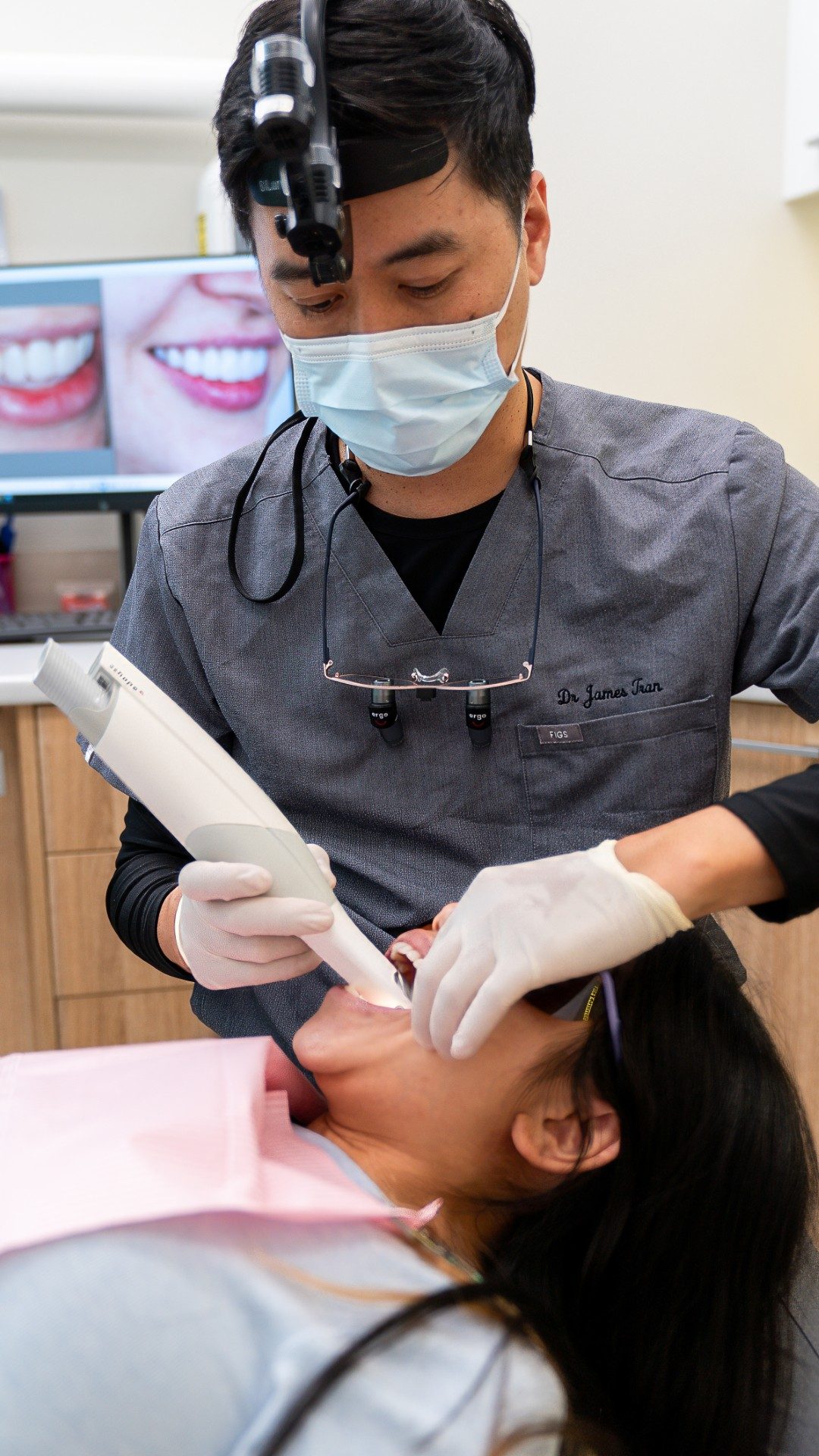
At Lumi Dental in Melrose Park, a dentist reviews your medical history, examines your mouth and takes a 3D X-ray in house where needed to measure the bone. If your thyroid levels are not yet stable, the team at Lumi Dental writes to your GP or specialist before planning surgery, and the implant is scheduled once your doctor is comfortable. IV sedation is available at the practice for anxious patients after medical clearance; Lumi Dental does not provide general anaesthetic itself and refers where it is needed. Complex cases are referred to a registered specialist. Read more about dental implants at Lumi Dental.
Questions patients ask
Can I get dental implants if I have hypothyroidism?
Usually, yes, if your levels are stable on treatment. Small studies have not found more implant failures in people with treated hypothyroidism, though one recorded more bone loss after the first year.
Is it safe to have dental implants with Graves' disease?
It can be, once your levels are controlled and your doctor agrees. While levels are high, elective surgery usually waits because of the effects on the heart.
Do I need to stop levothyroxine before implant surgery?
No. Keep taking it exactly as prescribed unless your own doctor tells you otherwise. Your dentist will not change it.
Does Hashimoto's affect dental implant healing?
When levels are well controlled, the studies available suggest implants can heal and last much as they do for anyone else. Mention any other autoimmune condition or a dry mouth. Signs to watch for afterwards are covered in our guide to dental implant failure signs.
Can I have implants after radioactive iodine treatment?
Often, yes. The team checks that your levels are steady, since the gland can become underactive, and looks for signs of reduced saliva. Contact Lumi Dental to arrange an assessment.
Considering an implant? Complimentary implant consult in Melrose Park
If you live with an underactive or overactive thyroid and are thinking about replacing a tooth, the team at Lumi Dental can review your history, examine your mouth and work with your doctor on timing. Contact Lumi Dental to book a complimentary implant consult, or read more about dental implants in Melrose Park. Patients visit from Ryde, Parramatta, Ermington and Rydalmere, with on-site parking at Melrose Central.
Sources
- healthdirect: Hyperthyroidism (thyrotoxicosis)
- Journal of Clinical Medicine (Torrejon-Moya A and colleagues): Patients with Thyroid Disorder, a Contraindication for Dental Implants? A Systematic Review (PMC)
- Clinical Implant Dentistry and Related Research (Attard NJ, Zarb GA): A study of dental implants in medically treated hypothyroid patients (PubMed)
- European Thyroid Journal (Williams GR and colleague): Thyroid Hormone Actions in Cartilage and Bone (PMC)
About the author
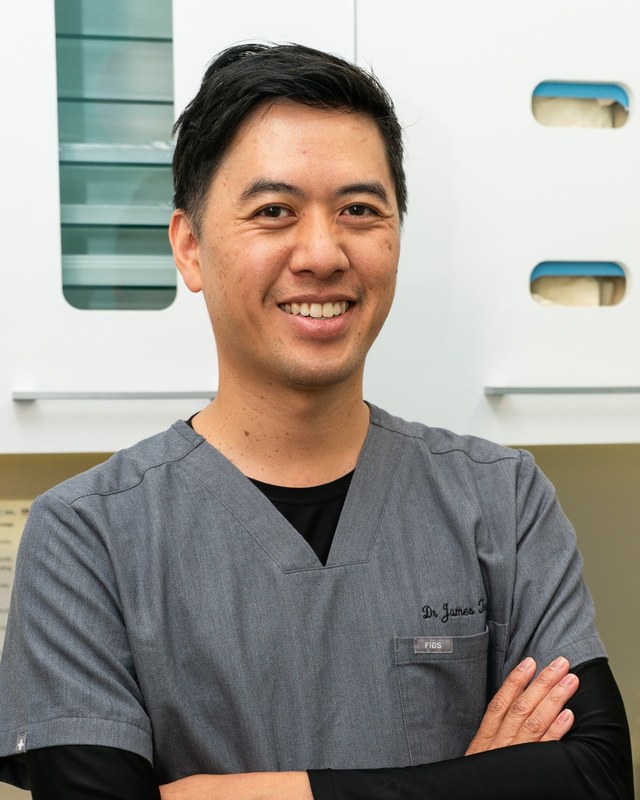
Dr James Tran is a general dentist at Lumi Dental in Melrose Park. He holds a BDent from the University of Sydney and a Graduate Diploma in Oral Implants, and is a Member of the International Congress of Oral Implantologists (MICOI).
This article is general information only and is not a substitute for an examination and individual advice from a registered dental practitioner. Suitability for any treatment varies from person to person.