

Coeliac disease that is diagnosed and well controlled on a strict gluten-free diet is not usually a reason to avoid dental implants; what matters more is the state of your bones and your nutrition, so a new diagnosis or ongoing symptoms are reasons to check first. Untreated coeliac disease can reduce how well the bowel absorbs calcium, vitamin D and iron, and a review in Archives of Endocrinology and Metabolism reports osteopenia or osteoporosis in 38% to 72% of adults at diagnosis across different studies. This guide to dental implants with coeliac disease explains what to check, and when, before implant surgery.
Written by Dr James Tran, BDent (University of Sydney), MICOI, GradDip (Oral Implants), general dentist at Lumi Dental in Melrose Park.
The short version
- Coeliac disease on its own does not usually rule out an implant. Bone density, nutrition and how settled the disease is shape the timing.
- The single rule: if your diagnosis is new, or you still have symptoms despite the diet, check bone and blood results with your GP before surgery is booked.
- Bone density often improves on a strict gluten-free diet, mostly in the first one to three years, though it may not return fully to normal.
- There is very little implant research in coeliac disease specifically, so planning leans on what is known about bone.
- Medicines prescribed around surgery can be checked for gluten on the label. Our article on coeliac disease and oral health covers the enamel and mouth ulcer side of the condition.
Coeliac disease, absorption and bone
Healthdirect describes coeliac disease as an autoimmune condition in which gluten, a protein in wheat, rye and barley, triggers an immune reaction that damages the small bowel. The finger-like villi lining the bowel become inflamed and flattened, which lowers the amount of nutrients the bowel can absorb. The treatment is a strict, lifelong gluten-free diet.
Healthy Bones Australia explains why that matters for bone. Calcium can be poorly absorbed in coeliac disease, and vitamin D, which the body needs to absorb calcium, may also run low. A diagnosis in childhood, with the diet followed, is unlikely to affect bone health. A diagnosis in adulthood after years of symptoms means calcium absorption may have been reduced for a long time, and the bones may have weakened.
The review in Archives of Endocrinology and Metabolism (Kondapalli and Walker) adds detail. Most studies show lower bone mineral density in people with coeliac disease, though reported rates vary widely.
What a gluten-free diet does for bone
This is the reassuring part. The same review describes improvement in bone mineral density on a strict gluten-free diet as well established, with some studies reporting average gains of around 5% to 8%, most of it within the first one to three years. Healthy Bones Australia makes the same point: even after a late diagnosis, a strict gluten-free diet can help rebuild bone strength.
Two cautions apply. Bone density often stays lower than in people without coeliac disease, and in one study calcium absorption was still reduced four years after the diet began. People also respond differently. That is why I usually ask how long someone has been on the diet.
What the implant research says
An implant becomes stable as bone grows onto its surface, so anything affecting bone could in theory matter. Yet there is very little research on implants in people with coeliac disease specifically. When I looked, the material was mostly small reports and clinician discussion rather than controlled studies.
The closest larger data is a Swedish multicentre study of 1,875 patients and 4,670 implants. It counted coeliac disease together with other autoimmune conditions such as rheumatoid arthritis and Crohn's disease, and found no relationship between autoimmune disease as a group and early implant failure or complications. The autoimmune group was small, 138 patients, and coeliac disease was not analysed on its own, so this is reassurance rather than proof.
If you also have another autoimmune condition, or take steroids or immune medicines, our guide to implants with autoimmune conditions or long-term steroids covers those factors.
The single rule: settled disease and known bone status first
If your coeliac disease is newly diagnosed, or you still have symptoms despite the diet, start by letting your GP or gastroenterologist confirm that it is under control, and find out where your bones and blood results stand before an implant is placed. If you have been well on a strict diet for years, the usual implant assessment is often enough.
Healthy Bones Australia notes that adults diagnosed with coeliac disease may need a bone density scan, which your doctor can refer you for, and that Medicare rebates are available for people with diagnosed coeliac or malabsorption disorders. Healthdirect lists unexplained iron, vitamin B12 or folate deficiencies among the problems coeliac disease can cause, and notes that most people with the condition have blood tests at least yearly. Where those results would help the plan, the team at Lumi Dental writes to your GP before planning surgery.
What to check first, by situation
A starting point for your implant consult; your doctors decide on any tests and treatment.
| Your situation | What to check first |
|---|---|
| Diagnosed years ago, well on a strict gluten-free diet | The usual implant assessment: gums, bite and bone on a 3D X-ray. Bring your most recent blood results if you have them. |
| Newly diagnosed | Time on the diet, and whether your doctor plans a bone density scan. Many people wait until the disease has settled. |
| Symptoms despite the diet | A review with your GP or gastroenterologist before surgery is booked. |
| Low bone density on a scan | The report and any treatment plan from your doctor, and how the jaw bone looks on the 3D X-ray. |
| Iron, vitamin D or B12 found to be low | Your GP's plan for correcting it, and when it is likely to be back in range. |
| Taking an osteoporosis medicine | The name of the medicine and how long you have taken it. Keep taking it as prescribed. |
Iron, vitamin D, B12 and healing
Low vitamin D and calcium affect bone, and an iron or B12 deficiency is worth sorting out with your GP before planned surgery. Our article on dental implants and low vitamin D explains what the implant studies on vitamin D found, so I will not repeat it here.
Supplements are your GP's call, not an implant requirement.
Osteoporosis medicines
Some people with coeliac disease are prescribed medicines for low bone density. These matter to an implant plan for a different reason, which our article on dental implants and osteoporosis medication explains. Never stop one because of dental treatment; tell the dentist and keep taking it as prescribed.
Gluten in medicines and dental products
Most dental materials are not eaten, but medicines prescribed around surgery are swallowed, so they deserve a check.
Coeliac Australia explains that the Therapeutic Goods Administration requires both prescription and non-prescription medicines to declare gluten or wheat when it is present at 20 parts per million or more, and that it considers medicines with lower detectable levels suitable for people with coeliac disease. Formulations change, so it advises checking the packaging every time you buy a medicine. Your pharmacist can help.
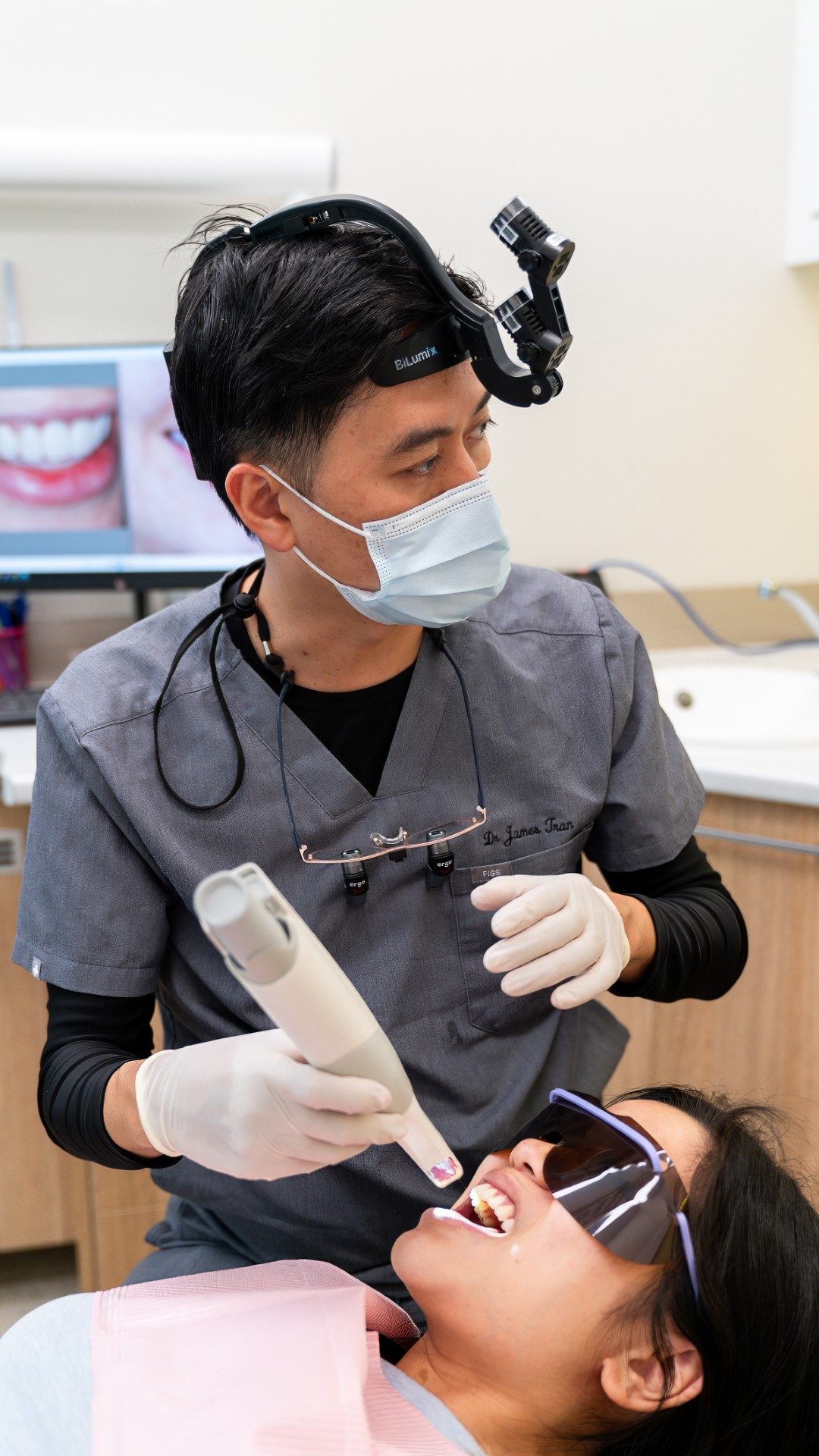
For polishing pastes or mouthwashes, ask the team for the ingredient list. Our article on whitening with coeliac disease covers toothpaste and gels. Lumi Dental has an in-house 3D intraoral scanner, which can often take the place of traditional impression trays.
Eating in the first days after surgery
Soft food is usual for the first days after implant surgery. Many soft foods are naturally free of gluten, but packaged soups and sauces still need a label check, and a dietitian can help if you are unsure.
How we approach this at Lumi Dental
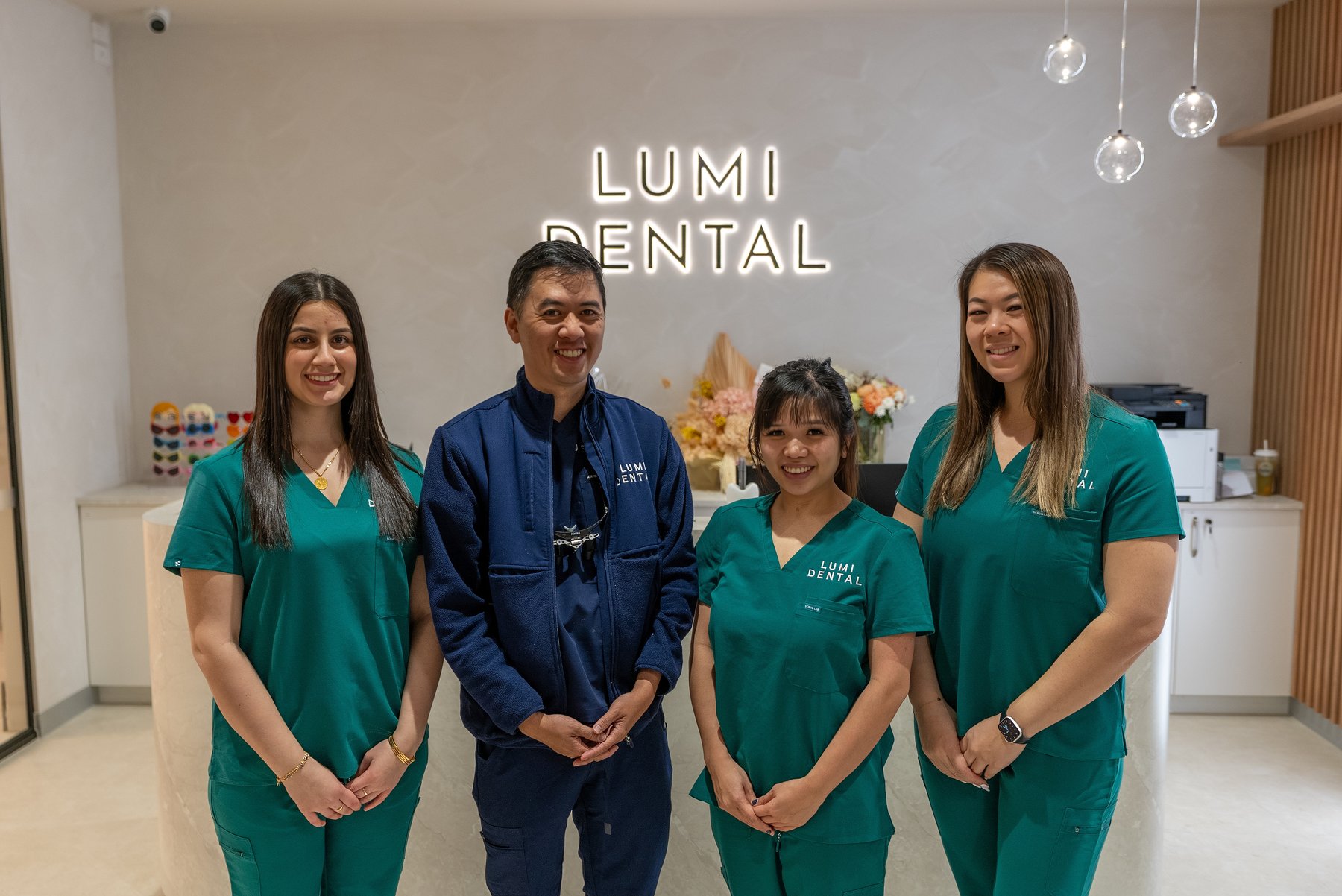
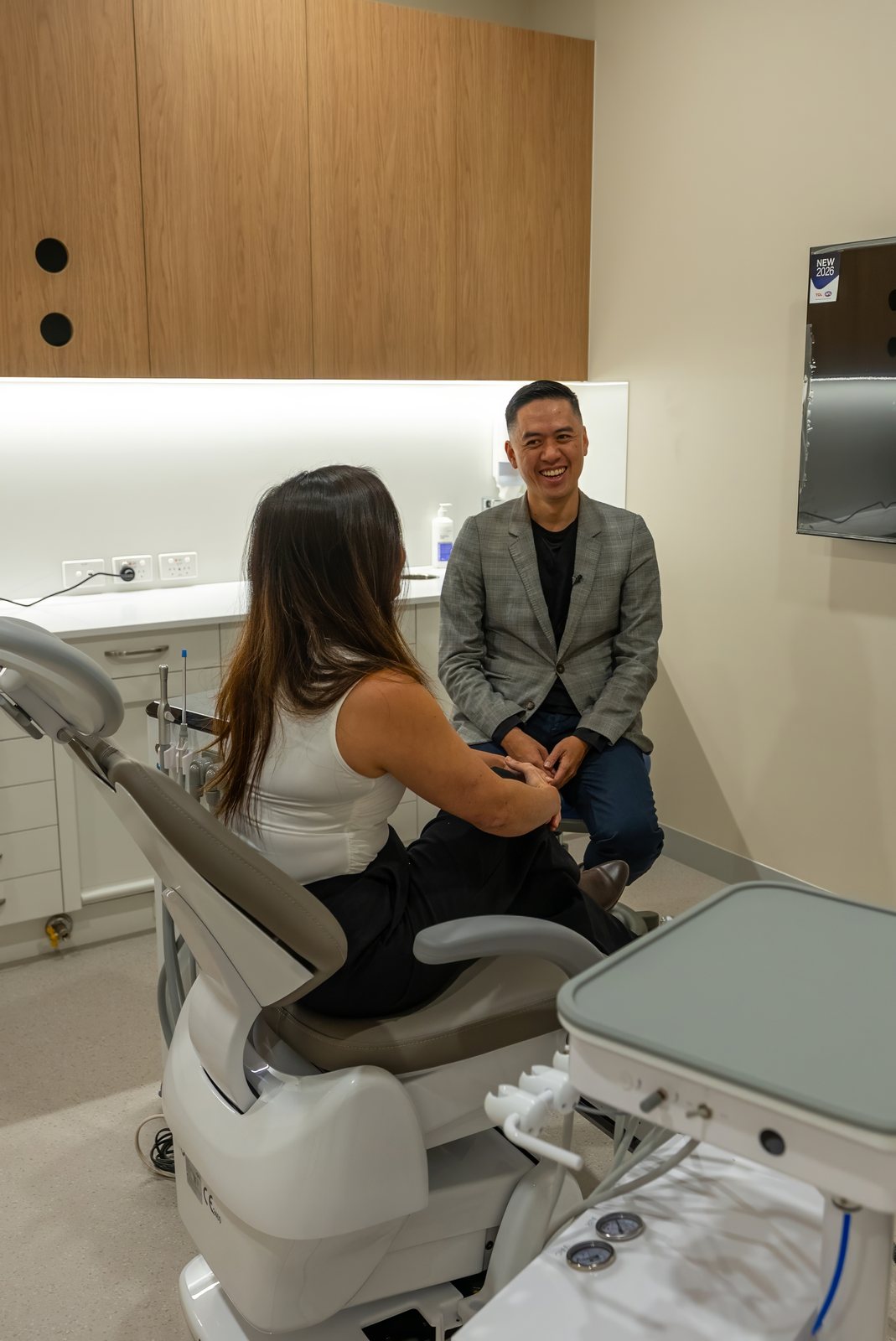
At Lumi Dental in Melrose Park, a dentist takes your medical history and medicines list, examines your gums and bite, and takes a 3D X-ray in house to measure the bone. With coeliac disease, we also ask when it was diagnosed, how long you have been on the diet, whether symptoms have settled and whether you have had a bone density scan or blood tests.
Where those answers are unclear, the team at Lumi Dental writes to your GP before planning surgery, and complex cases may be referred to a registered specialist. Read more about dental implants at Lumi Dental or about our 3D scanning and X-ray technology.
Questions patients ask
Can you get dental implants if you have coeliac disease?
Usually, yes. Coeliac disease that is well controlled on a gluten-free diet is not usually a reason to avoid implants. The dentist checks your bone, gums and general health first, and timing may change if your diagnosis is new.
Do I need a bone density scan before an implant?
Not always. Healthy Bones Australia notes that adults diagnosed with coeliac disease may need one, particularly with other risk factors, and your GP decides whether it is needed. If you have had one, bring the report to your consult.
How long after a coeliac diagnosis should I wait for an implant?
There is no fixed rule. Most bone improvement on a gluten-free diet is reported within the first one to three years, so many people wait until symptoms have settled and their doctor is happy with their blood results.
Are the medicines after implant surgery gluten free?
Check each one. Coeliac Australia advises reading the packaging every time, because medicines must declare gluten or wheat at 20 parts per million or more and formulations can change. Your pharmacist can confirm a specific product.
Does coeliac disease make implants fail?
That has not been shown. Research on implants in coeliac disease specifically is very limited, and a large Swedish study found no link between autoimmune conditions as a group and early implant failure. Our implant aftercare guide covers what keeps an implant healthy afterwards.
Considering an implant? Complimentary implant consult in Melrose Park
If you have coeliac disease and are thinking about replacing a missing tooth, the team at Lumi Dental can examine your mouth, take a 3D X-ray and talk through how your bone health fits the plan. Contact Lumi Dental to book a complimentary implant consult, or read more about dental implants in Melrose Park. Patients visit from Ryde, Parramatta, Ermington and Rydalmere, with on-site parking at Melrose Central.
Sources
- Archives of Endocrinology and Metabolism (Kondapalli AV, Walker MD): Celiac disease and bone (PMC)
- Healthy Bones Australia: Coeliac disease and bone health
- Clinical Implant Dentistry and Related Research (Duhan Wåhlberg R and colleagues): A multicenter study of factors related to early implant failures, part 2, patient factors (PMC)
- Coeliac Australia: Pain relief options and gluten in medicines
About the author

Dr James Tran is a general dentist at Lumi Dental in Melrose Park. He holds a BDent from the University of Sydney and a Graduate Diploma in Oral Implants, and is a Member of the International Congress of Oral Implantologists (MICOI).
This article is general information only and is not a substitute for an examination and individual advice from a registered dental practitioner. Suitability for any treatment varies from person to person.







