

Obstructive sleep apnoea does not usually rule out dental implants, but it changes how IV sedation is planned and monitored, so tell the implant team about it, and about your CPAP machine, at the first consult. It matters more to the sedation and the first nights at home than to the implant itself. It is also easy to have without knowing: a review of anaesthesia in sleep apnoea quotes a US estimate that around 80% of cases remain undiagnosed. This guide covers dental implants with obstructive sleep apnoea, diagnosed or suspected.
Written by Dr James Tran, BDent (University of Sydney), MICOI, GradDip (Oral Implants), general dentist at Lumi Dental in Melrose Park.
The short version
- Sleep apnoea alone is not a reason to avoid an implant. The main change is around sedation, because sedatives relax the muscles that hold the throat open.
- The single rule: name your sleep apnoea, your CPAP or mouth splint and your sleeping medicines at the first consult, not on the day of surgery.
- Loud snoring, daytime tiredness or observed pauses in breathing may lead to screening questions and a GP review before sedation is booked.
- Keep using your CPAP after surgery. Any change to the mask or pressure is a decision for your sleep physician.
- Strong pain relief and sleeping tablets can worsen apnoea; the prescriber decides what suits you. Our guide to IV sedation for implant surgery covers fasting, the day itself and the first 24 hours.
- A sleep apnoea mouth splint can usually be made or remade once the implant crowns are in place.
Sleep apnoea in brief
Healthdirect describes obstructive sleep apnoea (OSA) as a chronic breathing disorder in which the airway partly or completely blocks during sleep, breathing stops for short periods and you briefly wake to restart it, often without realising. Severity is graded by how often this happens: 5 to 14 pauses an hour is mild, 15 to 29 is moderate, and more than 30 is severe.
The Sleep Health Foundation notes that an overnight sleep study, which a GP can refer you for, is the best way to confirm it, and that the two most common treatments for moderate or severe OSA are CPAP, which delivers air under gentle pressure through a mask, and an oral appliance that holds the lower jaw forward.
If you are not sure whether your snoring is apnoea, our article on snoring versus sleep apnoea explains the difference and when to see your GP.
Why sedation is the part that changes
An implant is usually placed under local anaesthetic, often with IV sedation for a long appointment. The review in Future Science OA explains that sedative and hypnotic medicines reduce the tone of the throat muscles and make the upper airway more likely to collapse, in a dose-dependent way. In a throat that already narrows during sleep, that is the risk the team plans around. Studies of sedation for endoscopy are mixed: some found more oxygen drops and airway support in people who screened as high risk, others found no clear difference. That is why the plan is individual.
The STOP-Bang screening questions
A common screening tool is the STOP-Bang questionnaire: eight yes or no questions, one point each. As a review of sedation in sleep apnoea sets out, they cover loud Snoring, daytime Tiredness, Observed pauses in breathing, high blood Pressure, a BMI over 35, Age over 50, a Neck circumference over 40 cm and male Gender. Three or more yes answers suggests a higher risk of OSA. It is a screen, not a diagnosis.
The single rule: tell the team early and bring your CPAP into the conversation
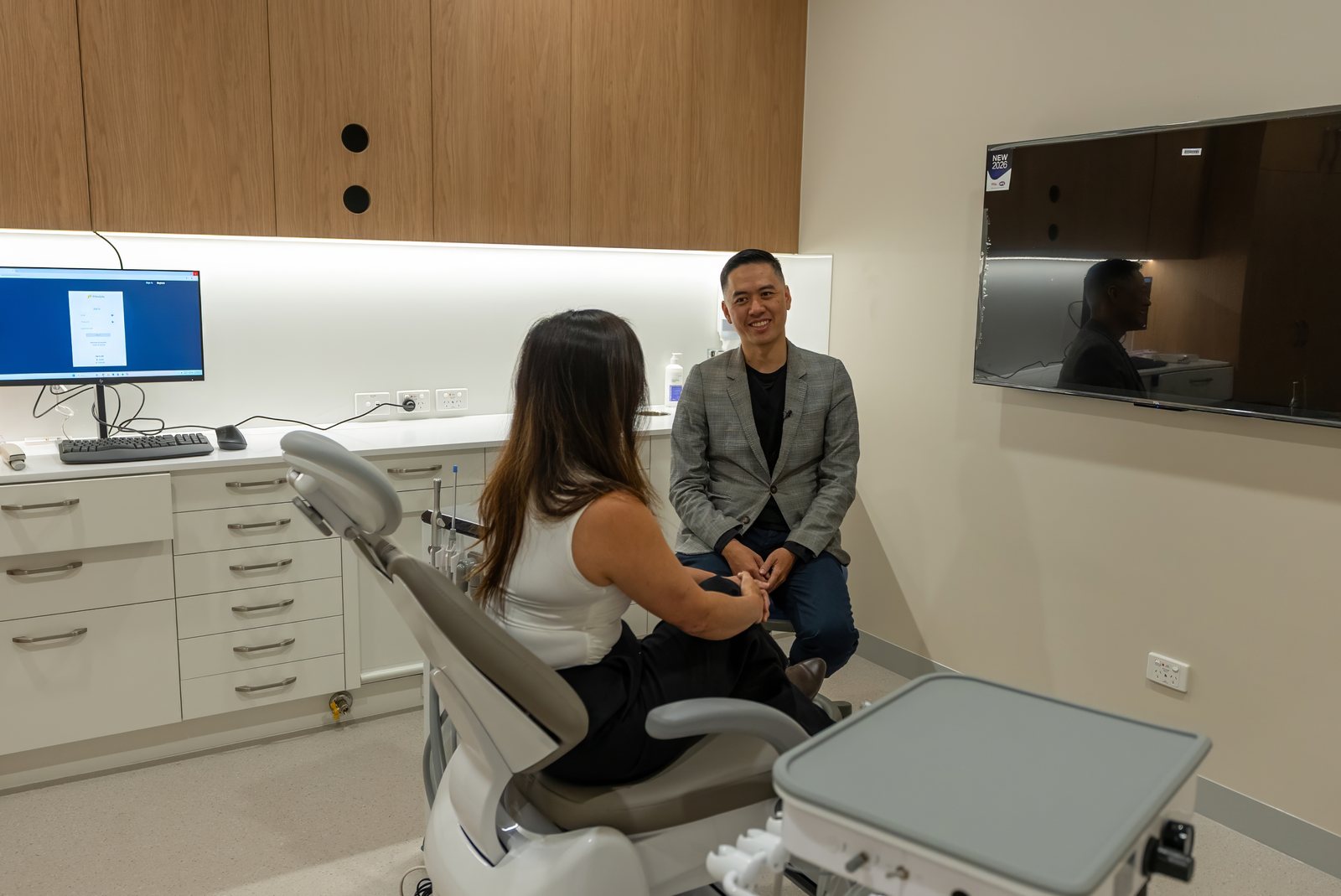
If you have diagnosed or suspected sleep apnoea, start by telling the implant team at the first consult, and say whether you use CPAP, a mouth splint or neither. The same review advises that people with a home CPAP machine bring it on the day of surgery.
Do not stop or change your CPAP, or any medicine, because of an implant. In my experience, the people whose surgery days run most smoothly are the ones who mentioned their sleep apnoea at the first visit, so the plan was built around it from the start.
What the team may do before and on the day
For well-treated OSA the changes are usually modest. The team may:
- ask the STOP-Bang questions and about your sleep study and CPAP use;
- write to your GP or sleep physician before planning surgery;
- keep sedation lighter, or suggest local anaesthetic alone for a short procedure;
- monitor breathing and oxygen closely, and think about your position in the chair;
- allow a longer recovery, with a responsible adult staying with you that night.
Lumi Dental does not provide general anaesthetic itself and refers where it is needed, though IV sedation is available at the practice. For severe or poorly controlled sleep apnoea, a hospital setting with an anaesthetist may be safer.
What to check first, by situation
| Your situation | What to check first |
|---|---|
| Diagnosed OSA, using CPAP most nights | How well CPAP is working. Keep using it after surgery; ask whether to bring it on the day. |
| Suspected but never tested | STOP-Bang questions at the consult. A GP review, and possibly a sleep study, before sedation is booked. |
| Using a mouth splint for OSA | Whether the splint grips teeth near the implant site, and what you will use at night while that area heals. |
| Heavy snorer, no diagnosis | Whether a partner has noticed pauses or gasping. |
| BMI or neck size concerns | Both are on the STOP-Bang list; sedation and monitoring are matched to your risk. |
| Taking sleeping tablets | List them. Your prescriber advises on them around the surgery date. |
The first nights: CPAP, swelling and the mask
The same review reports that using CPAP after surgery reduces breathing complications in people with OSA. After implant surgery a mask can press on a swollen upper lip and cheeks. Our article on how to sleep after implant surgery covers pillows, positions and why stopping CPAP is not a safe trade-off.
One case report in the Journal of Prosthodontics described the failure of lower full-arch implants in a patient whose CPAP mask was thought to have contributed. A single case shows nothing about how common this is, but it is a reason to raise your mask type during planning. Any mask change is for your sleep physician or CPAP provider. Mask fit when you have few or no teeth is covered in our guide to dentures or a full-arch bridge with a CPAP mask.
Pain relief and sleeping tablets
The Future Science OA review describes opioid pain relievers as lowering throat muscle tone, reducing the drive to breathe and dulling the body's response to low oxygen, and it reports that OSA raises the risk of opioid-related breathing problems by up to 50%. The Sleep Health Foundation notes that alcohol and sleeping tablets relax muscles and may worsen sleep apnoea in some people.
That does not mean going without pain relief. The prescriber chooses what suits your health and your apnoea. Keep taking your usual medicines unless your doctor advises otherwise.
Grinding, sleep apnoea and implant crowns
Sleep apnoea and night-time grinding often turn up in the same person. An umbrella review of eight systematic reviews concluded that adults with OSA appear more likely to have sleep bruxism, though the quality of the evidence was mostly low and cause and effect remain unclear.
For an implant, heavy grinding means more force on the crown and the screw that holds it. I usually check for wear facets, chipped fillings and tight jaw muscles at the planning visit. Our article on dental implants if you grind your teeth explains crown design and night guards.
Mouth splints after implants
The Sleep Health Foundation describes oral appliances as custom splints that fit over the upper and lower teeth and clip together to hold the lower jaw forward. Because the splint grips the teeth, a new or adjusted splint is usually made after the implant crowns are in place, with a plan agreed for the healing months.
A scoping review of splints held by implants found only four studies and called the evidence sparse. Our article on sleep apnoea oral appliances explains who suits a splint and how it is fitted.
How we approach this at Lumi Dental
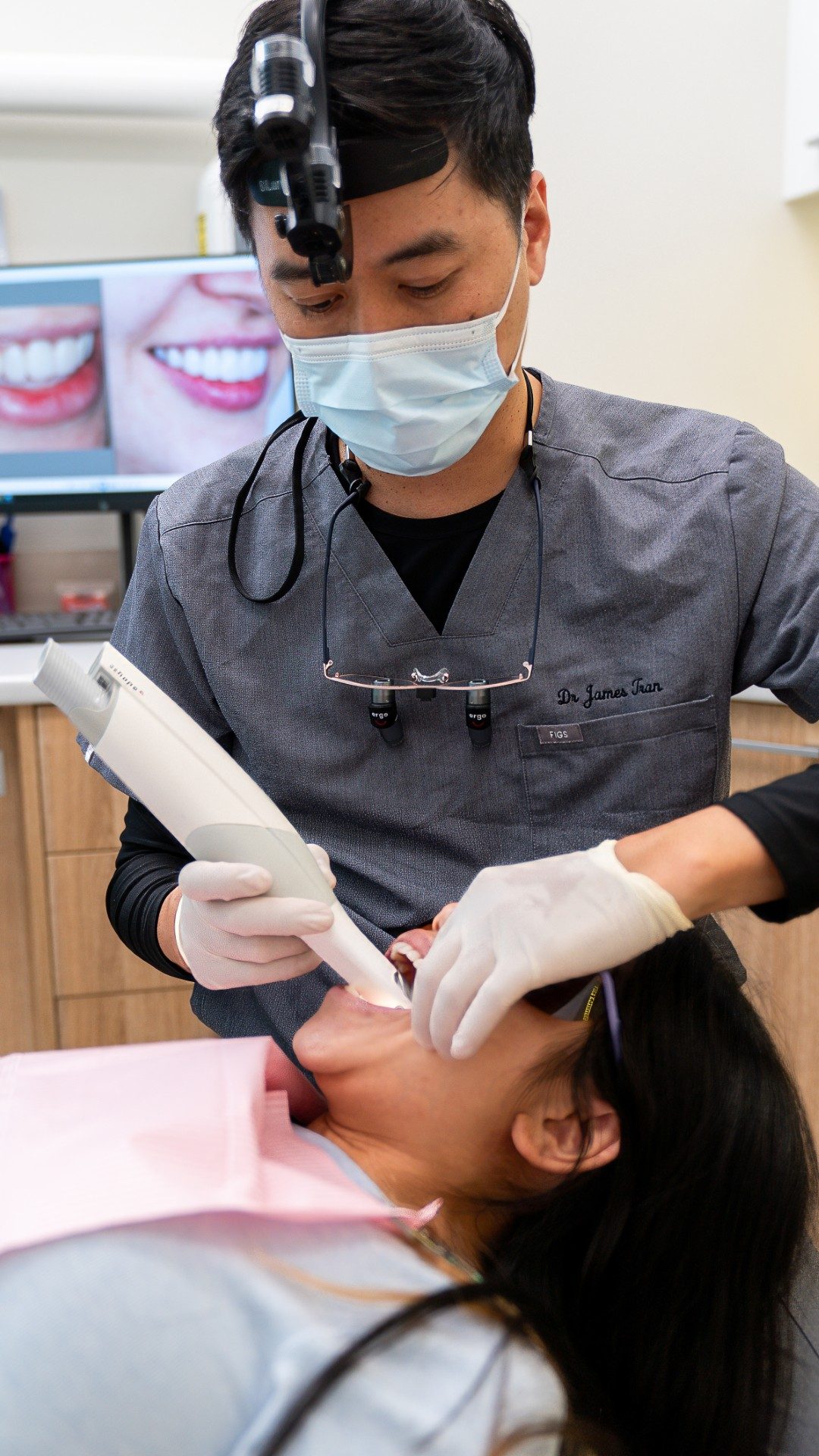
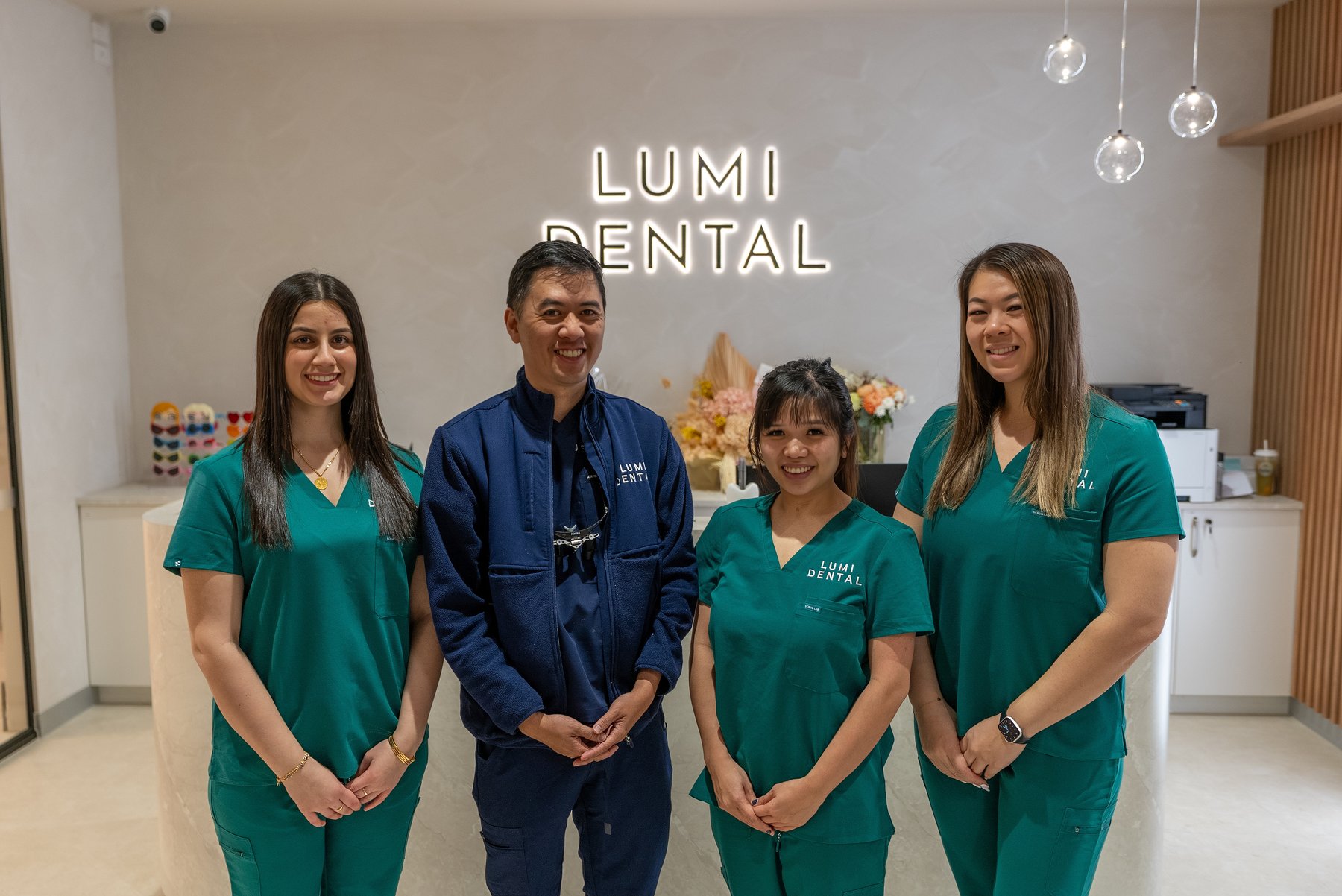
At Lumi Dental, a dentist takes your medical history and medicines list, asks about your sleep, CPAP and any mouth splint, examines your teeth and gums, and takes a 3D X-ray in house to plan the implant. Where sleep apnoea is diagnosed or suspected, the team at Lumi Dental writes to your GP or sleep physician before planning surgery, and IV sedation is offered only after that medical review.
Complex cases may be referred to a registered specialist or a hospital service. Read more about IV sedation at Lumi Dental.
Questions patients ask
Can you have IV sedation with sleep apnoea?
Often, yes, after a medical review, with lighter sedation and close monitoring. Severe or poorly controlled apnoea may be better managed in hospital.
Should I bring my CPAP machine to implant surgery?
Ask the team at your consult. Guidance for surgery advises bringing a home CPAP machine on the day.
Can I wear my CPAP mask after dental implant surgery?
Yes, keep using it. If the mask presses on a swollen or tender area, talk to your sleep physician or CPAP provider about the fit rather than stopping.
Does sleep apnoea make dental implants fail?
That has not been shown. The bigger issues are planning sedation safely and managing grinding, which often travels with sleep apnoea and can overload implant crowns.
Will I still be able to wear my sleep apnoea mouthguard?
Usually, once the crowns are fitted, though it may need adjusting or remaking. Our guide to sleep apnoea oral appliances explains how they are fitted.
Considering an implant? Complimentary implant consult in Melrose Park
If you live with sleep apnoea or use CPAP or a mouth splint, the team at Lumi Dental can examine your teeth, take 3D scans and plan your implant and any sedation around your sleep. Contact Lumi Dental to book a complimentary implant consult, or read more about dental implants in Melrose Park. Patients visit from Ryde, Parramatta, Ermington and Rydalmere, with on-site parking at Melrose Central.
Sources
- Healthdirect: Obstructive sleep apnoea (OSA)
- Sleep Health Foundation: Obstructive Sleep Apnoea (OSA)
- Future Science OA (Tracy E and colleagues): The perioperative implications of the patient with obstructive sleep apnea, a narrative review (PMC)
- Gastrointestinal Endoscopy Clinics of North America: Sedation challenges, obesity and sleep apnea (PMC)
About the author
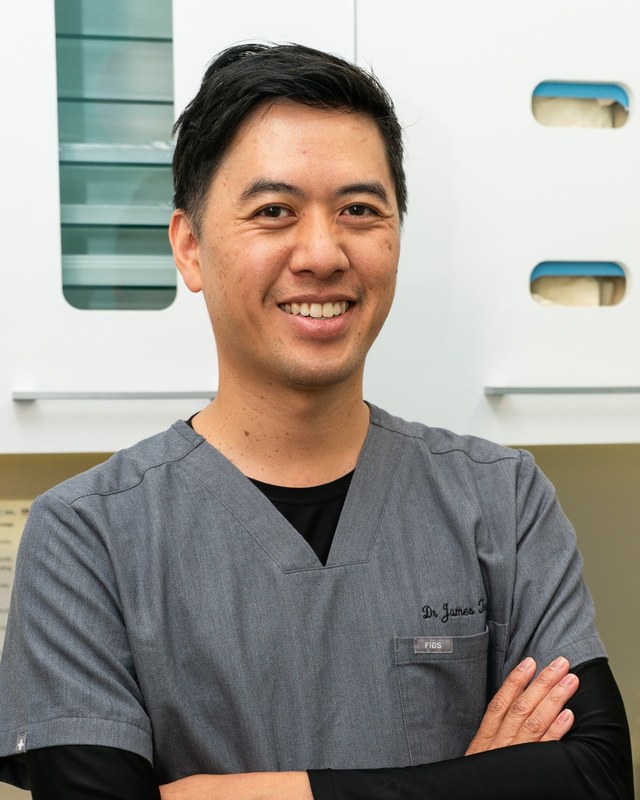
Dr James Tran is a general dentist at Lumi Dental in Melrose Park. He holds a BDent from the University of Sydney and a Graduate Diploma in Oral Implants, and is a Member of the International Congress of Oral Implantologists (MICOI).
This article is general information only and is not a substitute for an examination and individual advice from a registered dental practitioner. Suitability for any treatment varies from person to person.







