Book Online

All health funds accepted · Payment plans from $0 deposit · CDBS bulk billing

All health funds accepted · Payment plans from $0 deposit · CDBS bulk billing

Book Online

Dental injury playing sport: cover, claims and who pays

Dental injury playing sport: cover, claims and who pays

Dr James Tran, dentist at Lumi Dental Melrose Park

Dr James Tran

September 4, 2026 · Emergency Dental · 8 min read

In most cases private health extras cover pays first, and a club or association accident policy covers part of what is left. Neither of them pays a cent until the tooth has been dealt with. That is the shape of sports dental injury insurance in Australia, and it is why this article is ordered the way it is. A dental injury runs on two clocks. The clinical clock is measured in minutes. The administrative clock is measured in weeks. Sort the tooth out first, then work the claim. The paperwork can wait, the tooth cannot.

Key takeaways

  • Treat the injury first. No policy pays anything for an injury nobody treated, and the window for replanting a knocked out adult tooth is commonly described as about 30 minutes.
  • It is common, though not universal and not legally required, for Australian clubs and state or national sporting bodies to hold group personal accident insurance for registered members, often including a benefit for dental injury.
  • That cover is personal accident insurance, which is a different thing from public liability. It usually pays for specified injury costs while playing, training or travelling for the club, and does not usually require anyone to be at fault.
  • The Health Insurance Act 1973 (Cth) prevents general insurers from covering anything claimable on Medicare, which is why these policies are built around non-Medicare items such as dental treatment.
  • The common industry pattern is extras cover first and the club policy second, because accident policies are usually written to supplement rather than duplicate health cover. Check your own policy rather than assuming.
  • Lodgement windows are set per policy and are often short, so ask the club for the deadline the same week the injury happens.

Treat the tooth first, then start the paperwork

A knocked out adult tooth is a genuine emergency and the clock starts the moment it leaves the socket. Pick the tooth up by the crown, never the root. Do not scrub it and do not let it dry. Rinse it briefly in milk or saline if it is dirty, then either place it straight back into the socket and hold it there, or keep it moist in milk on the way to a dentist. About 30 minutes is the figure most commonly cited for the best chance of successful reimplantation.

Our guide to first aid for a knocked out tooth gives the full sequence, and why milk works as a storage medium explains the reasoning. If the jaw itself is involved, if the bite suddenly does not meet properly, or if there is numbness in the lip or chin, that is a different level of injury again and is covered in first aid for a suspected broken jaw and facial trauma. Where the injury is urgent, ring an emergency dentist from the sideline rather than waiting until the game ends.

There is a practical claims reason to do it this way as well. Every accident policy asks for evidence of treatment. Attending on the day produces an itemised account, a clinical note and often radiographs, which together are far stronger than a description written from memory a month later.

What this article covers that our mouthguard guides do not

This is about what happens after the injury, administratively, and who actually pays. Lumi Dental already has articles on the other half of the problem. Custom mouthguards compared with boil and bite and mouthguards for kids playing sport deal with prevention. The two first aid guides linked above deal with the first half hour. All four stop at the point where the tooth has been treated.

That is exactly where most people's actual question begins. Searches about sports dental injuries are usually not about mouthguard materials. They are about who is going to pay for the crown, the root canal treatment or the implant that follows, and about what has to be lodged, with whom, and by when. Broker websites explain the policy to the club administrator buying it. Dental practice pages sell mouthguards. Very little is written for the person sitting in the car afterwards with a tooth in a container of milk.

What club and association insurance actually is

It is personal accident cover, not public liability cover, and the distinction decides how a claim behaves. Personal accident cover pays the injured member for specified costs arising from an injury sustained while playing, training or travelling for the club. It does not usually require anyone to be at fault, which is why a claim can proceed after an ordinary contest for the ball with no blame attached to anyone. Public liability cover is a different product that responds when the club is legally liable to someone else.

It is a common pattern, though not universal and not legally mandated, for Australian clubs and for state and national sporting bodies to hold group personal accident insurance covering registered members. National member insurance programs are run by bodies including AFL community football programs, Cricket Australia and Ice Hockey Australia, and they are typically administered through brokers such as Marsh, Gallagher or DUAL Australia. Cover of that kind is usually tied to being a registered, financial member for the current season, so an unregistered player at a social run around may have nothing behind them at all.

Because these programs are arranged sport by sport and sometimes club by club, benefit levels and definitions vary widely. Two players in different codes with the same broken tooth can get very different outcomes. Do not assume the cover exists, and do not assume what it pays.

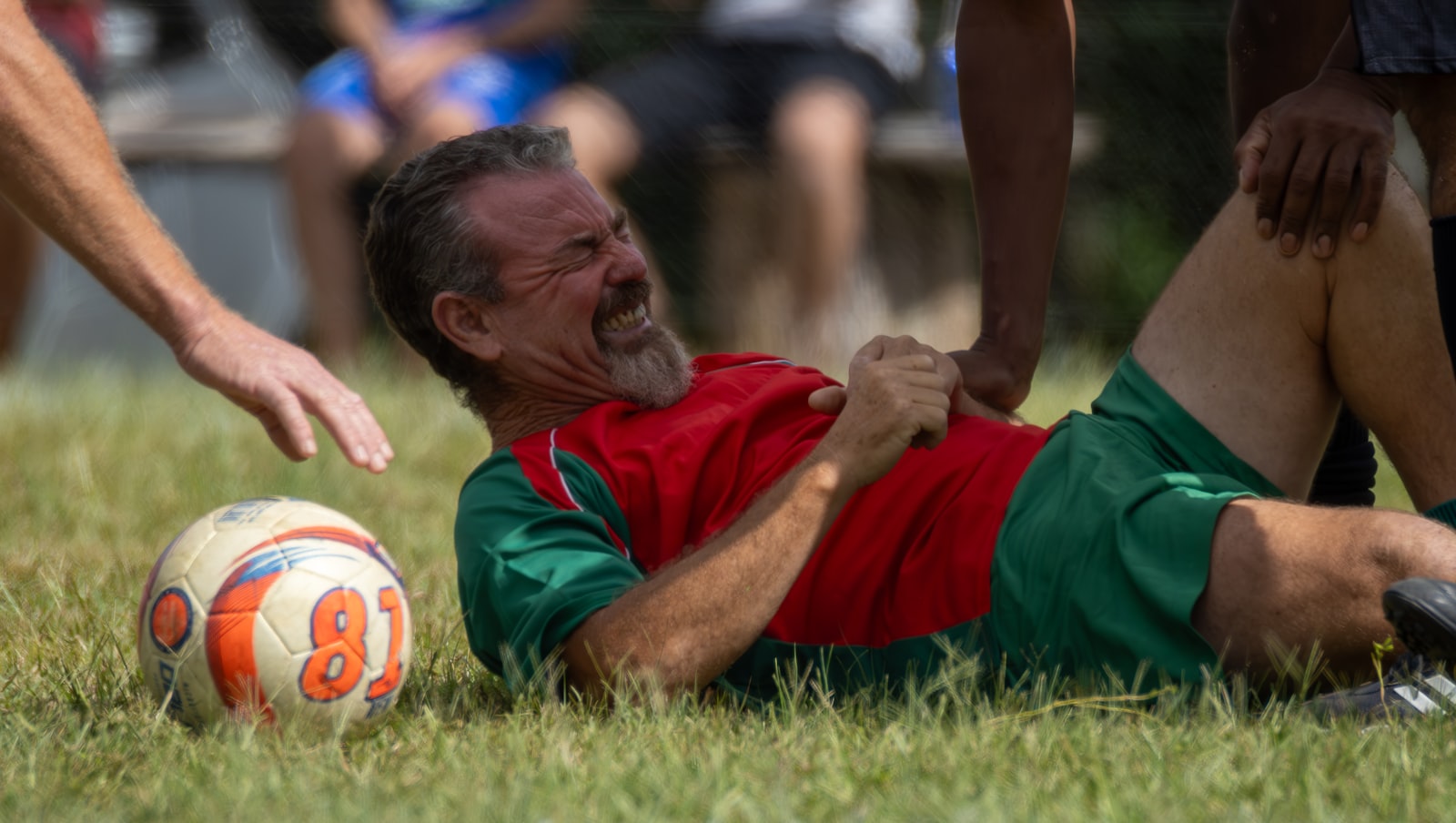
Contact sport collision of the kind behind most sports dental injury insurance claims in Australia
Club accident cover usually responds without anyone being at fault.

Why Medicare barely features

Medicare does not generally fund dental treatment provided in a private practice, so for most sports dental injuries it is not a payer at all. That is the starting point people find hardest to accept, particularly when the injury is obviously an accident.

There is a second effect that shapes the whole market. The Health Insurance Act 1973 (Cth) prevents general insurers from covering anything claimable on Medicare. General insurers therefore design accident policies around items that Medicare does not pay for, and most dental treatment falls squarely into that space. That is why dental benefits appear so consistently in sporting accident policies while other medical costs are handled differently or excluded.

The usual order of payment

The common pattern is that private health extras cover, where the player holds it, pays first for dental treatment, and the club or association accident policy then addresses some or all of the remainder. Accident policies are usually written to supplement existing health cover rather than duplicate it, so many of them ask what your fund has already paid before they assess anything.

Say it plainly: this is common industry design, not a legislated order of payment. Some policies operate differently, and some pay only in defined circumstances or only above a set excess. The reader who takes one thing from this section should take this: read your own club's policy schedule, or ask the club for it, and do not assume the sequence applies to you until you have seen it in writing.

Extras cover carries its own limits. Annual limits reset on a schedule set by the fund, waiting periods can apply to major dental items, and a serious injury can exhaust a year's limit in one appointment. None of that stops a claim, but it changes what is left for the accident policy to look at, so check your remaining limit early.

Who typically pays first after a sports dental injury

The table below sets out the usual sequence and what each payer tends to look at. Treat it as the common pattern rather than a rule, because policy wordings decide the answer in any individual case.

PayerWhat it typically coversWhere it sits in the sequenceKey thing to check
MedicareGenerally not routine dental treatment in private practiceUsually not a payer for the dental work itselfWhether any part of the injury involves care outside dentistry
Private health extras coverClaimable dental items, from examinations and radiographs through to major items depending on the productCommonly firstRemaining annual limit, waiting periods, and the benefit payable per item number
Club or association personal accident policySpecified injury costs, often including a dental injury benefit, for injuries while playing, training or travellingCommonly second, addressing part of what extras did not payWhether you were a registered member, and the lodgement deadline
Child Dental Benefits ScheduleA defined range of dental services for eligible childrenAlternative pathway for eligible children, not an accident policyEligibility linked to Family Tax Benefit Part A and similar payments, and the capped benefit period
The patient out of pocketWhatever remains after the payers above have respondedLastAsk the practice for a written estimate before treatment starts
NSW public dental servicesEmergency dental care, including knocked out or fractured teeth, for eligible patientsSeparate pathway rather than part of the sequenceEligibility criteria and which clinic covers you

The claim sequence, step by step

Work in this order and most claims become straightforward. The single most common reason a claim fails is not a dispute about the injury, it is missing documents or a missed deadline.

  1. Get treated. Same day for anything knocked out, loosened, fractured or painful.
  2. Ask the treating practice for an itemised account and a short written clinical note describing the injury and the treatment.
  3. Report the injury to the club as soon as practical, in writing, and ask who administers the association's accident policy.
  4. Ask the club for the policy schedule and the claim form, and ask directly what the lodgement deadline is.
  5. Claim through your private health extras cover first, and keep the fund's statement showing what it paid.
  6. Lodge the accident claim for whatever the extras cover did not meet, attaching the account, the fund statement and the clinical note.
  7. Keep every receipt, every radiograph and a written record of every conversation, including dates and names.

How long do you have?

Shorter than you would expect, and there is no single national answer. Lodgement windows are set by each policy, and some of them are measured in weeks rather than months. Because the windows differ by sport, club and underwriter, the only safe approach is to ask the club for the deadline immediately, in the same week as the injury, and to lodge a notification even if the treatment plan is not finished. A notification lodged early can usually be updated later. A claim lodged after the window has closed usually cannot be rescued.

If the injury happened in a motor vehicle on the way to or from a fixture, a completely different scheme may apply. Our article on dental injuries in a car accident and CTP claims in NSW covers that pathway.

Itemised dental account and claim paperwork for a sports dental injury insurance claim in Australia
Most claims turn on documents and deadlines, not on the injury itself.

Mouthguards, the ADA position, and what it means for a claim

The dental profession's position on mouthguards is about preventing injury, not about claims. The Australian Dental Association's Policy Statement 2.2.5 on the prevention and management of oral injuries, together with ADA NSW's mouthguard guidance, recommends a custom fitted mouthguard made by a dentist for contact sport and for any activity carrying a meaningful risk of collision. Both explicitly discourage self fitted boil and bite and off the shelf mouthguards, on the grounds of poor fit, dislodgement, and the airway risk that a loose guard creates on impact. The association also recommends that sporting bodies adopt mandatory mouthguard policies where a risk of oral injury exists.

What that guidance does not do is tell you how an insurer will treat your claim. Whether wearing or not wearing a mouthguard affects a particular policy is a matter for that policy's wording, and it is not something this article can verify in general terms. Do not assume a custom mouthguard guarantees acceptance, and do not assume its absence guarantees rejection. If it matters to you, ask the club to point you to the exact clause before the season starts.

The prevention case stands on its own regardless. A custom fitted guard is made to a model of the actual teeth, stays put under contact, and does not have to be held in place by clenching. Our comparison of custom guards and boil and bite guards goes through the differences in fit and retention in more detail.

How common are dental injuries in sport

Common enough that most contact sport clubs will see one a season, though the figures come from different sources and should not be merged into a single national rate. ADA NSW resource material states that sports related injuries account for close to 40 per cent of dental injuries, while only around 36 per cent of Australians wear a mouthguard for contact sport, with use lower at training than in matches. That gap between risk and protection is the part worth acting on.

For the broader picture, the Australian Institute of Health and Welfare's work on sports injury in Australia counted around 61,000 sports injuries resulting in a hospital admission in a single reporting year, about 12 per cent of all injury hospitalisations. Males made up roughly 70 per cent of those admissions and incidence was highest in the 15 to 24 age group. That dataset covers sports injury broadly and does not break out dental injury, so it tells you about the size and shape of the problem rather than about teeth specifically.

At the sport specific end, one cohort study of rugby union players reported orofacial trauma prevalence of 64.9 per cent, with 41.9 per cent of the orofacial injuries in that group involving the teeth. That is one cohort in one code, and it should not be read as a figure for sport in general. Taken together the evidence supports a simple conclusion: contact sport carries real risk to teeth, the exact rate depends heavily on the code studied, and protective equipment use in Australia sits well below the level the profession recommends.

Common questions

Does my sports club's insurance cover a knocked out tooth?

Often, but not always. Many Australian clubs and sporting bodies hold group personal accident insurance for registered members, and dental injury benefits are a common inclusion. It is not universal and it is not legally required, and cover usually depends on being a registered member. Ask your club for the policy schedule rather than assuming, and ask before the season rather than after the injury.

Do I need private health cover if the club has accident insurance?

They do different jobs and are not interchangeable. Extras cover is your own health policy and usually pays first for dental items, subject to annual limits and waiting periods. A club accident policy is typically designed to supplement existing health cover rather than replace it, and many policies ask what your fund has already paid. Relying on the club policy alone can leave a larger gap than expected.

Will my claim be rejected if I was not wearing a mouthguard?

That depends entirely on the policy wording, and it is not something to guess at. The Australian Dental Association's position on custom fitted mouthguards is about preventing injuries, not about insurance outcomes, and there is no general rule that a missing mouthguard defeats a claim or that wearing one secures it. Ask the club to show you the relevant clause.

How long do I have to make a sports dental injury claim?

There is no single deadline. Lodgement windows are set per policy and vary by sport, club and underwriter, and some are short. Ask the club for the deadline in the same week as the injury and lodge a notification straight away, even if treatment is still ongoing.

Which sports carry the highest risk of dental injury?

Contact and collision codes carry the clearest risk, and one cohort study of rugby union players reported orofacial trauma in 64.9 per cent of the group, with 41.9 per cent of those orofacial injuries involving teeth. Stick and ball sports and anything with a hard projectile or a hard surface also produce injuries. Ranking sports precisely is difficult because studies use different definitions and populations, so treat single sport figures as specific to that study.

Does Medicare cover a tooth injured playing sport?

Generally no. Medicare does not fund routine dental treatment in private practice, which is why the cost usually falls to extras cover, a club accident policy, or the patient. The Health Insurance Act 1973 (Cth) also stops general insurers covering anything claimable on Medicare, which is exactly why accident policies are structured around dental and other non-Medicare items.

If a tooth has been damaged on the field

The team at Lumi Dental in Melrose Park treats sports injuries as urgent, and the practice can supply the itemised account, item numbers and written clinical note that both your health fund and the club's insurer will ask for. If something has just happened, ring rather than email and have a look at our emergency dentist page for how to be seen quickly. If you are not already a patient, the current new patient offer sits on our current offers page, and a written estimate can be prepared before any treatment is booked so you can check your cover first.

This article is general information only. It is not legal, insurance or financial advice, and it is not a substitute for advice about your own policy or your own teeth. Benefit levels, definitions, exclusions and lodgement deadlines vary between sports, clubs, underwriters and health funds, so confirm the detail with your club, its insurer and your fund. For a dispute about a claim, speak to the insurer's internal complaints team, then the Australian Financial Complaints Authority, or get advice from a solicitor.


Dr James Tran — Lumi Dental, Melrose Park

Written by Dr James Tran

Dr James Tran (BDS, University of Sydney) is the founder of Lumi Dental in Melrose Park. He is committed to providing clear, evidence-based dental information to help patients make informed decisions about their care.

Ready to book your visit?

New patients welcome. Comprehensive first visit including exam, x-rays and treatment plan — just $149.

Book now