


If you are planning teeth whitening, start a 5 per cent potassium nitrate desensitising toothpaste about two weeks beforehand and keep using it through the course: it lowers the chance of sensitivity and does not dull the final shade. In a randomised study of 202 patients who brushed with either a potassium nitrate toothpaste or a standard fluoride toothpaste for two weeks before and during take-home whitening, more of the potassium nitrate group were free of sensitivity in the first week (58 per cent against 42 per cent), and both groups lightened by about 4.4 Vita shades. In my experience this one change turns a whitening course people abandon into one they finish.
Written by Dr James Tran, BDent (University of Sydney), MICOI, GradDip (Oral Implants), general dentist at Lumi Dental in Melrose Park.
The short version
- Whitening sensitivity is common: after in-chair whitening it has been reported in up to half of patients, usually settling within two to three days.
- Potassium nitrate calms the nerve. Stannous fluoride, arginine and calcium sodium phosphosilicate pastes plug the open tubules instead.
- Potassium builds up slowly, so start about two weeks before the first gel and continue until a week after you finish.
- The prep does not reduce the colour change.
- Toothpaste is prevention, not diagnosis. The dentist checks for recession, worn edges, cracks and decay first; our guide to the causes of whitening sensitivity explains why.
- Do not brush straight after the gel, use a whitening toothpaste as the prep, or skip the check-up.
Why whitening makes teeth sensitive
Whitening gels work because peroxide passes through enamel into the dentine beneath and breaks up stain molecules. Dentine is threaded with fluid-filled tubules running inward to the pulp, and anything that disturbs that fluid, whether cold, air or peroxide, can fire the nerve. A systematic review of desensitising agents used before in-chair whitening states that the exact mechanism remains unclear, and notes that gum recession, leaky fillings and defects where enamel meets root all make sensitivity more likely. The same review reports sensitivity after in-chair whitening in up to 50 per cent of cases, usually transient and lasting two to three days. Patients I see describe a sudden zing in a front tooth during or soon after a session, settling by morning. Our article on how long sensitivity lasts after whitening covers recovery.
How the desensitising ingredients work
teeth.org.au, the Australian Dental Association's patient site, explains that desensitising toothpastes act in one of two ways: they soothe the nerves inside the teeth so they stop responding, or they form a barrier over the sensitive area. Potassium nitrate is the first kind. Potassium ions diffuse along the tubules to the nerve fibres at the edge of the pulp and, once concentrated enough, reduce their excitability, so it needs time to work. Stannous fluoride, arginine and calcium sodium phosphosilicate are the second kind; a scoping review of desensitising toothpastes describes them as occluding the tubules so the fluid inside cannot shift. CPP-ACP cream supplies calcium and phosphate to enamel, and a randomised trial has reported less sensitivity after the first in-chair session when it was applied straight after the gel, with no loss of shade.
| Active ingredient | How it works | Where it fits | Availability |
|---|---|---|---|
| Potassium nitrate 5% | Calms the nerve; builds up over days | The standard prep | General sale, several brands |
| Stannous fluoride | Plugs tubules; also acts on decay and gum inflammation | Alternative or follow-on | General sale |
| Arginine with calcium carbonate | Deposits a calcium-rich plug in the tubules | Alternative if potassium nitrate does not suit | General sale |
| CPP-ACP cream | Delivers calcium and phosphate to enamel | In the tray after gel, or at night | Usually via a dental practice |
What the research says about preparing before whitening
The study behind the two-week rule was a randomised trial across fourteen dental practices. Patients brushed twice a day for 14 days with either a 5 per cent potassium nitrate and fluoride toothpaste or a standard fluoride paste, then began a two-week course of take-home gel while continuing their assigned paste. The first-week figures quoted above come from that study; over the whole course the potassium nitrate group averaged 10.1 sensitivity-free days against 8.6, with the same shade gain in both groups. The effect is modest, but satisfaction was higher in the potassium nitrate group.
A later systematic review of five randomised trials and 387 people found the benefit depends on the protocol: desensitising toothpastes reduced sensitivity after take-home whitening with 22 per cent carbamide peroxide and after a single in-chair session with 35 per cent hydrogen peroxide, but not with 16 per cent carbamide peroxide or after two in-chair sessions. The paste helps most where there is more sensitivity to prevent.
Timing matters as much as the ingredient. A review of thirteen trials and 841 patients found that desensitising agents applied before in-chair whitening lowered pain scores, whereas a trial that applied a 10 per cent potassium nitrate gel for just ten minutes beforehand found no reduction at all. Potassium works by accumulation. Give it the fortnight.
The single rule: start two weeks out and keep going
If whitening is booked, start a 5 per cent potassium nitrate toothpaste now and do not stop until a week after the last application. Use it twice a day in place of your usual paste and spit without rinsing so a film stays on the teeth. This is the schedule I usually hand to patients.
| Stage | What to do | Why |
|---|---|---|
| Day minus 14 to day minus 1 | Brush twice daily with 5% potassium nitrate paste; spit, do not rinse; attend the dental check | Potassium builds gradually; the check finds recession, decay or cracks first |
| Day 0, first gel application | Continue the paste; wear the gel for the set time, not longer | Sensitivity tracks wear time and concentration |
| During the course | Keep brushing with the paste; if a tooth zings, skip a night or shorten wear time | Pausing lets the pulp settle; the final shade is reached either way |
| The week after | Finish the tube, then switch to a fluoride or remineralising paste | Dentine stays reactive for several days after peroxide stops |
Our article on fluoride and remineralising toothpaste after whitening is the follow-on to this one.
Who gains the most from the prep
The patients I steer firmly towards the prep are those with gum recession and exposed roots, because root dentine has no enamel cover and gel reaches the tubules directly; our article on whitening with receding gums explains the extra steps. People with worn edges where dentine shows are in the same group, and so is anyone who has had sensitivity with whitening before, since a past reaction is the best predictor of the next one. High-strength in-chair sessions deserve the prep too. If your teeth already twinge with cold water, read our guide to whitening when your teeth are already sensitive; the dentist may suggest a gentler gel, shorter wear, or treating the cause first.
What not to do
- Do not brush immediately after removing the gel. The surface is briefly softer and the tubules more open; wait a while, then brush gently. teeth.org.au gives similar advice after acidic drinks: wait at least 60 minutes.
- Do not use a whitening toothpaste as the prep. Whitening pastes rely on abrasives or very low peroxide levels to lift surface stain; they do nothing for the nerve.
- Do not treat the toothpaste as a substitute for an examination. teeth.org.au is clear that it will not help if decay is the cause. Our checklist of who should not whiten their teeth lists what is ruled out first.
- Do not double up on wear time after a skipped night. A missed night is simply added to the end of the course.

How we approach this at Lumi Dental
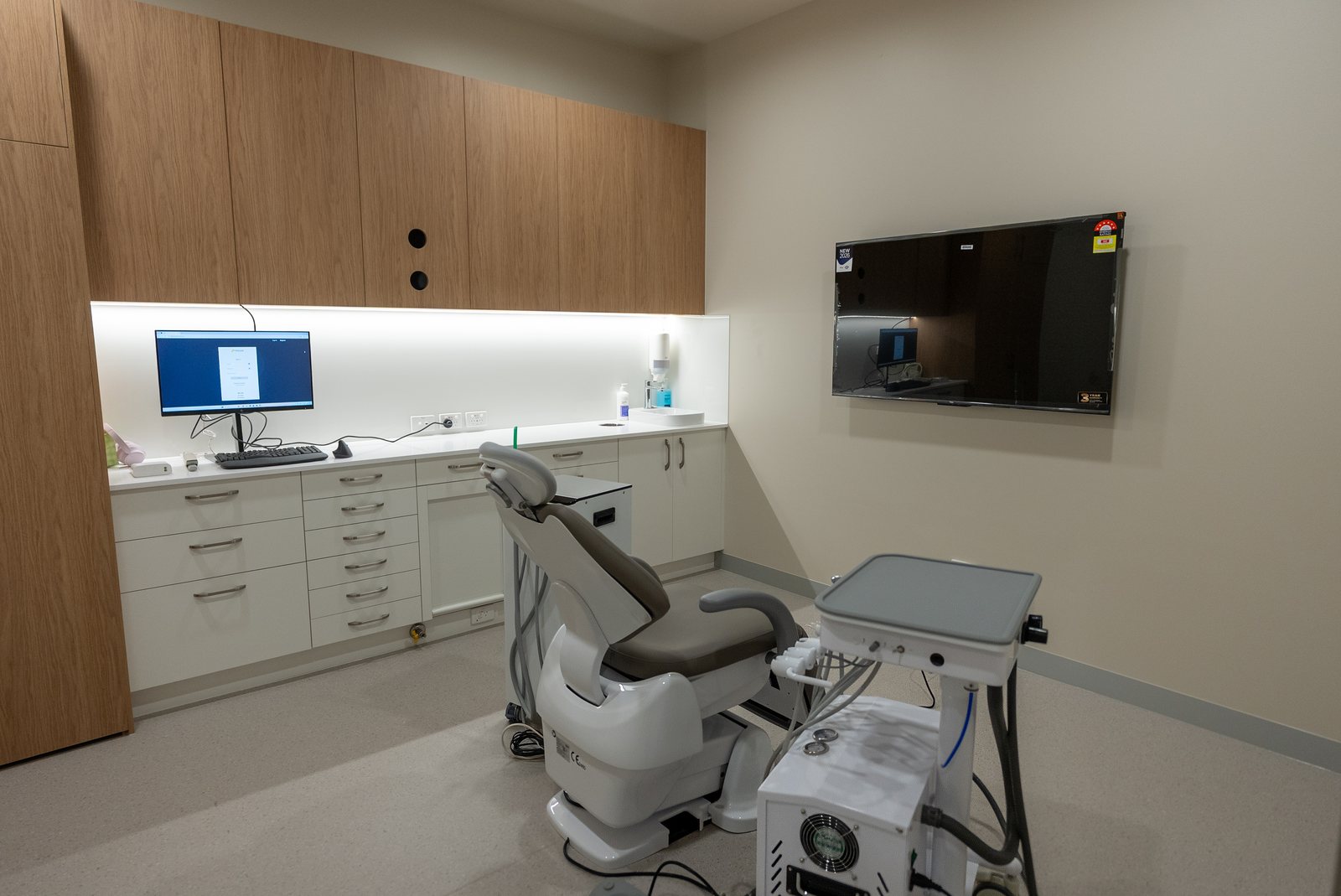
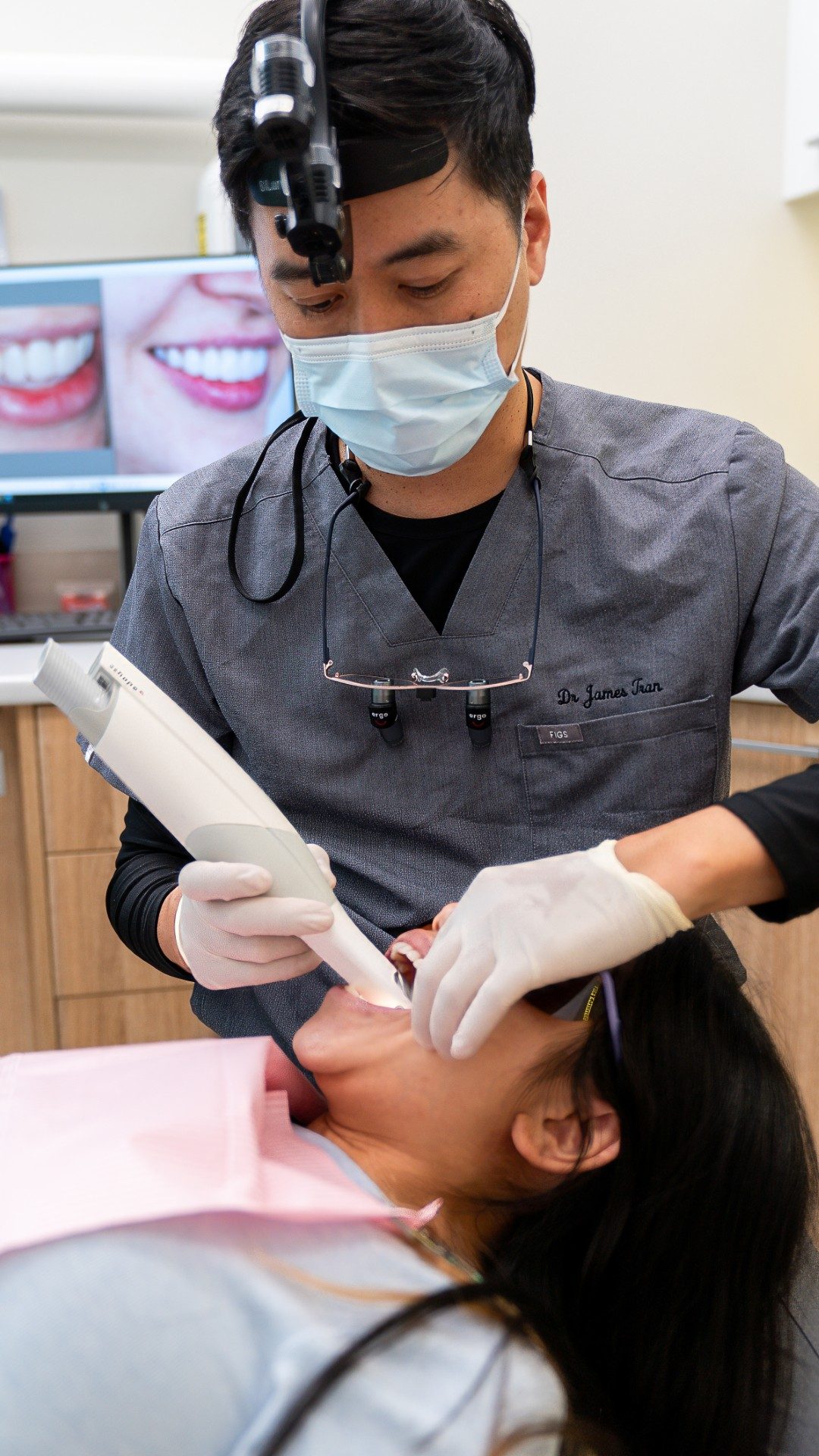
Whitening at Lumi Dental starts with the dentist, not the gel. The examination looks for the usual causes of sensitivity, including recession, cracked or leaking fillings, erosion and early decay. The oral health therapists on the team then talk through the prep: which desensitising paste suits you, when to start it, and how to use it with trays made from an in-house 3D intraoral scan. The whitening options are named Lumi Home, Lumi Refresh and Lumi Radiance; details are on the teeth whitening page. Patients with a history of sensitivity usually start on a gentler protocol.
Questions patients ask
How long before whitening should I start using sensitive toothpaste?
About two weeks, brushing twice a day, then keep going through the course and for a week after. Potassium nitrate builds up in the dentine and needs time.
Does desensitising toothpaste make whitening less effective?
No. In the two-week prep trial both groups lightened by about 4.4 Vita shades, and a review of pre-treatment agents found no consistent effect on colour change. The desensitiser calms the nerve; it does not block the peroxide.
Which is better before whitening, potassium nitrate or stannous fluoride?
Potassium nitrate has the most whitening-specific research and is the usual choice. Stannous fluoride plugs the tubules instead and is a good alternative, especially with early gum disease or a high decay risk.
Can you put sensitive toothpaste in whitening trays?
A smear of 5 per cent potassium nitrate paste worn in the trays for 10 to 30 minutes on a rest night is a common way to settle a zinging tooth. Do not mix it with the gel, and ask first; a general dentist can check that the zing is not coming from a crack or cavity.
What if my teeth are still sensitive after the course?
It usually fades over a few days, and teeth.org.au notes that sensitivity after dental treatment may last up to two weeks. Keep using the paste, avoid very cold drinks, and book a review if a single tooth stays sensitive, aches on its own or hurts on biting.
Thinking about whitening? Complimentary cosmetic consult in Melrose Park
If sensitivity has put you off whitening, the team at Lumi Dental can check your teeth, plan the two-week prep and match the gel strength to your history. Book a complimentary cosmetic consult at Melrose Central in Melrose Park, or read about teeth whitening at Lumi Dental. Patients visit from Ryde, Parramatta, Ermington and Rydalmere, with on-site parking.
Sources
- Haywood VB and colleagues. Brushing with a potassium nitrate dentifrice to reduce bleaching sensitivity. Journal of Clinical Dentistry (PubMed)
- Cabral AEA and colleagues. Effectiveness of desensitizing toothpastes in reducing tooth sensitivity after tooth bleaching: a systematic review. Clinical Oral Investigations (PubMed)
- Post-operative sensitivity and color change due to in-office bleaching with the prior use of different desensitizing agents: a systematic review. Cureus (PMC)
- Australian Dental Association (teeth.org.au): Sensitive teeth
About the author

Dr James Tran is a general dentist at Lumi Dental in Melrose Park. He holds a BDent from the University of Sydney and a Graduate Diploma in Oral Implants, and is a Member of the International Congress of Oral Implantologists (MICOI).
This article is general information only and is not a substitute for an examination and individual advice from a registered dental practitioner. Suitability for any treatment varies from person to person.








