
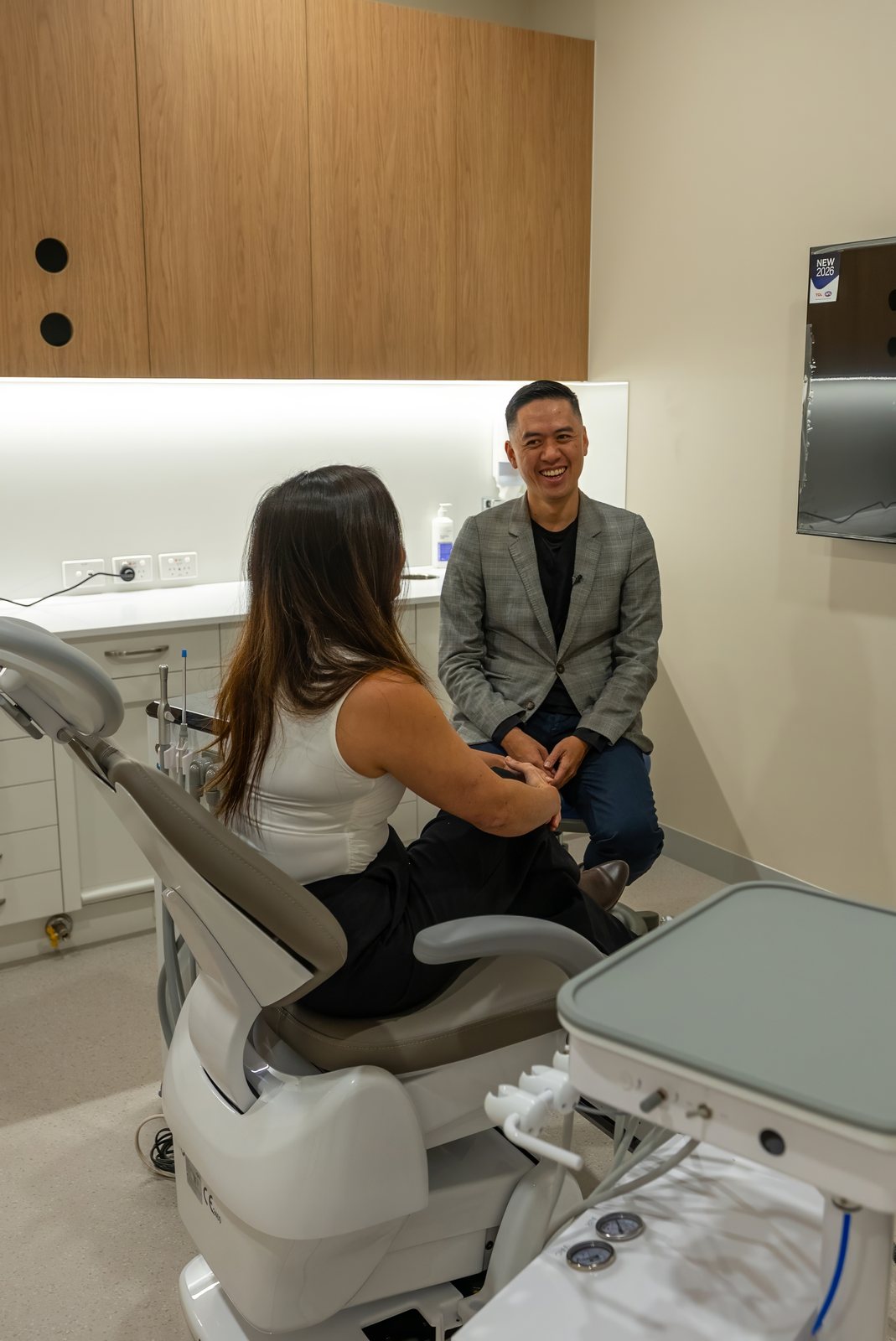

Teeth whitening with receding gums is often possible, but it needs a dentist's check first, because exposed root surfaces do not whiten like enamel and are more prone to sensitivity. If your gums have pulled back and you are wondering whether whitening is safe, the short answer is that it may be, provided the cause of the recession is understood and the plan is adjusted to protect the exposed areas. In my experience, a careful assessment before any whitening saves people from discomfort and disappointment.
Key Takeaways
- Roots are covered by cementum and made of dentine, which is naturally more yellow than enamel and may respond less predictably to whitening.
- Exposed roots usually have a higher chance of sensitivity, so gentler products and a slower approach are often chosen.
- A dentist should examine your teeth and gums first, to find out why the gums have receded and to rule out decay or gum disease.
- Custom made trays can be designed to keep whitening gel away from the gum line.
- Whitening does not change the colour of fillings, crowns or bonding, so uneven shades may become more noticeable.
- Treating the cause of recession, or covering exposed roots with bonding or a gum graft, may be part of the plan.
Why Receding Gums Change the Whitening Picture
Healthy teeth have enamel on the crown and a layer of cementum over the root, with the gums sitting at the neck of the tooth. When the gums recede, part of the root becomes visible. Root surfaces are made of dentine and cementum, which are softer and more yellow than enamel, so they typically look darker near the gum line.
Whitening gels work by releasing oxygen that lightens stains inside the tooth structure. Enamel tends to respond fairly evenly, but dentine and cementum may lighten more slowly or less evenly. That is why some people with recession find the top of the tooth lightens while the area near the gum line stays yellow.
If you would like to understand why gums recede in the first place, our guide to receding gums causes and treatment is a good place to start.
Why Sensitivity Is More Likely With Exposed Roots
Enamel acts as a protective cap over the sensitive inner part of the tooth. Roots do not have that protection, and the surface is covered with tiny channels called dentinal tubules that connect towards the nerve. When whitening gel touches an exposed root, it can reach those channels more easily, which may cause sharp, short twinges to hot, cold or sweet things.
Many people already have some sensitivity at receded areas, even before whitening. In that situation, whitening can make things feel worse for a time. Research has found that sensitivity during whitening is common in the general population, and that it usually settles after treatment ends, although experiences vary. If you want to understand more, read our article on teeth whitening with sensitive teeth, or see how long it typically lasts in sensitive teeth after whitening.
What a Dentist Checks Before Whitening
The cause of the recession
Gum recession has several possible causes, and whitening does not fix any of them. Brushing too hard, gum disease, a thin gum type, teeth positioning and grinding can all play a part. Notches at the gum line from heavy brushing or bite forces are another possibility, and our article on abfraction and toothbrush abrasion explains how they form.
Decay and gum health
Root surfaces are more prone to decay than enamel, and decay can look like staining. Whitening over untreated decay or inflamed gums is not advisable. A check up, an x-ray where appropriate and a professional clean help make sure the foundation is healthy before any lightening begins.
Existing dental work
Whitening agents do not lighten fillings, crowns, veneers or bonding. If you have restorations at the front, the natural teeth may end up lighter than the work, which can look uneven. Our guide to teeth whitening with fillings or bonding looks at how dentists plan for this.
Options a Dentist May Suggest
| Approach | What it involves | Points to consider |
|---|---|---|
| Lower strength gel | Using a gentler concentration over a longer period | Slower change, but often more comfortable |
| Desensitising ingredients | Gels or toothpastes containing ingredients such as potassium nitrate | May reduce twinges, although results vary |
| Custom fitted trays | Trays made from impressions or scans, with a design to keep gel off the gums | Better control than off the shelf trays |
| Shorter wear times | Wearing trays for less time or on alternate days | Gives sensitive areas time to settle |
| Treating the cause | Adjusting brushing technique, managing gum disease, protecting from grinding | Helps stop recession from progressing |
| Bonding or gum graft | Covering exposed roots with tooth coloured material or grafted tissue | May improve appearance and comfort, but needs separate assessment |
The types of whitening gel can also matter. If you are interested in the difference between the common ingredients, our article on carbamide peroxide vs hydrogen peroxide explains how they differ.
Why Custom Trays Matter Around the Gum Line
Off the shelf trays and strips are not shaped to your mouth, and they can press gel onto the gums and exposed roots. This is one of the reasons people with recession can experience a burning or stinging feeling during whitening. A tray made for your own teeth can be trimmed and shaped to sit away from the gum margin, so the gel stays on the tooth surfaces you want to lighten.
Your dentist can also explain how often to wear the tray, how long for, and what to do if you feel a twinge. It is important to follow the specific instructions you are given, and to stop and contact your dentist if discomfort is more than mild or does not settle.
Treating Recession Before or Alongside Whitening
Sometimes the most helpful step is to address the recession itself. If brushing technique is a contributor, a change to a soft brush and a lighter, angled technique may help protect the gums. If gum disease is present, treating it comes first. For deeper or more noticeable recession, a dentist may talk through bonding to cover the exposed roots, or refer for gum surgery.
A gum graft takes tissue from elsewhere in the mouth to cover exposed root surfaces, and it may reduce sensitivity and improve the look of the gum line. It is a specialist procedure with its own recovery and is not suitable for everyone. You can read more in our gum graft surgery guide. Outcomes vary between people, and no dentist can guarantee a particular result.
Common Questions
Can you whiten teeth if your gums are receding?
Yes, in many cases, but a dentist should assess your teeth and gums first. The plan may include gentler gel, custom trays and desensitising products to reduce the chance of discomfort.
Will whitening make my receding gums worse?
Whitening does not cause gum recession, but gel that touches the gums can cause irritation, and exposed roots may become more sensitive. Properly fitted trays and a careful plan can help limit this.
Why do the roots of my teeth stay yellow after whitening?
Roots are made of dentine and cementum, which are naturally yellower than enamel and often lighten less. This is a normal limitation, and it is one reason a dentist may suggest bonding to cover the area if the colour bothers you.
Is whitening toothpaste safe for exposed roots?
Some whitening toothpastes are abrasive, which may wear exposed root surfaces more quickly. A dentist or hygienist can suggest a toothpaste that suits your gums and sensitivity.
Can gums grow back after recession?
Gum tissue does not typically grow back on its own, but treatment can stop recession from getting worse and, in some cases, cover exposed roots. Our article on whether receding gums can grow back goes into this in more detail.
Does whitening work on crowns and fillings?
No, whitening agents do not change the colour of crowns, fillings or bonding. If you have restorations in view, it is best to plan the shade with your dentist before you start.
Book a Whitening Assessment With the Team at Lumi Dental
If you have receding gums and would like to brighten your smile, the team at Lumi Dental in Melrose Park, Sydney, can examine your teeth and gums, explain what is realistic, and discuss options that may suit you. You can learn more about teeth whitening at Lumi Dental, check our current deals, or book a free cosmetic consult, where you can ask questions and receive a written quote before deciding on anything.


