Most adults with mild to moderate crowding can be treated with clear aligners without having teeth removed, because the space is usually made with small amounts of enamel reshaping (IPR), some widening of the arch and gentle tipping of the teeth. A literature review of enamel reduction reports that about 0.5 mm can be taken from each side of a contact between back teeth, and that small amounts across several contacts add up to a few millimetres of room. Extractions come into the conversation when crowding is severe or the lips and profile are already full, and that decision comes from your records, not from the aligner system.
Written by Dr James Tran, BDent (University of Sydney), MICOI, GradDip (Oral Implants), general dentist at Lumi Dental in Melrose Park.
The short version
- Crowded teeth need room to move. There are four ways to make it: IPR, expansion, moving back teeth backwards (distalisation) and extraction.
- For mild to moderate crowding in adults, the first three often provide enough space, so teeth are usually not removed.
- When teeth are removed for orthodontics, it is usually premolars. Wisdom teeth are a separate question, covered in whether you need wisdom teeth out before clear aligners.
- Research shows aligners can close extraction spaces, but keeping roots upright is harder and teeth tend to tip into the gap.
- Expansion has limits set by the gum and bone on the cheek side of the teeth.
- Severe crowding, a full profile or a complex bite is a reason to see a registered specialist orthodontist.
The single rule: extractions follow the records, not the aligner
If your crowding is mild to moderate and your lips are not already pushed forward, start with a plan that makes space without removing teeth. If the crowding is severe, the front teeth already stick out, or the lips are full and strained at rest, extractions are worth discussing, and a specialist opinion is sensible.
That choice depends on measurements: how many millimetres of space are missing, how thick the bone and gum are, how the back teeth meet and how the lips sit over the teeth. A review of premolar extraction planning lists the discrepancy between teeth and bone, the jaw relationship, the facial profile and patient cooperation among the factors that guide the decision. None of those depends on whether the teeth are moved by trays or by brackets.
Four ways to make space
IPR: reshaping the sides of teeth
Interproximal reduction removes a fraction of a millimetre of enamel where teeth touch. The review of enamel reduction techniques states that up to half of the enamel on the contact surface is widely accepted as the safe maximum, and quotes about 0.5 mm per surface on back teeth, with less on lower front teeth, whose enamel is thinner. It also reports an early estimate of about 2.5 mm of space from five front contacts and 6.4 mm from eight back contacts. How it is done, and how it feels, is explained in our guide to clear aligner attachments and IPR.
Expansion: widening the arch
Aligners can widen a narrow arch by moving the back teeth outwards. In adults this is mostly tipping of the crowns rather than widening of bone. It can add useful room and improve the width of the smile, but it is limited by the bone and gum on the outside of the teeth.
Distalisation: moving back teeth backwards
Upper molars can be moved back to make room in front of them, usually one or two teeth at a time. It takes longer, and some plans add small temporary anchorage screws to stop the front teeth being pushed forward while the back teeth move.
Extraction: removing a tooth
Removing a premolar on each side frees up the most space in one step. The trade-off is that the gap has to be closed fully and the neighbouring roots kept upright, which is the hardest part for aligners.
Extractions, IPR and expansion compared
| Method | How it makes space | Typical case | Things to weigh |
|---|---|---|---|
| IPR | Removes a fraction of a millimetre of enamel between teeth | Mild crowding; triangular teeth; uneven tooth widths | Small amounts per contact; enamel thickness varies; may reduce small dark gaps at the gum |
| Expansion | Tips back teeth outwards to widen the arch | Narrow arch; dark corners when smiling; mild to moderate crowding | Limited by gum and bone thickness; less predictable at the gum line than at the cusps |
| Distalisation | Moves upper molars backwards | Mild crowding with space behind the last molars | Slower; front teeth can drift forward unless anchorage is added |
| Premolar extraction | Removes one tooth per side to create a large space | Severe crowding; protruding front teeth; full lips | Root control is harder with aligners; profile changes; often managed with specialist input |
What research says about aligners in extraction cases
Clear aligners can close premolar extraction spaces, but the evidence suggests they are less precise at it than fixed braces. A systematic review and meta-analysis of 20 studies, including 536 aligner patients, found that upper front teeth were retracted on average about 1.9 mm less than planned, and that upper first molars tipped forward into the space by about 6 degrees more than planned. Root divergence and loss of anchorage were common, and aligners scored lower than fixed appliances for root control and how well the teeth met at the end.
The authors concluded that aligners can be used in extraction cases, but with planned overcorrection and extra mechanics. In plain terms, a tray is good at tipping a crown and less good at carrying the whole root along with it. Our comparison of braces vs aligners for adults explains why some movements still favour fixed braces.
Lips, profile and the shape of your smile
Teeth support the lips. When front teeth are pulled back into an extraction space, the lips usually follow part of the way. The premolar extraction review cites studies in which the upper lip moved back by roughly 0.5 to 0.75 mm for every millimetre the upper front teeth were retracted.
For someone whose front teeth and lips are pushed forward, that can be a welcome change. For someone with a straight or flat profile, it may not be. Expansion and IPR do the opposite: front teeth often move slightly forward as crowding resolves. Profile photographs are taken before any plan is finalised, and I usually show patients their side profile alongside the scan, because lip position is easy to overlook in the mirror.
How far can expansion go?
Expansion is one of the main ways aligners make room, and it is also where expectations can outrun biology. A study of 30 adults treated with clear aligners found that planned widening was achieved with about 71% accuracy at the cusp tips of upper teeth but about 60% at the gum line, and molar inclination reached only about 40% of the plan. The authors concluded that aligner expansion comes mainly from tipping crowns rather than moving whole teeth, and that the virtual plan overestimates it.
Tipping teeth outwards in thin bone can leave the roots pressing against a thin outer plate, and the gum over them can recede. Our article on whether clear aligners can cause gum recession covers the warning signs. Where the upper jaw itself is narrow, widening the bone is a different treatment, explained in our guide to adult palatal expansion (MARPE).
Who decides, and when to see a specialist orthodontist
General dentists provide clear aligners for suitable cases, typically mild to moderate crowding with a sound bite. When the case needs premolar extractions, substantial root movement, a skeletal correction or a significant change to the profile, referral to a registered specialist orthodontist is often the better path. In my experience, being clear about that line at the first visit saves people from starting a plan that would have suited braces or specialist care better.

How we approach this at Lumi Dental
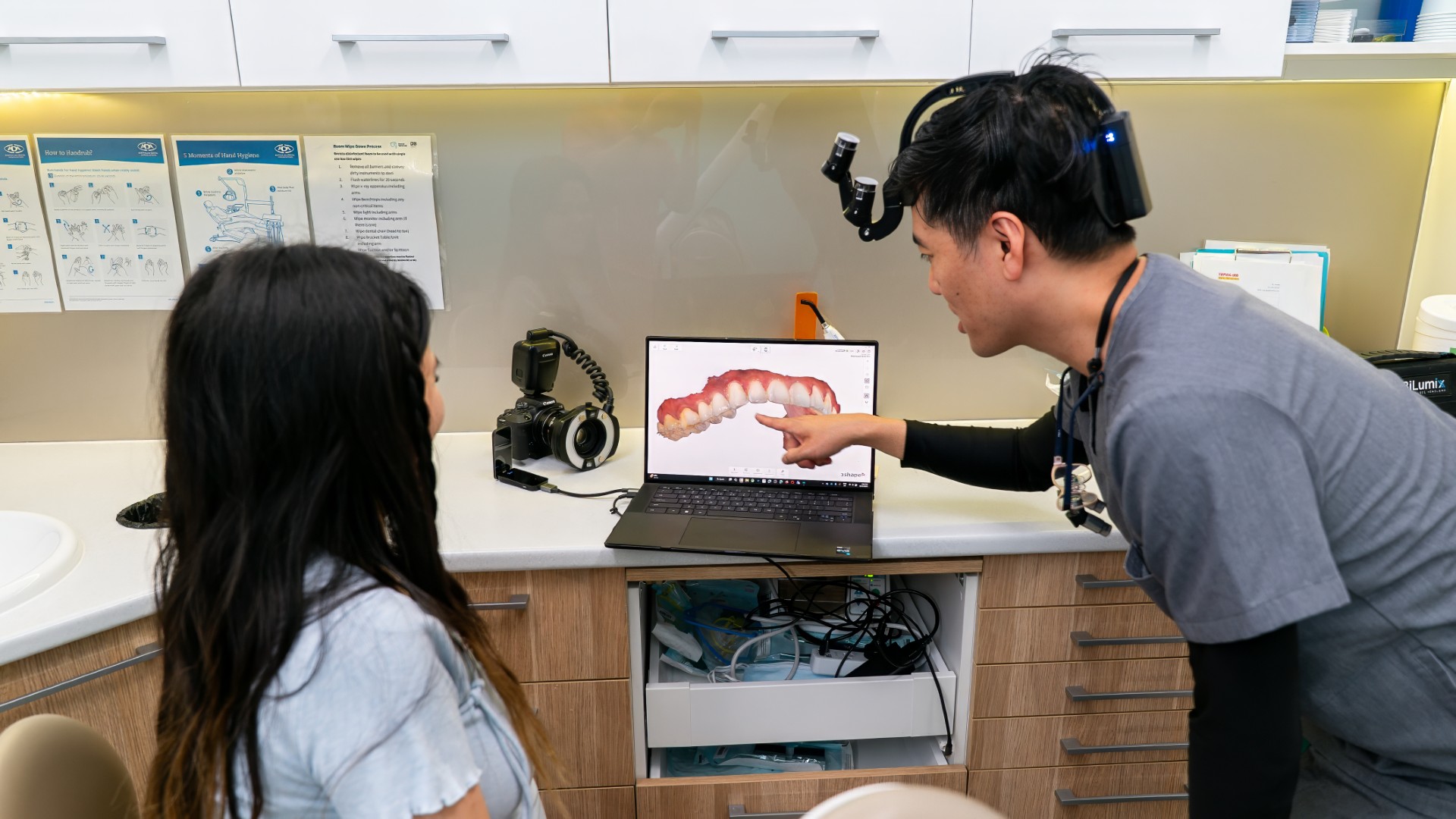
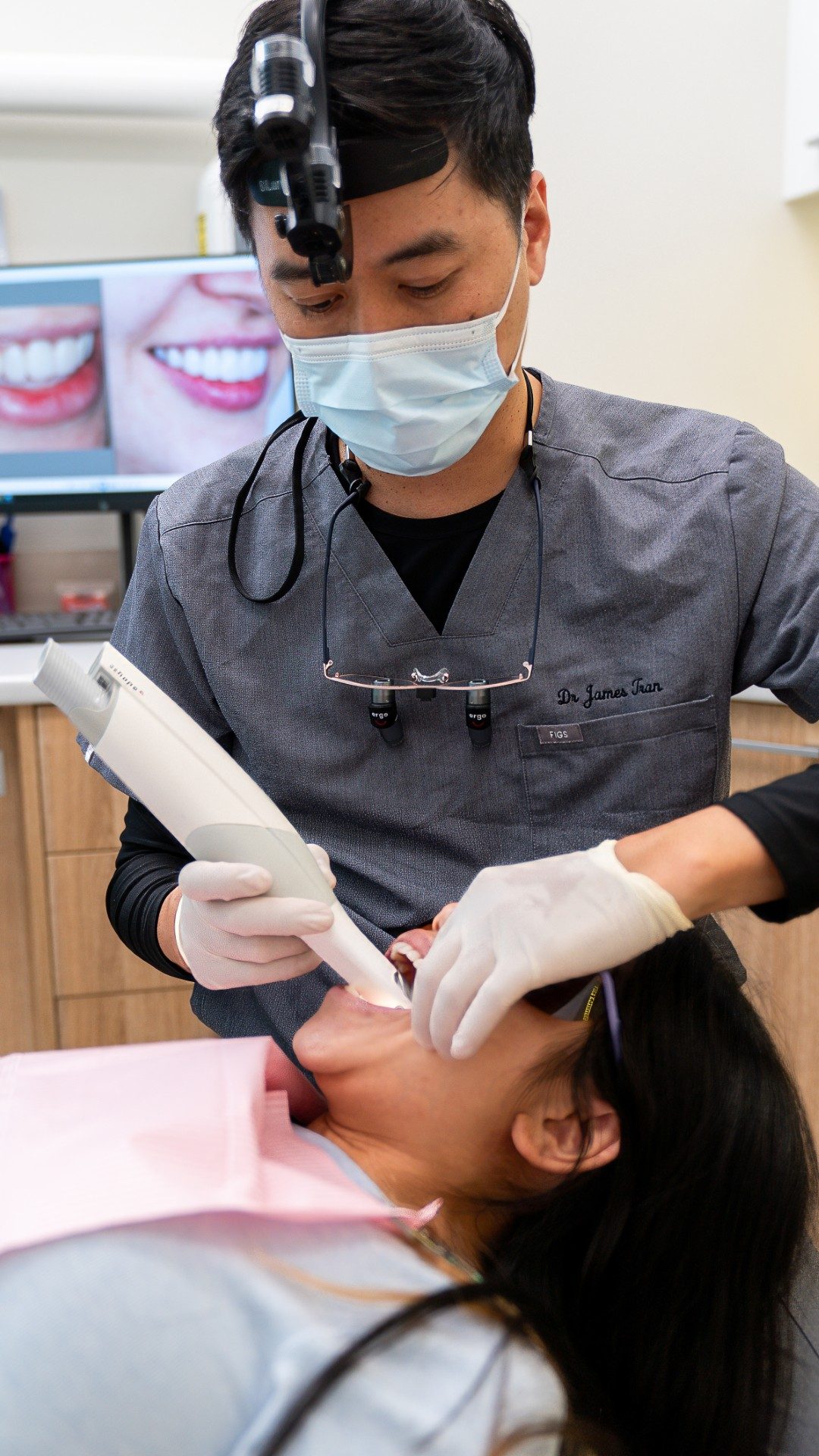
At Lumi Dental in Melrose Park, a dentist plans clear aligners from a 3D intraoral scan, clinical photographs and, where needed, a 3D X-ray, and measures how much space the teeth need before any method is chosen. Gum health is checked before treatment, and the hygiene team of oral health therapists looks after cleans and gum therapy during it. Lumi Dental provides clear aligners, not fixed braces, and does not have specialists on staff, so cases that need extractions or complex movement are referred to a registered specialist orthodontist. Read more about clear aligners at Lumi Dental.
Questions patients ask
Do you have to get teeth pulled for clear aligners?
Usually not for mild to moderate crowding. Space is often made with IPR, expansion or moving back teeth. Extractions are considered when crowding is severe or the front teeth already stick out.
Is IPR bad for your teeth?
Kept within the limits in the plan, IPR removes only a small part of the enamel at the contact, and the surfaces are polished afterwards. Enamel thickness varies, so the amount is planned tooth by tooth.
Can clear aligners close the gap after a tooth is removed?
They can, but research shows teeth tend to tip into the space and roots are harder to keep upright than with braces. Extra attachments, overcorrection or specialist care are often used.
Will removing teeth make my face look sunken?
Lips usually move back part of the distance the front teeth move. For full lips that can be an improvement; for a flat profile it may not be, which is why profile photos are part of planning.
Will my teeth move back if I didn't have extractions?
Teeth can move back after any orthodontic treatment, with or without extractions. Retainers hold the result; see our guide to retainer types and how long to wear them.
Thinking about clear aligners? Free aligner consultation in Melrose Park
If you have been told you may need teeth removed, or want to know how space would be made in your case, the team at Lumi Dental can scan your teeth and talk through the options. Book a free aligner consultation, or read more about clear aligner treatment in Melrose Park. Patients visit from Ryde, Parramatta, Ermington, Rydalmere and nearby suburbs, with on-site parking at Melrose Central.
Sources
- The Open Dentistry Journal (Livas C and colleagues): Enamel reduction techniques in orthodontics, a literature review (PMC)
- Orthodontics and Craniofacial Research (Abu Arqub S and colleagues): Clear aligners in extraction-based orthodontic treatment, a systematic review and meta-analysis (PubMed)
- Materials: The predictability of transverse changes in patients treated with clear aligners (PMC)
- Dental Press Journal of Orthodontics: Tooth extractions in orthodontics, first or second premolars? (PMC)
About the author
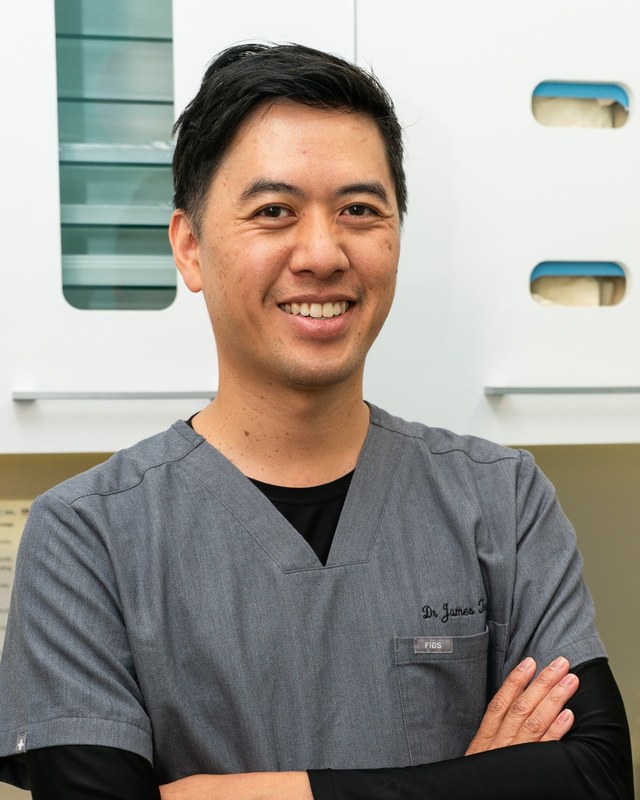
Dr James Tran is a general dentist at Lumi Dental in Melrose Park. He holds a BDent from the University of Sydney and a Graduate Diploma in Oral Implants, and is a Member of the International Congress of Oral Implantologists (MICOI).
This article is general information only and is not a substitute for an examination and individual advice from a registered dental practitioner. Suitability for any treatment varies from person to person.