

Most people do not need their wisdom teeth out before clear aligners: a wisdom tooth is removed first only when it is a problem in its own right, such as being impacted against the second molar, decayed, repeatedly infected or about to erupt into the path of the teeth being moved, not simply because aligner treatment is planned. The idea that wisdom teeth push the front teeth into crowding is not supported: the Australian Dental Association's consumer site states there is currently no evidence for it, and a Cochrane review found removing symptom-free impacted wisdom teeth may not significantly affect crowding. Here is how the decision is made.
Written by Dr James Tran, BDent (University of Sydney), MICOI, GradDip (Oral Implants), general dentist at Lumi Dental in Melrose Park.
The short version
- Judge the wisdom tooth on its own merits. Impacted, decayed, infected or pressing on the second molar means remove it, usually before the aligner scan; quiet and healthy means leave it and monitor.
- Research has not shown that wisdom teeth cause front-tooth crowding in a way removal prevents; our post on the wisdom teeth crowding myth walks through the studies.
- A wisdom tooth that erupts partway through treatment can sit under the tray edge, trap plaque and change how the last trays fit.
- If removal is needed, I usually allow about four to eight weeks of healing before the aligner scan; removal during treatment is also possible, sometimes with a new scan.
- Teenagers often have wisdom teeth still forming. These are watched on an OPG, not removed in advance.
- Retainers are needed after aligners whether or not the wisdom teeth are there.
The single rule: remove a wisdom tooth before aligners only when it is a problem in its own right
In my experience the decision starts with the wisdom tooth itself, not the aligners. teeth.org.au, the Australian Dental Association's consumer site, lists the reasons a wisdom tooth is removed: it is impacted, it has or is at risk of decay or gum disease, the gum around it has been infected more than once, or it is affected by a cyst. None of those reasons is "aligners are planned". If one applies, the tooth comes out and the aligner plan is built around a healed socket; if none applies, the tooth stays and the plan is built around it. Our guide to wisdom teeth removal covers the procedure when it is needed.
The crowding myth, and what the research reports
Wisdom teeth were long blamed for the lower front-tooth crowding that appears in the late teens and twenties. A Cochrane review of removing versus keeping symptom-free, disease-free impacted wisdom teeth found one randomised trial of adolescents who had finished braces, and after five years there was no evidence that removal had a clinically significant effect on the dimensions of the dental arch. The reviewers rated the evidence low to very low certainty and advised that teeth left in place be checked at regular intervals.
A systematic review of twelve clinical studies found most did not link wisdom teeth to worse front-tooth crowding, four did, and concluded that removal to prevent crowding or relapse is not justified. A later meta-analysis of thirteen observational studies, most at moderate or high risk of bias, reported slightly less crowding and longer arch length in people without lower wisdom teeth, and called for better research. The fair summary is that front teeth drift with age in everyone, wisdom teeth are at most a minor contributor, and the retainer is what holds the result.
How aligners move teeth, and where a wisdom tooth gets in the way
A clear aligner is a thin plastic shell covering the teeth from one last molar to the other. Small tooth-coloured attachments bonded to some teeth give the tray something to push against, and interproximal reduction, a sliver of enamel polished from between teeth, makes space; our guide to aligner attachments and IPR explains both. Three things can go wrong. A tooth partly through the gum sits at the trimline, the tray edge, where it traps plaque and inflames the gum, which teeth.org.au calls pericoronitis. A wisdom tooth that erupts during treatment changes the arch behind the last tooth the trays were designed to hold, so later trays can rock or fail to seat. An impacted tooth angled into the second molar can hold that molar still or damage its root, and Orthodontics Australia notes that aligners are rarely used to move impacted teeth. None of these is a reason to remove a wisdom tooth that is fully through, upright and cleanable.
Situations and the usual advice
| Situation | Usual advice | Why |
|---|---|---|
| Fully erupted, healthy, cleanable | Keep; trays cover or stop short of them | No evidence they undo aligner results; removal has its own risks |
| Impacted against the second molar, or decay on either tooth | Remove first, heal, then scan | The problem exists regardless of aligners and worsens under a tray |
| Partly erupted with repeated gum infection | Remove first | A tray edge over inflamed gum is painful and hard to keep clean |
| Still forming (early to mid teens) | Leave and monitor on an OPG | Position often changes as roots form |
| Erupts partway through treatment | Review the fit; trim, refit, or remove and rescan | The arch behind the planned last tooth has changed |
| Never developed | Nothing to decide | Some people never develop them |
Timing: before the scan, during treatment, or after
Before the scan
When a wisdom tooth does need to come out, I prefer to remove it before the aligner scan. The 3D intraoral scan records the gum as well as the teeth, and a socket that is still filling in changes shape for weeks. In my experience about four to eight weeks of healing lets the gum behind the second molar settle so the scan, and every tray made from it, is accurate.
During treatment
Sometimes a wisdom tooth erupts or becomes sore halfway through. Removal during treatment is possible and often the right call. Trays can usually be trimmed to clear the socket, and if the fit of the back teeth has changed, a new scan and refinement trays put the plan back on track. What I ask patients not to do is stop wearing their trays while they wait, because the front teeth drift within days.
After treatment, and the teenage years
teeth.org.au notes that wisdom teeth generally appear between 18 and 25 and that teeth causing or likely to cause problems are easier to remove by around 25. Teenagers' wisdom teeth are often still forming; they are watched on an OPG at reviews rather than removed ahead of time, because their position changes as the roots develop, and if one later needs removal the retainer holds the result meanwhile.
Relapse, retainers and wisdom teeth
The studies above suggest wisdom teeth are not the main cause of relapse; the natural tendency of the lower front teeth to crowd with age is, with or without wisdom teeth. The answer is the same for everyone who finishes aligners: a retainer worn as instructed. Our guide to retainer types and how long to wear them sets out the options; a wisdom tooth removed after treatment does not change the retainer.
What the OPG and 3D X-ray show
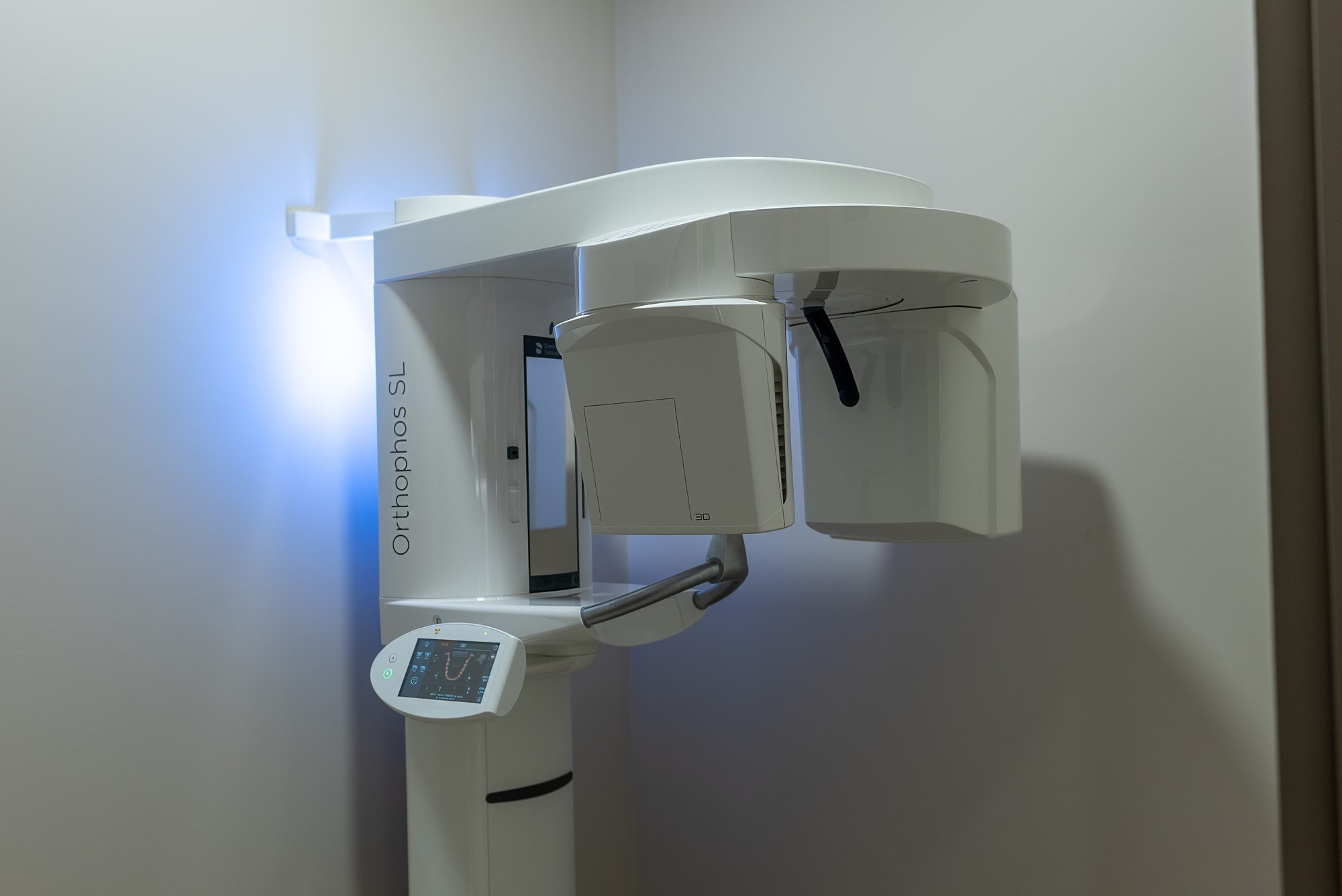
Every aligner plan at the practice starts with an OPG, the panoramic X-ray that shows all four wisdom teeth, how far their roots have formed and the angle they sit at; teeth.org.au describes it as how a dentist sees tooth position, root shape and closeness to nerves. Where a lower wisdom tooth looks close to the nerve canal or is tucked against the second molar, a 3D X-ray (CBCT) is taken in house. Our explainer on dental X-ray types covers what each one shows.
How we approach this at Lumi Dental
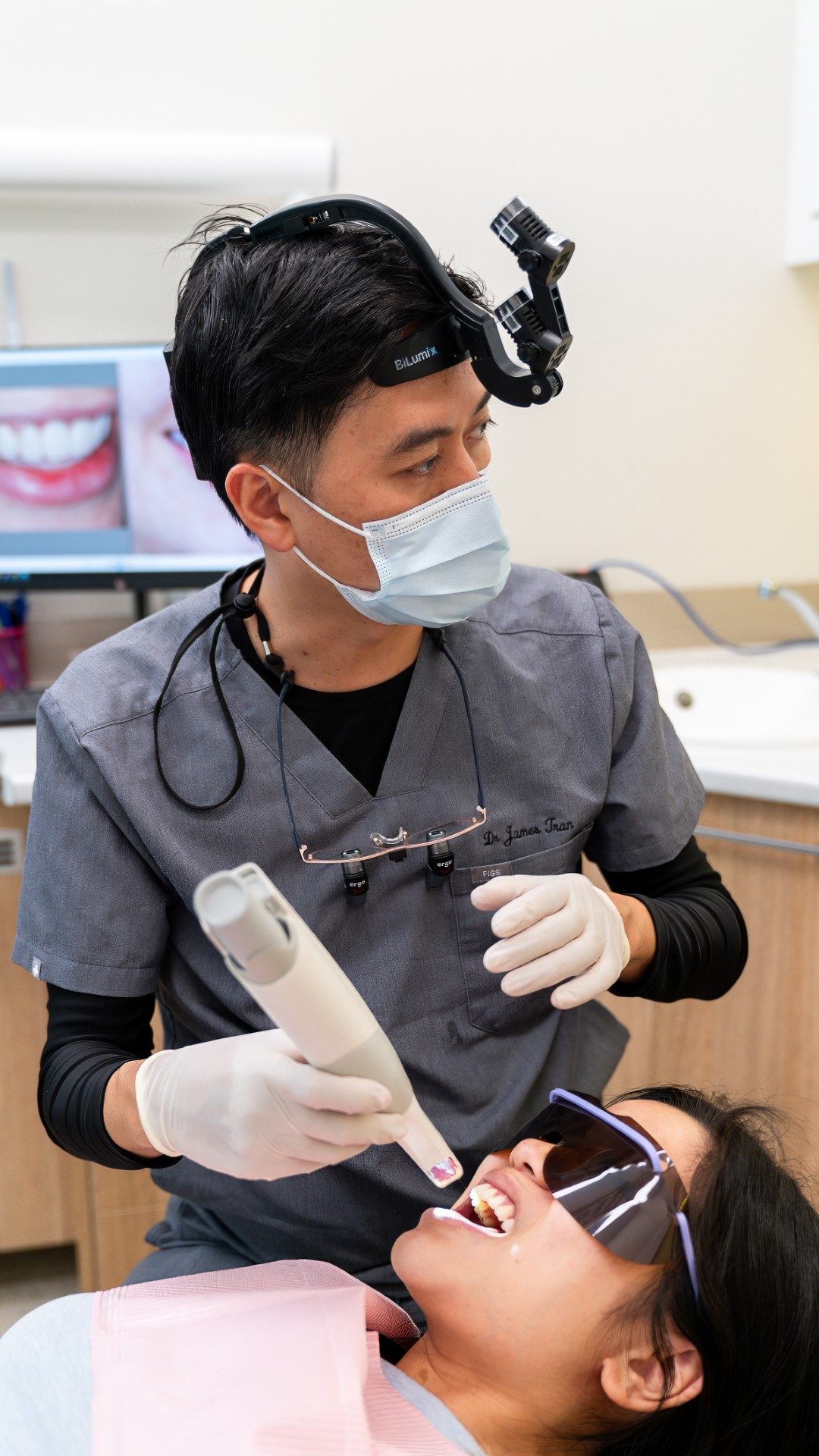
Clear aligner treatment at Lumi Dental in Melrose Park is planned by a dentist from a 3D intraoral scan, with an OPG and, where needed, 3D X-ray taken in house. Routine wisdom teeth removal is done at the practice under local anaesthetic; Lumi Dental does not provide general anaesthetic itself and refers where it is needed, though IV sedation is available at the practice for adults. Difficult impactions are referred to registered specialists. Read more about clear aligners at Lumi Dental.
Questions patients ask
Do wisdom teeth have to come out before Invisalign or other clear aligners?
No, not as a rule. A wisdom tooth is removed first only if it is impacted, decayed, repeatedly infected or about to erupt into the teeth being moved. Healthy, fully erupted wisdom teeth are left alone and the trays are designed around them.
Will wisdom teeth push the teeth crooked again after aligners?
The evidence says no. teeth.org.au states there is currently no evidence that wisdom teeth make other teeth crooked, and the Cochrane review found removal may not significantly affect crowding.
How long after wisdom teeth removal can aligners start?
Usually about four to eight weeks, once the gum behind the second molar has settled enough for an accurate scan. The exact gap is set at the review after surgery.
Can a wisdom tooth be removed while wearing aligners?
Yes. The trays are trimmed to clear the socket for a short time, and if the fit at the back changes, a new scan and refinement trays follow. Keep wearing the current tray unless told otherwise, because teeth drift within days.
Should a teenager's wisdom teeth be removed before starting aligners?
Not if they are still forming and causing no trouble. They are monitored on an OPG at reviews rather than removed in advance. Our guide to clear aligners for teenagers covers what else parents should know.
Wondering about wisdom teeth before aligners? Complimentary aligner consult in Melrose Park
If you are in Melrose Park, Ryde, Parramatta, Ermington, Rydalmere or nearby and want your wisdom teeth assessed before you commit to aligners, book a complimentary aligner consultation or read more about clear aligners at Lumi Dental.
Sources
- Cochrane: Surgical removal versus retention for the management of asymptomatic disease-free impacted wisdom teeth
- Australian Dental Association, teeth.org.au: Wisdom teeth
- PubMed Central: The role of mandibular third molars on lower anterior teeth crowding and relapse after orthodontic treatment, a systematic review
- PubMed Central: Effect of mandibular third molars on crowding of mandibular teeth in patients with or without previous orthodontic treatment, a systematic review and meta-analysis
About the author

Dr James Tran is a general dentist at Lumi Dental in Melrose Park. He holds a BDent from the University of Sydney and a Graduate Diploma in Oral Implants, and is a Member of the International Congress of Oral Implantologists (MICOI).
This article is general information only and is not a substitute for an examination and individual advice from a registered dental practitioner. Suitability for any treatment varies from person to person.








