


Yes, teeth whitening gel expires: the peroxide in it breaks down slowly from the day it is made, faster in heat and light, so a syringe past its printed date is usually weaker rather than dangerous. Most take-home whitening gels carry an expiry date of around one to two years from manufacture, and that date assumes the gel has been kept cool, dark and capped. This guide explains why whitening gel loses strength, how to tell it has gone off, where to store it, and what the Australian rules on peroxide strength mean for the gel in your drawer.
Written by Dr James Tran, BDent (University of Sydney), MICOI, GradDip (Oral Implants), general dentist at Lumi Dental in Melrose Park.
The short version
- Whitening gel is hydrogen peroxide or carbamide peroxide in a thick carrier. Both decompose over time, releasing oxygen and losing bleaching power.
- Heat and light are the main causes of degradation during storage, so the printed date assumes cool, dark storage.
- Manufacturers differ on the fridge. One widely used gel is labelled for 15 °C to 25 °C with no refrigeration; some systems are kept cold. Follow your label.
- Watch for runny gel, a yellow tinge, a bulging syringe, more stinging than usual, or no shade change after a full course. Our guide to whitening gel strengths explains the percentage on the syringe.
- Trays do not expire, but hot water and heat can warp them.
- In Australia, gel above 6% hydrogen peroxide or 18% carbamide peroxide is restricted to registered dental practitioners, so dentist-supplied gel has a known strength and date.
Why whitening gel loses strength
What is in the syringe
healthdirect lists the two active ingredients in whitening products as hydrogen peroxide and carbamide peroxide, usually supplied as a gel. Hydrogen peroxide is the bleaching agent itself. It breaks down into water and oxygen, and that oxygen-releasing reaction is what breaks up stain molecules inside enamel and dentine. Carbamide peroxide is hydrogen peroxide bound to urea; in the mouth it releases hydrogen peroxide more slowly, roughly a third of its weight, which is the figure usually quoted. Our comparison of carbamide peroxide and hydrogen peroxide has more. The same reaction runs, very slowly, inside the sealed syringe, and nothing converts back, so an old gel has simply had more of that reaction happen before it reached your teeth.
What heat and light do
A laboratory study of carbamide peroxide stability described the compound as chemically unstable and highly sensitive to light and heat, the main reasons products lose potency in storage. In that study, carbamide peroxide dissolved in water had lost almost all of its strength after six hours at 80 °C, and loss rose with every increase in temperature and exposure time. A pharmacy stability study on a compounded carbamide peroxide gel found the same pattern at everyday temperatures: the gel held its strength for at least 45 days in a fridge at about 8 °C but only about 30 days at 32 °C. In my experience, the syringe that "did nothing" on a top-up course has usually lived somewhere warm.
The single rule: if the date has passed or the gel looks different, replace it
If the printed date has passed, or the gel is thinner, runnier or a different colour from the day you collected it, do not use it. Do not make up for lost strength by squeezing in more gel or wearing the trays longer: more gel means more overflow onto the gums, and longer wear of a degraded gel adds sensitivity without adding shade. Replace the syringe and keep the same routine.
How to tell whitening gel has gone off
- Runny or watery. Fresh gel holds its shape in the tray. As peroxide breaks down the carrier can thin and separate, and thin gel runs over the tray edge onto the gums.
- Discoloured or cloudy. Most gels are clear or faintly tinted. A yellow or brown tinge, or new cloudiness, means the formulation has changed.
- A bulging or weeping syringe. Decomposing peroxide releases oxygen, so a syringe whose plunger has crept back, feels tight, or leaks around the cap has been reacting inside.
- More stinging than before. Gel whose chemistry has drifted may irritate gums it previously did not. healthdirect advises seeing your dental professional if irritation or sensitivity lasts more than a day or two.
- No change after a full course. If a routine that worked the first time does nothing on a repeat, the gel is the first suspect.
Where to keep whitening gel: a storage table
Manufacturers differ, so the label wins. The instructions for one widely used take-home gel say to store trays and gel in a dark, dry place between 15 °C and 25 °C, warn that higher temperatures shorten shelf life, say not to refrigerate or freeze the gel, and ask you to use a syringe within 30 days of opening. Some other systems are shipped and stored cold. If your label is silent, cool, dark, dry and capped is the safe default.
| Place | Temperature and light | Verdict |
|---|---|---|
| Bedroom drawer or linen cupboard | Stable room temperature, dark | Good default for most gels |
| Fridge, in a sealed bag | Cold, dark | Only if the label says so; never freeze; warm the syringe in your hand before use |
| Bathroom cabinet | Warm and humid after every shower | Avoid; heat cycles and moisture shorten shelf life |
| Car glovebox or centre console | Very hot on sunny days, cold at night | Never; treat gel left in a hot car as spoiled |
| Handbag, gym bag or a desk by a window | Variable heat, direct light | Avoid; light speeds decomposition |
Leftover gel and touch-ups
Months after a course, with syringes still in the box, check the date and the appearance first. If both pass, a touch-up with leftover gel is reasonable, usually a few nights rather than a full course, and expect a little less than the original course if the gel has lost some strength. Our article on whitening maintenance and how long results last explains when a top-up makes sense. Do not mix old and new syringes in one tray, do not share syringes, and cap each syringe straight after use. Replacement syringes are supplied after a review; current offers are on the current deals page and a written quote follows an examination.
Trays do not expire, but they can warp
Custom trays are a thin thermoplastic formed over a model of your teeth, and heat is their enemy too. The same manufacturer instructions say to rinse trays in cold water, never hot water or a dishwasher, because heat can deform them, and to let them air dry in their case. A warped tray lets gel escape onto the gums and leaves parts of the teeth uncovered, so the result looks patchy. Our article on custom whitening trays explains how they are made.
Why where the gel came from matters in Australia
Peroxide strength is regulated. healthdirect states that only registered dental professionals can use whitening products containing more than 6% hydrogen peroxide, and the ACCC has told suppliers that do-it-yourself kits with more than 6% hydrogen peroxide or more than 18% carbamide peroxide are unsafe and should not be sold to consumers, after reports of chemical burns to gums and the mouth. For storage this matters because a dentist-supplied syringe tells you its strength and its expiry, so you can judge it. An unlabelled online kit tells you neither.
How we approach this at Lumi Dental
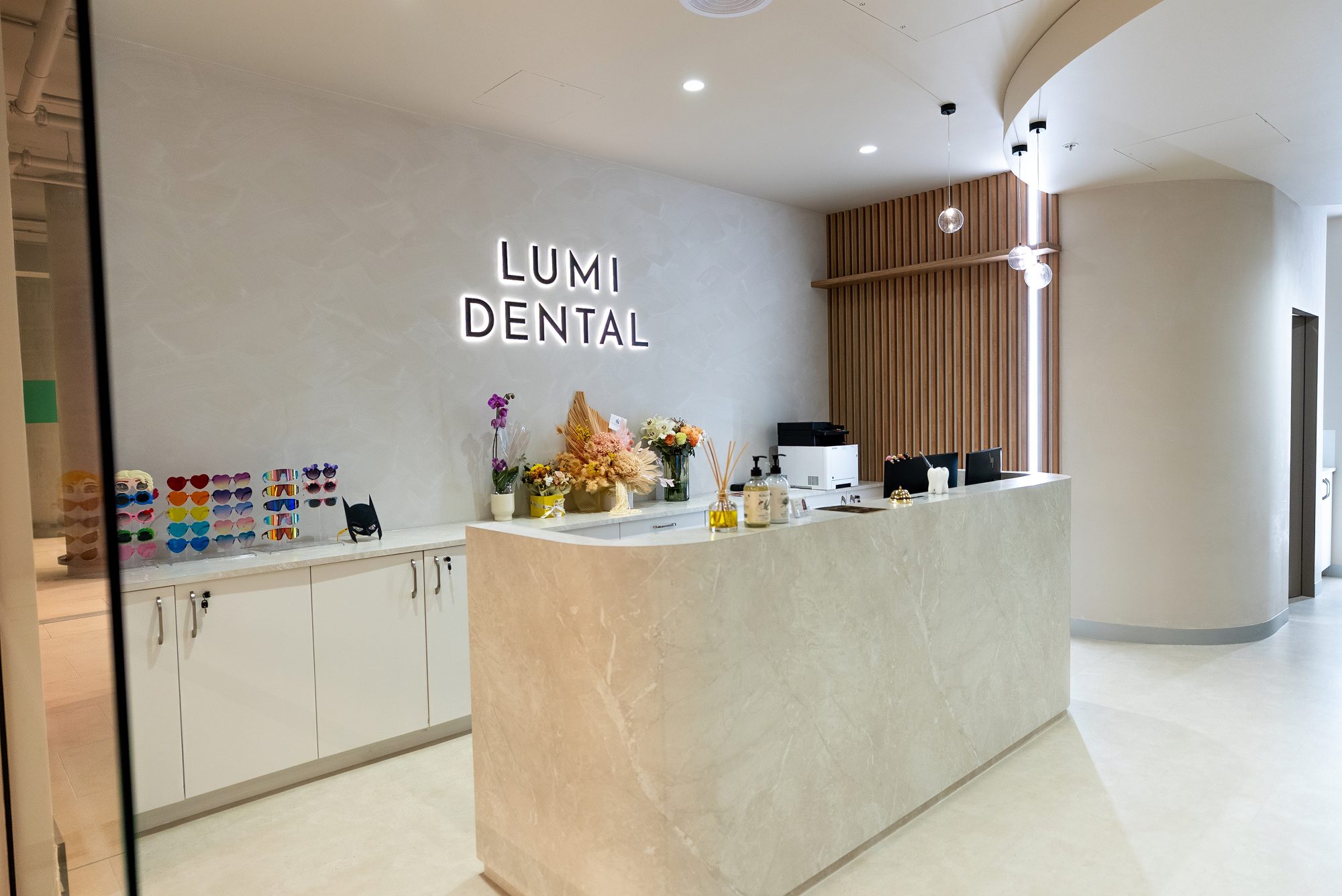
At Lumi Dental in Melrose Park, take-home whitening starts with an examination by a dentist, and the trays are made from an in-house 3D intraoral scan. The whitening options are named Home, Refresh and Radiance, and the teeth whitening page describes how a consult works. When gel is dispensed, the team goes through how much to use, how long to wear the trays and where to keep the syringes; the hygiene team of oral health therapists looks after cleans and whitening maintenance. If a syringe at home looks different from the day you collected it, bring it to the review; I usually prefer to look at the gel and the trays together.
Questions patients ask
Does teeth whitening gel expire?
Yes. Most carry a printed date of around one to two years from manufacture, assuming cool, dark, capped storage. The gel does not become harmful at the date; it becomes weaker, because peroxide keeps breaking down into water and oxygen inside the syringe.
Can I use expired teeth whitening gel?
It is not worth it. An out-of-date gel usually whitens less, and gel that has changed in texture or colour can irritate the gums more than fresh gel would. Replace the syringe rather than doubling the dose or wear time. Our guide to how often you can whiten your teeth safely covers the spacing of courses.
Should whitening gel be kept in the fridge?
Only if the label says so. One major manufacturer says to store its gel between 15 °C and 25 °C and not to refrigerate or freeze it; other systems are kept cold from manufacture. Either way, never freeze gel and never leave it in a car.
How long does whitening gel last once opened?
Shorter than the printed date. The manufacturer instructions above ask for an opened syringe to be used within 30 days, because air reaches the gel each time the cap comes off. Cap it after each use, store it cool and dark, and finish a course in one run rather than over months.
Are chemist and online whitening kits safe to store and use?
Kits sold to the public in Australia are limited to 6% hydrogen peroxide or 18% carbamide peroxide, and the ACCC advises against any kit that does not state its concentration. A kit that sat in a warm warehouse may already be weak on arrival. Our article on whether at-home whitening kits are safe covers the safety side.
Not sure if your whitening gel is still good? Complimentary cosmetic consult in Melrose Park
If you have a syringe you are unsure about, or a course that did less than you hoped, the team at Lumi Dental in Melrose Park can check the gel, the trays and the teeth together. Book a complimentary cosmetic consult or read about teeth whitening at Lumi Dental. Patients visit from Ryde, Parramatta, Ermington, Rydalmere and nearby suburbs.
Sources
- healthdirect: Teeth whitening
- ACCC Product Safety: ACCC takes action on unsafe teeth-whiteners (peroxide limits for do-it-yourself kits)
- PMC: Stability and influence of storage conditions on nanofibrous film containing tooth whitening agent (carbamide peroxide stability under heat and light)
- Philips Sonicare support: How do I store the whitening trays and gels?
About the author

Dr James Tran is a general dentist at Lumi Dental in Melrose Park. He holds a BDent from the University of Sydney and a Graduate Diploma in Oral Implants, and is a Member of the International Congress of Oral Implantologists (MICOI).
This article is general information only and is not a substitute for an examination and individual advice from a registered dental practitioner. Suitability for any treatment varies from person to person.








