


Whitening mouthwash can lift a little surface stain and help you hold a shade you have already reached, but it will not change the colour of your teeth the way a dentist-made tray or an in-chair session does. The hydrogen peroxide in a whitening mouthwash is low dose, with published studies describing rinses at 1 to 2 percent, and it touches the enamel only briefly, while a take-home tray holds a stronger gel against the teeth for hours. In a laboratory study that stained enamel with tea and treated it for 56 days, three peroxide mouthwashes all lightened the samples over time, and every one finished well behind a 10 percent carbamide peroxide tray gel. This guide covers what is in a whitening rinse, what the evidence shows, and the one job it does well.
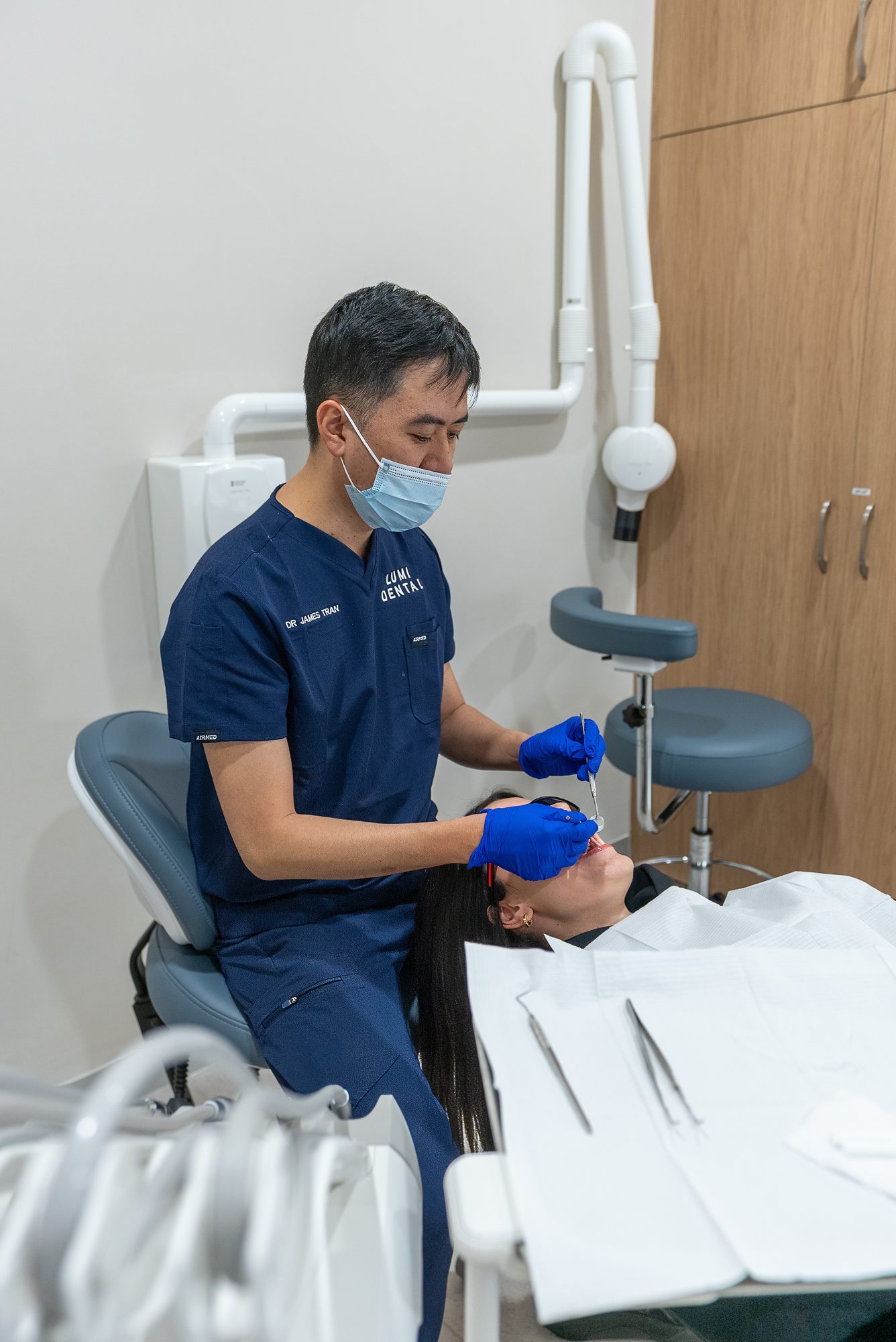
Written by Dr James Tran, BDent (University of Sydney), MICOI, GradDip (Oral Implants), general dentist at Lumi Dental in Melrose Park.
The short version
- Most whitening rinses rely on low-dose hydrogen peroxide; others use a blue pigment that masks yellow for a while, or pyrophosphate that slows new stain.
- Laboratory studies report a modest lightening from peroxide rinses that builds over weeks and stays well short of a tray gel.
- A rinse works on the outside of the tooth and does nothing for colour that comes from inside; see intrinsic versus extrinsic staining.
- In Australia, products over 6 percent hydrogen peroxide (or over 18 percent carbamide peroxide) are for registered dental practitioners only, so supermarket rinses sit far below that line.
- A rinse earns its place after whitening: research has reported that peroxide and pyrophosphate rinses helped bleached enamel hold its whiteness through a staining cycle.
- The rule: a rinse maintains, a tray changes.
The rule: a rinse maintains, a tray changes
Patients I see often ask whether a whitening mouthwash is worth trying before committing to proper whitening. My usual answer is that it belongs at the other end of the process. Peroxide whitening depends on how much peroxide reaches the enamel and how long it stays there, and a rinse loses on both: its peroxide is a fraction of what a tray gel releases, and it is swished and spat while saliva dilutes it, whereas a custom tray seals gel against the enamel for hours. What a rinse can do is slow the return of coffee, tea and red wine stain on enamel that has already been whitened. Our guide to stain removal versus teeth whitening draws the line between lifting stain off the surface and changing the shade of the tooth, and a rinse sits firmly on the stain side.
What is in a whitening mouthwash
Hydrogen peroxide
The same active ingredient as dentist-supplied gel, at a far lower dose. Studies of whitening rinses describe products containing 1, 1.5 and 2 percent hydrogen peroxide. The 10 to 20 percent carbamide peroxide used in dentist-supervised trays converts in the mouth to roughly 3.5 to 6.4 percent hydrogen peroxide, and in-chair gels are stronger again. The Dental Board of Australia confirms that only registered dental practitioners can use or supply products over 6 percent hydrogen peroxide or 18 percent carbamide peroxide.
Blue covarine and other optical pigments
Some rinses deposit a thin blue film on the tooth. Blue cancels yellow, so the teeth look whiter straight away, with no change to the enamel, until the film wears off. In a laboratory comparison of six whitening mouthwashes, the blue covarine products produced the more noticeable whiteness changes. It is the same idea as purple colour-corrector toothpaste.
Pyrophosphate and stain-control agents
These do not bleach anything. They interfere with the way stain and tartar bind to enamel, so new stain is slower to build, which is what matters for holding a result.

What the laboratory studies found
Almost all the evidence comes from extracted teeth stained in a laboratory, not from people, so treat the figures as a guide to direction rather than a promise.
- One study stained bovine enamel in tea, then treated it with one of three peroxide mouthwashes or with 10 percent carbamide peroxide gel, measuring colour at 7, 28 and 56 days. All three rinses lightened the samples and kept doing so over time, but the change was significantly lower than with the gel, and after 56 days the three brands did not differ from each other.
- Another applied a 1.5 percent hydrogen peroxide rinse to darkened human enamel for 4 minutes a day for 28 days against 10 percent carbamide peroxide gel for 2 hours a day. The rinse lightened the enamel, but less than the gel.
- A third used rinses after a 38 percent hydrogen peroxide in-chair gel or a 10 percent carbamide peroxide tray gel. They added some whitening, but the researchers also recorded increased surface roughness after most treatments and a drop in enamel microhardness in all but one group.
The direction is real, the size is small, and the comparison with a tray is not close.
Mouthwash, toothpaste, strips, trays and in-chair compared
| Option | How it works | Likely change | Main risks |
|---|---|---|---|
| Whitening mouthwash | Low-dose peroxide, blue pigment or stain-control agents; brief contact | Slight; mainly holds a result or lifts fresh surface stain | Alcohol in some rinses dries the mouth; no effect on internal colour |
| Whitening toothpaste | Mild abrasives and stain-control agents, sometimes peroxide or PAP | Surface stain only; the ADA notes it does not tend to make a large difference to colour | Sensitivity; enamel wear with hard brushing |
| Consumer whitening strips | Peroxide film at consumer strength, worn for set periods | Modest change on the teeth the strip covers | Gum irritation where the strip overlaps gum; uneven coverage |
| Dentist-made take-home trays | Custom tray holds gel at a strength chosen for you for hours at a time | A visible shade change across the arch over several weeks | Temporary sensitivity; gum irritation if gel overflows |
| In-chair whitening | Strong hydrogen peroxide gel applied by a dental practitioner, often with a light | Whiter teeth after one appointment | Sensitivity on the day; gums must be protected |
What a rinse is good for: holding a result
A laboratory study bleached extracted teeth with take-home gels, then put them through a four-week cycle of staining and whitening mouthwash. All the samples lost some whiteness, but the rinses containing hydrogen peroxide or pyrophosphate held it better than plain water, with the pyrophosphate rinse recording the smallest colour drift; the authors suggested it may be the safer choice for maintenance given the drawbacks of peroxide. That sits alongside healthdirect's everyday advice to rinse with water after food or drink that stains, and it is why I suggest a whitening rinse mainly to people who have finished a course and want to keep it.
Risks and what to check on the label
- Alcohol. The NHS advises people with a dry mouth to use an alcohol-free mouthwash because a dry mouth raises the risk of decay. Our comparison of alcohol-free and alcohol mouthwash goes into the trade-offs.
- Peroxide on soft tissue. healthdirect notes that whitening products can irritate the lips, gums and tongue and leave teeth sensitive to cold, and advises a dental check if that lasts more than a day or two. Rinses are far gentler than gels, but stinging gums are still a reason to stop.
- Enamel surface. The combined-treatment study recorded roughness and hardness changes, so use a rinse as directed, not as a soak.
- Internal colour and dental work. healthdirect is clear that if the yellowing is deep inside the tooth, gel on the outside will not whiten it, and that whitening does not change crowns, veneers or fillings. A rinse will not either.
How we approach this at Lumi Dental
At Lumi Dental in Melrose Park, the first step for anyone unhappy with the colour of their teeth is an examination by a dentist, because the answer depends on whether the colour is surface stain, yellowed enamel, an internal discolouration or an old filling, and a rinse only helps with the first. The hygiene team of oral health therapists removes stain and tartar at a scale and clean, which can brighten teeth more than months of rinsing. If a real shade change is wanted, the whitening options are named Home, Refresh and Radiance, and your cosmetic dentist at Lumi Dental recommends one after the examination. The oral health therapists then look after whitening maintenance, which is where a well-chosen rinse fits in.
Questions patients ask
Does whitening mouthwash actually whiten your teeth?
A little, and slowly. Laboratory studies report that peroxide rinses lighten stained enamel over weeks, but much less than a dentist-supplied tray gel, and blue-pigment rinses only mask yellow for a short time. Neither produces the shade change people usually mean by whitening.
How long does it take for whitening mouthwash to work?
In the laboratory, measurable change built over several weeks of daily use and was still increasing at eight weeks; in the mouth, with saliva and food in the way, expect less. If nothing has changed after a couple of months, the colour is probably not surface stain, and more rinsing will not fix it.
Is whitening mouthwash bad for your teeth?
Used as directed, a low-dose peroxide rinse is generally well tolerated. Laboratory work has recorded roughness and hardness changes in enamel exposed to whitening rinses, so do not swish for longer than the label says, and stop and see a dentist if your gums sting or your teeth become sensitive.
Which is better, whitening mouthwash or whitening toothpaste?
Neither changes the shade of the tooth much; both work on surface stain. Toothpaste has the edge for stain removal because the brush adds mechanical cleaning and it carries fluoride, while a rinse suits maintenance after whitening. Our article on whether whitening toothpaste works covers the toothpaste side.
Should I use whitening mouthwash after professional teeth whitening?
This is where a whitening rinse earns its keep: research on bleached enamel has reported that peroxide and pyrophosphate rinses helped hold whiteness through repeated staining. Ask your dentist which type to use and when to start, because peroxide can add to sensitivity in the first days after a course. Our guide to whitening maintenance and how long results last covers the rest of the routine.
Rinses not shifting the colour? Complimentary cosmetic consult in Melrose Park
If months of whitening mouthwash have changed nothing, the team at Lumi Dental in Melrose Park can work out whether the colour is stain, enamel, a filling or something inside the tooth, and explain what each option would do. Book a complimentary cosmetic consult, or read about teeth whitening at Lumi Dental. Patients visit from Ryde, Parramatta, Ermington, Rydalmere and nearby suburbs.
Sources
- Dental Board of Australia: Teeth whitening products
- healthdirect: Teeth whitening
- PMC: Efficacy of mouthwashes containing hydrogen peroxide on tooth whitening
- PubMed (BMC Oral Health): The effects of the use of whitening mouthwash after home bleaching on the color stability and surface hardness of enamel
About the author

Dr James Tran is a general dentist at Lumi Dental in Melrose Park. He holds a BDent from the University of Sydney and a Graduate Diploma in Oral Implants, and is a Member of the International Congress of Oral Implantologists (MICOI).
This article is general information only and is not a substitute for an examination and individual advice from a registered dental practitioner. Suitability for any treatment varies from person to person.








