Eating with new dentures takes practice, and most people get there by starting with soft food, cutting it small and chewing on both sides at once. A denture replaces the teeth but not the roots, so you lose the fine sense of pressure that natural teeth give you. Your tongue, cheeks and jaw muscles have to learn a new way of holding food and the denture together. Healthdirect notes that most people take a few months to feel fully used to dentures, though eating usually becomes manageable well before that.
Written by Dr James Tran, general dentist at Lumi Dental, Melrose Park. BDent (University of Sydney), Graduate Diploma in Oral Implants.
The short version
- For the first week or two, stick to soft, moist food cut into small pieces.
- Put food on both sides of your mouth and chew evenly. One-sided chewing tips the denture.
- A sore spot is common and usually a quick fix. Here is what to do about denture sore spots, and please do not just wear through the pain.
- Bring firmer foods back one at a time, and back off if the denture starts to move.
- Expect at least one adjustment visit in the first month. It is a normal part of fitting, not a sign something went wrong.
Why food suddenly feels hard to manage
Natural teeth sit in bone, and a thin ligament around each root tells your brain exactly how hard you are biting. A denture has none of that. It rests on the gums and stays put through a mix of suction, the shape of your ridges and muscle control you have not built yet.
So a well-made denture can still feel bulky or loose on day one. That is normal.
Lower dentures are usually harder than uppers. The tongue is constantly moving underneath, and there is far less surface for suction. If you have a lower set, this explanation of why lower dentures often fit worse may help you set fair expectations.
What to eat, stage by stage
A general guide only. Your dentist may suggest a different pace after seeing how your gums are coping.
| Stage | Foods that usually suit | Foods to hold off on |
|---|---|---|
| First few days | Soup, yoghurt, mashed potato, scrambled eggs, porridge, smoothies, soft pasta | Crusty bread, raw vegetables, nuts, steak, sticky lollies |
| Weeks 1 to 2 | Soft fish, well-cooked vegetables, soft fruit, mince, rice, sandwiches with the crusts off | Whole apples, corn on the cob, tough meat, popcorn |
| Weeks 3 to 4 | Tender chicken, softer cuts of meat cut small, cooked greens, banana, peeled and sliced fruit | Hard nuts, hard rolls, chewy toffee, ice |
| After the first month | Most normal meals, cut small and chewed on both sides | Very hard or very sticky food, which many wearers keep to a minimum long term |
Cut it small and use both sides
Two habits do most of the work.
First, cut food into pieces about the size of a five-cent coin. Big pieces make you bite hard at the front, and that is exactly the movement that lifts an upper denture at the back or rocks a lower one.
Second, split each mouthful between the left and right sides and chew on both at the same time. Chewing on one side presses that side down and lets the other side lift. Biting straight through a sandwich with the front teeth does the same thing, which is why a knife and fork become more useful than they used to be. The Better Health Channel gives similar advice: start soft, eat slowly and cut food small before working back to harder textures.
Small things that help at the first few meals
- Take smaller mouthfuls and eat more slowly than you normally would.
- Sip water between bites to keep things moving.
- Let hot drinks cool a little. An upper denture covers the palate, so you feel heat less and can scald yourself without noticing.
- Watch for fish bones, bits of shell and small seeds. They are harder to feel with a denture in.
Speech and extra saliva
Most people notice a slight lisp or a whistle on "s" sounds at first. Some sound a little muffled. Reading aloud for ten minutes a day helps the tongue adapt faster than just waiting, and the tricky sounds often settle within a couple of weeks.
Extra saliva for a while is common too, and usually calms down over days to weeks. If speech or drooling has not improved by your review, tell your dentist, because a small change to the thickness of the plate or the position of a tooth can make a difference.
Sore spots: what we look for at an adjustment
Sore spots are the most common early problem. They show up where the denture edge or base presses on a thin patch of gum, often on the inside of the lower ridge or near the cheek. Better Health recommends going back to your dental clinic as soon as possible when this happens, and I agree.
At the appointment I look at the gum first to find the ulcer or red patch, then mark the fitting surface of the denture with a pressure-indicating paste. You put the denture back in and bite for a moment. The paste wears through where the pressure is too high, which shows exactly where to ease the acrylic. A few minutes with a bur, a polish, and we check again. Sometimes it takes two rounds.
If you can, wear the denture for a few hours before the visit. The mark on the gum is then fresh and easier to match to the denture. Please do not file or bend a denture at home. It almost always makes the fit worse.
Book in if you notice:
- a spot that stays tender for more than a day or two
- a denture that clicks or moves when you talk or eat
- ulcers, white patches or redness that do not settle
- pain that stops you eating
Over months and years the gums and bone keep changing shape, and a reline may eventually be needed. The guide to denture care and relines explains how that works.
Does adhesive help?
A denture that fits well should not need adhesive to function. That said, a thin layer can give some people more confidence while they learn, particularly with a lower set. Use a small amount, clean it off the denture and gums every day, and do not use more and more to cover a loose fit. A loose denture usually needs adjusting or relining instead. More detail on denture adhesives is in a separate article.
How we approach this at Lumi Dental
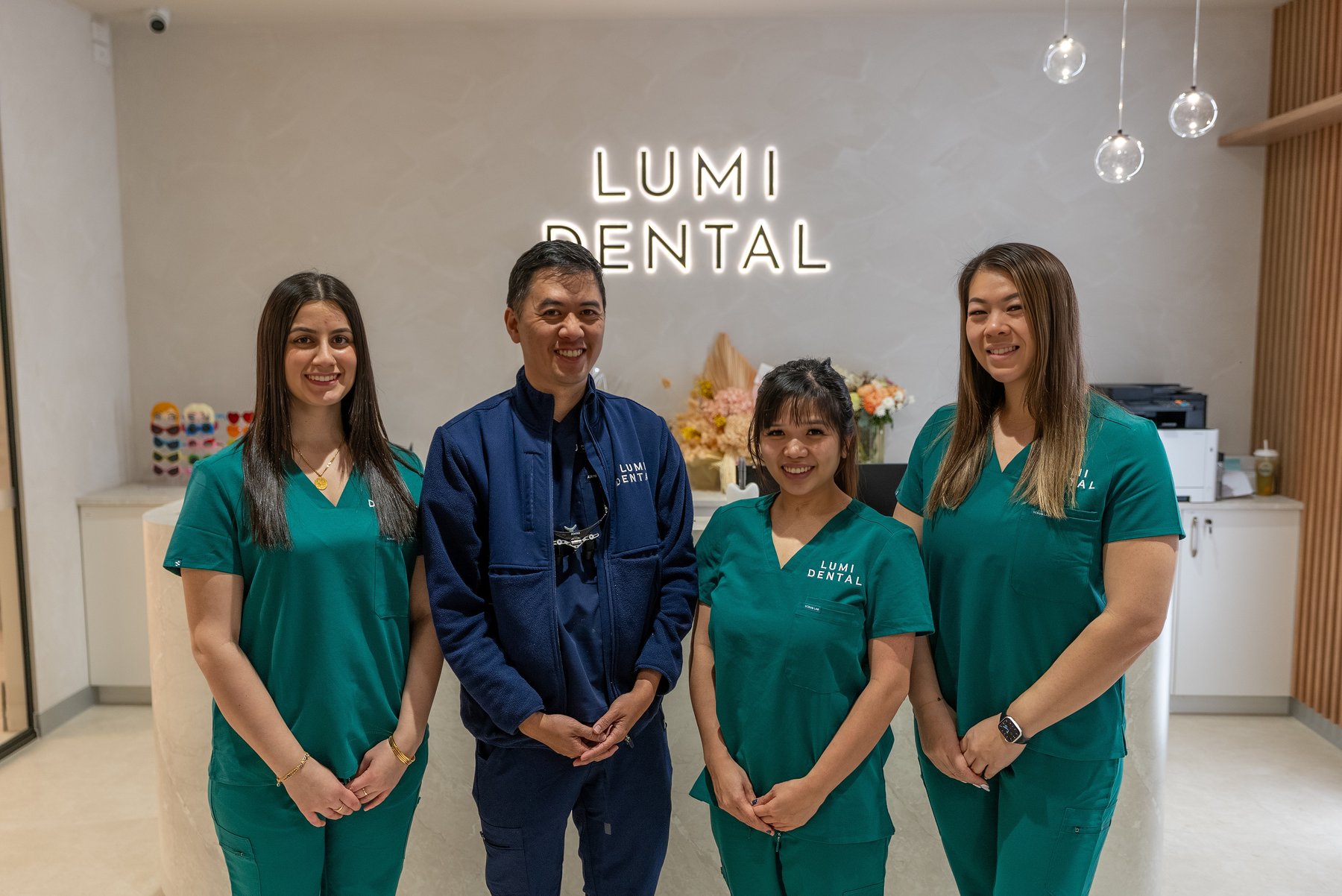
At Lumi Dental in Melrose Central, Melrose Park, denture reviews are part of general dentistry with Dr James Tran, a general dentist. We plan for adjustment visits in the first weeks rather than treating them as a problem. Our oral health therapists, Sabrina Tran and Jennifer Nguyen, see patients for cleans and gum care, which matters if you still have some natural teeth alongside a partial denture.
We use 3D intraoral scanning in-house, which gives a detailed record of the gums and remaining teeth, and every instrument goes through our dedicated sterilisation room between patients. If a case needs a registered specialist, we refer. See our general dentistry service.
Bringing harder foods back
Add one new texture at a time. If the denture shifts or a sore spot appears, drop back a step for a few days. A sensible order for many people is soft fruit, then tender meat, then crisp vegetables sliced thin, then firmer bread. Raw carrot, whole apples and nuts usually come last, and many wearers keep slicing or grating them.
Caramel, sticky lollies and chewing gum can pull a denture loose and are usually kept to a minimum.
If chewing is narrowing your diet, protein and fibre tend to drop first. Eggs, fish, legumes, yoghurt and soft cooked vegetables can fill the gap.
Some people find that even a well-made denture does not give them enough chewing confidence. For them, implant-retained overdentures may be worth talking about. They are assessed case by case.
Questions patients ask
How long until I can eat normally with new dentures?
Many people are eating most everyday meals within four to six weeks, though full confidence can take a few months. Lower dentures and dentures fitted straight after extractions often take longer.
What can I eat on the first day?
Soft, moist food: soup, yoghurt, mashed vegetables, scrambled eggs, porridge. Keep mouthfuls small and let hot drinks cool first.
Is it normal for new dentures to hurt when I eat?
Some tenderness is common, but pain that lasts more than a day or two is a reason to book an adjustment. Waiting it out rarely helps, and most sore spots are quick to fix.
Should I use adhesive at the start?
You can, in a thin layer, if it helps your confidence. It should not be used to make up for a poor fit, which needs checking instead.
Why does my denture lift when I bite into food?
Biting with the front teeth levers the denture up at the back. Cut food small, place it toward the back on both sides, and if it still lifts, a review may show an adjustment or reline is needed.
Sources
- Healthdirect Australia: Dentures
- Better Health Channel: Dentures
- Australian Dental Association: Dentures
Book a denture review in Melrose Park
If a new denture is not settling, the team at Lumi Dental in Melrose Park, Sydney, can check the fit, find the pressure points and talk through your options. Contact the practice to arrange a time, or see current deals at Lumi Dental. A consult and a written quote follow an exam.
About the author
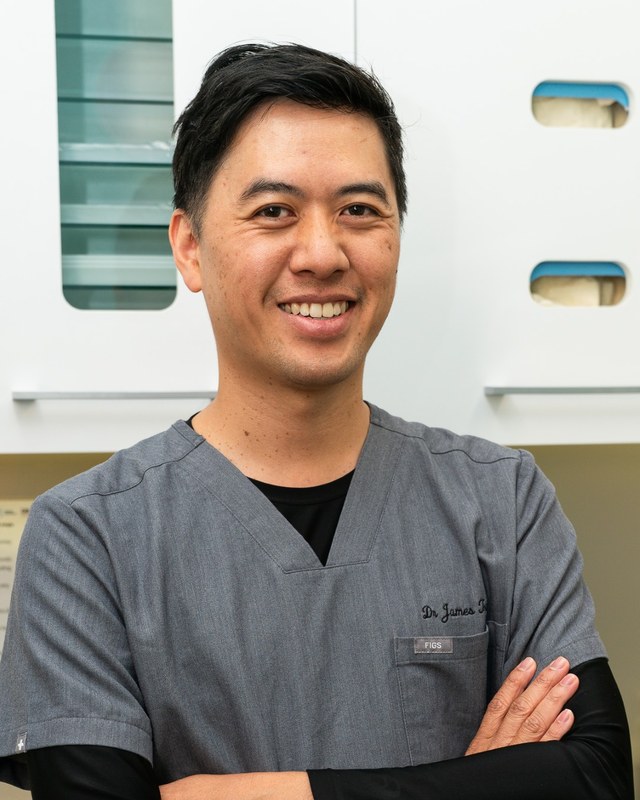
Dr James Tran is a general dentist at Lumi Dental in Melrose Park, Sydney, and is registered with the Dental Board of Australia. He holds a Bachelor of Dentistry from the University of Sydney and a Graduate Diploma in Oral Implants, is a Member of the International Congress of Oral Implantologists (MICOI), and is part of the General Dental Residency faculty. Read more about Dr James.
This article is general information and is not a substitute for advice from your own dentist after an examination. All dental treatment carries risks, and individual results vary.