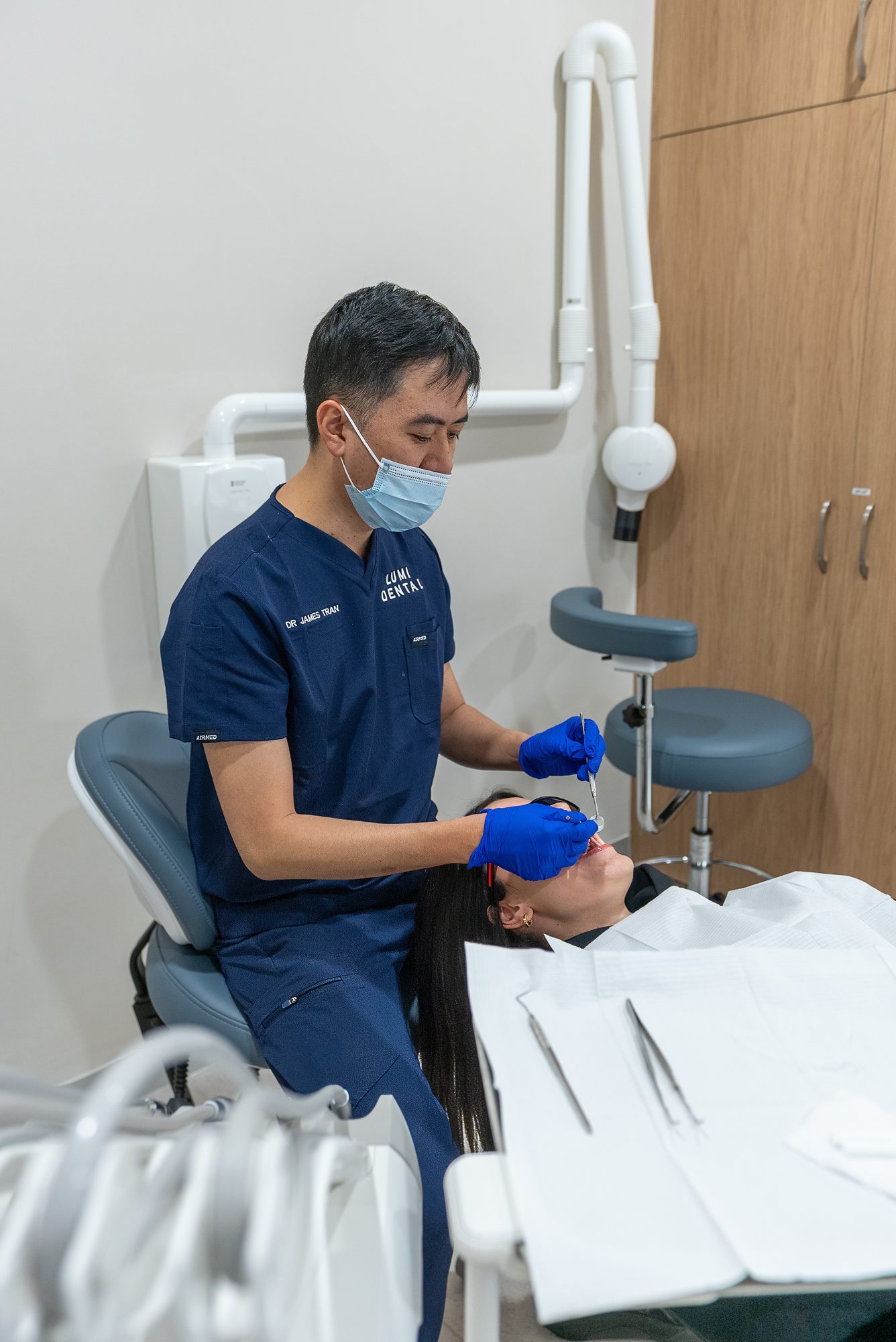

Most people notice a lisp, a whistle or a clicking sound when speaking with new dentures, and for many it eases over the first few weeks as the tongue, lips and cheeks learn the new shapes. Health authorities in Australia describe getting used to dentures as taking a while, with healthdirect noting that most people need a few months to get used to how they feel. Speech is usually among the first things patients mention at the review visit. This guide explains what is normal, what helps and when the denture itself may need adjusting.
Written by Dr James Tran, general dentist at Lumi Dental in Melrose Park (BDent, University of Sydney; Graduate Diploma in Oral Implants).
The short version
- A lisp, whistling and clicking are common in the early days, because the tongue has to learn a new arrangement of teeth and acrylic.
- Sounds made with the tongue near the front teeth, such as s, sh, f, v and th, are the ones most often affected.
- Reading aloud and speaking slowly for a few minutes each day can speed up the adjustment.
- Clicking often points to how the teeth meet, or to a denture that moves, and can usually be reviewed and adjusted.
- If speech problems or sore spots persist beyond a few weeks, go back for a review rather than waiting (see our guide to denture sore spots).
- Loose lower dentures are the most common cause of ongoing speech trouble, and implants can be one way to steady them.
Why New Dentures Change the Way You Speak
Speech is a closely timed movement of the tongue, lips and jaw. Your tongue has spent years working out where your natural teeth or your old denture sit, and it uses them as landmarks. When the teeth change position, even by a millimetre or two, the landmarks move and some sounds come out differently.
An upper denture also covers the roof of the mouth, where the tongue touches for sounds such as t, d and s. A denture base that is slightly thick in that area can change those contacts. A lower denture takes up space where the tongue normally rests, which can make the tongue feel crowded. Teeth set too far forward or back can affect the f and v sounds, which are made by the lower lip touching the edge of the upper front teeth. If you have been without teeth for a while, the tongue and cheeks may have changed shape to fill the gap and need time to adapt back.
Which Sounds Are Affected and Why
The table below lists the changes patients describe most often. It is a general guide, and a dentist can tell which of these applies by listening and examining the denture.
| What you notice | Sounds involved | Common reason | What may help |
|---|---|---|---|
| Lisp | s, z, sh, ch | Tongue has less room, or the front teeth sit in a new position | Slow practice; review of tooth position |
| Whistling | s | A narrow gap between the tongue and the denture surface | Review; small shape adjustment |
| Muffled or "thick" speech | t, d, n, l | Upper denture covers the palate where the tongue makes contact | Time and practice; review of base thickness |
| Trouble with f and v | f, v | Front teeth set slightly forward or back | Review of front tooth position |
| Clicking | Most sounds | Teeth touching as you talk, or a denture that moves | Bite check; fit or reline review |
| Denture lifts or slips | Any, especially p, b, m | Poor fit or lower denture movement | Review; denture adhesive may help |
Why Dentures Click
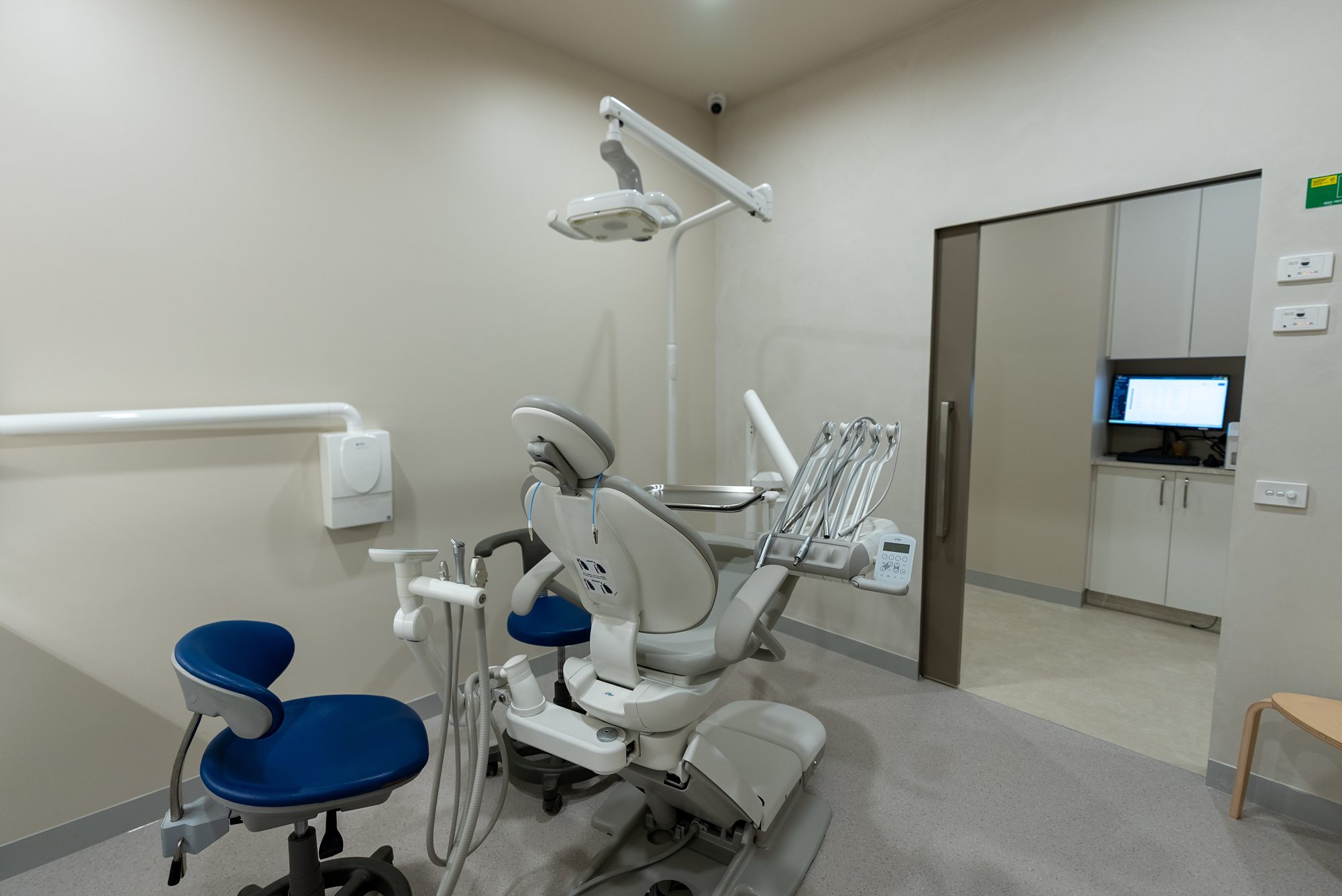
Clicking is the sound of the upper and lower teeth meeting during speech. Natural teeth rarely touch when we talk, because there is a small gap between them. Better Health Channel notes that you might hear your dentures click as you get used to talking with them. Several things can cause it.
- Bite height. If the teeth are set slightly too close together, they may meet during speech.
- A denture that moves. A loose denture can tap against the gum or the opposing teeth as you talk.
- An uneven bite. If the teeth touch on one side before the other, the denture can rock slightly.
In my experience, a click that stays the same from day to day, and appears at the same sounds, usually points to the bite or the fit rather than to anything you are doing wrong. It is worth mentioning at your review visit.
How to Practise Speaking With New Dentures
The tongue and lips learn through repetition, and a few minutes a day can help. These are the steps I suggest most often.
- Read aloud, slowly and clearly, from a book or newspaper. Pause on words you find hard.
- Repeat words that start or end with s, f and th until they sound natural, then try them in sentences.
- Speak a little slower than usual in the first week, and let your lips and tongue take their time.
- Practise in front of a mirror so you can see what your mouth is doing.
- Wear the denture as your dentist advises, since speech usually adapts faster with regular use than with occasional wear.
It is normal to feel self-conscious on the phone for the first week or two. Eating is a separate skill, and our guide to eating with new dentures covers the first weeks of chewing.
How Long Does It Take to Adjust?
There is no single timeline. Healthdirect says most people take a few months to get used to how new dentures feel, and Better Health Channel says it will take a while to get used to talking with them. In practice, patients tend to find that the clicking and lisp ease within the first few weeks, while the overall feeling of the denture takes longer to become familiar. It can take longer if you had no denture before, or if the new one differs a lot from your last.
Immediate dentures, which are fitted on the day teeth are removed, behave differently. The gums and bone change shape as they heal, so the fit shifts over the first months and an adjustment or reline is often needed. We explain that process in our guide to immediate dentures.

A Simple Rule for When to Go Back
If a speech problem has not improved after a few weeks of regular wear and practice, or if you have a sore spot, a denture that moves or a click that stays constant, book a review. Better Health Channel advises talking to your dentist if difficulties continue beyond several weeks, and the Australian Dental Association notes that small modifications may be needed until the denture is comfortable. Waiting months for it to settle can mean months of avoidable discomfort, and a rubbing denture can cause a sore spot to break down.
Bring the denture to the appointment and tell the dentist which sounds are difficult. That helps to pinpoint whether the cause is tooth position, base thickness or fit.
When the Type of Denture Matters
An upper denture usually stays in place by suction against the palate, so it tends to be more stable and speech settles more readily. A lower denture sits on a ridge that is smaller and has a moving tongue beside it, so it is often the one that clicks, lifts or shifts. Our article on why lower dentures fit worse than upper dentures explains this in more detail.
For patients whose lower denture keeps moving, an implant-retained denture can be one option to discuss. Two or more implants can hold the denture so that it clips on and stays steadier during speaking and eating, and our guide to implant-retained overdentures sets out how they work and who they may suit. Whether implants are appropriate depends on bone, general health and your goals.
How We Approach This at Lumi Dental
The team at Lumi Dental in Melrose Park treats speech concerns with new dentures as a fit and bite question first. A review usually involves listening to the sounds you find difficult, checking how the teeth meet and how stable the denture is, and checking the gum for pressure marks. The practice offers general dentistry as well as single and full-arch dental implants, and if a case is better managed by a registered specialist, the team refers it on. Lumi Dental does not list its own prices in articles, and a written quote is provided after an assessment.
Questions Patients Ask
Why do I lisp with my new dentures?
The tongue has to learn a new arrangement of teeth and acrylic, and s and sh sounds are the most sensitive to that change. For many people it eases over a few weeks of regular wear and practice.
How long does it take to speak normally with new dentures?
It varies. Most people find speech improves within the first few weeks, while healthdirect notes that it can take a few months to feel fully used to the dentures overall.
Why do my dentures click when I talk?
Usually because the upper and lower teeth are touching during speech, or because the denture is moving slightly. A dentist can check the bite and fit and make adjustments.
Should I take my dentures out if I cannot speak clearly?
Occasional rest breaks are reasonable if the denture is sore, but regular wear generally helps speech adapt. If speech or comfort does not improve, a review is better than avoiding the denture.
Can dentures be adjusted to fix my speech?
Often, yes. Small changes to tooth position, base thickness or fit can improve how certain sounds come out, although not every speech difficulty can be fully removed.
Talk to the Team at Lumi Dental
If you are struggling with speech, clicking or fit with your dentures, or you are wondering whether implants could steady a loose lower denture, the team at Lumi Dental in Melrose Park can assess your mouth and talk through your options. Read about dental implants in Melrose Park, or book a consult. Patients visit from Ryde, Parramatta, Ermington, Rydalmere and nearby suburbs.
Sources
About the author

Dr James Tran is a general dentist at Lumi Dental in Melrose Park. He holds a BDent from the University of Sydney and a Graduate Diploma in Oral Implants, is a MICOI member and is part of the General Dental Residency faculty.
This article is general information and is not a substitute for individual advice from a dentist who has examined you.