


A front tooth implant replaces a missing front tooth with a post in the jawbone, a connector (abutment) and a custom crown, and it typically takes about 3 to 9 months from extraction to the final tooth. In Australia, a single implant usually costs around $3,500 to $7,500 all-in, and front teeth often sit toward the upper end because of the extra aesthetic work involved. This guide explains why the front of the mouth is harder to get right, what each stage involves and how you can avoid a gap while you heal. You can also read about dental implants at Lumi Dental in Melrose Park.
Key Takeaways
- A front tooth implant is one of the more demanding implant cases because thin bone, the gum line and your lip line all affect how natural it looks.
- Typical Australian fees are about $3,500 to $7,500 all-in, and front teeth can cost more if grafting, soft tissue work or custom temporaries are needed. Our dental implant cost guide has a full breakdown.
- Healing commonly takes 3 to 6 months after placement, although immediate placement may be possible in suitable cases.
- You do not usually need to go without a tooth while you heal.
- Alternatives such as a Maryland bridge or conventional bridge may suit some people better.
Why front tooth implants are harder
The simple rule: at the front of the mouth, the gum and bone matter as much as the crown. A back tooth implant mainly needs to be strong. A front tooth implant also needs to blend in with its neighbours in conversation, in photos and under different lighting. In my experience, the patients who are happiest with their result understood these aesthetic factors before treatment started.
Thin bone at the front
The bone on the lip side of upper front teeth is often very thin. After a tooth is removed, this thin wall can shrink quickly. If too much bone is lost, the implant may need to sit higher or further back, which can make the crown look longer than its neighbour. This is why bone grafting is more common at the front. Our article on bone grafts for dental implants explains how it works.
The gum line and the papilla
The small triangle of gum between two teeth is called the papilla. When it is missing, a dark triangle can appear beside the implant crown. The papilla depends on the bone beneath it, so preserving bone is a large part of preserving a natural gum line. Soft tissue grafting may be suggested to thicken the gum.
Your lip line and shade matching
If your upper lip rises high when you smile (a high lip line), small differences in gum height or colour are easier to see. Natural front teeth are also not one flat colour: they are often more translucent at the edges and warmer near the gum. Matching a single crown can take custom shade work with the dental technician and sometimes more than one try-in.
Front tooth implant timeline
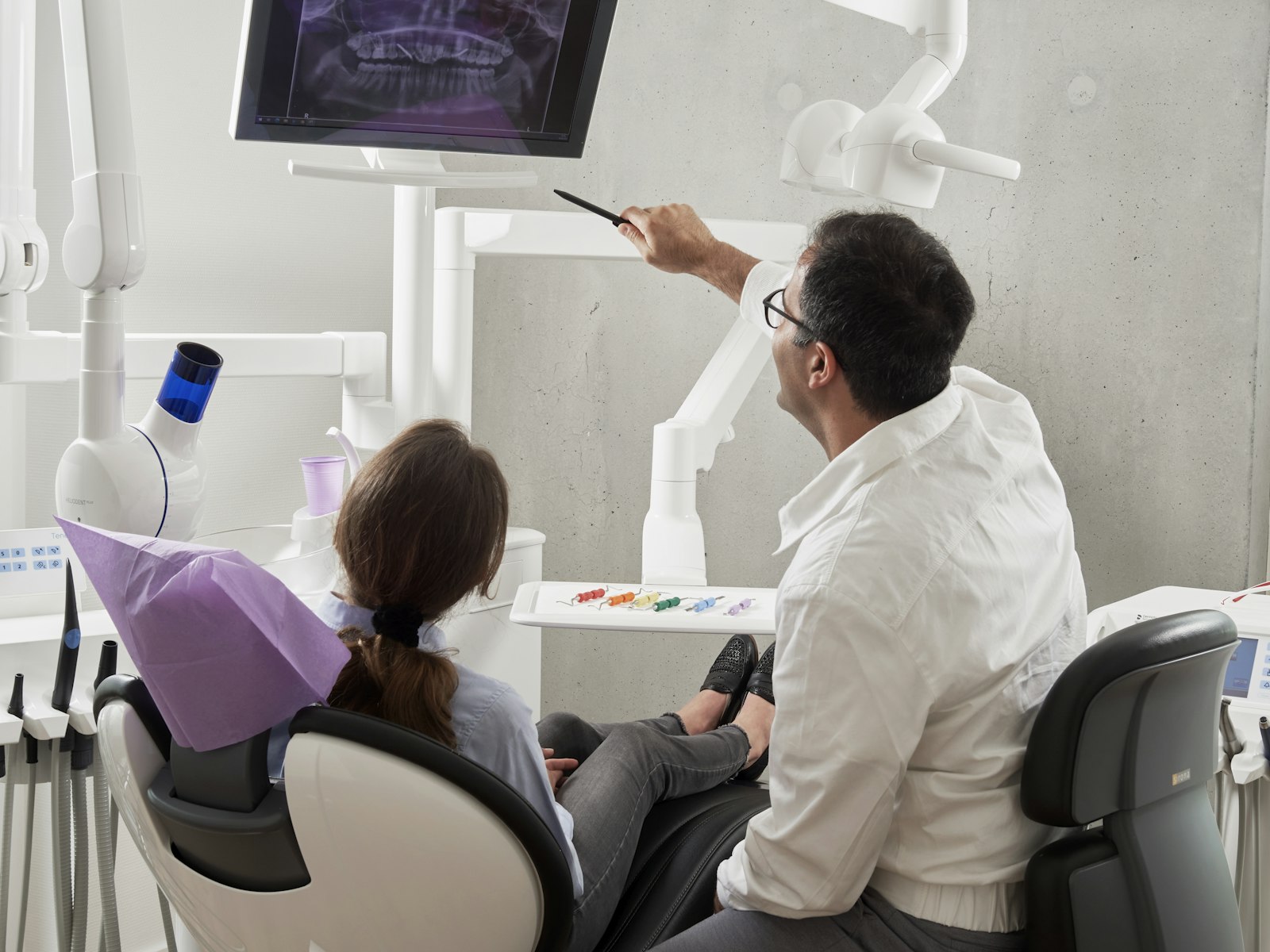
Every case is different, but most follow a similar sequence, beginning with an examination, photos and a 3D (CBCT) scan to measure the bone.
- Assessment and planning: scans, photos and a written treatment plan with costs.
- Extraction: the tooth is removed as gently as possible to protect the bone.
- Bone grafting (if needed): at the time of extraction or as a separate step.
- Implant placement: under local anaesthetic, with sedation available for anxious patients.
- Healing: the bone bonds to the implant, commonly over 3 to 6 months.
- Gum shaping and final crown: a temporary crown may shape the gum before the custom crown is fitted.
In suitable cases, the implant can be placed the same day the tooth is removed, sometimes with a temporary crown attached straight away. This depends on healthy bone, no active infection and good initial stability. See our guide to immediate vs delayed implant placement.
Temporary tooth options while you heal
For most people, the biggest worry is being seen with a gap. Your dentist will suggest a temporary option based on your bite, budget and healing plan.
| Temporary option | How it works | Things to consider |
|---|---|---|
| Flipper (temporary partial denture) | A small removable plate with a tooth attached | Low cost and quick, but can feel bulky and must not press on the healing site |
| Clear retainer with a tooth (Essix) | A thin clear tray with a tooth in the gap | Discreet and gentle on the gum, but not designed for eating |
| Temporary bonded bridge | A tooth bonded to the backs of neighbouring teeth | Fixed and natural looking, but can debond |
| Immediate provisional crown | A temporary crown attached to the implant on the day | Only when the implant is stable enough; avoid biting firm foods with it |
Front tooth implant cost in Australia
A single implant in Australia typically costs about $3,500 to $7,500 all-in (implant, abutment and crown). These are general market ranges and vary by case. A front tooth implant may cost more because of:
- bone grafting at extraction or before placement
- soft tissue grafting to thicken the gum
- a custom temporary crown to shape the gum line
- custom shade matching and extra try-ins
- a zirconia abutment or all-ceramic crown chosen for aesthetics
Major dental limits on health fund extras often sit around $1,500 to $2,500 a year, although this varies widely between funds. Because treatment spans several months, it sometimes falls across two benefit years, which can increase the total rebate. Check waiting periods and item numbers with your fund first. For pricing information, see our current deals page, and ask for a written quote after your examination.
Zirconia or porcelain crown on a front implant?
For front teeth, all-ceramic crowns (often zirconia, sometimes layered with porcelain for translucency) are often preferred because there is no metal core that could show as a grey line near the gum. Porcelain fused to metal crowns are strong with a long track record, but may be less suitable when the gum is thin. A tooth-coloured abutment can also reduce grey show-through. Our comparison of zirconia vs porcelain fused to metal implant crowns goes into more detail.

Risks to be aware of
Implants have a good long-term track record, but like any surgery they carry risks. At the front, the main concerns are aesthetic.
- Grey show-through: with thin gum, the implant or abutment may show as a greyish tint.
- Gum recession: the gum may shrink over time, exposing more of the crown or abutment.
- Dark triangles: loss of the papilla can leave a small gap between teeth.
- Peri-implantitis: inflammation around the implant can lead to bone loss if not managed.
Smoking, uncontrolled diabetes and grinding can all increase the risk of complications.
Alternatives and who is suitable
An implant is not the only option. A Maryland (resin-bonded) bridge bonds a replacement tooth to the backs of the neighbouring teeth with little or no drilling, and can suit younger patients or people not ready for surgery. A conventional bridge can make sense when the teeth either side already need crowns. A partial denture is a lower cost removable option.
Most healthy adults whose jaw has finished growing can be considered for an implant. Good candidates typically have healthy gums, enough bone (or the option of grafting), well controlled general health and a commitment to cleaning and regular reviews. Teenagers may be advised to wait until growth is complete.
Frequently Asked Questions
How long does a front tooth implant take?
A front tooth implant typically takes about 3 to 9 months from start to finish. Healing after placement commonly takes 3 to 6 months, with extra time if a bone graft is needed first.
Will I have a gap while my implant heals?
Usually not, as a temporary tooth can be worn during healing. Options include a flipper, a clear retainer with a tooth, a bonded temporary bridge or sometimes a temporary crown on the implant.
How much does a dental implant for a front tooth cost?
A front tooth implant in Australia commonly costs about $3,500 to $7,500 all-in, and can be more when grafting or extra aesthetic work is needed. A written quote after an examination is the most reliable guide; our dental implants page explains what an assessment involves.
Does a front tooth implant look natural?
A front tooth implant can look very natural when the bone, gum and crown are carefully planned. The result depends on gum thickness, bone levels, your lip line and shade matching.
Does getting a front tooth implant hurt?
Many people find implant placement more comfortable than they expected, as it is done under local anaesthetic. Some tenderness and swelling for a few days is common and usually managed with over-the-counter pain relief.
Considering a front tooth implant?
Replacing a front tooth is a significant decision, and the right plan depends on your bone, gum, bite and smile. The team at Lumi Dental offers a complimentary implant consultation to review your scans, talk through implant and non-implant options and answer your questions, followed by a written quote after assessment. Contact us to book your implant consultation, learn more about dental implants in Melrose Park, or visit our current deals page for pricing information.
This article is general information only and is not a substitute for personalised advice from a registered dental practitioner.


