
Grey teeth can often be lightened, but how much depends on the pattern: one grey tooth, a grey band across many teeth and an overall grey tone have different causes and different fixes. When patients ask why their teeth are grey, the pattern tells me more than the colour does, so this guide is organised that way. The Australian Dental Association notes that stains inside a tooth can be very difficult to remove by treating the outside, and that a dental practitioner is best placed to diagnose the reason first.
Written by Dr James Tran, BDent (University of Sydney), MICOI, GradDip (Oral Implants), general dentist at Lumi Dental in Melrose Park.
The short version
- Yellow usually whitens well. Grey whitens slowly and partially. A single grey tooth needs a diagnosis first.
- One grey tooth usually means the nerve inside has died after a knock, deep decay or an old root canal. After an X-ray, the options are internal bleaching, bonding, a veneer or a crown.
- A grey band across many teeth usually points to tetracycline-type antibiotics during tooth development. Whitening gives partial results and needs longer supervised courses.
- Grey-blue, see-through biting edges are thin enamel from wear or erosion. Whitening cannot fix this and may make it more obvious.
- Grey comes from inside the tooth, which is why it behaves differently from surface stain; see our guide to intrinsic and extrinsic staining.
Why grey behaves differently from yellow
Most yellow teeth are yellow for a simple reason: pigment from coffee, tea and wine on the enamel, or yellow dentine showing through thinned enamel. Peroxide gels handle both. Grey usually means something is inside the tooth that gel reaches slowly or not at all: blood breakdown products after an injury, antibiotic deposits laid down while the tooth was forming, metal from a filling, or the dark of the mouth showing through enamel that has become too thin.
That is why I ask about the pattern first: one tooth or all of them, a band or the edges only, and whether it followed a knock, a root canal or childhood antibiotics. Healthdirect makes the same point: when the cause is deep inside the tooth, gel applied to the outside will not whiten it.
Patterns of grey and what they usually mean
One grey tooth
A single front tooth that has gone grey, often years after a knock in childhood sport or a fall, has usually lost its nerve. The darkening is often explained as the pulp breaking down and its by-products staining the dentine. Deep decay and old root canal treatments can do the same. Once the root is sound or root filled, the options are internal bleaching (gel placed inside the tooth), composite bonding, a veneer, or a crown if the tooth is heavily filled. Our article on internal bleaching for a dark tooth covers that procedure.
A grey band or stripes across many teeth
Horizontal grey, blue-grey or brown bands across most of the teeth, often darker towards the gum, are the classic sign of tetracycline or minocycline taken while the adult teeth were forming. The drug binds into the dentine as it forms, so the stain is built in. Whitening helps, slowly and partially: a long-term clinical study on PubMed reported that tetracycline-stained teeth whitened successfully with extended treatment time, around six months of nightly tray wear in that study, and that the shade held for years in most participants. Heavy banding often ends with veneers. More in our guide to tetracycline tooth stains.
A grey shadow near an old filling
Back teeth with large amalgam fillings often look grey from the side, because the metal shows through the enamel around it. A grey mark in the gum nearby, an amalgam tattoo, is a settled fleck of metal and is harmless. Replacing the filling with a tooth-coloured one may lift the shadow, though a tooth darkened by metal for decades does not always recover fully.
Grey-looking teeth with age
Teeth darken and dull over time: dentine thickens and turns more yellow-brown, enamel thins, and years of tea and coffee sit on top, so the effect reads as grey. This pattern responds reasonably to whitening, though the result is a lighter version of the same tone rather than bright white.
Grey-blue, translucent biting edges
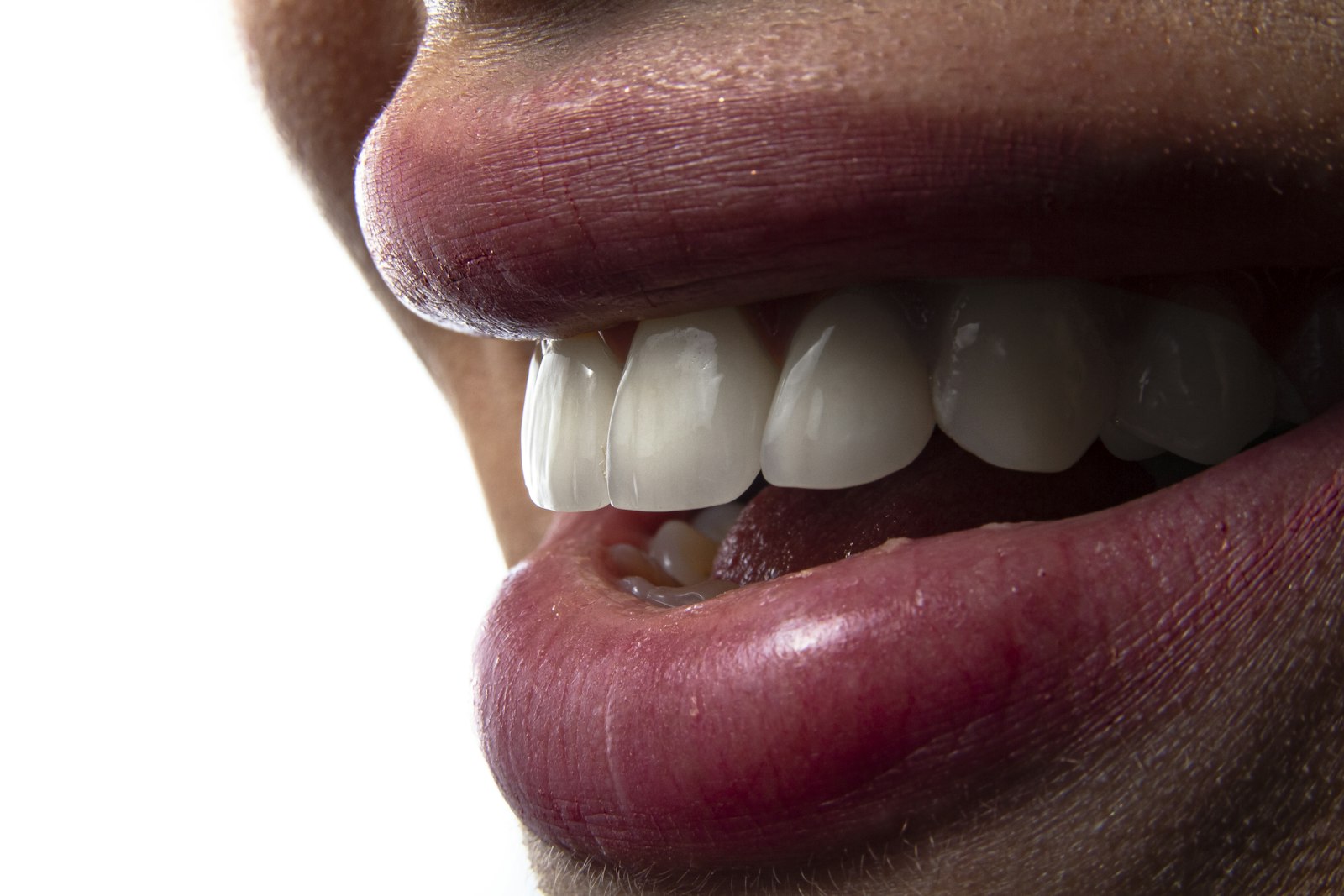
If the edges of the front teeth look see-through or blue-grey while the rest looks fine, the enamel there is thin, from grinding, acid erosion or plain wear. Whitening does not add enamel and can make thin edges look more transparent, a result patients I see are rarely happy with. Bonding to rebuild the edges, or veneers in more worn cases, is the usual direction.
Rarer developmental causes
A few people have teeth that have been grey, blue-grey or opalescent since they came through, sometimes across a family. Dentinogenesis imperfecta is one inherited example, thought to leave dentine weaker as well as darker. Dental fluorosis is usually white or brown mottling rather than grey. These cases are uncommon; whitening is rarely the answer, and referral to a registered specialist may be appropriate.
Yellow usually whitens well; grey whitens slowly and partially; a single grey tooth needs a diagnosis first
That is the whole decision in one line. Yellow and brown tones respond to peroxide in weeks. Grey intrinsic stains respond over months rather than weeks, and often to a lighter grey rather than white. One grey tooth among normal neighbours needs an examination and an X-ray before any bleaching, inside or out, because whitening a tooth with an infection at its root does nothing for the infection. If your teeth are more yellow than grey, start with our guide to yellow teeth and how to whiten them.
Grey teeth at a glance
| Pattern | Likely cause | Does whitening help? | What usually works |
|---|---|---|---|
| One grey tooth | Nerve has died after a knock, decay or an old root canal | External gel does little; internal bleaching may | X-ray first, then internal bleaching, bonding, veneer or crown |
| Grey band or stripes on many teeth | Tetracycline or minocycline during tooth development | Partial, slow; needs longer courses | Extended supervised take-home whitening; veneers if heavily banded |
| Grey shadow near an old filling | Amalgam showing through thin enamel | No | Replace with a tooth-coloured filling; sometimes a crown |
| Overall grey with age | Dentine darkening, enamel thinning, surface stain | Reasonably | Professional clean, then a supervised course |
| Grey-blue translucent edges | Thin enamel from grinding, erosion or wear | No, may worsen the look | Bonding or veneers; treat the cause of wear |
| Grey since the teeth came through | Developmental, such as dentinogenesis imperfecta | Rarely | Individual assessment; bonding, veneers or crowns; specialist referral if needed |
Why a single dark tooth needs an X-ray before bleaching
Patients sometimes ask to bleach the one tooth and see what happens. In my experience that is the wrong order. A grey tooth that has lost its nerve may be sitting on an infection that has been quietly present for years, and needs a root canal treatment, or a review of an old one, before any bleaching goes inside it. Internal bleaching also depends on a sound seal over the root filling. An examination, a cold test and an X-ray answer those questions in one visit, and the same visit catches a leaking filling, a crack or a dull old crown that only looks like a grey tooth. None of those bleach; the Better Health Channel lists decay, fillings, crowns, veneers and some types of discolouration among the things whitening gel does not change.
What a longer whitening course looks like for grey teeth
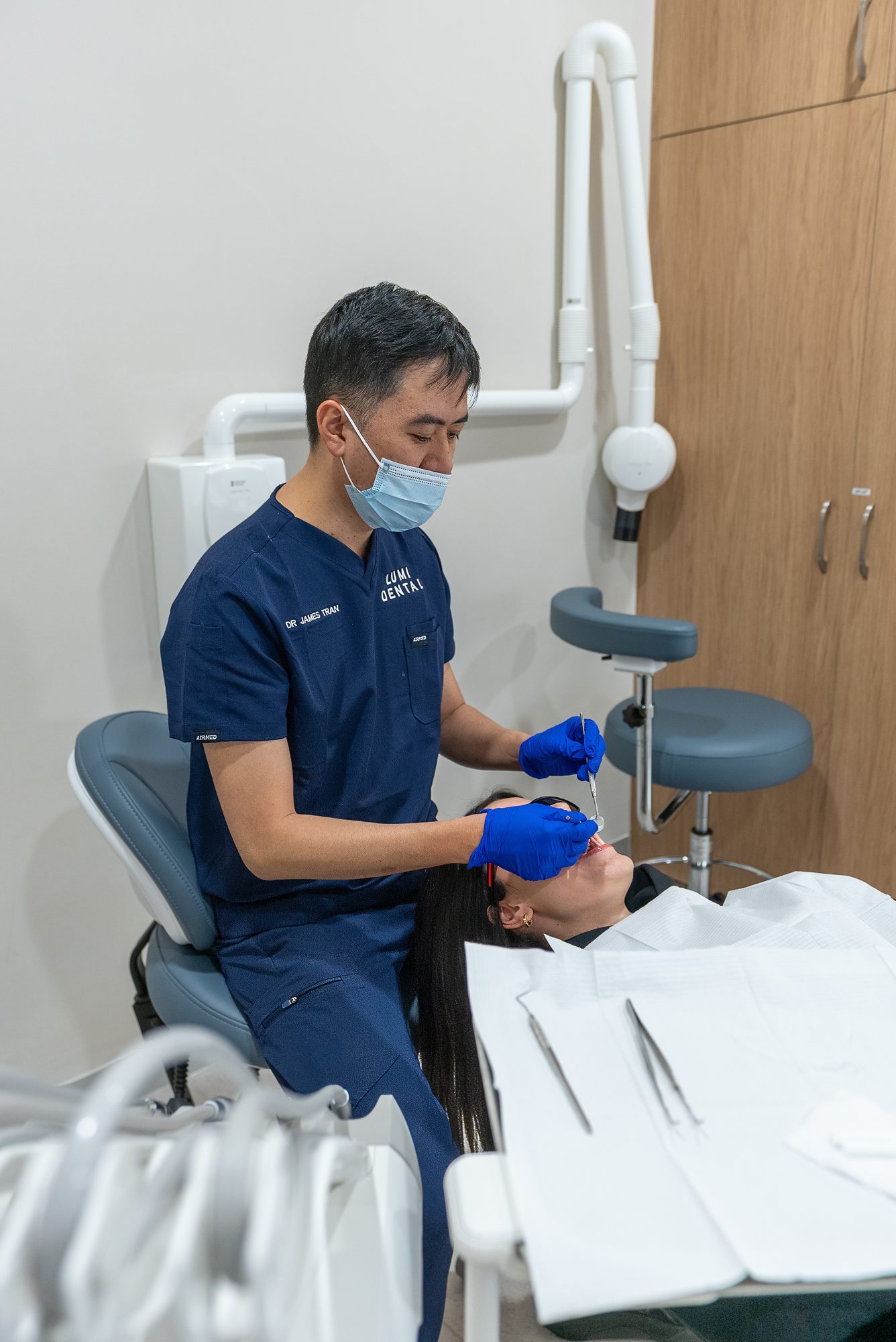
For banded or generally grey teeth that are otherwise healthy, the usual plan is supervised take-home whitening with custom trays, worn nightly for weeks to months rather than the week or two a yellow case needs. The starting shade is photographed so progress is measured, with reviews every few weeks to check sensitivity and decide whether to continue. Gels above 6% hydrogen peroxide, or the equivalent 18% carbamide peroxide, may only be supplied by registered dental practitioners, so a long course is a supervised one.
Grey teeth generally lighten a few shades and even out, which many people are pleased with, but they rarely reach the bright result yellow teeth can. For uniform white across heavily banded teeth, veneers or bonding may be the more candid recommendation.
How we approach this at Lumi Dental
At Lumi Dental in Melrose Park, grey teeth start with an examination by a dentist, a 3D intraoral scan and the X-rays the case calls for, including 3D X-ray where a single dark tooth needs a closer look at its root. Lumi Dental is mercury-free, so any replacement filling is tooth-coloured. Where whitening is unlikely to reach what you want, the team talks through composite bonding and porcelain veneers, and refers to a registered specialist when a case needs one.
Questions patients ask
Why is one of my teeth grey?
Most often because the nerve inside it has died after a knock, deep decay or an old root canal. It needs an examination and an X-ray first, because the tooth may have a painless infection at the root.
Can grey teeth be whitened?
Often, but slowly and partially. Grey from tetracycline or ageing responds to longer supervised courses; grey from a dead nerve needs internal bleaching; grey from thin enamel or metal fillings does not whiten. Our guide to how many shades whitening can go sets expectations.
Why are my teeth grey at the edges?
The enamel at the biting edges has worn thin, usually from grinding or acid, so the dark of the mouth shows through. Whitening will not fix it and can make it more obvious; bonding to rebuild the edges is the usual answer.
Is a grey tooth an emergency?
Not usually, but have it checked within a few weeks rather than ignored. If the tooth becomes painful, the gum swells or a pimple appears on the gum above it, book sooner, because that suggests infection.
Should I get veneers instead of whitening for grey teeth?
Mild or moderate grey is often worth a supervised whitening course first, since veneers are irreversible. Heavy banding or very thin enamel is where veneers earn their place. Our comparison of veneers versus teeth whitening goes through the trade-offs.
Find out what is behind the grey: complimentary consult at Lumi Dental
If grey teeth are bothering you, the team at Lumi Dental in Melrose Park can examine them, take the X-rays needed and tell you plainly whether whitening, internal bleaching, bonding or veneers is the sensible path. Book a complimentary cosmetic consult, or read more about teeth whitening at Lumi Dental. Patients visit from Ryde, Parramatta, Ermington, Rydalmere and nearby suburbs.
Sources
- Australian Dental Association (teeth.org.au): Teeth staining
- healthdirect: Teeth whitening
- Better Health Channel: Cosmetic dentistry and teeth whitening
- PubMed: Nightguard vital bleaching of tetracycline-stained teeth, 90 months post treatment
About the author

Dr James Tran is a general dentist at Lumi Dental in Melrose Park. He holds a BDent from the University of Sydney and a Graduate Diploma in Oral Implants, and is a Member of the International Congress of Oral Implantologists (MICOI).
This article is general information only and is not a substitute for an examination and individual advice from a registered dental practitioner. Suitability for any treatment varies from person to person.