
Telling your dentist you have hepatitis B or hepatitis C does not change the infection control used on you, because hepatitis and dental treatment already sit under standard precautions that are applied to every patient, every time. The instruments are already sterilised the same way. The barriers are already the same. Nothing about your disclosure makes the surgery safer or less safe, because the protocol was never adjusted patient by patient in the first place.
What your disclosure does change is the clinical plan. If your liver is affected, that can alter how bleeding is managed, which pain relief is suggested, and how local anaesthetic is dosed. Those are useful changes, and they are the reason the question is on the medical history form.
Key takeaways
- Standard precautions apply universally in Australian dental practice, set out in the Australian Dental Association Guidelines for Infection Prevention and Control, 5th edition, 2024.
- You should not be booked last in the day, charged extra, or given different instruments because of a hepatitis diagnosis. None of that is standard practice.
- Refusing dental care on the basis of HIV or viral hepatitis status is unlawful under the Disability Discrimination Act 1992.
- An estimated 220,000 Australians live with chronic hepatitis B, and only 69 percent have been diagnosed.
- Hepatitis C is now curable for most people, with direct acting antiviral cure rates above 95 percent since listing on the Pharmaceutical Benefits Scheme in 2016.
- Advanced liver disease, not the virus itself, is what changes bleeding risk, pain relief choice and anaesthetic dosing.
The Australian picture, honestly stated
Hepatitis B
The 2023 National Surveillance for Hepatitis B Indicators report from the Doherty Institute WHO Collaborating Centre estimated 220,000 Australians living with chronic hepatitis B, around 0.82 percent of the population. Only 69 percent of them have been diagnosed, which leaves close to 70,000 people who do not know. Engagement in care is lower again. Around 25 percent of people with chronic hepatitis B are in regular care against a target of 50 percent, and 12.6 percent are on treatment against a 20 percent target.
Those diagnosis figures matter for a reason that surprises people. Because so many infections are undiagnosed, any protocol that relied on knowing a patient status would fail regularly. Standard precautions exist precisely because the information is often absent.
Hepatitis C
The Kirby Institute estimated 162,590 people living with chronic viraemic hepatitis C in Australia at the start of 2016, about 0.66 percent of the population. That number is now well out of date and should not be quoted as current, because direct acting antivirals were listed on the Pharmaceutical Benefits Scheme in 2016, giving universal access with cure rates above 95 percent and few side effects.
The Burnet Institute reported in 2025 that more than 110,000 Australians have been treated since that listing, with close to 100,000 cured. Dispensing has fallen a long way since the initial surge, averaging about 1,583 prescriptions per month across the 2020 to 2024 period. So the fair statement is that far fewer Australians live with active hepatitis C than in 2016, and that the remaining group is harder to reach rather than untreatable.
What standard precautions actually means
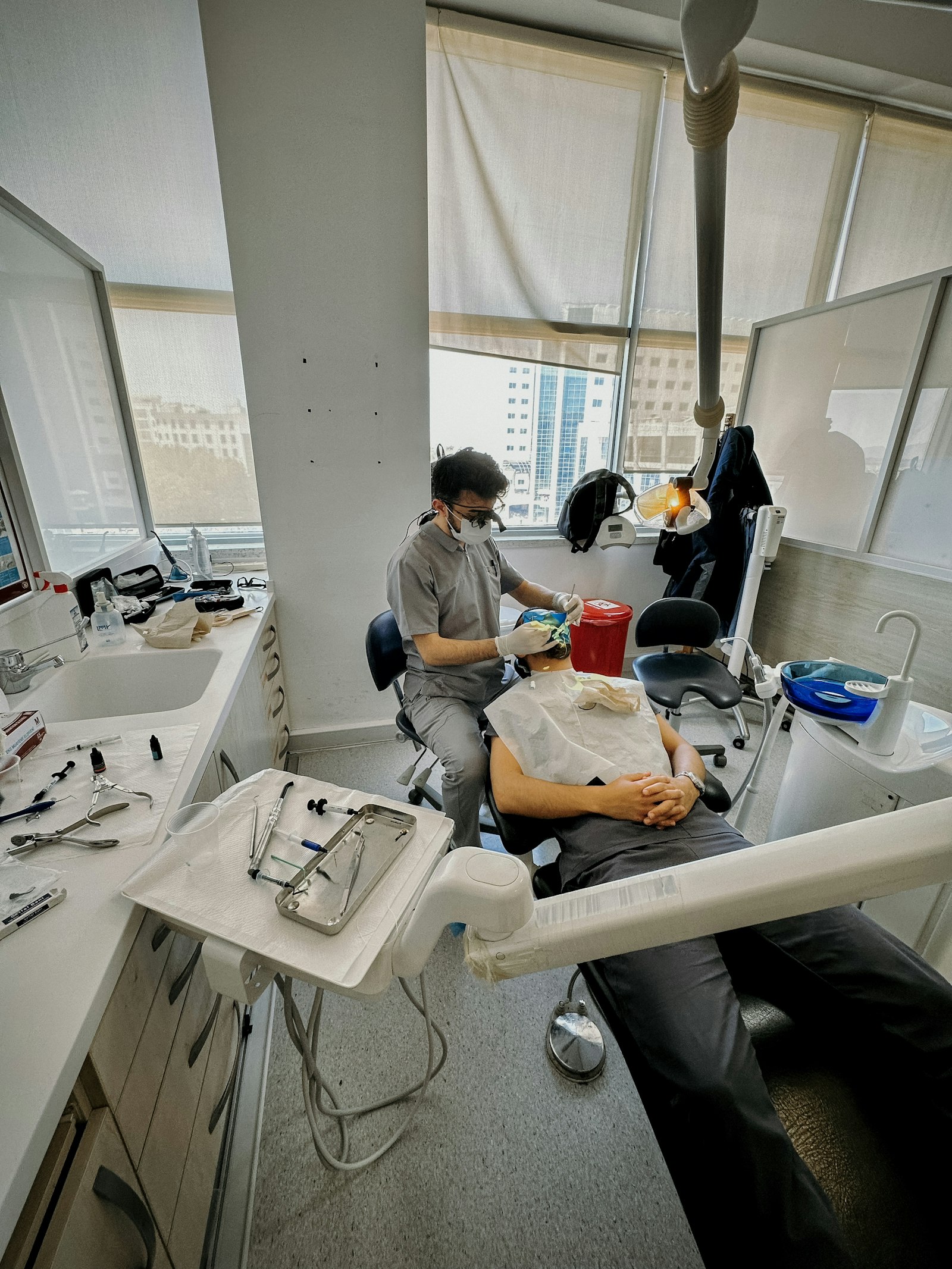
Standard precautions are the set of work practices applied to every patient regardless of known infection status. Instruments that enter the mouth are cleaned, packaged and sterilised in a validated cycle with monitoring. Single use items are discarded. Gloves, eye protection and masks are changed between patients. Surfaces are cleaned and barriers replaced. Waterlines are managed. None of this is switched on or off depending on what is written on a form.
This is why the belief that a hepatitis diagnosis means special instruments, a separate room, or extra sterilisation is wrong, and why correcting it matters. If a practice told you it needed to do something different because of your status, the honest interpretation is that its ordinary standard was not high enough.
What changes and what does not
| What your disclosure does NOT change | What it DOES change | Why |
|---|---|---|
| The sterilisation and barrier protocol used on you | How closely the team asks about your liver function and current treatment | Standard precautions are applied to every patient already, while liver function genuinely alters clinical planning |
| The time of day you are offered an appointment | How much time is allowed for a surgical appointment | There is no clinical basis for last of the day booking. Bleeding control after an extraction can take longer if the liver is affected |
| The fee you are charged | Whether your dentist writes to your GP, hepatologist or liver clinic first | No extra instruments or processes are needed, so no extra cost arises. High risk cases warrant specialist consultation before surgery |
| Whether you can be treated at all | The bleeding assessment before an extraction or gum surgery | Refusing care on the basis of viral hepatitis status is unlawful. Cirrhosis can bring thrombocytopenia and a prolonged prothrombin time, which raise surgical bleeding risk |
| The type of local anaesthetic available to you | The dose used and how it is spaced through a long appointment | Amide local anaesthetics such as lignocaine are metabolised in the liver, so reduced doses may be appropriate in significant impairment |
| Whether you are offered pain relief afterwards | Which pain relief is recommended, and at what daily total | Paracetamol is considered first line in chronic liver disease at reduced daily doses, while anti inflammatories are generally avoided in cirrhosis |
Bleeding, pain relief and anaesthetic, in more detail
The distinction that matters is between having the virus and having significant liver damage. Many people with chronic hepatitis B on treatment, and most people cured of hepatitis C, have normal or near normal liver function and need no special handling at all. It is cirrhosis that changes clinical planning.
Bleeding
Cirrhosis can reduce platelet counts and prolong the prothrombin time, both of which increase bleeding risk with surgical and dental procedures. Where risk appears high, consultation with the treating hepatologist before surgery is appropriate. Practically, this means recent blood results are useful before an extraction, and that local measures to control bleeding may be used more thoroughly. If you also take an anticoagulant, our article on blood thinners and tooth extraction covers how those two considerations are handled together.
Pain relief
Paracetamol is considered safe in chronic liver disease at reduced daily doses and is recommended first line for pain, including in alcoholic cirrhosis, which runs against what many patients expect. Anti inflammatories such as ibuprofen are best avoided in cirrhosis because of the risk of renal impairment, hepatorenal syndrome and gastrointestinal bleeding. This reverses the usual dental order of preference, since ibuprofen is normally the stronger option for dental pain. Our comparison of ibuprofen and paracetamol for tooth pain explains the usual reasoning, which your dentist and doctor will adjust for your liver function rather than you adjusting it yourself.
Local anaesthetic
Amide local anaesthetics, including lignocaine, are metabolised by the liver. In significant impairment, reduced doses may be needed, which in practice can mean a longer treatment split across two visits rather than one long appointment. It does not mean going without anaesthetic.
Refusal of care is unlawful
This needs saying plainly, because fear of refusal is one reason people do not disclose. Refusing dental care on the basis of HIV or viral hepatitis status is unlawful under the Disability Discrimination Act 1992, which covers the provision of goods, services and facilities. A dental surgery refusing to register patients with HIV has been cited as an example of unlawful discrimination. If a practice turns you away for this reason, that is not a clinical judgement, and you are entitled to raise it.
HIV raises a related but separate set of oral health issues, including the conditions that show up in the mouth and the interactions with antiretroviral therapy. Our article on HIV and oral health covers those. This article stays with the hepatitis viruses and with liver function, which is a different clinical problem even though the discrimination law protects both equally.
Does hepatitis show up in the mouth?
Hepatitis C has a well documented association with lichen planus, which appears in the mouth as white lacy patches, red areas or ulcers. Lodi and colleagues, in Oral Diseases in 2010, reported a pooled odds ratio of 4.85 for hepatitis C seropositivity in lichen planus patients, with a 95 percent confidence interval of 3.58 to 6.56. An oral lichen planus specific meta analysis published in the Australian Dental Journal by Alaizari and colleagues in 2016 reported an odds ratio of 6.07, confidence interval 2.73 to 13.48. An updated meta analysis of 84 studies published in 2023 found an odds ratio of 4.48, confidence interval 3.48 to 5.77.
Those are consistent findings, and they come with a large caveat. The association is strongly geography dependent, and it is considerably higher in Mediterranean basin countries, where the odds ratio was 5.41 with a confidence interval of 3.16 to 9.29. Australian rates are likely lower. An association is also not causation, and most people with oral lichen planus do not have hepatitis C. Because medicines can produce lesions that look almost identical, our article on oral lichenoid drug reactions is worth reading alongside this if you have been told you have lichen planus.
Why disclosure is worth it
Some people weigh up disclosure and decide against it. That is understandable, and it is also a decision that costs you rather than protecting you, because the protection you are worried about losing was never conditional in the first place.
What you gain by telling the practice is a plan that fits your liver, safer bleeding management, appropriate pain relief and a dentist who can spot the mouth signs that matter. What you do not gain is a different standard of cleanliness, because that was already the same.
One more point on risk, for completeness rather than reassurance theatre. The needlestick figures often quoted, roughly 23 to 37 percent transmission risk for hepatitis B where the source is surface antigen positive, higher again where both antigens are positive, around 1.8 percent for hepatitis C and around 0.3 percent for HIV, describe the risk to a clinician from a sharps injury. They are international, older than universal hepatitis B vaccination of dental staff, and older than hepatitis C cure. They describe an occupational risk, not a risk to the next patient.
Common questions
Do I have to tell my dentist I have hepatitis B?
You should, and the reason is clinical rather than protective. Your infection control does not change, but liver function affects bleeding management, pain relief and anaesthetic dosing. Your medical history is confidential.
Can a dentist refuse to treat you if you have hepatitis C?
No. Refusing care on the basis of HIV or viral hepatitis status is unlawful under the Disability Discrimination Act 1992, which covers the provision of goods, services and facilities. Refusal to register patients on that basis has been cited as an example of unlawful discrimination.
Is it safe to go to the dentist with hepatitis?
Yes. Standard precautions are applied to every patient in every practice, which is what makes the setting safe regardless of who knows what. The care you receive is planned around your liver function rather than around the diagnosis label.
Does hepatitis C affect your teeth and gums?
There is a well documented association with oral lichen planus, with pooled odds ratios between roughly 4.5 and 6 across several meta analyses. The link is strongest in Mediterranean populations and is not proof of cause. Most people with oral lichen planus do not have hepatitis C.
Will I be booked last in the day because of my hepatitis?
You should not be. There is no clinical reason for it, since instrument processing and surface cleaning are the same for every patient. If a practice tells you otherwise, ask what its ordinary protocol is.
Booking at Lumi Dental
Bring your current medicines and, if you have advanced liver disease, any recent blood results or your specialist details. Lumi Dental is at Shop LG16, Melrose Central, 35 Hope St, Melrose Park, open Monday to Saturday, with Sunday by appointment. New patients can see what the current new patient special includes on the current deals page, and routine examinations and cleans are described on the general dentistry page. You can reach the team through the contact page.
This article is general information only and is not personal dental or medical advice. Decisions about pain relief doses and surgical planning are made by your dentist and doctor together, based on your own liver function.