

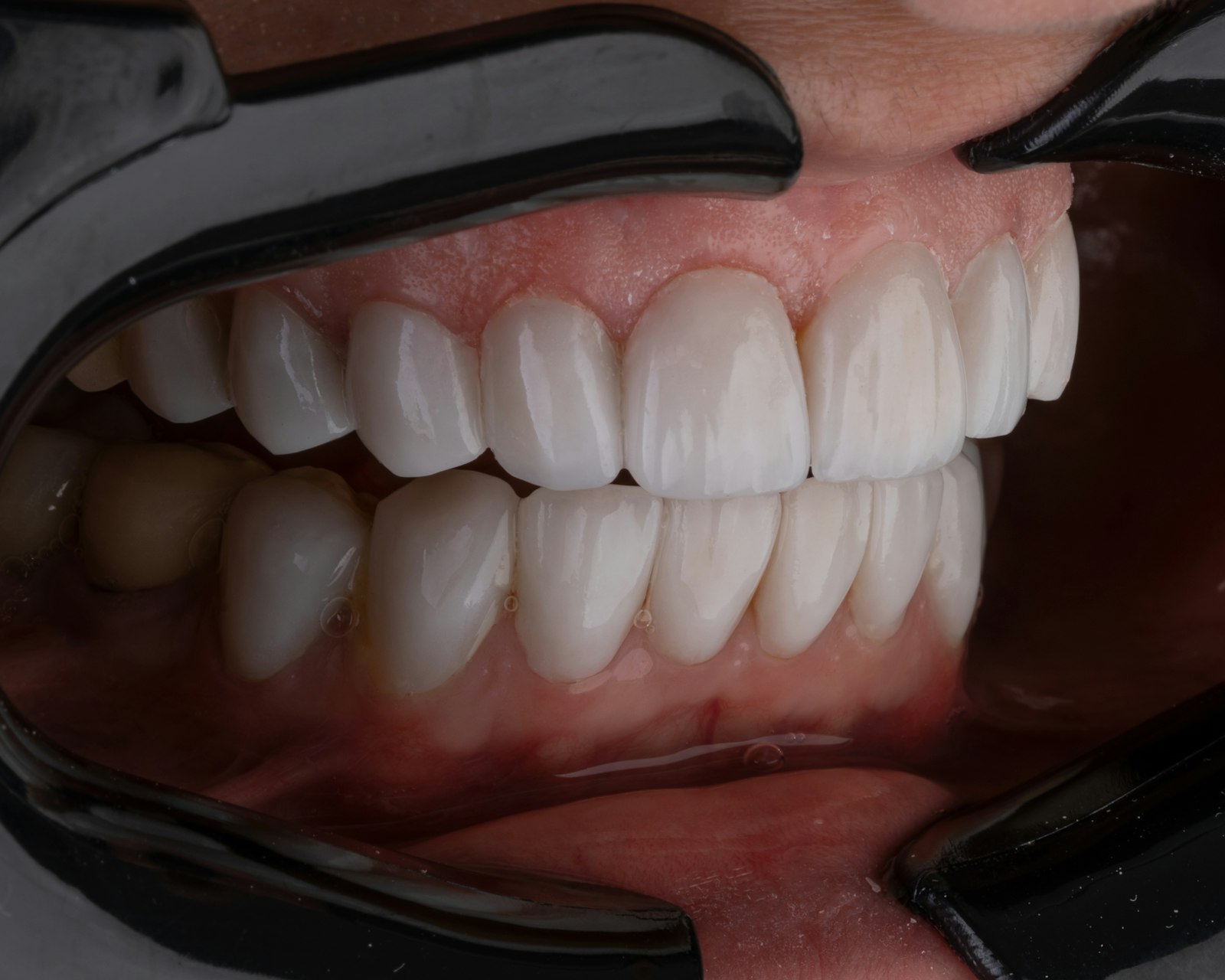

When you are missing several teeth in a row, you do not necessarily need one implant for every gap. An implant-supported bridge spans the space using a few well-placed implants to carry a fixed bridge of several teeth. The single idea that decides most of the plan is simple: the number of implants does not have to match the number of teeth being replaced. That is what makes this option both stable and efficient for larger gaps.
Key takeaways
- An implant-supported bridge replaces several missing teeth in a row using two or more implants that carry a fixed bridge.
- It does not need one implant per tooth, which can make it more efficient than individual implants for a longer gap.
- Unlike a traditional bridge, it does not rely on grinding down the neighbouring natural teeth.
- Because implants transmit chewing force into the jaw, they help preserve the bone in a way that bridges and dentures do not.
- Good bone, healthy gums and steady cleaning are the foundations of a long-lasting result.
What an implant-supported bridge is
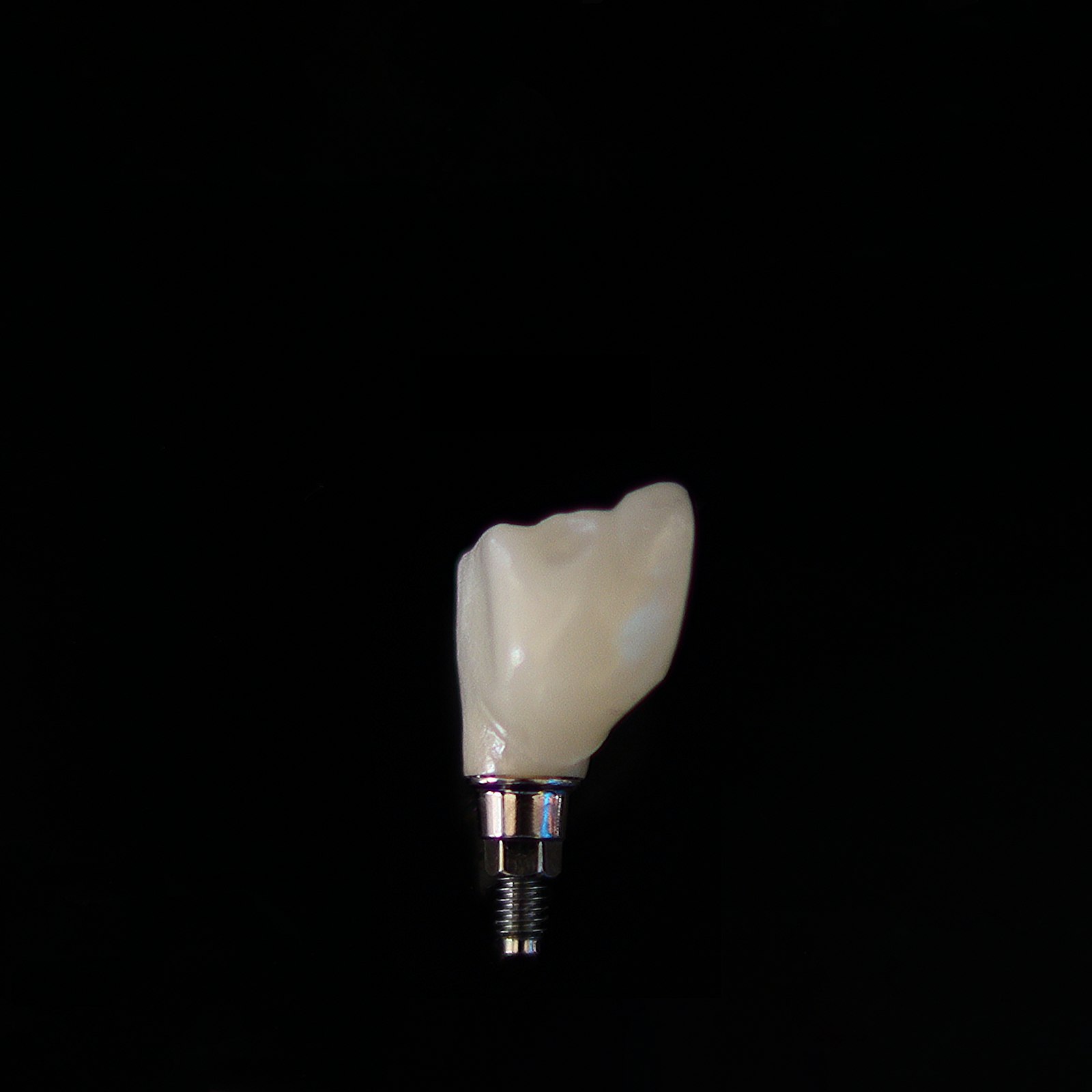
A bridge is a row of joined replacement teeth. In a traditional bridge, that row is anchored to the natural teeth on either side of the gap. In an implant-supported bridge, it is anchored instead to dental implants placed in the jaw. For example, four missing teeth in a row might be restored with two implants at each end carrying a four-tooth bridge, with the middle teeth suspended between them. The implants fuse to the bone through a process called osseointegration, which we explain in our guide to how implants bond to bone.
How it compares to other options
The three common ways to replace several teeth in a row each have trade-offs. The right choice depends on bone, budget, the health of the neighbouring teeth and what you want day to day.
| Option | How it is held | Key points |
|---|---|---|
| Implant-supported bridge | Two or more implants in the jaw | Fixed, stable, preserves bone, does not touch neighbouring teeth |
| Traditional (tooth-supported) bridge | Crowns on the natural teeth either side | No surgery, but the neighbouring teeth are trimmed down |
| Removable partial denture | Clasps on remaining teeth | Lowest upfront cost, removable, less stable, can feel bulky |
For a wider view of replacing missing teeth, our guide comparing implants, bridges and dentures walks through each path. If a whole arch is missing, a full-arch solution may suit better, which we cover in our full-arch implant guide.
Who it suits
An implant-supported bridge works best when there is enough healthy jawbone to hold the implants, the gums are healthy, and general health supports healing. Where bone has shrunk after teeth were lost, a graft may be needed first, which is one reason early planning helps; our article on bone loss after extraction explains why the ridge changes over time. Smoking, uncontrolled diabetes and untreated gum disease all affect success and are assessed beforehand.
The process and timeline
Treatment usually runs over a few months. After planning with scans, the implants are placed and then left to fuse with the bone, often around three to six months. A temporary restoration can bridge the gap in the meantime. Once the implants are stable, the final bridge is made and fitted. The exact sequence varies with your bone, the site and whether grafting is needed, so a tailored plan is essential.
What it costs
Cost depends on the number of implants, the size of the bridge, the materials, and whether any grafting is needed. As a general market guide only, replacing several teeth with an implant-supported bridge in Australia commonly runs into the many thousands of dollars, typically more than a traditional bridge but with the benefits of bone preservation and not altering the neighbouring teeth. These are general ranges, not a quote, and the team at Lumi Dental does not list its own prices here. The cleanest way to understand your situation is a consultation with a written plan. You can explore our dental implant options, see current offers on our pricing page, or book a complimentary consult for a tailored quote.
Caring for it
An implant-supported bridge is cleaned much like natural teeth, with the addition of cleaning underneath the bridge where it meets the gum. Interdental brushes, a water flosser and special implant floss all help. Keeping these areas clean protects against gum inflammation around the implants, which our guide to cleaning dental implants covers in detail. With good care and regular check-ups, implant-supported bridges can last many years.
Frequently asked questions
How many implants does a bridge need?
It depends on the length of the gap and the bone, but a bridge of several teeth is often supported by two or more implants rather than one per tooth. Your dentist plans the number from your scans.
Is it better than a normal bridge?
Each has a place. An implant-supported bridge does not require trimming the neighbouring teeth and helps preserve bone, while a traditional bridge avoids surgery and costs less upfront. The best choice depends on your teeth, bone and goals.
Does it help keep the jawbone?
Yes. Because the implants transmit chewing forces into the jaw, they help maintain the bone, which bridges and dentures resting on the gum do not do to the same extent.
How long does treatment take?
Commonly a few months, as the implants need time to fuse with the bone before the final bridge is fitted. A temporary can fill the gap meanwhile. Timelines vary with grafting and healing.
How do I clean under the bridge?
With interdental brushes, an implant floss and often a water flosser, to keep the area where the bridge meets the gum free of plaque. Your dental team will show you a routine that suits your bridge.
An implant-supported bridge is a stable, long-lasting way to replace several teeth in a row without altering the neighbours. To find out whether it suits you, the team at Lumi Dental in Melrose Park is happy to talk it through.

