
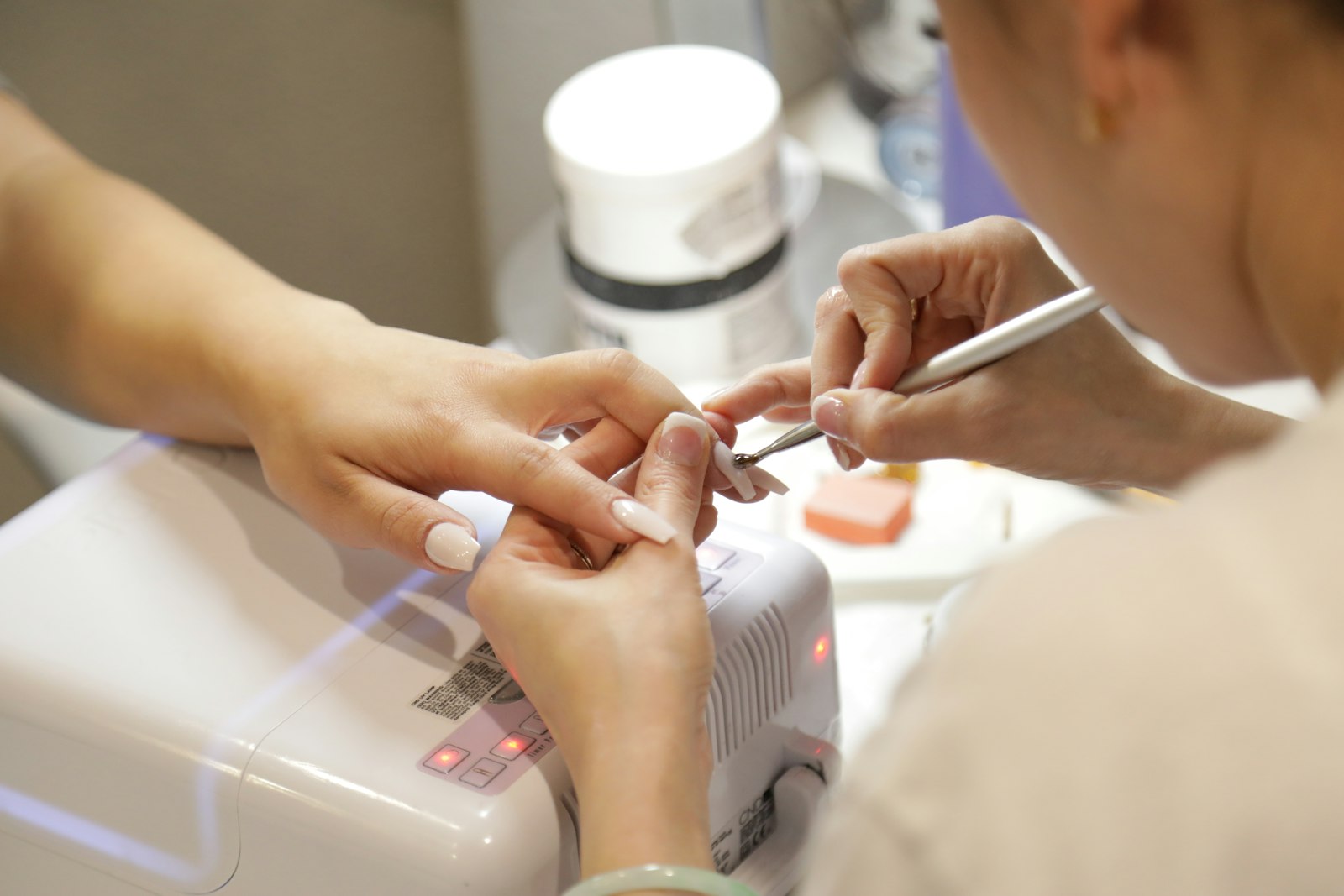

Nail technicians and beauticians can protect their teeth on the job by keeping water within reach, avoiding constant sugary sips and mints, and breaking up long seated stretches that encourage jaw clenching. Working with a mask over the mouth, chemical odours in the air and a full booking sheet is a setting where dental health can quietly slip down the priority list. This guide from Lumi Dental in Melrose Park, Sydney, covers what nail technician dental health typically involves and the small habits that can help.
Key Takeaways
- Breathing through a mask for hours, plus dust and fumes, can leave the mouth dry and irritated, and a dry mouth typically raises the risk of decay and gum inflammation.
- Long, seated work with the head tilted forward is often linked with jaw tension and clenching, which can wear teeth and cause headaches.
- Sipping sugary drinks or sucking mints to cover chemical odours bathes the teeth in sugar and acid across the whole shift.
- Biting your own nails or cuticles is common in beauty work and can chip teeth and irritate gums.
- A simple routine before, during and after each shift is easier to keep than a long list of rules.
- Ongoing cough, wheeze, or throat or nose irritation should be raised with your GP, as these are not dental problems.
Why the Salon Environment Matters for Your Mouth
A treatment room can look calm, but for the person working in it the day is physically repetitive. You sit for long stretches, lean in close to a client's hands or face, and often work through the day with a mask on. Clients come first, so drinks, snacks and toilet breaks tend to be pushed back.
None of this means salon work is harmful to teeth in itself. It means several small factors can add up: reduced saliva, frequent sugar exposure, muscle tension and habits picked up under pressure. Understanding each one makes it easier to change the parts you control.
Masks, Dust and Fumes: Dry Mouth and Irritation
Mouth-covered breathing
Wearing a mask for much of the day is sensible around acrylic and gel dust. A side effect for some people is that they breathe more through the mouth, particularly when the mask feels warm or restrictive. Mouth breathing tends to dry the tissues, and saliva is one of the mouth's main defences against decay. If this sounds familiar, our article on mouth breathing in adults explains what it can do to teeth and gums.
Dust and chemical odours
Filing and buffing acrylic or gel products creates fine dust, and many salon products give off strong odours. Some people notice a dry, scratchy or irritated mouth and throat during or after a shift. The reasons are not always clear, and individual sensitivity varies, so we can only describe this in general terms. Good ventilation, source extraction at the desk and a well-fitted mask are workplace measures that can help, and they are worth discussing with your employer or industry body.
What a dry mouth can lead to
When saliva flow drops, food particles and acids linger longer. Patients I see with a persistently dry mouth may notice more cavities near the gumline, a sticky or burning feeling, bad breath and gums that bleed more easily. Sipping water, chewing sugar free gum and using a fluoride toothpaste twice a day can typically help, and we can suggest other options at a check up.
Seated Posture, Forward Head Position and Jaw Clenching
Hours spent leaning over a client's hands often pull the head forward and lift the shoulders. Many people also hold their jaw tight while concentrating on detailed work, without realising it. Over time, this can contribute to sore jaw muscles, headaches around the temples, worn or flattened tooth edges and clicking in the jaw joint.
Clenching and grinding are related but not identical, and it helps to know which you do. Our guide to jaw clenching vs teeth grinding covers the differences and what to look for. A few practical habits can reduce the load:
- Set a reminder to check your jaw. Lips together, teeth apart, tongue resting gently on the roof of the mouth.
- Adjust chair and table height so your head can stay closer to neutral.
- Take a short stretch between clients, rolling the shoulders and gently opening and closing the jaw.
- If you wake with a sore jaw, mention it at your next dental visit so we can check for wear.
Stress from a busy day can add to this pattern. Our piece on whether stress can cause tooth problems is a useful read if you suspect it plays a part.
Biting Nails and Cuticles
Working around nails all day makes it easy to pick at a ragged edge with your teeth, especially when you are tired or concentrating. Biting nails or cuticles can chip tooth edges, push bacteria into the gums and, over time, may contribute to tooth movement or wear. It can also be a way of releasing tension, which links back to clenching.
If this is a habit for you, our article on the effects of nail biting on teeth explains what dentists typically look for. Keep a clipper or file on your station for the moment you feel the urge, and treat the habit the same way you would advise a client to: with a substitute action rather than willpower alone.
Water, Sugary Sips and Masking Odours
When you cannot leave the desk, a drink beside you is convenient. The trouble starts when that drink is a sweet coffee, a soft drink or a flavoured energy drink sipped from morning to close. Each sip lowers the mouth's pH for a period, and repeated sipping gives the teeth little time to recover. Our article on sports and energy drinks and your teeth explains how sugar and acid work together.
Mints and lollies used to mask chemical odours or to freshen breath between clients can have a similar effect if they contain sugar. Better options include:
- Plain water, sipped often, so the mouth stays moist.
- Sugar free gum with xylitol, which encourages saliva flow.
- Saving sweet drinks for a set break rather than sipping through the day.
Skipping water to avoid toilet breaks can backfire by drying the mouth further. A small bottle with a lid, kept at the station, tends to work better than a mug that has to be moved around client materials.
A Practical Daily Routine
The table below is a general guide. Adjust it to your own roster and salon layout.
| When | What to do | Why it helps |
|---|---|---|
| Before your shift | Brush with fluoride toothpaste, clean between teeth, drink a glass of water, eat a balanced breakfast or meal | Starts the day with a clean mouth and a moist one, and reduces the urge to snack on sweets |
| Before your shift | Fill a water bottle and pack sugar free gum, a nail clipper and a small snack such as nuts or cheese | Makes the better choice the easy choice when clients are booked back to back |
| During your shift | Sip water between clients, check that your jaw is relaxed, and stretch your neck and shoulders | Supports saliva flow and reduces clenching |
| During your shift | Choose sugar free gum instead of mints or lollies to mask odours | Avoids repeated sugar exposure across the day |
| During your shift | Use a clipper rather than your teeth on a ragged nail or cuticle | Protects tooth edges and gums |
| After your shift | Rinse with water, then brush and clean between teeth before bed | Removes the day's plaque and acids |
| After your shift | Stretch your neck and jaw, and note any soreness, dryness or cough | Gives you a record to share with your dentist or GP |
When to See Your GP
Some symptoms that show up in the mouth or throat are not caused by teeth. A cough that does not settle, wheeziness, shortness of breath, frequent nose or throat irritation, or symptoms that improve on days off work are worth discussing with your GP. They can consider occupational health advice and, where appropriate, arrange a referral. We are not able to diagnose these conditions, and dental care is not a substitute for a medical check.
It is also worth telling your dentist and GP about the products you work with and how long you work each day. That context helps both of us give more useful advice.
Common Questions
Can working in a nail salon cause dry mouth?
It can contribute for some people. Breathing through the mouth under a mask, long hours without water and irritation from dust or odours may all play a part. If dryness is constant, ask your dentist or GP to check for other causes, including medicines.
Does wearing a mask affect my teeth?
A mask itself does not damage teeth. The concern is that it may encourage mouth breathing, which can dry the mouth. A well-fitted mask, regular water sips and good brushing habits can help offset this.
Why does my jaw ache after long days of nail work?
Holding your head forward for hours and concentrating on fine work commonly leads to jaw muscle tension. Clenching or grinding, which you may not notice, can add to this. A dental check can show whether your teeth are wearing and whether a night guard is worth discussing.
Is biting my nails bad for my teeth?
Yes, it can be. Nail biting may chip or wear tooth edges and can irritate the gums. Switching to a clipper or file when you feel the urge usually helps.
Are sugar free mints safe for my teeth?
Sugar free options are typically kinder to teeth than sugared mints, though some are still acidic. Sugar free gum is generally a better choice because chewing encourages saliva.
Should I see a dentist or a GP for a persistent cough or irritation?
Start with your GP for cough, wheeze or breathing symptoms, as they can look at occupational causes. See your dentist for tooth, gum or jaw concerns. It is fine to see both.
Book a Check Up at Lumi Dental
If you spend your days caring for clients, it is reasonable to make time for your own dental care. The team at Lumi Dental in Melrose Park, Sydney, can check for dryness related changes, tooth wear and gum health, and suggest a routine that fits your roster. Have a look at our current deals for new patients, or read about our general dentist services in Melrose Park. You are welcome to ask for a free consult and a written quote before any treatment. For more on how work habits affect teeth, see our guide for retail and supermarket workers, who often face similar break and hydration pressures.


