


An oral medicine specialist is a registered dental specialist who diagnoses and manages non-surgical conditions of the mouth, such as ulcers that will not heal, white or red patches and burning mouth, but a general dentist is usually the right first stop. Oral medicine is one of 13 dental specialties recognised by the Dental Board of Australia, and most people reach an oral medicine specialist through a referral after a dentist or GP has examined the problem. In my experience, most mouth sores settle once the cause is removed, while a smaller group needs a biopsy or longer-term care.
Key Takeaways
- A general dentist is usually the first stop for a mouth ulcer, patch or burning sensation, and refers on when a specialist opinion would help.
- Oral medicine specialists focus on non-surgical conditions such as oral lichen planus, leukoplakia, burning mouth syndrome, dry mouth and medication-related mouth changes.
- A common rule of thumb is that an ulcer or patch that has not healed in about 2 to 3 weeks should be examined by a dentist or doctor. Our guide to mouth ulcers and when to worry covers the warning signs.
- Your GP may be involved for blood tests, such as iron, vitamin B12 and folate, or to look for links with coeliac disease or autoimmune conditions.
- Never stop or change a prescribed medicine because of a mouth reaction without first speaking to the doctor who prescribed it.
- "Specialist" is a protected title in Australia, and you can check any practitioner's registration on the AHPRA public register.
What Does an Oral Medicine Specialist Do?
Oral medicine sits where dentistry and general medicine meet. An oral medicine specialist has completed further university training after their general dental degree and is registered in the specialty with the Dental Board of Australia. Their work is mostly diagnostic and medical rather than surgical. Many work in hospitals and dental hospitals or alongside oral pathology services, and some also see patients in private rooms.
Conditions they commonly see include:
- Recurrent mouth ulcers, or ulcers that do not heal
- Oral lichen planus and lichenoid reactions
- White or red patches, known as leukoplakia and erythroplakia
- Burning mouth syndrome
- Dry mouth, including dry mouth linked to Sjogren's syndrome
- Unexplained facial pain and changes in taste
- Mouth effects of medicines, including lichenoid reactions and medication-related jaw problems
- Mouth care for people having cancer treatment
What a General Dentist Does First
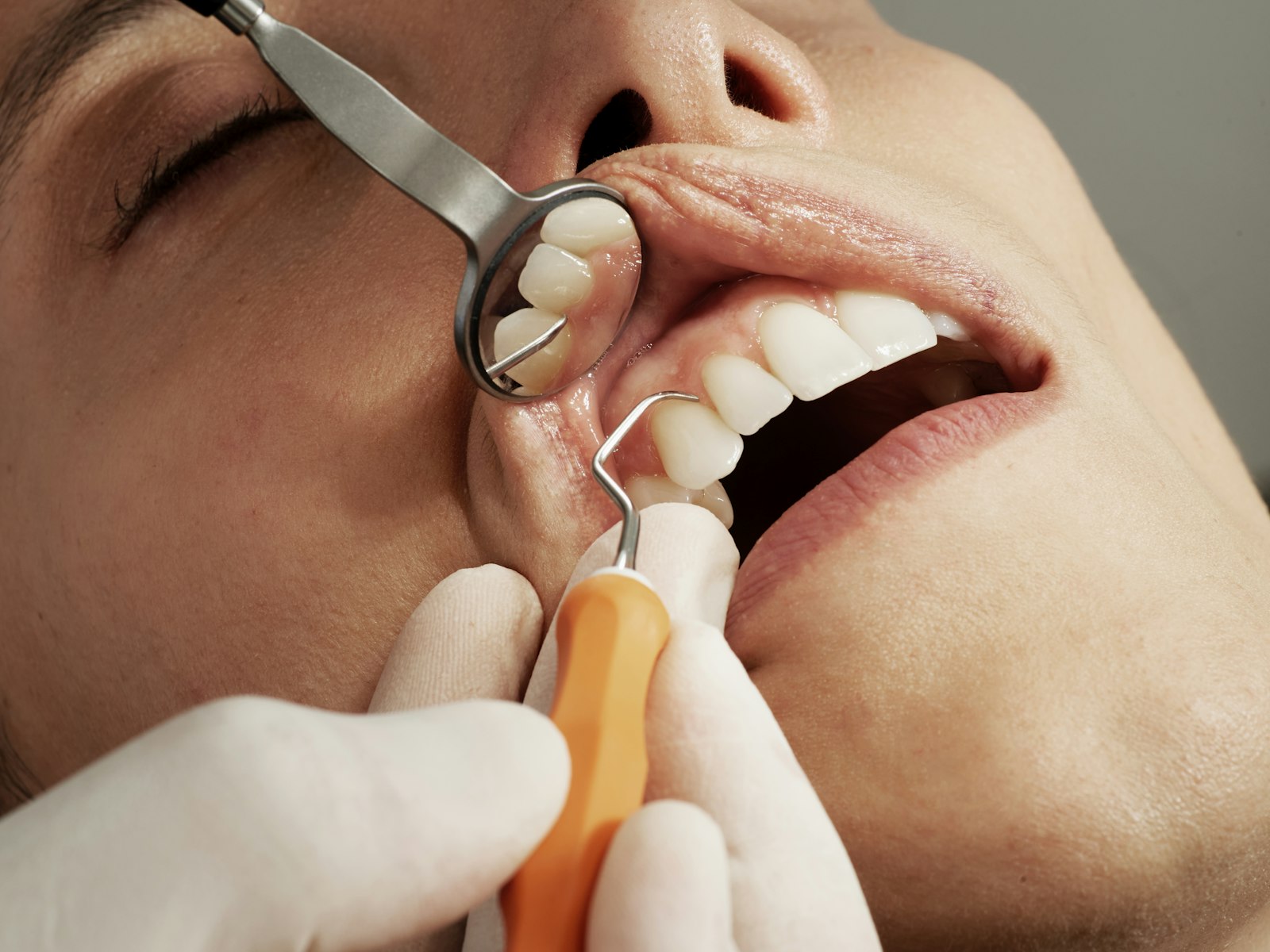
When you see a general dentist with a sore, patch or burning feeling, the first visit usually involves:
- A history: how long it has been there, whether it comes and goes, recent illness, new medicines, smoking and alcohol use
- A careful look at the area and the rest of the mouth, including the tongue, floor of the mouth, cheeks, palate and gums
- Checking for an obvious cause, such as a sharp tooth, broken filling, rough denture edge or brace wire
- Often a clinical photograph, so any change can be compared at a review appointment around 2 weeks later
Plenty of problems can be managed by a general dentist: an ulcer caused by a sharp edge, a denture sore, oral thrush, or a minor burn from hot food. Removing the cause and reviewing the area is often all that is needed. When a sore does not behave as expected, or the history raises concern, the team at Lumi Dental refers to a registered specialist. Our article on dental specialists explained sets out the different specialties.
If a Sore or Patch Lasts More Than Three Weeks, Get It Examined
This is the single rule worth remembering. Most ordinary mouth ulcers, including the common recurrent kind, heal on their own within a week or two. A widely used rule of thumb is that any ulcer, lump, white patch or red patch that has not healed in about 2 to 3 weeks should be checked by a dentist or doctor.
That does not mean something serious is going on, as most persistent sores still have a harmless cause. It means the sore needs a proper assessment, which may include a biopsy.
Book in sooner if you notice any of the following:
- A sore with hard or raised edges
- A red patch, or a patch that is partly red and partly white
- Bleeding from the area without an obvious reason
- Numbness of the lip, tongue or chin
- A lump in the neck that does not go away
- A sore that keeps growing, or new difficulty swallowing
Smoking, heavy alcohol use and a history of previous mouth lesions all make early review more important.
Who Treats What: A Symptom Guide
A general guide to where most people start, and when an oral medicine specialist may become involved.
| Symptom | Usually start with | When an oral medicine specialist may be involved |
|---|---|---|
| Single ulcer next to a sharp tooth, filling or brace wire | General dentist | If it has not healed about 2 to 3 weeks after the cause is fixed |
| Ulcers that keep coming back | General dentist or GP | Frequent, large or slow-healing ulcers, or ulcers with gut, skin or joint symptoms |
| White lacy lines on the cheeks, or sore peeling gums | General dentist | To confirm oral lichen planus and plan long-term care |
| White or red patch that does not rub off | General dentist | Often, for biopsy and ongoing monitoring |
| Burning tongue or mouth that looks normal | General dentist, then GP for blood tests | When dental, fungal and blood causes have been ruled out |
| Persistent dry mouth | General dentist or GP | If Sjogren's syndrome or a medicine effect is suspected |
| Mouth changes after starting a new medicine | General dentist and the prescribing doctor | Lichenoid reactions or medication-related jaw problems |
| Mouth care before or during cancer treatment | General dentist and the oncology team | Often, as part of hospital-based care |
| Sore spot or redness under a denture | General dentist | Rarely, and only if it persists after the denture is adjusted |
Common Conditions Seen in Oral Medicine
Oral lichen planus
Oral lichen planus is a long-term inflammatory condition that often appears as white lacy lines on the inside of the cheeks, and can make the gums red and tender. It is managed rather than cured, and regular review is usually recommended.
White and red patches
Leukoplakia is a white patch, and erythroplakia a red patch, that cannot be wiped off and has no other obvious cause. Both are watched closely, and a biopsy is often recommended to understand what is happening in the tissue. Our guide to white and red patches in the mouth explains the difference in more detail.
Burning mouth syndrome
Burning mouth syndrome causes a burning or scalding feeling, often of the tongue, lips or palate, in a mouth that looks healthy. It is a diagnosis reached after other causes, such as thrush, dry mouth, low iron or vitamin B12 and denture problems, have been ruled out. You can read more in our burning mouth syndrome guide.
Medication-related changes
Some medicines can cause lichenoid reactions, dry mouth or, less commonly, problems with the jaw bone. If you suspect a link, tell both your dentist and the doctor who prescribed the medicine. Never stop or change a prescribed medicine without speaking to the prescriber first.
Where Your GP Fits In
Some mouth problems are a sign of something happening elsewhere in the body, and your GP is well placed to look into it. Recurrent ulcers can be linked to low iron, vitamin B12 or folate, and occasionally to coeliac disease, inflammatory bowel conditions or autoimmune conditions. A GP can arrange blood tests and refer to other medical specialists if needed.
If mouth symptoms come with tiredness, weight loss, gut problems, skin rashes or joint pain, raise them with your GP as well as your dentist. The two often work together.
What Happens If You Need a Biopsy
A biopsy means removing a small piece of tissue, usually under local anaesthetic, so a pathologist can examine it under a microscope. It may be done by an oral medicine specialist, an oral surgeon or, in some cases, a general dentist. It is usually quick, and the results go back to the clinician who took the sample. Our article on what to expect from an oral biopsy covers the steps and aftercare.
Being advised to have a biopsy does not mean your dentist suspects cancer. It is often the only reliable way to confirm a diagnosis or show that a patch is harmless.
Common Questions
Can a general dentist treat mouth ulcers?
Yes, a general dentist can diagnose and manage many mouth ulcers, especially those caused by sharp teeth, dentures, braces or minor injury. If an ulcer does not heal after the cause is removed, or keeps returning, the dentist may suggest blood tests through your GP, a biopsy or a referral.
Do I need a referral to see an oral medicine specialist?
A referral is not always required, but most patients are referred by a dentist or GP, and many hospital clinics accept referrals only. A referral also means the specialist receives your history, photos and test results, which makes the first appointment more useful.
Who treats mouth ulcers that won't heal?
Start with a dentist or GP, who will examine the ulcer, look for a cause and decide whether a biopsy or specialist opinion is needed. Any ulcer that has not healed in about 2 to 3 weeks should be checked rather than left to see what happens.
Is oral medicine the same as oral surgery?
No, oral medicine focuses on diagnosing and managing conditions mostly without surgery, while oral surgery deals with surgical treatment such as complex extractions. The two specialties often work together, and either may perform a biopsy.
How do I check whether a dentist is a registered specialist?
You can search the practitioner's name on the AHPRA public register, which shows their registration type and any recognised specialty. In Australia only dentists registered in a specialty, such as oral medicine, may use the title "specialist".
Start With an Exam at Lumi Dental
If you have a mouth sore, patch or burning feeling that has lasted more than a couple of weeks, the sensible first step is an examination with a general dentist. The team at Lumi Dental in Melrose Park will take a history, examine the area, photograph it where useful and arrange a review. Where a case needs a specialist opinion, the team refers to a registered specialist and sends through everything found so far. You can book a general dental examination in Melrose Park, and see current deals for ways to get started.


