

A blocked feeling and a little blood-stained mucus in the first few days after an upper dental implant or sinus lift can be normal, but pus, a foul smell or taste, fever, swelling that grows after day three, worsening facial pain, or air or fluid passing between mouth and nose are reasons to call the dentist the same day. The upper back teeth sit just under the maxillary sinus, so surgery there can briefly change how the sinus feels. A Cambridge University Hospitals leaflet notes that the sinuses may feel full or blocked for some weeks after a sinus lift. This guide sorts expected sinus symptoms from the ones that need a call.
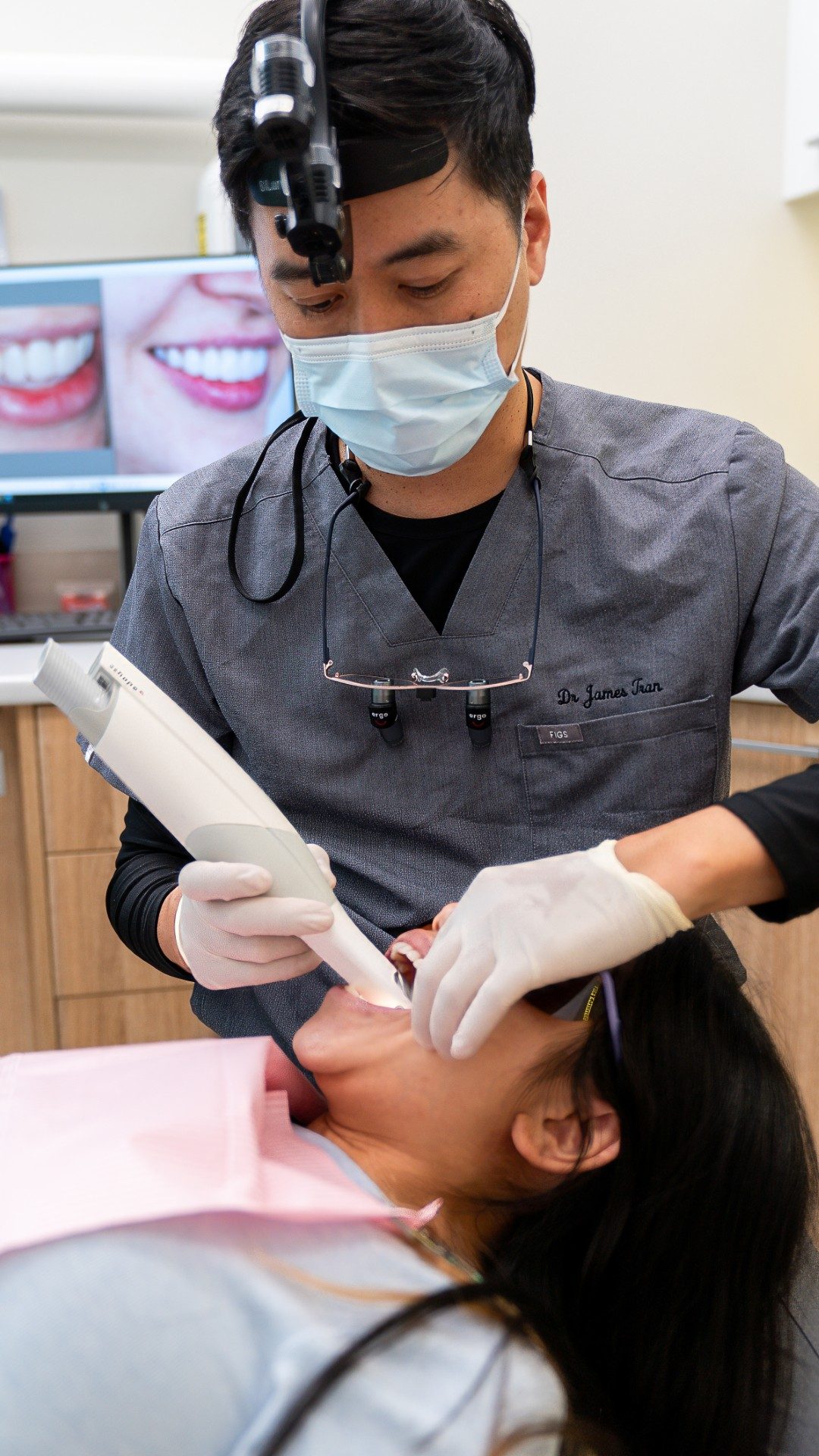
Written by Dr James Tran, BDent (University of Sydney), MICOI, GradDip (Oral Implants), general dentist at Lumi Dental in Melrose Park.
The short version
- Congestion, a small nosebleed and cheek swelling in the first days are common and tend to settle.
- The single rule: symptoms that ease each day are usually healing; symptoms that worsen after day two or three, or come with fever, pus or a bad taste, need a same-day call.
- Do not blow your nose hard while the site heals. One hospital leaflet says two weeks after a sinus lift.
- Our guide to bone grafts and sinus lifts explains the procedure itself.
- Antibiotics, decongestants and nasal sprays are the prescriber's or pharmacist's decision.
- One-sided sinus symptoms weeks or months later still deserve a check.
Why upper back implants sit so close to the sinus
The Cambridge leaflet describes the maxillary sinuses as air-filled spaces beside the nose, above the upper premolars and molars and below the eye, lined by a thin membrane. After an upper back tooth is lost, the bone under it often thins, and the sinus floor can end up only a few millimetres above the gum.
That is why bone height is measured on a 3D X-ray before an upper back implant, which also shows any swelling of the sinus lining. If height is short, a sinus lift raises the membrane and places graft underneath.
Drinks coming out of your nose after an upper tooth was removed is a different problem, covered in our article on an opening into the sinus after an upper extraction.
What normal recovery feels like
The Cambridge leaflet lists normal healing after a sinus lift as:
- pain controlled with simple pain relief
- swelling at its worst after about two days
- bruising over the cheek, sometimes spreading towards the lower jaw
- feeling better once stitches come out, at around ten days, and back to normal after two to three weeks
It also mentions bleeding, which can include a nosebleed, and describes normal bleeding as slow, dark red oozing. In my experience, the blocked feeling worries patients more than the bruising, mostly because nobody warned them about it.
Pressure inside the sinus can disturb a fresh graft. The leaflet advises not blowing your nose for two weeks and using any prescribed medicines as directed. Our article on exercise, alcohol and flying after implant surgery explains why flying and diving are usually avoided for a period; ask your dentist how long applies to you.
The single rule: easing is healing, worsening needs a call
If symptoms improve a little each day, that is usually healing. If they get worse after day two or three, call the same day. The Cambridge leaflet asks patients to make contact if swelling or pain worsens after two days, bleeding has not stopped by two days or is bright red and continuous, they develop a fever or feel unwell, or they think graft material was dislodged by a sneeze or nose blow.
| What you notice | When | What to do |
|---|---|---|
| Stuffy or blocked feeling on that side | Days 1 to 3, sometimes weeks | Usually normal if steady or easing; mention it at the review |
| Small nosebleed or blood-stained mucus | First day or two | Often normal; call if bright red and continuous |
| Cheek swelling and bruising | Peaks around day 2 | Normal; call if it grows after day 2 or 3 |
| Bad taste, foul smell or pus | Any time | Not normal: call the same day |
| Fever or feeling unwell | Any time | Not normal: call the same day |
| Air or fluid passing between mouth and nose | Any time | Not normal: call the same day, do not blow your nose |
| One-sided congestion, discharge or facial pressure | Weeks or months later | Book a review |
Swelling spreading towards the eye or neck, or trouble breathing or swallowing, is an emergency: call triple zero (000).
How often sinusitis follows a sinus lift
Figures depend on the technique and on how infection is defined. The Cambridge leaflet quotes infection in 2.9% of cases with the external, side-window approach and 0.8% with the internal approach, where the sinus floor is tapped up through the implant site. A review of rare complications in the Journal of the Korean Association of Oral and Maxillofacial Surgeons notes reported rates of up to 21% across the literature, a wider range that includes minor infections.
The review separates two kinds. Graft infection under the membrane is more frequent, with signs such as severe pain, facial swelling returning at two to three weeks, fever and loss of graft material. Infection of the sinus itself tends to cause pain, tenderness and pus draining from the nose. Most respond to antibiotics, though a major graft infection may need surgery.
Who may be more at risk
Healthdirect lists untreated allergies, a crooked nose, smoking, nasal polyps and overuse of decongestant sprays as raising the chance of sinusitis in general. The review suggests that anyone with a history of chronic sinus problems is assessed thoroughly before a lift. If you get frequent sinus infections or hay fever, say so at planning; our article on hay fever and your teeth explains the link with the upper back teeth.
A torn membrane, an implant tip or graft in the sinus
The membrane can tear while it is lifted: the Cambridge leaflet gives a 19% chance with the external approach and 3.8% with the internal one. The surgeon usually stitches or patches it, or may stop and let it heal for a few months before trying again.
A tear does not usually doom the implant. A systematic review in the Journal of Clinical Medicine pooled 18 studies and found no significant difference in implant failure between augmented sinuses with and without a perforated membrane. The same review looked at 11 studies of implants whose tip had passed through the sinus floor, found failure was generally low, and reported only one case of transient sinusitis.
Less often, an implant or graft material moves up into the sinus. The rare complications review lists causes such as low stability in the bone and pressure from a temporary denture, and says a displaced implant should be removed promptly or the patient referred to an oral and maxillofacial surgeon. Removal through the nose with an endoscope may involve an ENT surgeon.
Decongestants, saline sprays and medicines
Healthdirect lists saline sprays, decongestants and steroid nasal sprays among treatments a doctor may suggest for sinusitis, with antibiotics kept for severe or prolonged cases. After sinus surgery, use only what your dentist, doctor or pharmacist has advised. Our article on decongestants, cold medicines and your teeth covers their effects on the mouth.

Sinus symptoms weeks or months later
Healthdirect describes chronic sinusitis as lasting more than 12 weeks, with a blocked nose, a change in smell and facial pressure. Usually late symptoms are ordinary sinusitis, but the rare complications review describes a small series of eight patients whose sinusitis was linked to peri-implantitis after a sinus lift, with a blocked nose, mucus discharge and loss of smell, and loose screws on every implant crown.
Clues pointing to the implant include symptoms on that side only, gum swelling around it, or a loose crown. I usually suggest a review if one-sided congestion has not started to improve within healthdirect's window of around 7 to 10 days, or keeps returning.
How we approach this at Lumi Dental
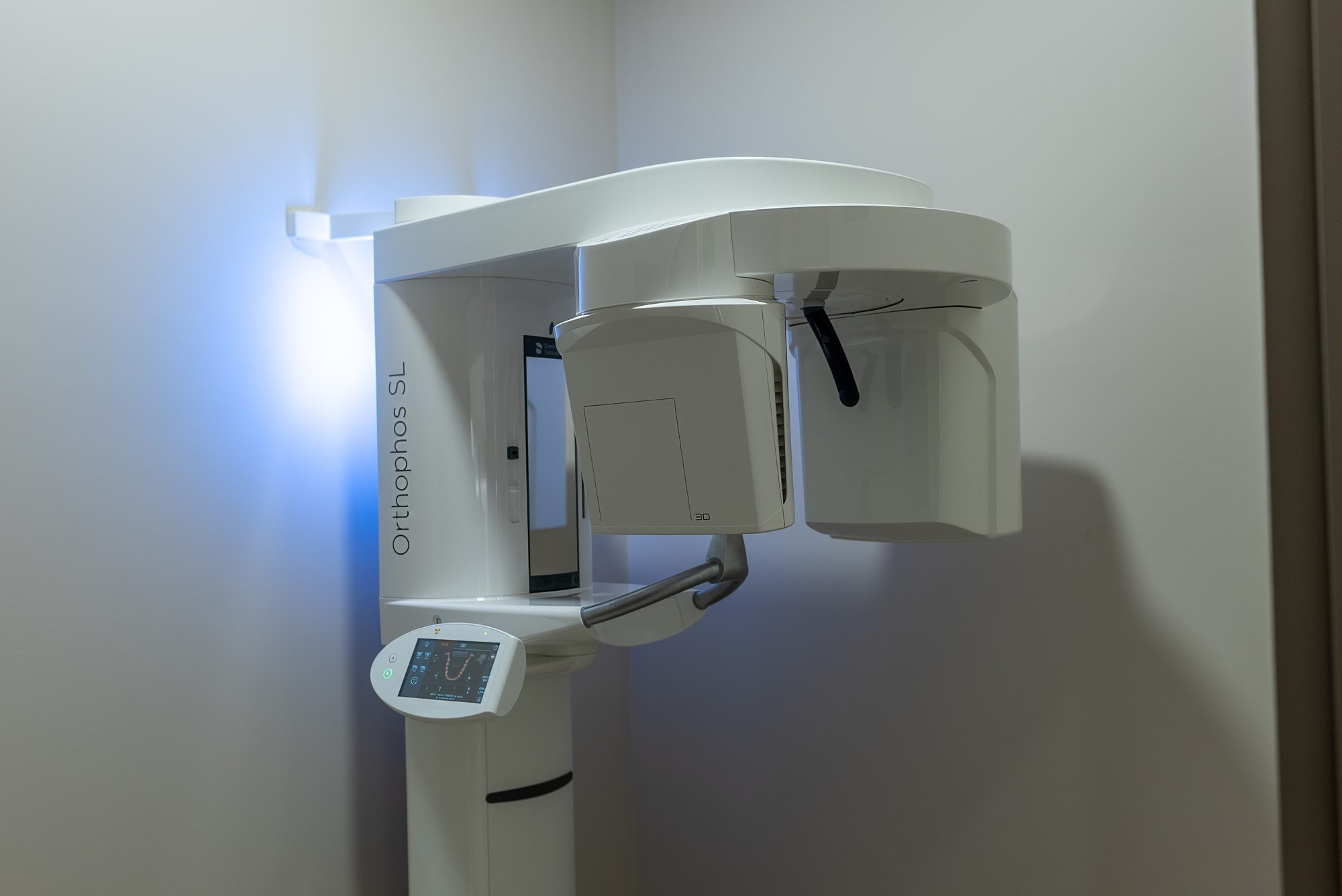
At Lumi Dental, upper back implants are planned with a 3D X-ray taken in house, so the dentist can see the sinus floor, bone height and sinus lining first. If the scan shows sinus disease, or you get frequent sinus infections, the team at Lumi Dental may suggest seeing your GP or an ENT surgeon before surgery. Where a sinus problem needs surgical care, Lumi Dental refers to an ENT surgeon or an oral and maxillofacial surgeon; neither is on staff. You get written aftercare and a review appointment. Read more about 3D imaging at Lumi Dental.
Questions patients ask
Is it normal to have a stuffy nose after a sinus lift?
Yes, a blocked feeling on that side is common and can last some weeks, slowly easing. With fever, pus, a foul smell or worsening pain, call your dentist.
How do I know if my sinus lift is infected?
Warning signs include pain or swelling that worsens after the first two or three days, fever, a bad taste or smell, and pus from the mouth or nose. Swelling that returns two to three weeks after surgery can also signal graft infection.
Can a dental implant cause sinus problems?
It can, but it is not common. An implant tip slightly through the sinus floor rarely causes trouble, while infection around an implant or a displaced implant can cause one-sided sinusitis.
How can I tell sinus pain from implant pain?
Healthdirect notes sinusitis can feel like pressure in the teeth and worse when bending over, often across several upper teeth, while implant pain tends to sit at one spot. Our guide to sinus toothache and referred pain explains more.
Can I blow my nose after a dental implant?
After a sinus lift, avoid it for as long as your dentist advises; one hospital leaflet says two weeks. After an upper implant without a lift, ask, because it depends on how close the implant sits to the sinus.
Considering an implant? Complimentary implant consult in Melrose Park
If you are planning an upper back implant and have a history of sinus trouble, raise it at a complimentary implant consult and the team at Lumi Dental can go through your 3D X-ray with you. Contact Lumi Dental to book, or read about dental implants in Melrose Park. Patients visit from Ryde, Parramatta, Ermington and Rydalmere, with on-site parking at Melrose Central.
Sources
- Cambridge University Hospitals: Sinus lift procedures
- Healthdirect: Sinusitis (rhinosinusitis)
- Journal of the Korean Association of Oral and Maxillofacial Surgeons: A review of rare complications of maxillary sinus floor augmentation (PMC)
- Journal of Clinical Medicine: Clinical outcomes of maxillary sinus floor perforation by dental implants and sinus membrane perforation during sinus augmentation (PMC)
About the author

Dr James Tran is a general dentist at Lumi Dental in Melrose Park. He holds a BDent from the University of Sydney and a Graduate Diploma in Oral Implants, and is a Member of the International Congress of Oral Implantologists (MICOI).
This article is general information only and is not a substitute for an examination and individual advice from a registered dental practitioner. Suitability for any treatment varies from person to person.







