

Teeth whitening after a stroke is usually possible once recovery has settled and your swallowing plan allows it; the method is then chosen to keep gel out of the throat and off the side of the mouth that does not feel normally. The Stroke Foundation estimates that more than 440,000 Australians are living with a history of stroke, and one in four strokes happens to someone under 65, so wanting your smile back is a common and reasonable goal. This guide is for stroke survivors and for the partners and carers who help.
Written by Dr James Tran, BDent (University of Sydney), MICOI, GradDip (Oral Implants), general dentist at Lumi Dental in Melrose Park.
The short version
- Whitening waits until your GP or rehabilitation team is happy with your recovery. Cosmetic treatment is never urgent.
- If a speech pathologist has given you a swallowing plan, it comes first. Ask them before using trays at home.
- A numb cheek or lip may not warn you about gel irritation. Check in a mirror and clear any excess.
- Brushing with the other hand and checking the weak cheek are covered in our guide to looking after your teeth after a stroke.
- A short in-chair session, or trays loaded by a carer with very little gel, often suits best.
- Blood thinners stay exactly as prescribed. Whitening does not change that.
The single rule: settled recovery, a safe swallow, then the method that keeps gel in place
Once your doctors are comfortable and your swallow is safe for the task, pick the approach that keeps gel on the teeth. For many people that is a short in-chair session first, where the team controls the gel and uses suction. For others it is take-home trays with a carer loading a very small amount and checking the numb side afterwards. In my experience, the people who do best are those who match the method to their hands, swallow and energy, rather than to the quickest result.
| Challenge | What may help |
|---|---|
| One-sided weakness | Pre-filled syringes, a tray case that opens with one hand, sitting at a table, or a carer who loads and seats the trays |
| Numb side of the mouth | A mirror check after seating, wiping away excess gel, and looking for redness or white patches afterwards |
| Swallowing difficulty | Your speech pathologist's advice first, tiny amounts of gel, upright posture, and in-chair whitening with suction |
| Aphasia | Written steps with pictures, yes or no questions, agreed hand signals and a support person in the room |
| Fatigue | Morning appointments, shorter sessions, and fewer tray days spread across the week |
| On blood thinners | Keep taking them as prescribed, mention them when booking, and have the gums checked first |
Why whitening waits in the early months
The weeks and months after a stroke belong to rehabilitation: walking, speech, swallowing and getting home. The Stroke Foundation's communication fact sheet notes that most recovery takes place in the first few months, though people can keep improving for years. Its fatigue fact sheet says about half of survivors experience fatigue, usually starting in the first few weeks, and suggests planning activities for when you have the most energy and breaking tasks into steps.
There is no set number of months to wait. Ask your GP or rehabilitation team, and tell the dentist what they said. A dental check-up and clean can often happen sooner, and NSW Health lists dry mouth, weak face and tongue muscles and reduced feeling in the mouth among the effects of stroke, so getting decay and gums checked is worth doing anyway.
Swallowing difficulty and gel that escapes the tray
The Stroke Foundation explains that a stroke can change how you move food around the mouth and how well you swallow, which is called dysphagia. With dysphagia, food or drink can go into the lungs instead of the stomach. That can happen with no cough or choking at all, which the Stroke Foundation calls silent aspiration. People with dysphagia may also have trouble controlling saliva.
Whitening gel is meant to stay in the tray, but a little always squeezes out. Someone with a slower or weaker swallow may hold that gel at the back of the mouth for longer. So:
- Ask your speech pathologist whether trays are suitable for you, and how upright you should sit.
- Use far less gel than you might expect, and wipe away anything that squeezes out.
- Spit rather than swallow when the trays come out, if your plan allows it.
- If coughing or a wet-sounding voice appears during tray wear, stop and tell your GP or speech pathologist.
Our guide to swallowed whitening gel or gel on your lips explains what usually happens and when to call the Poisons Information Centre.
The side of the mouth that does not feel
Reduced feeling in the cheek, lip or gum on one side means you may not notice gel sitting on the gums, a tray edge rubbing, or a sore spot starting. Peroxide on gums usually stings and turns white for a while; if you cannot feel it, it stays longer.
A routine that helps:
- After seating the trays, look in a mirror and wipe the gum edge on the weak side with a tissue or cotton bud.
- After removing the trays, rinse if your swallowing plan allows, or wipe with damp gauze if it does not.
- Check the weak side in good light for redness, white patches or ulcers, or ask a carer to look.
- Stop and call the team if a sore spot does not settle within a day or two.
After an in-chair session, I check the weak side again before you leave.
Our article on how much whitening gel to put in your trays shows how small the right amount is. With a numb side, that small amount matters more than usual.
One-handed trays, lip seal and seating
Loading a tray usually takes two hands: one to hold the tray and one to press the syringe. If one hand is weaker, ask about pre-filled or easy-press syringes, rest the tray on a non-slip mat on the table, and choose a case that opens with one hand. A partner or carer can load the gel while you seat the trays.
Facial weakness can make it harder to close the lips over a tray, so saliva and gel may leak from the corner of the mouth on the affected side. A tissue within reach, sitting upright and shorter wear times all help. The tray set-up in our article on whitening with Parkinson's disease carries over well for anyone with reduced hand control.
Blood thinners and other medicines
Many stroke survivors take a blood thinner. Keep taking it exactly as prescribed; whitening is never a reason to stop, skip or change any medicine. Our article on whitening on blood thinners covers the gums and the clean beforehand, and if you are also thinking about replacing a missing tooth, see dental implants after a stroke.

In-chair whitening: communication, the chair and getting there
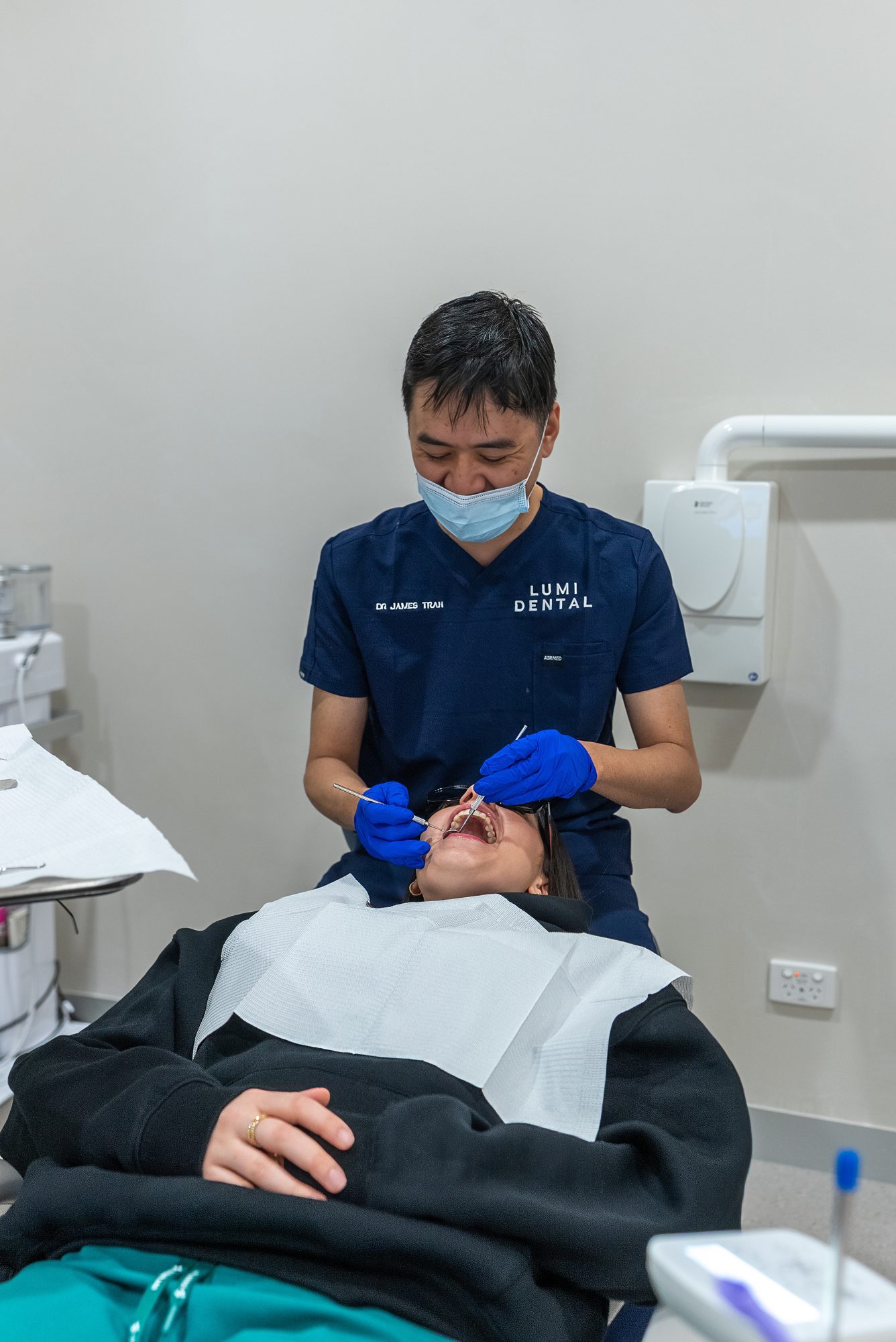
An in-chair session takes tray handling out of the picture: the team places a gum barrier, applies the gel, uses suction and removes it all.
Aphasia and agreeing signals
The Stroke Foundation reports that one in three stroke survivors have communication difficulties, including aphasia, which affects talking, reading, writing or understanding, even when thinking and memory are unaffected. Once the cheek retractor is in, nobody can talk easily anyway, so agree on signals before you start:
- a raised hand to stop;
- a thumbs-up or thumbs-down for "comfortable" or "not comfortable";
- written steps with pictures to read beforehand;
- questions the team asks one at a time, in a quiet room, with yes or no answers.
This follows the Stroke Foundation's tips: face to face, one person speaking at a time, and short sentences.
Lying back, transfers and the day itself
Mention the stroke when you book, along with any walking frame or wheelchair, and whether lying back affects your swallowing. The chair can stay more upright, and the team can raise it in stages at the end. Morning appointments often suit people with fatigue. A support person is welcome in the room, and Melrose Central has on-site parking; check current hours on the contact page.
How we approach this at Lumi Dental
At Lumi Dental, a dentist first checks the teeth, gums and soft tissues, looks closely at the side of the mouth affected by the stroke, and asks about your swallowing plan, medicines and rehabilitation. Gum problems or decay are treated before whitening, with the oral health therapists providing cleans and gum therapy. The whitening options are named Home, Refresh and Radiance, and the dentist will explain which may suit your hands, swallow and energy. You can read more on the teeth whitening page.
Questions patients ask
How long after a stroke can I get my teeth whitened?
There is no fixed time. Wait until your GP or rehabilitation team is happy with your recovery and any swallowing plan allows it, then book an examination first.
Is whitening safe if I have trouble swallowing?
It can be, with the right method. Ask your speech pathologist first; in-chair whitening with suction, or trays with a very small amount of gel and an upright posture, keeps the risk of swallowing gel low.
Do I need to stop my blood thinner before teeth whitening?
No. Keep taking it exactly as prescribed. Tell the team which medicine you take so they can check your gums and plan the clean.
Can a carer put whitening trays in for me?
Yes. A partner or carer can load the gel, seat the trays and check the weak side afterwards. The team can show them how at the fitting visit, or see our guide on loading whitening trays.
Will whitening work on teeth stained after my stroke?
Often, if the stain is in the natural tooth. Stain from a dry mouth or medicines may partly polish off with a clean, and fillings or crowns will not change colour.
Thinking about whitening? Complimentary cosmetic consult in Melrose Park
If you have had a stroke and would like a brighter smile, the team at Lumi Dental can check your teeth and gums, talk through your swallowing plan and hand function, and suggest whether trays or an in-chair visit may suit. Book a complimentary cosmetic consult at Melrose Central in Melrose Park, or read about teeth whitening options at Lumi Dental. Patients visit from Ryde, Parramatta, Ermington and Rydalmere.
Sources
- Stroke Foundation: Top 10 facts about stroke
- Stroke Foundation: Swallowing after stroke fact sheet
- Stroke Foundation: Communication after stroke fact sheet
- NSW Health: Stroke and oral health
About the author

Dr James Tran is a general dentist at Lumi Dental in Melrose Park. He holds a BDent from the University of Sydney and a Graduate Diploma in Oral Implants, and is a Member of the International Congress of Oral Implantologists (MICOI).
This article is general information only and is not a substitute for an examination and individual advice from a registered dental practitioner. Suitability for any treatment varies from person to person.







