Dental implants after a stroke are often still possible, but implant surgery is usually best planned once your stroke team or GP considers you medically stable, and your blood thinner is managed with the doctor who prescribed it rather than stopped by the dentist. A Danish nationwide study of more than 480,000 planned operations found the risk of a heart attack, stroke or cardiovascular death after surgery was highest when the stroke had happened less than three months earlier, and that the risk levelled off after about nine months. Those were mostly hospital operations, not dental implants, but they explain why timing comes first.
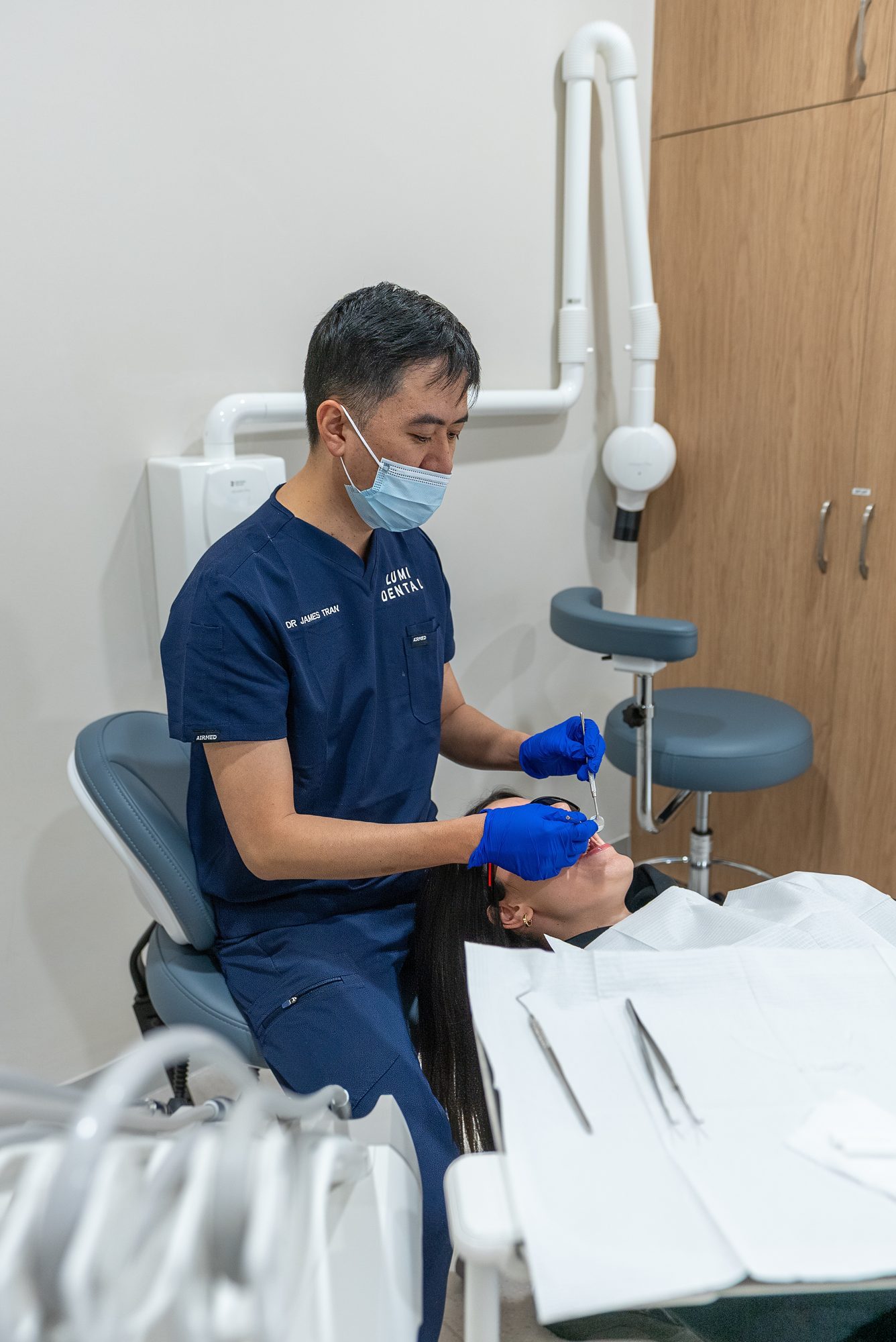
Written by Dr James Tran, BDent (University of Sydney), MICOI, GradDip (Oral Implants), general dentist at Lumi Dental in Melrose Park.
The short version
- An implant is planned treatment, so there is rarely a reason to place one in the early months after a stroke or TIA (a mini-stroke).
- Your stroke team or GP decides when you are stable enough for planned surgery.
- Keep taking every blood thinner exactly as prescribed. The team at Lumi Dental writes to your GP or specialist before planning surgery. Our guide to dental implants and blood thinners explains how each type is handled.
- Weakness in one hand changes which kind of implant teeth make sense, because someone has to clean them every day.
- Swallowing changes and tiredness shape how appointments are run.
Why timing matters after a stroke or TIA
The Stroke Foundation explains that after a stroke or TIA, the risk of having another one is higher, which is why almost everyone is started on medicines to lower it. Surgery adds its own stress on blood pressure and clotting.
In the Danish study, compared with people who had never had a stroke, the odds of a major cardiovascular event were about 14 times higher when the stroke was less than three months before surgery, about 5 times higher at three to six months, and about 3 times higher at six to twelve months. After about nine months the risk appeared stable, although it stayed above that of people who had never had a stroke. The raised early risk applied to lower-risk operations too, not only major surgery.
A review in Clinical Medicine explains part of the reason. After a stroke, the brain's ability to keep its own blood flow steady is impaired, possibly for one to three months, so even modest drops in blood pressure matter more. The authors suggest delaying planned surgery by about three months, tailored to the person.
The single rule: stable first, blood thinner stays, then plan the teeth
If you have had a stroke or TIA in the past few months, start with your stroke team or GP, not with the implant. Ask them: am I stable enough for a planned dental procedure under local anaesthetic? Once the answer is yes, the dentist plans around your medicines rather than changing them.
Waiting does not mean living with pain. A broken tooth, an infection or a sore denture can be treated in the meantime. In my experience, the waiting months are a good time to work out how teeth will be cleaned at home, because that answer shapes the whole plan.
Blood thinners after a stroke
The Stroke Foundation describes two groups of blood-thinning medicines used after a stroke or TIA. Antiplatelet medicines include aspirin, aspirin combined with dipyridamole, and clopidogrel. Anticoagulants include warfarin and the direct-acting oral anticoagulants (often called DOACs) such as dabigatran, apixaban and rivaroxaban. Its advice: do not miss doses, because stroke risk rises very quickly, and tell your doctor about the blood thinner before any surgery.
The Clinical Medicine review adds that stopping antiplatelet medicine around surgery has been linked with a higher risk of stroke. For implant surgery, bleeding is usually controlled in the mouth with careful technique, stitches and pressure. A dentist does not stop, skip or change a blood thinner.
If you take warfarin, bring recent INR results. If you take a DOAC, the plan for the day of surgery is confirmed with your prescriber.
What to check before implant planning
These are the questions I usually work through at the first visit.
| Question to check | Why it matters | Who answers it |
|---|---|---|
| How long since the stroke or TIA, and are you stable? | Risk after surgery is highest in the early months | Stroke team or GP |
| Which blood thinner do you take? | Sets the bleeding plan; the medicine itself usually continues | GP or prescriber, with the dentist |
| Is blood pressure well controlled? | Large swings around surgery matter more after a stroke | GP |
| How well do both hands work? | Decides which implant teeth can be cleaned at home | Dentist, with the occupational therapist if you have one |
| Is swallowing affected? | Shapes chair position, water spray and appointment length | Speech pathologist, then the dentist |
| Who helps with cleaning, now and later? | A carer may need to learn the routine | You, your family and the dentist |
Weakness on one side and choosing teeth you can clean
The Stroke Foundation lists weakness on one side of the body, trouble controlling movements, and ignoring one side (called neglect) among the effects of stroke. All three affect brushing. Food can sit unnoticed on the weaker side, and floss is hard with one good hand. Our guide to oral care for stroke survivors covers one-handed brushing in detail, so here the focus is the implant choice.
A conventional denture
No surgery, and it comes out for cleaning. The trade-off is hold: a weaker cheek and tongue make a lower denture harder to control.
An implant overdenture
Two or more implants hold a removable denture with clips. It is much more stable than a plain denture, and in some cases easier to keep clean than fixed teeth because it comes out and the short posts are brushed directly. Seating it needs some hand control, so practise before deciding. Our article on implant-retained overdentures explains how they work.
Single implants or a fixed bridge
A single implant crown is cleaned much like a natural tooth. A fixed full-arch bridge feels most like teeth but never comes out at home, so cleaning underneath needs a water flosser or small brushes daily. A design that can be simplified later is usually safer than one that depends on fine movement.
Swallowing, tiredness and how appointments are run
The Stroke Foundation notes that some people have difficulty swallowing food, drink or their own saliva after a stroke, and that fatigue is common. Both matter in the dental chair.
- Share any swallowing assessment from a speech pathologist, and any advice about thickened fluids.
- Sitting more upright rather than lying flat often feels safer, with regular pauses to swallow.
- Shorter visits at the time of day you feel freshest usually work better.
- Small parts are handled with extra precautions, such as gauze at the back of the mouth.
- Bring a carer or family member if you would like them there.
Our article on oral care during stroke recovery explains why the swallowing plan comes first in daily mouth care too.
Speech, memory and making decisions together
A stroke can affect speaking, understanding, reading and memory. That does not mean someone cannot make their own treatment decisions, but it may mean more time, written notes and a trusted person at the consultation. Patients I see often take the written plan home and come back with questions, which is a sensible way to decide.
If thinking changes may progress, the long-term question is who will clean the teeth later. Our guide to dental implants and dementia covers that planning in more depth.
IV sedation after a stroke
IV sedation can help with anxiety or a longer procedure, but after a stroke it needs medical clearance first, because it affects breathing and blood pressure. Lumi Dental offers IV sedation at the practice, given with monitoring, and our article on IV sedation for dental implant surgery explains what the day involves. Lumi Dental does not provide general anaesthetic itself and refers where it is needed, though IV sedation is available at the practice.
How we approach this at Lumi Dental
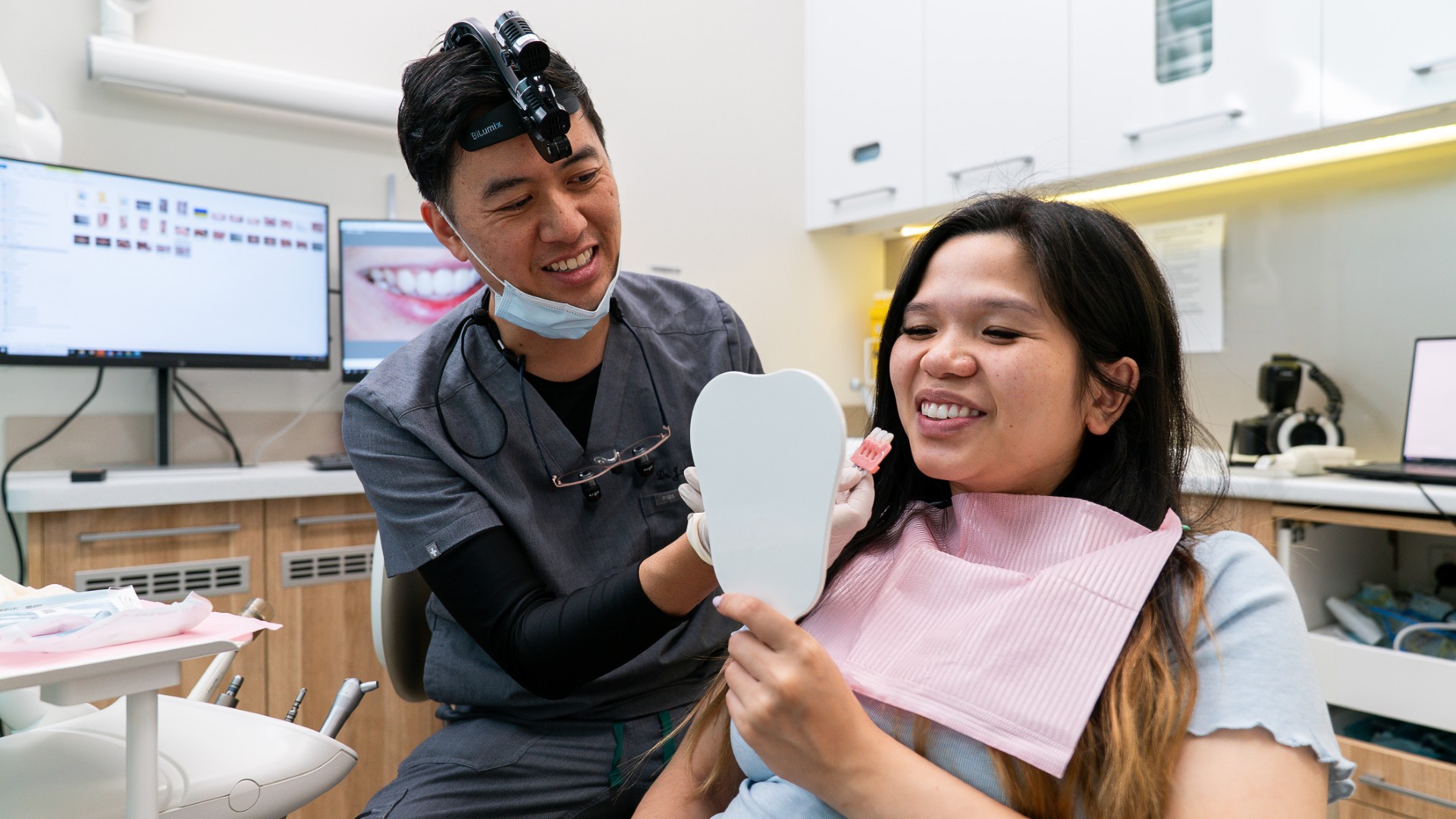
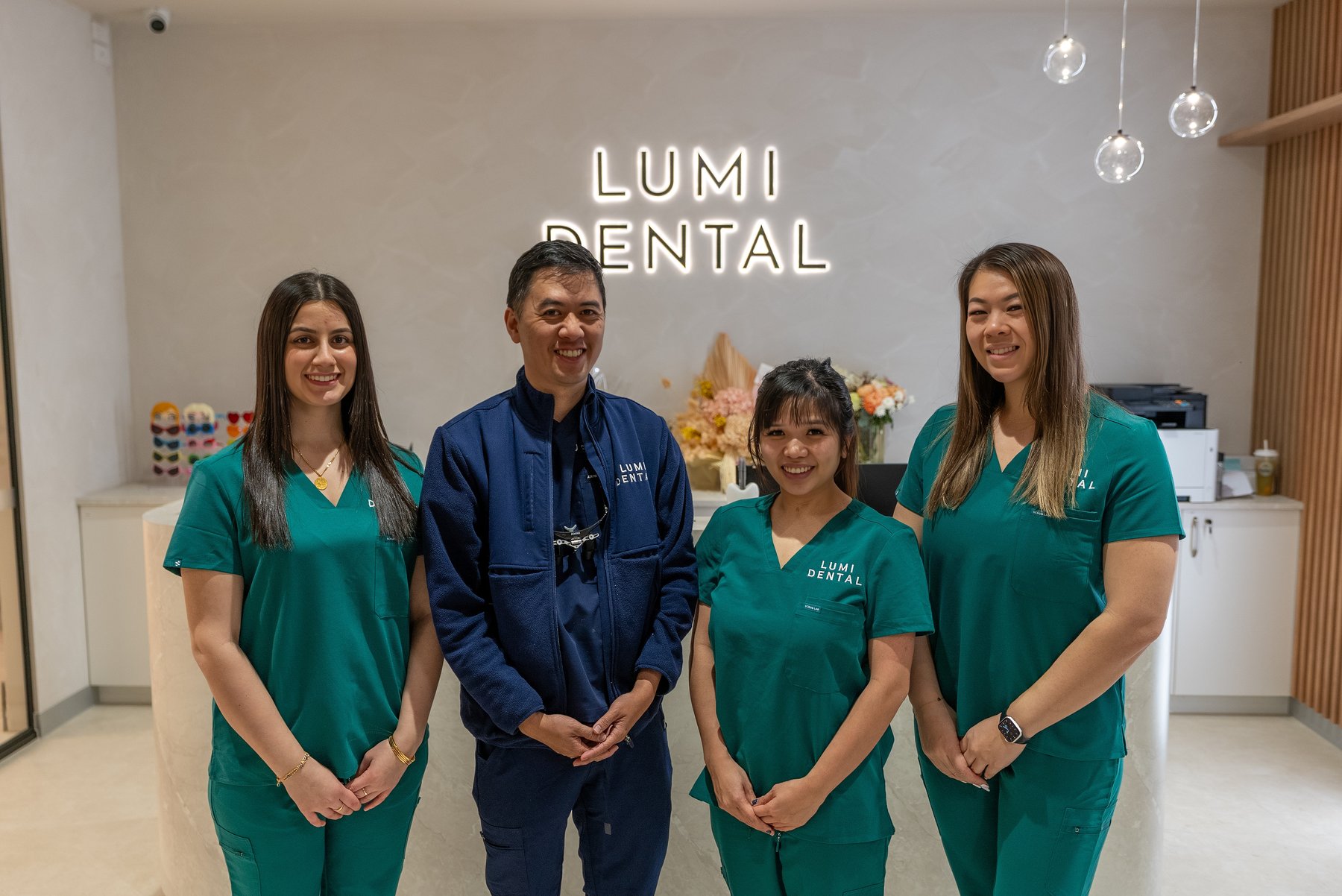
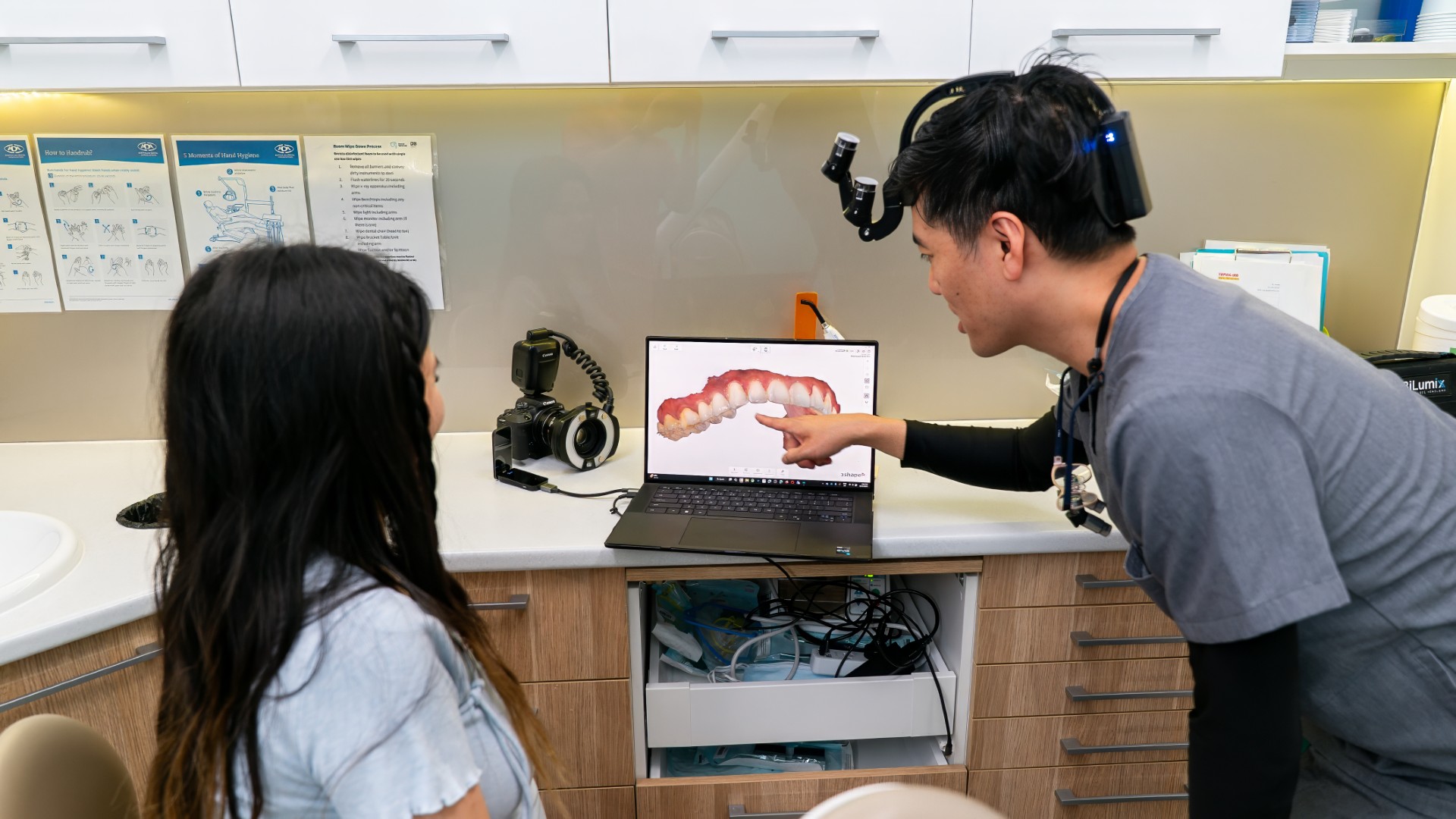
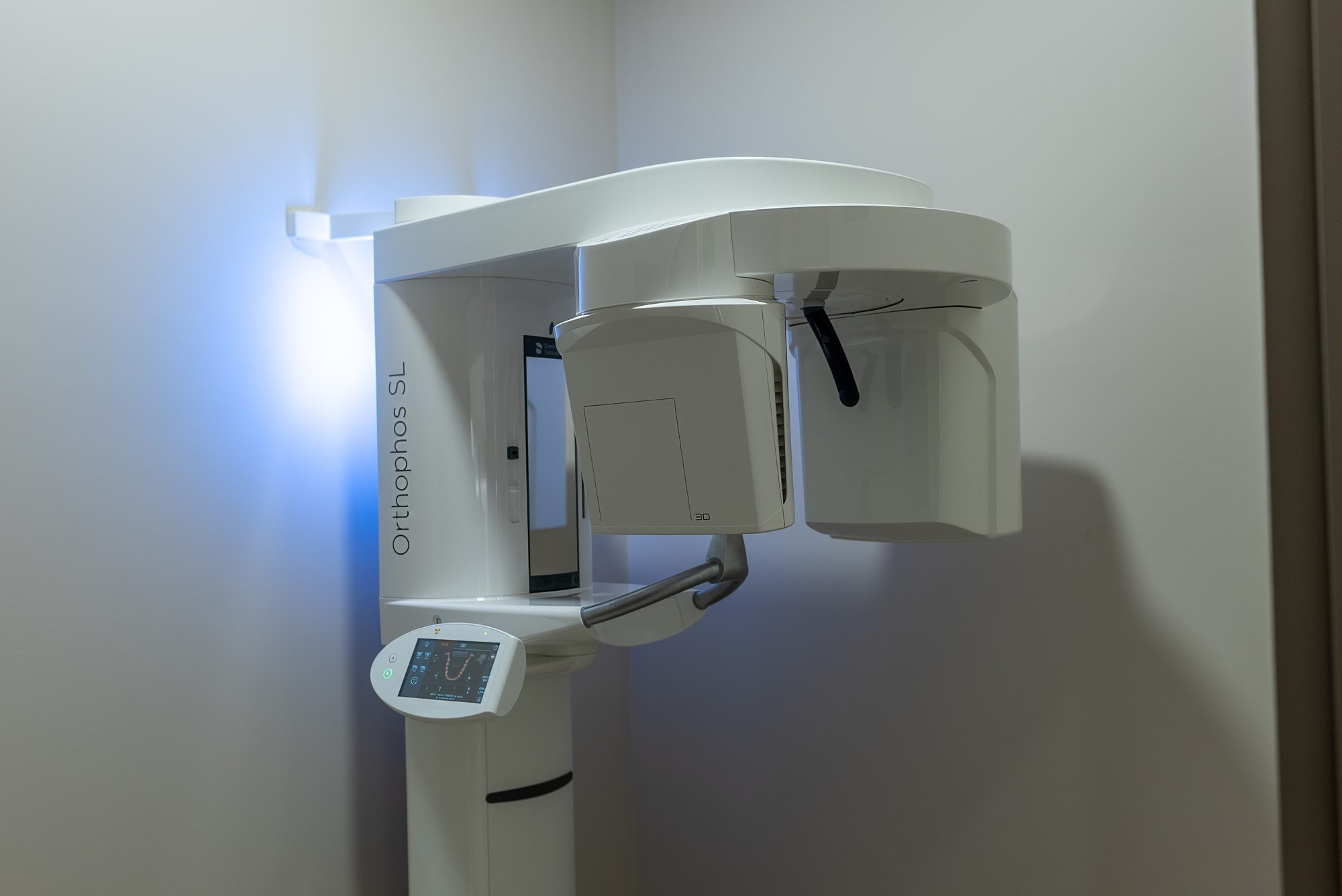
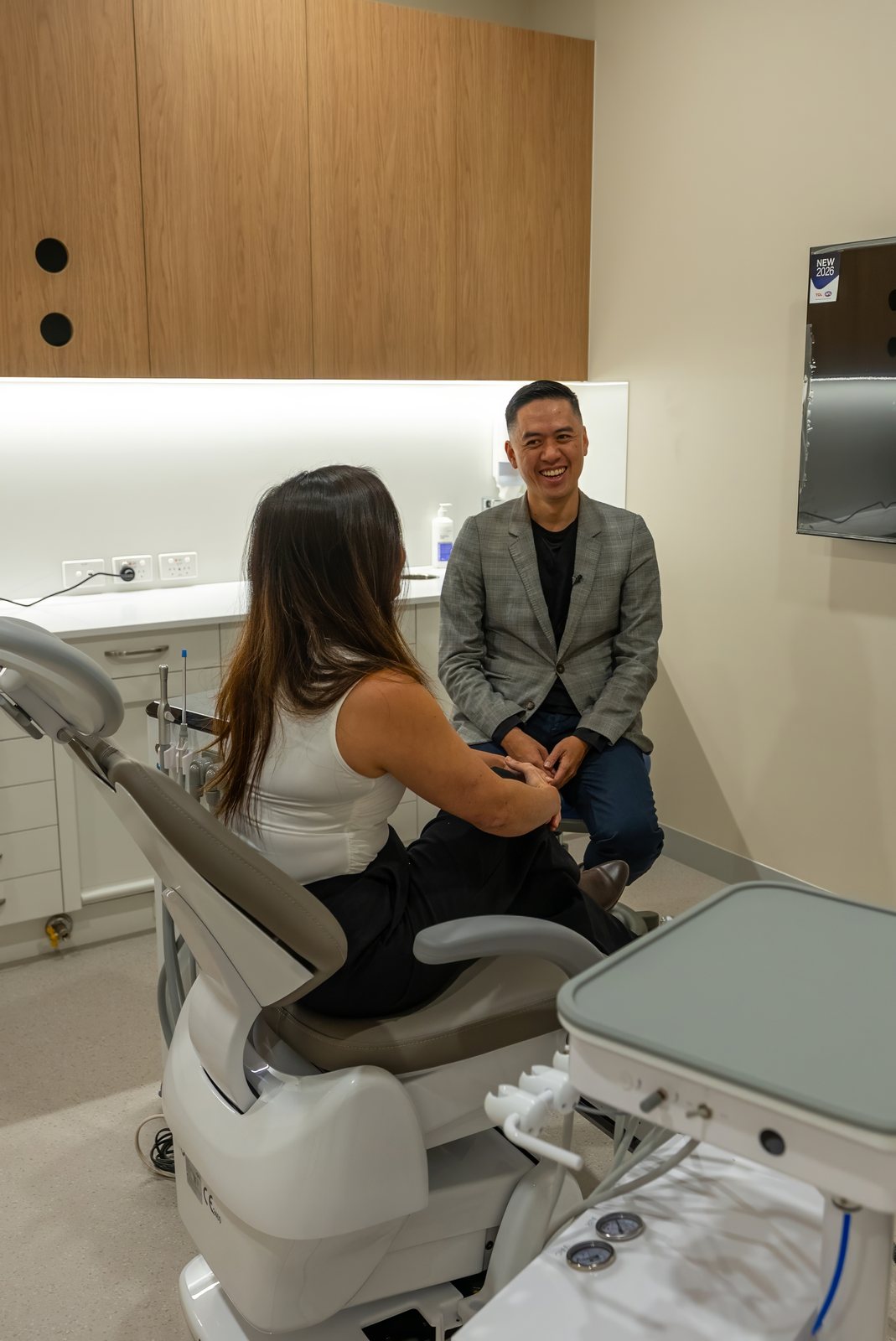
At Lumi Dental in Melrose Park, a dentist examines your mouth, denture or gaps, and takes a 3D X-ray in house where needed to measure the bone. We ask about the stroke, your medicines and how your hands work, and the team at Lumi Dental writes to your GP or specialist before planning surgery. Your written plan compares a denture, an implant overdenture and fixed options, including the daily cleaning each one involves. IV sedation is available after medical clearance, and complex cases are referred to a registered specialist. Read more about dental implants at Lumi Dental.
Questions patients ask
How long after a stroke can I have a dental implant?
There is no single number; your stroke team or GP confirms you are stable. Research on planned surgery shows the highest risk in the first three months, settling after about nine. Urgent dental problems can be treated sooner.
Do I have to stop my blood thinner for an implant?
Usually not. Bleeding is controlled in the mouth, and the dentist never stops or changes your medicine; our guide to implants and blood thinners explains how each medicine is handled.
Can I have implants after a TIA?
Often, yes, once the cause has been investigated and your doctor is happy you are stable. The same timing questions apply as after a stroke.
Is an overdenture easier than fixed implant teeth after a stroke?
For some people it is, because it comes out for cleaning and the posts are easy to reach. It still needs clipping in, so try the movement first.
Can my carer come into the appointment?
Yes. A carer or family member is welcome in the room, and it helps if they are the person who will help with cleaning at home.
Considering an implant? Complimentary implant consult in Melrose Park
If a loose denture or missing teeth are making eating harder after a stroke, the team at Lumi Dental can examine your mouth, talk through your options and plan around your medicines with your doctors. Contact Lumi Dental to book a complimentary implant consult, or read more about dental implants in Melrose Park. Patients visit from Ryde, Parramatta, Ermington and Rydalmere, with on-site parking at Melrose Central.
Sources
- JAMA (Jorgensen ME and colleagues): Time elapsed after ischemic stroke and risk of adverse cardiovascular events and mortality following elective noncardiac surgery (PubMed)
- Clinical Medicine (Mehdi Z and colleagues): Perioperative management of adult patients with a history of stroke or transient ischaemic attack undergoing elective non-cardiac surgery (PMC)
- Stroke Foundation: Effects of stroke
- Stroke Foundation: Medicine after stroke or TIA fact sheet
About the author
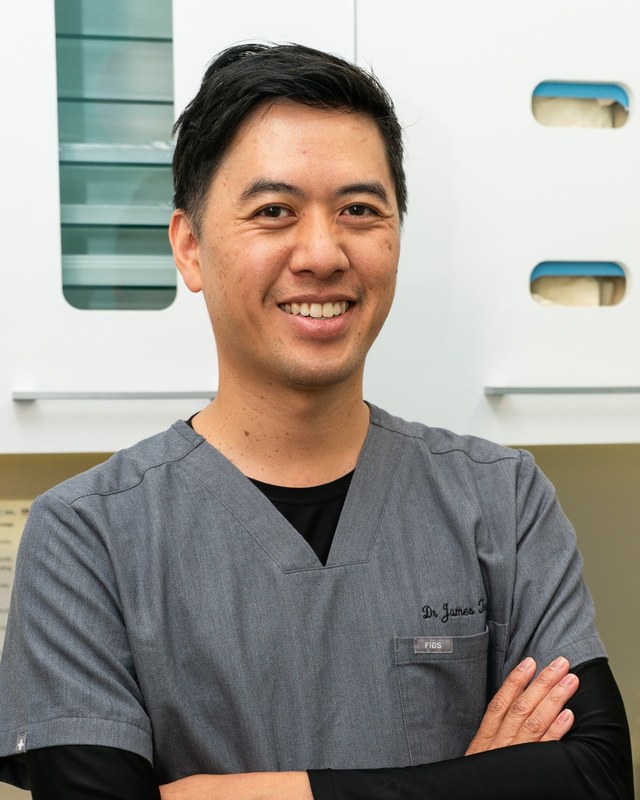
Dr James Tran is a general dentist at Lumi Dental in Melrose Park. He holds a BDent from the University of Sydney and a Graduate Diploma in Oral Implants, and is a Member of the International Congress of Oral Implantologists (MICOI).
This article is general information only and is not a substitute for an examination and individual advice from a registered dental practitioner. Suitability for any treatment varies from person to person.