


Parkinson's disease does not usually rule out teeth whitening, but the plan should be built around one goal: keeping the gel on the teeth and out of the throat. Tremor, stiffness, swallowing changes and the way medicines wear off across the day all affect how easy that is, so teeth whitening with Parkinson's is less about the diagnosis and more about the practical set-up. Parkinson's Australia reports that more than 150,000 people in Australia live with Parkinson's.
Written by Dr James Tran, BDent (University of Sydney), MICOI, GradDip (Oral Implants), general dentist at Lumi Dental in Melrose Park.
The short version
- Parkinson's on its own is not a reason to avoid whitening. Swallowing, saliva and hand control decide which method suits.
- Our article on Parkinson's disease and oral care covers brushing, drooling, dry mouth and check-ups in general. This one is only about whitening.
- Swallowing changes are common and not always noticed, so very small amounts of gel and good wiping matter more than usual.
- If loading and seating trays is hard, a short in-chair session booked for a time you are usually "on", or trays that a carer loads, often suits better.
- Take your Parkinson's medicines at the times your neurologist or GP has set. The appointment fits around them, not the other way round.
- Sitting up slowly at the end of a visit helps, because dizziness on standing is common with Parkinson's.
The single rule: keep the gel in the tray and out of the throat
When tremor, stiffness or slower swallowing make it hard to load a tray neatly, seat it in one go, or clear excess from the mouth, gel ends up where it should not be. If that describes your day, start with a short in-chair session booked in an "on" period, or trays loaded by a carer with a very small amount of gel. In my experience, most people do well with one of those two approaches.
| Challenge | What may help |
|---|---|
| Hand tremor | Pre-filled syringes, a carer loads the trays, elbows resting on the bench, or an in-chair session instead |
| Jaw or lip tremor | Shorter in-chair sessions with breaks, or trays that only need a gentle bite to stay seated |
| Swallowing difficulty | A tiny amount of gel, excess wiped away straight after seating, shorter wear times, and in-chair whitening with suction if swallowing is a real concern |
| Drooling | Sitting upright, a tissue to hand, and trays trimmed to keep the gel away from the gum edge |
| Dry mouth | Sipping water before and after, a lip balm, and a check for decay and root sensitivity first |
| "Off" periods | Use trays, or book visits, at the time of day you are usually "on" |
| Dyskinesia | A partly reclined chair, supports for the neck and knees, and breaks when movements increase |
Swallowing changes and why excess gel matters
Swallowing difficulty, called dysphagia, is part of Parkinson's for many people. A review in Expert Review of Gastroenterology and Hepatology reports that the prevalence of dysphagia in Parkinson's was around 35% when people described it themselves, but rose to around 82% when clinicians measured it. The same review notes that in one study, more than half of the people who did not report swallowing problems had them when tested with a camera examination. In other words, it is easy to have some swallowing change without being aware of it.
That matters because a little gel always escapes from a tray, and someone who swallows less often may hold it at the back of the mouth for longer. Using far less gel than you might expect, wiping off anything that squeezes out, and spitting rather than swallowing at the end all help. Our guide to swallowed whitening gel or gel on your lips explains what happens and when to call the Poisons Information Centre.
Drooling and dry mouth: how each affects the gel
It can seem odd that the same condition causes both drooling and a dry mouth, but both are common. A review of mouth problems in Parkinson's, published in the journal Parkinson's Disease, reports drooling rates of between 32% and 74% across studies, depending on how severe the disease was and how drooling was defined, and an estimate that a dry mouth affects approximately 55% of people with Parkinson's.
If saliva pools or spills
Extra saliva thins the gel and carries it towards the lips and throat. Sitting upright with the head supported, wiping the gum edge after seating the trays, and keeping a tissue in reach all help.
If the mouth is dry
A dry mouth can make peroxide sting the gums and lips, and often goes with more decay and sensitive exposed roots. Sipping water, a plain lip balm, and treating decay first all help. Our article on teeth whitening with a dry mouth goes into more detail.
On and off periods, dyskinesia and timing
Parkinson's UK describes "on" periods as times when symptoms are well controlled and "off" periods as times when symptoms return, often as levodopa wears off before the next dose is due. It also describes dyskinesia: involuntary twitching, jerking or twisting movements that some people notice after taking their medicine, when levodopa levels are higher.
Tray work and in-chair sessions both go better when movements are settled. A review of oral problems in Parkinson's suggests that dental hygienists schedule people 60 to 90 minutes after their medicines have been taken, because medicines tend to be most effective then. That is advice about booking the appointment. It is not advice to change when you take anything; your neurologist or GP decides that.
Lying back and sitting up
Being tipped flat can make dyskinesia, stiffness and swallowing harder. I usually suggest a partly reclined chair, a neck pillow and something under the knees. The NHS lists dizziness or fainting when moving from sitting or lying to standing among the symptoms of Parkinson's, caused by a sudden drop in blood pressure. At the end of any visit, the team brings the chair up in stages and you sit for a minute or two before standing.
Trays at home: a set-up for the person and a carer
Custom trays work well for many people with Parkinson's, if the routine suits the hands that use them. Our article on how much whitening gel to put in your trays shows how small the amount is. With a tremor, that small amount is the main safety step.
- Ask about pre-filled or pre-measured syringes, which need less squeezing and control.
- Sit at a table with good light and a mirror on a stand, elbows resting, rather than standing at the basin.
- Let a partner or carer load the trays and check the fit, while you seat them if you can.
- Choose a tray case that opens easily, or a shallow dish with a lid.
- Start with shorter wear times, at a time of day you are usually "on".
Strips are hard to place squarely with a tremor and may slip onto the gums. Our guide to whitening with stiff or sore hands has more tips on handling trays that apply here too.
In-chair whitening: when it suits better
In an in-chair session the team handles all of the gel: the gums are covered with a protective barrier, suction is used throughout, and the gel is removed before you sit up. When swallowing or hand control makes tray work unreliable, that control is the main advantage.
The trade-off is time with the mouth open. Jaw tremor and dyskinesia can make a long session tiring, so it is planned in shorter stretches with breaks. Our guide to in-chair teeth whitening explains what each step involves. Patients I see often choose a mix: one in-chair visit to start, then occasional top-ups with trays that a carer helps with.
How we approach this at Lumi Dental
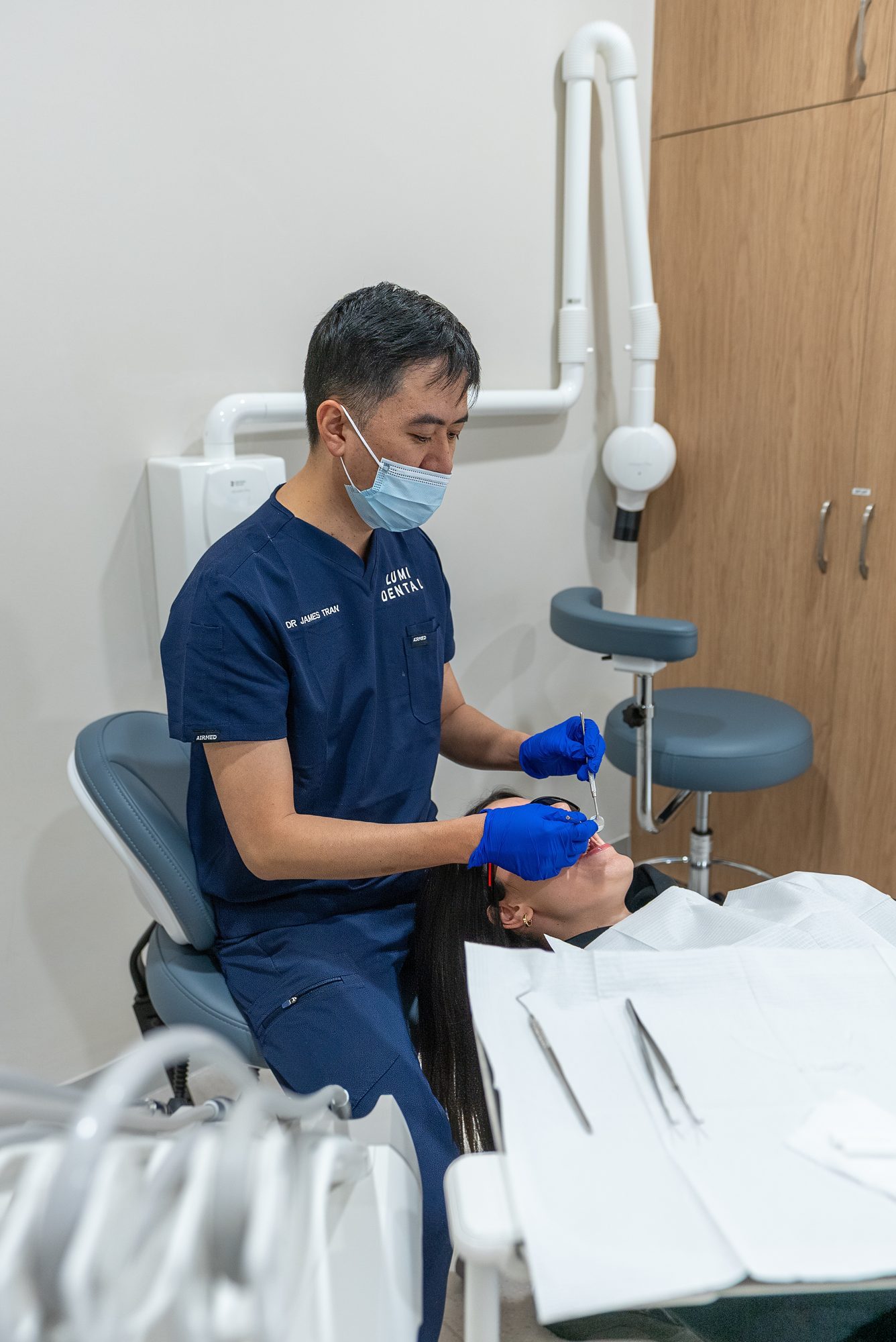
At Lumi Dental, whitening starts with an examination by a dentist, who checks for decay, worn areas and gum inflammation, and asks about swallowing, saliva, tremor and the times of day you feel best. Bring an up-to-date medicines list, and a partner or carer is welcome to stay in the room. The team can book a longer appointment with time for breaks. The whitening options are named Lumi Home, Lumi Refresh and Lumi Radiance, and the dentist will explain which may suit you, including whether trays, an in-chair visit or a mix is easiest to manage. Routine care is described on our general dentistry page.
Questions patients ask
Can you whiten your teeth if you have Parkinson's disease?
Usually yes. Parkinson's itself is not a reason to avoid whitening. The method is chosen around swallowing, saliva and how well hands and jaw can manage trays.
Is whitening gel dangerous if someone with Parkinson's swallows a little?
The aim is to swallow as little as possible, and our guide to swallowed gel explains what to watch for. Using a tiny amount, wiping away excess and choosing in-chair whitening when swallowing is a concern all reduce the risk. If a larger amount is swallowed, call the Poisons Information Centre on 13 11 26.
Can a carer put the whitening trays in for someone with Parkinson's?
Yes. A carer can load the trays, check the fit and wipe away excess, and the dentist can show both of you how at the fitting appointment.
What time of day is best for a dental appointment with Parkinson's?
Usually the time when you are reliably "on". A review of oral care in Parkinson's suggests 60 to 90 minutes after medicines are taken, but you should keep taking them at the times your doctor has set.
Will whitening help teeth stained from a dry mouth or medicines?
Whitening lightens natural tooth colour and many surface stains, but it does not change fillings or crowns. The dentist can tell you what to expect at the consult, and our teeth whitening page explains the options.
Thinking about whitening? Complimentary cosmetic consult in Melrose Park
If you live with Parkinson's, or care for someone who does, the team at Lumi Dental can check the mouth, talk through swallowing, saliva and tremor, and suggest a whitening plan that fits your day. Book a complimentary cosmetic consult at Melrose Central in Melrose Park, or read about teeth whitening at Lumi Dental. Patients visit from Ryde, Parramatta, Ermington and Rydalmere, and there is on-site parking.
Sources
- Parkinson's Australia: Statistics
- Parkinson's UK: Movement changes, wearing off, on and off periods and dyskinesia
- PMC (Expert Review of Gastroenterology and Hepatology): A comprehensive review of the diagnosis and treatment of Parkinson's disease dysphagia and aspiration
- PMC (Parkinson's Disease): Disorders of the oral cavity in Parkinson's disease and parkinsonian syndromes
About the author
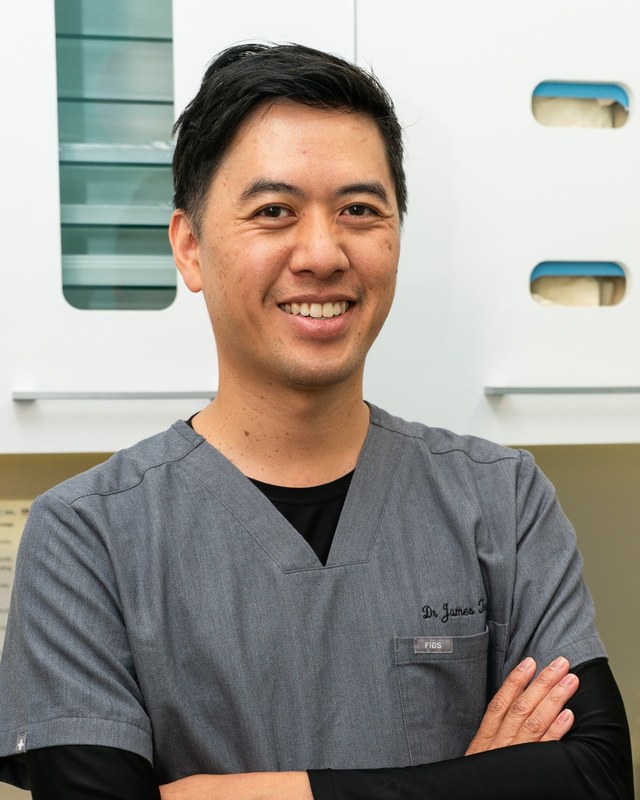
Dr James Tran is a general dentist at Lumi Dental in Melrose Park. He holds a BDent from the University of Sydney and a Graduate Diploma in Oral Implants, and is a Member of the International Congress of Oral Implantologists (MICOI).
This article is general information only and is not a substitute for an examination and individual advice from a registered dental practitioner. Suitability for any treatment varies from person to person.







