
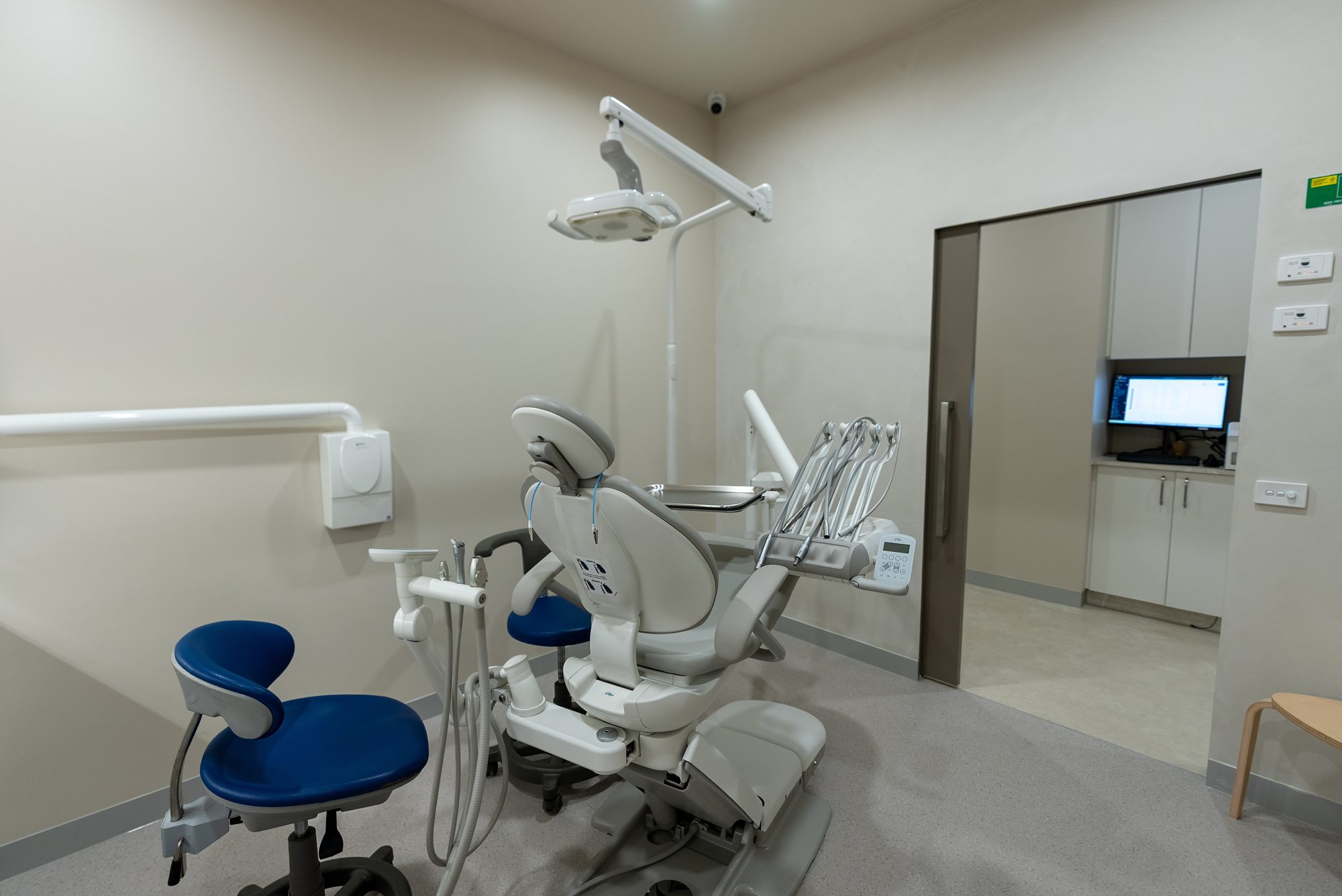

Wait until the gum has closed over the socket and nothing is tender before you whiten, which usually means a couple of weeks after a simple extraction and at least a month after surgical wisdom teeth removal, and never whiten while stitches, a dry socket or an infection are present. Teeth whitening after a tooth extraction or wisdom teeth removal is a timing question: peroxide gel does nothing to an empty socket, but it does irritate healing gum. According to healthdirect, the wound from an extraction usually takes up to two weeks to heal, and in my experience a wisdom tooth site often needs longer before a tray edge can rest against it comfortably.
Written by Dr James Tran, BDent (University of Sydney), MICOI, GradDip (Oral Implants), general dentist at Lumi Dental in Melrose Park.
The short version
- Whitening gel is a peroxide. It should not touch a socket that is still open, still has stitches, or still bleeds or aches.
- A simple extraction site has usually closed within about two weeks. After surgical wisdom teeth removal, allow at least a month and a review that confirms the socket has closed.
- The bone keeps remodelling for months, but the gel only touches the gum surface.
- A dry socket or an infected socket resets the clock. Our guide to dry socket versus normal healing explains the signs to check first.
- Custom trays made before an extraction may no longer fit; have them checked before the first session.
- If the gap will be filled with an implant, bridge or denture tooth, whiten first so the new tooth is matched to the finished shade.
Why a healing socket and whitening gel do not mix
Whitening gels rely on hydrogen peroxide or carbamide peroxide passing through enamel to break down stain, and the same chemistry is hard on soft tissue. A review in the British Dental Journal on the safety of peroxide whitening products concluded that concentrated gels should not be used without gum protection, and that peroxide products should be avoided in people with damaged or diseased soft tissues. A socket emptied a week ago is exactly that: a wound closed by a blood clot, then granulation tissue, then new gum. The problem is contact. A take-home tray covers the gum margin around every tooth, so over a gap it holds a pocket of gel against the healing site, and the painted-on barrier used in-chair cannot seal to an open socket or to stitches.
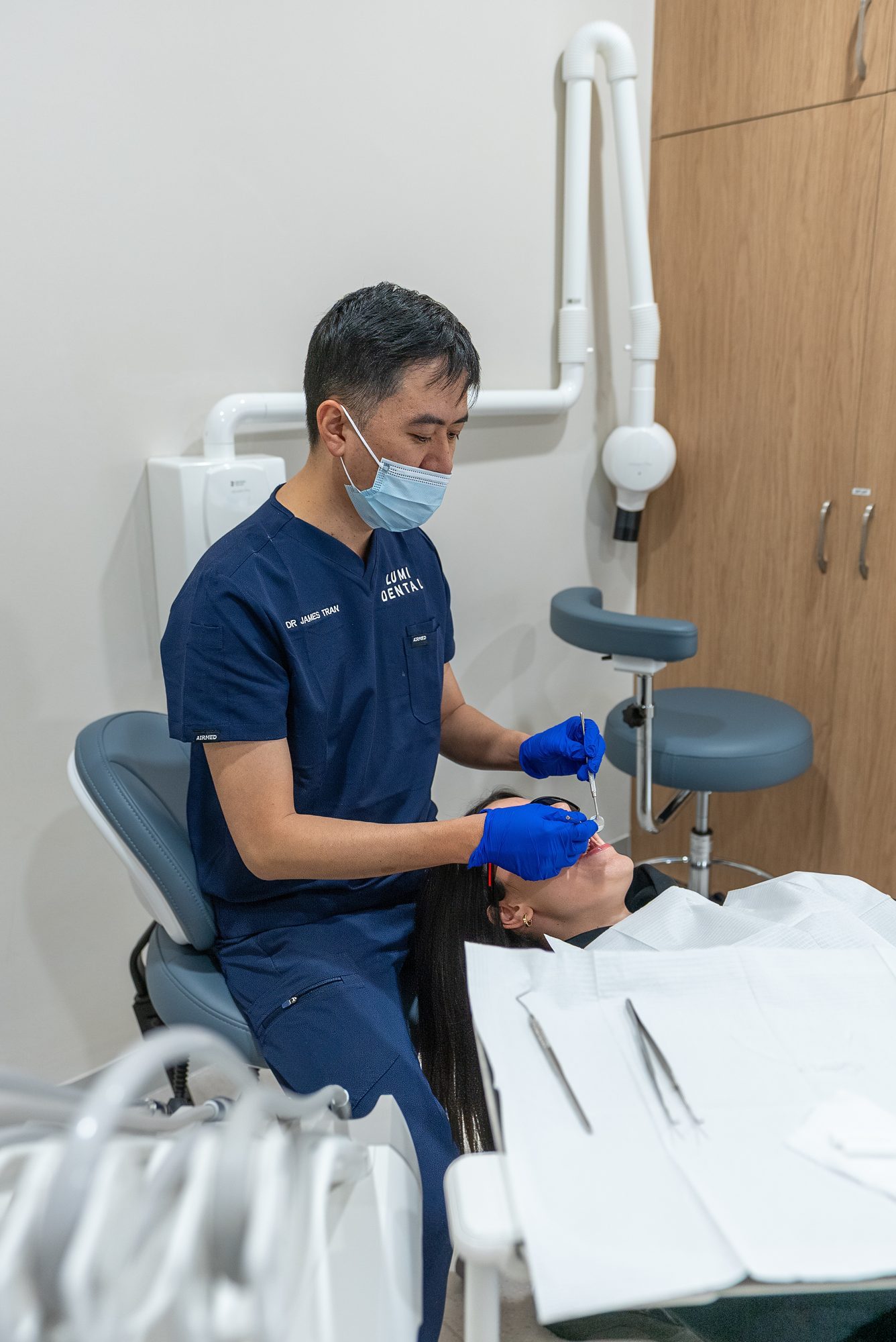
The single rule: whiten when the gum has closed and nothing is tender
The gum heals much faster than the bone beneath it. The Royal Cornwall Hospitals leaflet on wisdom tooth extraction puts healing at between a week and a month depending on whether the removal was simple or surgical, notes that gum heals very quickly compared with bone, and that a sharp bony edge can persist for three to six months. Once the gum has knitted over the socket, the gel has nothing raw to touch.
The test is simple. Run your tongue over the site: no hole that traps food. Brush gently beside it: no bleeding, no ache. Look in a mirror: pink gum, not red or grey, and no visible stitch material. The Cornwall leaflet gives ten to fourteen days for dissolvable stitches to go; our article on wisdom teeth stitches covers what to expect. If anything on that list is not right, the whitening waits.
Typical waiting times by situation
| Situation | When whitening can usually restart | Why |
|---|---|---|
| Simple extraction of one tooth | Once the gum has closed and nothing is tender, often about two weeks | healthdirect puts healing at up to two weeks |
| Surgical wisdom teeth removal with stitches | Not before a month, once the stitches have gone and the review confirms closure | Cornwall leaflet: up to a month; NHS: jaw stiffness for up to two weeks |
| Several teeth removed in one visit | After the last socket has closed | More sites to heal; trays usually need remaking |
| Dry socket or infected socket | After treatment, once the socket has healed over | Peroxide on exposed bone or infected tissue is painful and unhelpful |
| Extraction with a bone graft | Ask the dentist who placed the graft; usually once the membrane and stitches are gone | A graft site is protected for longer |
| Gap to be filled with an implant, bridge or denture tooth | Whiten before the final tooth is made | The new tooth is matched to the finished shade and will not whiten |
Take-home trays versus in-chair whitening after an extraction
If you already own custom trays, check them first. They were moulded to a full arch, and the gum reshapes as a socket heals, so a tray made before the extraction can rock, pinch, or hold a reservoir of gel in the tooth-shaped space over the gap. Bring the trays to the review: sometimes a trim solves it, and often a new 3D scan and tray is the cleaner answer, as our guide to custom whitening trays explains.
In-chair whitening has a different limitation: you lie back with your mouth held open for an extended session, which is unpleasant with the sore, stiff jaw the NHS describes for up to two weeks after wisdom teeth removal. Patients I see who want an in-chair session before an event do better booking it for after the review appointment.
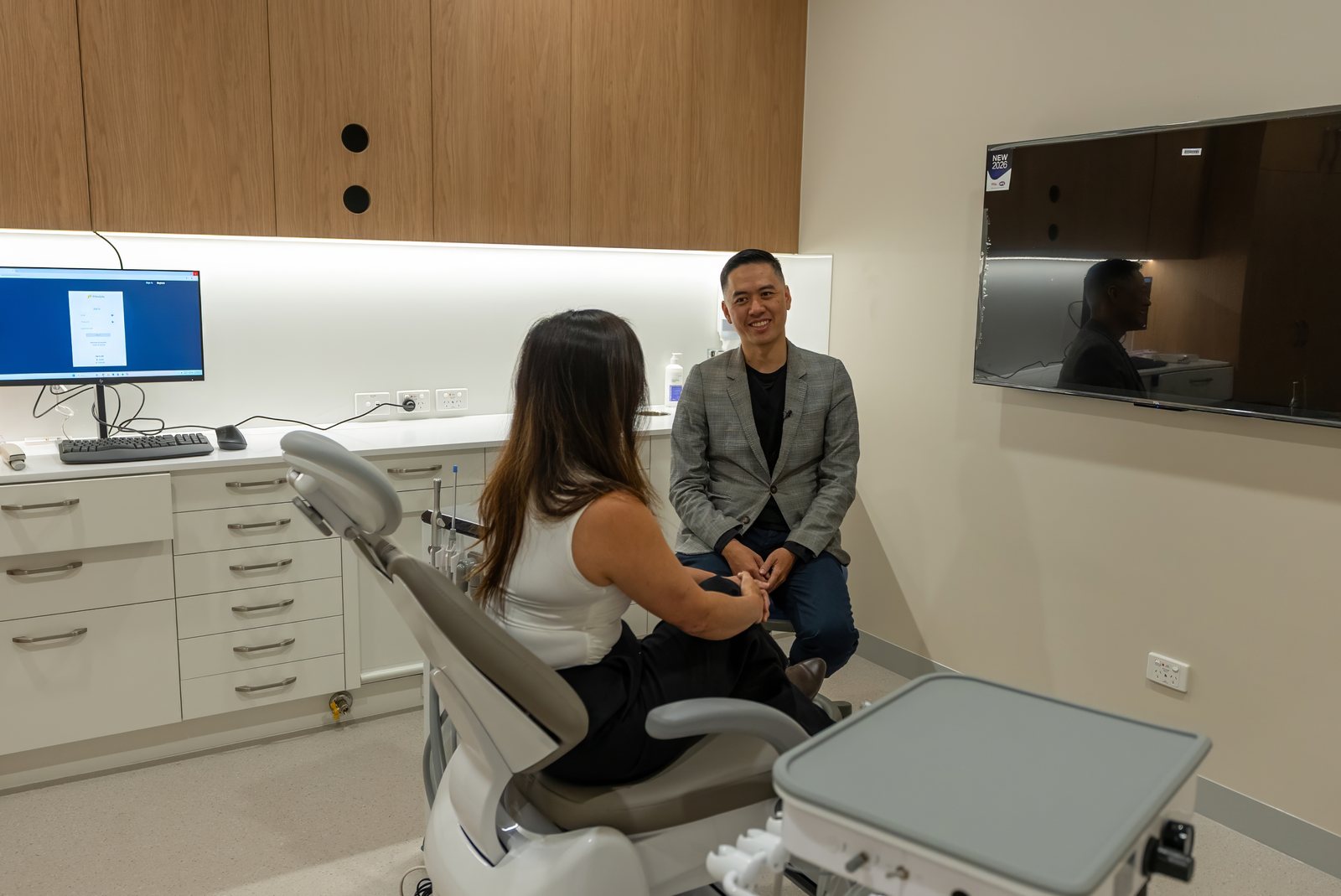
Wisdom teeth are at the back, so the wait is about comfort, not colour
Wisdom teeth sit behind the smile line, so removing them does not change the shade people see and there is no cosmetic reason to hurry. The wait is about three practical things. Comfort: swelling, bruising, a stiff jaw and difficulty chewing are expected for up to two weeks according to the NHS. Sensitivity: the British Dental Journal review reports tooth sensitivity in anywhere from 15 to 78% of people having external bleaching, and the second molar beside a fresh surgical site is often tender already. Hygiene: soft food and cautious brushing leave more plaque and stain than usual, and gel whitens clean enamel more evenly, so a scale and clean before whitening is the usual order.
If the gap will be filled, whiten first
A crown on an implant, a bridge, or a denture tooth is made to match the neighbouring teeth on the day the shade is chosen, and porcelain and acrylic do not whiten afterwards. Whiten after it is fitted and the natural teeth lighten while the replacement stays put. The order that avoids this: let the socket heal, whiten to the shade you want, let it settle, then have the final tooth matched. An implant is placed at a planned interval after an extraction, as our guide to how long after an extraction an implant can go in explains, and a whitening course fits inside that healing period.

Signs you are not ready yet
A few things mean the whitening waits, whatever the calendar says. Throbbing pain that starts or worsens around day three or four, often with a bad taste, is the pattern of a dry socket, which the Cornwall leaflet places at three to four days. Increasing swelling, a disturbed taste or any discharge a week or more after the extraction points to an infected socket. Stitches still visible, bleeding when you brush beside the site, a hole that traps seeds, and a jaw that will not open comfortably all mean the gum is not finished. One that is easy to miss: the NHS notes that lower wisdom tooth removal can leave the lip, chin or tongue numb for weeks or months. You may not feel gel that has crept onto the lip, so I usually suggest waiting until sensation is back before wearing trays overnight.
How we approach this at Lumi Dental
At Lumi Dental in Melrose Park, wisdom teeth removal and teeth whitening are both provided at the practice, so the dentist who saw the socket sets the whitening start date. Whitening begins with a dentist's examination and clinical photographs to record the starting shade. If trays are needed, an in-house 3D intraoral scan is taken once the site has settled, so the tray fits the gum as it is now. The hygiene team of oral health therapists removes surface stain beforehand. The whitening options are named Home, Refresh and Radiance, and the teeth whitening page explains how a consult works.
Questions patients ask
How long after a tooth extraction can I whiten my teeth?
Once the gum has closed over the socket and the site is not tender, which for a simple extraction is often about two weeks. Surgical removals take longer. If you are unsure whether the site has closed, contact Lumi Dental and have it checked.
Can I whiten my teeth two weeks after wisdom teeth removal?
Usually not yet. The NHS describes pain, swelling and a stiff jaw for up to two weeks, and the Cornwall leaflet allows up to a month for healing after a surgical removal. A month, plus a review that confirms the sockets have closed, is the safer target.
Will whitening gel damage the extraction site?
It will not harm bone inside a closed socket, but on open or healing gum peroxide stings, can leave a white blanched patch and sets the site back. Our guide to gum irritation after whitening covers what settles it.
Can I use whitening strips or whitening toothpaste after an extraction?
Strips sit on the gum margin and carry peroxide, so wait as you would with trays. A whitening toothpaste mainly removes surface stain and can be used on the other teeth once normal brushing resumes.
Should I whiten before or after an implant goes into the gap?
Before the final crown is made. It is matched to the neighbouring teeth and will not change afterwards, so whiten once the socket has healed, let the shade settle, then have the shade taken.
Recovering from an extraction and planning to whiten? Complimentary cosmetic consult in Melrose Park
If you are healing from an extraction or wisdom teeth removal and want to whiten once it is safe, the team at Lumi Dental in Melrose Park can check the socket and confirm the start date. Book a complimentary cosmetic consult or read about teeth whitening at Lumi Dental. Patients visit from Ryde, Parramatta, Ermington, Rydalmere and nearby suburbs.
Sources
- NHS: Wisdom tooth removal
- healthdirect: Tooth extraction
- Royal Cornwall Hospitals NHS Trust: Following your wisdom tooth extraction
- PubMed (British Dental Journal): Hydrogen peroxide tooth-whitening (bleaching) products, review of adverse effects and safety issues
About the author

Dr James Tran is a general dentist at Lumi Dental in Melrose Park. He holds a BDent from the University of Sydney and a Graduate Diploma in Oral Implants, and is a Member of the International Congress of Oral Implantologists (MICOI).
This article is general information only and is not a substitute for an examination and individual advice from a registered dental practitioner. Suitability for any treatment varies from person to person.








