
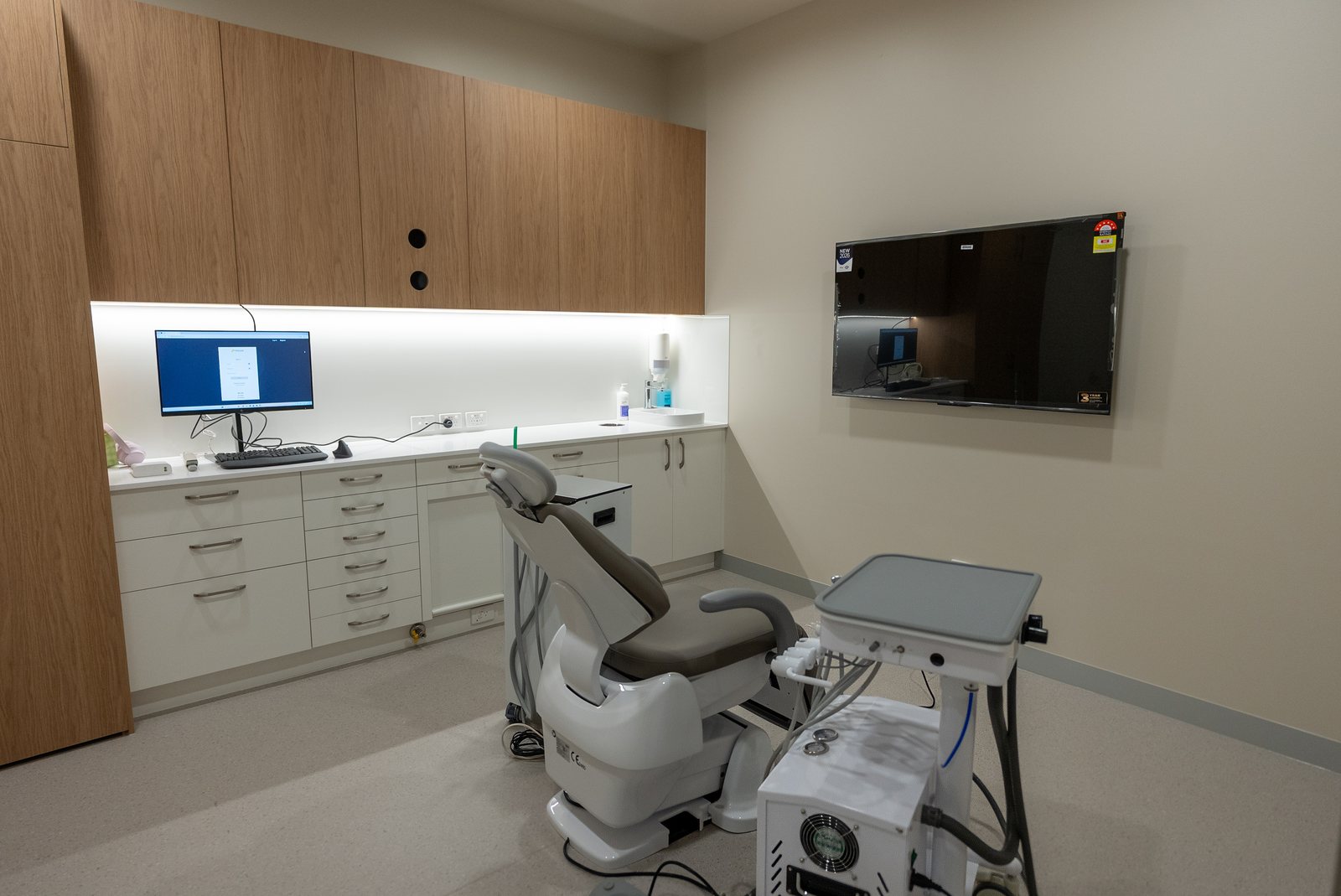

If gum contouring or crown lengthening is planned for a gummy smile, the gum is usually treated first and teeth whitening follows once the gum has healed and settled. That order lets the strip of tooth uncovered by the procedure lighten along with the rest of the tooth, and it keeps whitening gel away from healing gum. Whitening changes tooth colour only. It does not change how much gum shows when you smile, which a clinical reference text puts at about 1 to 2 mm in a smile considered typical.
Written by Dr James Tran, BDent (University of Sydney), MICOI, GradDip (Oral Implants), general dentist at Lumi Dental in Melrose Park.
The short version
- Whitening lightens natural teeth. It cannot shorten the gum, lengthen the teeth or change how high the upper lip lifts.
- The simple rule: if gum reshaping is planned, treat the gum first and whiten once it has healed and settled.
- Simple gum contouring usually heals faster than crown lengthening that also reshapes bone, so the wait before whitening differs.
- Whitening trays are best made after the gum line has changed, so the edges follow the new margin.
- If veneers or bonding are part of the plan too, whitening comes before them.
- The cause of a gummy smile decides which treatment fits. Our guide to gummy smile causes and treatment explains how a dentist works that out.
What whitening changes, and what it cannot
Whitening gel, based on hydrogen peroxide or carbamide peroxide, lightens the colour of natural teeth. Teeth.org.au, the consumer site of the Australian Dental Association, notes that it does not change porcelain crowns, veneers or white fillings. It also cannot move anything: the gum stays where it is, the teeth stay the same length, and the upper lip rises just as far when you smile.
Why whiter teeth can make the gum line more noticeable
Lighter teeth sit against pink gum with more contrast. Where front teeth look short or square because gum covers part of them, that sharper edge can draw the eye to the gum line and to uneven tooth heights. In my experience, people already unsure about their gum line often notice it more once their teeth are lighter, so I prefer to discuss both at the same consult.
Why a gummy smile happens, in brief
A clinical reference on excessive gingival display describes several causes, including gum that covers part of the tooth (altered passive eruption), a short or very mobile upper lip, a longer upper jaw, and front teeth that have come down further than usual. The same text notes that definitions vary: some authors call more than 3 to 4 mm of gum on smiling a gummy smile, while others use more than 2 mm.
The cause matters here because each one has a different treatment and healing time. Gum covering the teeth may be trimmed, or treated with crown lengthening if bone also sits too close to the enamel. Lip movement and jaw shape need other approaches.
The simple rule: treat the gum first, then whiten
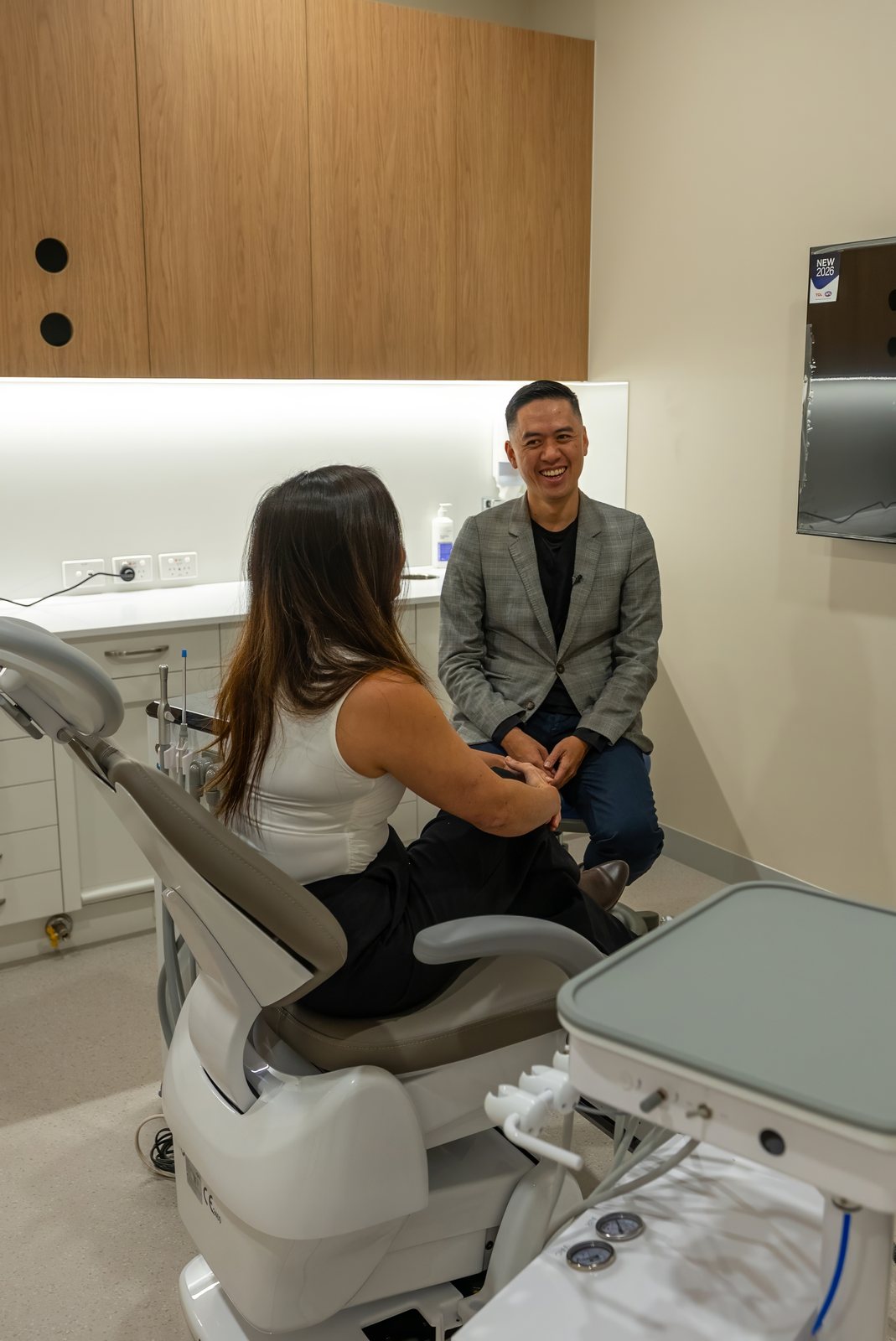
If gum contouring or crown lengthening is planned, have the gum treated first, let it heal and settle, then whiten. If only whitening is planned, there is nothing to wait for.
The newly uncovered tooth is whitened with the rest
Gum reshaping uncovers a band of tooth that was hidden under gum. If you whiten first, that band was covered during whitening. Peroxide does spread through the tooth, so it may lighten partly, but it can end up a slightly different shade, and the neck of the tooth often looks a little darker anyway because the enamel there is thinner. Whitening after the gum has settled treats the whole visible tooth together.
Gel stays off healing gum
Teeth.org.au warns that strong peroxide gel can cause chemical burns if it touches the gums, lips or tongue, and that these burns often turn into ulcers before they heal. Healing gum after surgery is more fragile than healthy gum, so there is no benefit in putting gel near it while it repairs.
If veneers or bonding are also planned
Composite and porcelain do not whiten, so the natural teeth are whitened before any tooth-coloured restorations are shade matched. The usual order is gum first, then whitening, then veneers or bonding once the shade has settled. Our article on whitening before veneers or bonding explains the gap needed between whitening and shade matching.
How long to wait after gum contouring or crown lengthening
Healing time depends mainly on whether bone is reshaped. A gum lift trims soft tissue only; crown lengthening often removes a little bone as well. Our comparison of a gum lift and crown lengthening covers the difference in detail.
Gum contouring (soft tissue only)
A systematic review of gingivectomy healing states that complete healing of the wound usually takes 4 to 6 weeks, and describes full epithelial cover and connective tissue maturation as taking between one and two months. The gum may look comfortable well before that. Whitening is usually planned once the dentist has checked that the margin looks healed and stable.
Crown lengthening with bone reshaping
A narrative review of crown lengthening reports that most tissue repair happens in the first 3 to 6 months and that the final position of the gum margin stabilises within about 6 months, with flap surgery taking around 2 to 6 weeks for initial healing. The authors note there is no universally agreed protocol, so whitening, and any restorations after it, are often timed for when the gum line has stopped moving.
| Route | What it changes | Typical order with whitening | Typical wait before whitening |
|---|---|---|---|
| Whitening only | Tooth colour | Whiten at any time | None |
| Gum contouring, then whitening | Gum covering the teeth | Gum first, whiten after healing | Often several weeks; research describes complete healing at about 4 to 6 weeks |
| Crown lengthening, then whitening | Gum and bone level at the tooth | Surgery first, whiten once the margin is stable | Often weeks to months; margin stability is reported within about 6 months |
| Lip procedure or injections | How high the upper lip lifts | Order matters less; plan around healing and comfort | Guided by the treating practitioner |
| Orthodontic treatment, such as clear aligners | Tooth position and height | Usually align first, whiten near the end | Discussed during treatment planning |
Whitening trays after the gum line changes
Take-home whitening uses thin custom trays that hold gel against the teeth. The edge of the tray is shaped to the gum line so gel stays on the tooth and off the gum. Our article on how custom whitening trays work explains that fit.
A tray made before gum reshaping follows the old gum line. Afterwards its edge may stop short of the newly uncovered tooth, or sit against tender gum and let gel collect there. For that reason the scan for whitening trays is usually taken after healing. If you already have trays, bring them so the dentist can check the fit.
Sensitivity near the new gum line
Teeth can feel sensitive for a while after gum is removed, because more tooth is exposed to air, drinks and brushing. Teeth.org.au lists sensitivity to cold as a known side effect of whitening, sometimes severe enough that breathing in cold air hurts. Stacking the two close together adds to the chance of discomfort, so letting the area settle before starting gel is the gentler path.
When whitening does begin, your dentist may suggest shorter wear times at first and will explain how to manage sensitivity. Wipe away any gel that squeezes onto the gum, and call the practice if discomfort persists.
When whitening first can make sense
If you are not yet sure about gum surgery, or are considering a lip treatment that leaves the gum and teeth alone, whitening first is reasonable, knowing a small top-up may be needed if the gum line changes later. Bleeding or swollen gums come before either cosmetic step; our article on whitening with gum disease explains why.
How we approach this at Lumi Dental
At Lumi Dental the dentist examines the gums and teeth, looks at how much gum shows at rest and when you smile, and explains which options fit the cause. Clinical photos and an in-house 3D intraoral scan help record the gum line and tooth proportions. Where surgical gum or bone work is needed, it may be referred to a registered periodontist, and whitening is then timed around their healing advice. The oral health therapists look after cleans and gum health along the way. You can read more about cosmetic dentistry at Lumi Dental; the whitening options are named Lumi Home, Lumi Refresh and Lumi Radiance.
Questions patients ask
Should I whiten my teeth before or after gum contouring?
Usually after. Treating the gum first means the newly uncovered tooth is whitened with the rest, and gel is not used near healing gum.
How long after gum contouring can I whiten my teeth?
It depends on the procedure and how you heal. Research describes complete healing after soft tissue gum surgery at about 4 to 6 weeks, and longer when bone has been reshaped. Your dentist will check the gum before you start.
Will teeth whitening make my gummy smile look worse?
It does not change the amount of gum you show. Some people notice the gum line more once their teeth are lighter, because the contrast is greater, so it is worth discussing both together.
Can whitening gel damage my gums?
Strong gel can burn soft tissue if it touches it, which is why trays fit closely and in-chair whitening uses a protective barrier. Brief white patches on the gum edge usually settle quickly; our article on gum irritation after whitening covers what to do.
Do I need new whitening trays after gum surgery?
Often, yes. Trays made before surgery follow the old gum line, so a new scan after healing usually gives a better fit. A complimentary cosmetic consult is a good time to check.
Thinking about whitening? Complimentary cosmetic consult in Melrose Park
If you want whiter teeth and are also unhappy with how much gum shows, the team at Lumi Dental can look at both and suggest an order that suits you. Book a complimentary cosmetic consult at Melrose Central in Melrose Park, or read more about teeth whitening at Lumi Dental. Patients visit from Ryde, Parramatta, Ermington and Rydalmere, with on-site parking.
Sources
- Australian Dental Association (teeth.org.au): Teeth whitening
- StatPearls (NCBI Bookshelf): Excessive Gingival Display
- PMC: Efficacy of Low-Level Laser Therapy in Wound Healing and Pain Reduction After Gingivectomy: A Systematic Review and Meta-analysis
- PMC: Crown Lengthening Procedures: Biological Foundations, Clinical Outcomes, and Contemporary Approaches in Flapless and Flap Techniques, a Narrative Review
About the author

Dr James Tran is a general dentist at Lumi Dental in Melrose Park. He holds a BDent from the University of Sydney and a Graduate Diploma in Oral Implants, and is a Member of the International Congress of Oral Implantologists (MICOI).
This article is general information only and is not a substitute for an examination and individual advice from a registered dental practitioner. Suitability for any treatment varies from person to person.








