

Whitening gel should not go on teeth while the gums around them are inflamed or bleeding: treat the gum disease first, let the gums settle, then whiten. Teeth whitening with gum disease comes up often at cosmetic consults, usually from someone whose gums bleed a little when they brush. The order matters more than the product. Healthdirect lists gum disease among the situations where teeth whitening is not recommended, alongside untreated dental problems and cracked teeth, and that is the position the team at Lumi Dental takes as well.
Written by Dr James Tran, BDent (University of Sydney), MICOI, GradDip (Oral Implants), general dentist at Lumi Dental in Melrose Park.
The short version
- Peroxide gel irritates healthy gums a little and inflamed gums a lot. Bleeding, puffy gums are a reason to wait, not a reason to buy a stronger product.
- Gingivitis usually settles within a few weeks of a professional clean and better home care. Periodontitis needs gum therapy, healing time and a reassessment first.
- Receded gums expose root surface, which does not whiten like enamel and is often sensitive to gel.
- Two findings decide readiness: whether the gums bleed when gently probed, and how deep the pockets are.
- Whitening does nothing for the cause of the bleeding, and a course that stings every night tends to be abandoned.
- Not sure which type of gum disease you have? Start with our guide to the stages of gum disease, from gingivitis to periodontitis.
If your gums bleed, start with gum treatment, reassess, then whiten
That is the whole decision in one line, and it applies to in-chair whitening and take-home trays alike. In my experience the patients who skip the first step rarely get the result they wanted: the gel stings, the trays come out early, the shade change is patchy along the gum line where blood and swelling got in the way, and the gums are no healthier at the end. A swollen gum also sits higher on the tooth than it will once it heals, so a shade judged against inflamed gums can look different a month later when more tooth, and sometimes some root, is showing.
What peroxide gel does to inflamed gums
Whitening products work with hydrogen peroxide or carbamide peroxide, and the gel is designed to sit on enamel, not soft tissue. A review in the dental literature lists tooth sensitivity and mild gingival irritation as the commonly reported risks, both scaling with peroxide concentration and treatment time, and describes gum irritation as beginning within a day of treatment and lasting several days. That is on healthy gums.
Inflamed gums are a different surface. The margin is swollen, fragile and already bleeding, so gel that would merely tingle on a healthy gum can sting sharply and leave a white, blanched patch. Blood oozing into a tray dilutes the gel and shields the enamel nearest the gum, so the result is often uneven as well as uncomfortable. Healthdirect warns that products with a lot of bleaching agent can irritate or burn the lips, gums and tongue. Products above 6% hydrogen peroxide may only be used or supplied by registered dental practitioners in Australia, one reason a supervised course starts with an examination.
Gingivitis or periodontitis: why the type changes the plan
Gingivitis
The Australian Dental Association describes gingivitis as the mildest and most common type of gum disease: plaque builds up where the teeth and gums meet, and the gums respond with redness, swelling and bleeding. It is reversible. A professional clean plus two or three weeks of careful brushing and interdental cleaning usually brings the bleeding under control. Our guide to whitening before or after a scale and clean covers the timing.
Periodontitis
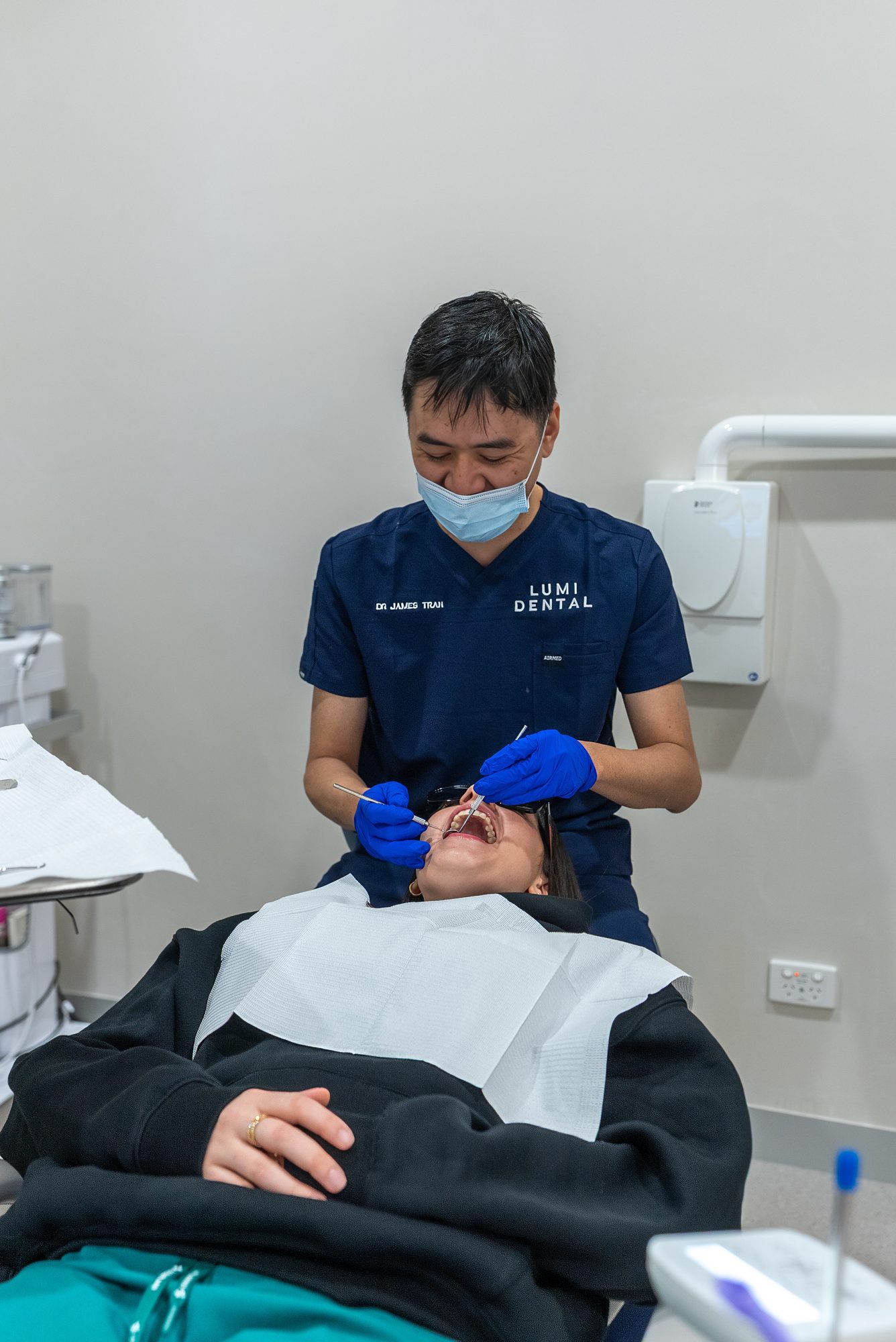
When gingivitis is not controlled, the inflammation can progress to periodontitis, which the ADA reports affects around 1 in 4 Australian adults. Bacteria damage the gum and the bone supporting the teeth, pockets form under the gum, and it does not usually cause pain. Signs include gums pulling back so the teeth look longer, and loose or moving teeth. Whitening on top of untreated periodontitis is the wrong order: the gel pools in inflamed pockets and bleeding margins, and the disease is unchanged when the course ends. The periodontal chart, with its bleeding points and pocket depths, tells us which category you are in; see our article on what the numbers on a periodontal chart mean.
How gum recession changes whitening results
Recession is the part of this conversation patients are least prepared for. Where the gum has pulled back, the exposed surface is root, not enamel: a thin layer of cementum over dentine, naturally more yellow and more porous. Peroxide lightens enamel well and root surface poorly, so the crown of the tooth brightens while the band near the gum stays the same colour, and the contrast can look more noticeable than before. Exposed root is also the usual source of cold sensitivity, and gel sitting on it stings.
None of this rules whitening out. Trays can be trimmed to stay off exposed roots, lower strengths chosen, and the visible root addressed separately with composite bonding or a periodontist referral. Our guide to whitening with receding gums and exposed roots goes through the options.

Gum readiness table: whiten now or wait?
| What your gums are doing | What it usually means | Whiten now or wait? |
|---|---|---|
| Pink, firm, no bleeding when brushing or flossing | Healthy gums | Whiten after a routine examination and clean |
| Bleed when brushing, red or puffy along the edge | Gingivitis, reversible | Wait: clean plus home care, review in a few weeks, then whiten |
| Bleed when gently probed, pockets deeper than the healthy range | Periodontitis likely | Wait: gum therapy, healing time, reassessment |
| Gums pulled back, teeth look longer, cold sensitivity near the gum | Recession, with or without active disease | Case by case: roots will not whiten like enamel; trays trimmed, lower strength |
| Swelling, pus, a loose tooth or a bad taste | Active infection or advanced disease | Do not whiten; examination and treatment first |
| Bleeding gums while pregnant or breastfeeding | Pregnancy gingivitis | Wait: whitening is not recommended in pregnancy or breastfeeding |
What gum therapy involves
Gum therapy is the treatment of periodontitis, and it follows the stepwise approach the ADA describes in its guidance on gum disease treatment. The first step is coaching on daily cleaning, because plaque is the cause and no treatment holds without home care, along with attention to smoking and diabetes. The second step is thorough removal of plaque and tartar above and below the gum line, often over several appointments with local anaesthetic, and in some specific cases with antibiotics alongside. The gums are then given time to heal.
At the reassessment the gums are measured again. The ADA notes that in around 40% of cases no further treatment is needed and the patient moves to supportive periodontal care, meaning maintenance visits at closer intervals than a routine clean. Where bleeding and deep pockets persist, the steps may be repeated or surgery recommended, which is where I refer to a registered periodontist.
How long to wait after gum treatment
For gingivitis, the wait is short: once the clean is done and the gums have stopped bleeding on brushing, usually within two to three weeks, whitening can start. For periodontitis, the decision is made at the reassessment rather than on a calendar. I usually review gums several weeks after gum therapy, often four to eight weeks depending on how they respond, and whitening is confirmed only once bleeding on probing has largely resolved and home care is stable. Newly treated root surfaces are often sensitive for a few weeks too, so waiting is kinder as well as better for the result.
When whitening does begin, it begins gently: a protective barrier over the gums for in-chair treatment, take-home trays made from a fresh scan so they fit the settled gum line rather than the swollen one, and a lower concentration or shorter wear time for the first few nights.
How we approach this at Lumi Dental
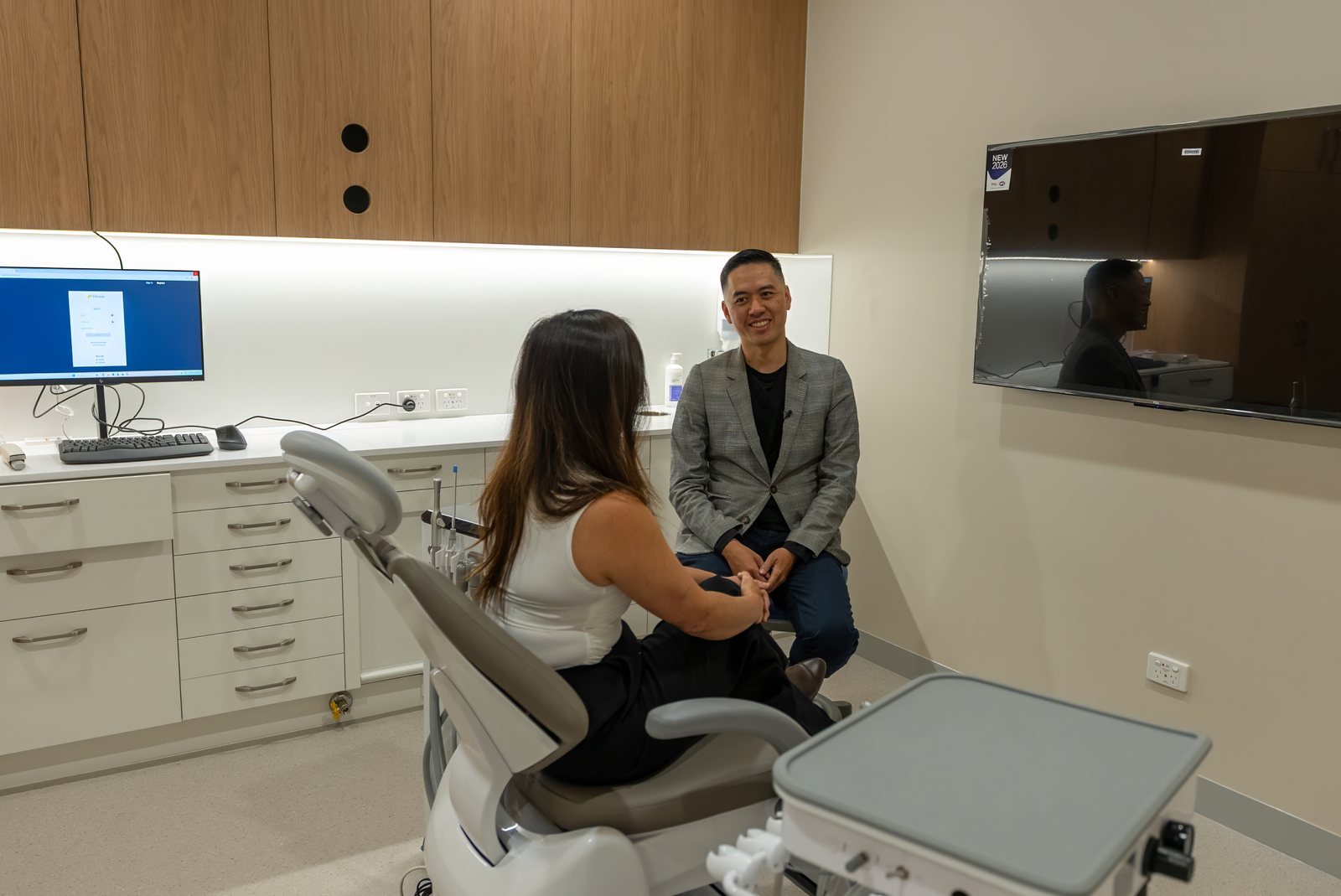
At Lumi Dental in Melrose Park, a whitening enquiry starts with an examination by a dentist, including a periodontal chart of bleeding points and pocket depths, a 3D intraoral scan and X-rays where needed. If the gums are healthy, whitening is planned at the same visit. If not, the hygiene team of oral health therapists provides the clean or gum therapy, the dentist reviews the gums afterwards, and whitening follows once the chart supports it, in-chair or take-home. Advanced periodontitis is referred to a registered periodontist. Your general dentist at Lumi Dental coordinates each step.
Questions patients ask
Can I whiten my teeth if I have gingivitis?
Not until it has been treated. Gingivitis is reversible, so the wait is usually only a few weeks: a professional clean, better brushing and interdental cleaning, and once the gums have stopped bleeding you can whiten with less stinging and a more even result.
Will teeth whitening make my gum disease worse?
Whitening does not cause gum disease, but peroxide gel on inflamed gums adds irritation and does nothing to the bacteria driving the problem. The disease continues under a brighter shade, which is why dentists treat the gums first.
How long after gum treatment can I whiten my teeth?
After a routine clean for gingivitis, typically two to three weeks, once bleeding on brushing has stopped. After gum therapy for periodontitis, whitening is confirmed at the reassessment visit, often several weeks later, once the gums no longer bleed on probing.
Why did my gums turn white and sting after whitening?
Peroxide gel has sat on the gum rather than the tooth. Blanching and stinging usually settle within a day or two; if they last longer, healthdirect advises a check with your dental professional. Our article on gum irritation after teeth whitening covers what to do in the meantime.
My gums bleed when I brush but nothing hurts. Is that really gum disease?
Very likely, yes. Healthy gums do not bleed with normal brushing, and gum disease is usually painless until it is advanced, so bleeding is the early warning worth acting on. Our guide to bleeding gums when brushing explains the common causes.
Healthy gums first, then a brighter shade: complimentary consult in Melrose Park
If your gums bleed and you have been thinking about whitening, the team at Lumi Dental in Melrose Park can examine and chart your gums and tell you plainly whether to whiten now or treat first. Book a complimentary cosmetic consult, or read more about teeth whitening at Lumi Dental. Patients visit from Ryde, Parramatta, Ermington, Rydalmere and nearby suburbs.
Sources
- healthdirect: Teeth whitening
- Australian Dental Association (teeth.org.au): Gum diseases
- Australian Dental Association (teeth.org.au): Gum disease treatment
- PMC (Journal of Evidence-Based Dental Practice): Tooth whitening, what we now know
About the author

Dr James Tran is a general dentist at Lumi Dental in Melrose Park. He holds a BDent from the University of Sydney and a Graduate Diploma in Oral Implants, and is a Member of the International Congress of Oral Implantologists (MICOI).
This article is general information only and is not a substitute for an examination and individual advice from a registered dental practitioner. Suitability for any treatment varies from person to person.