


For teeth whitening with sensory sensitivities, choose the method by the sensations you would rather control: take-home trays let you set the pace, time and place, while in-chair whitening is shorter overall but fixes the light, sound and equipment for one sitting. Autistic adults and people with sensory sensitivities often find that the dental room, not the whitening gel, is the hard part. In a UK survey of 37 autistic and 43 non-autistic adults, autistic respondents reported more negative dental experiences, and a challenging sensory environment was one of the main reasons they gave.
Written by Dr James Tran, BDent (University of Sydney), MICOI, GradDip (Oral Implants), general dentist at Lumi Dental in Melrose Park.
The short version
- Whitening involves no injection and no drilling. The sensations come from the scan, the tray, the gel, the room and possible tooth sensitivity.
- The simple rule: pick the format whose sensations you can control or predict best.
- Take-home trays mean one short scan visit and one fitting visit, then whitening on your own schedule at home. Our guide to how custom whitening trays work explains the fit.
- In-chair whitening uses a cheek retractor, a gum barrier and often a light, in one longer appointment.
- A written step plan, an agreed stop signal and your own sunglasses or headphones can all be arranged before anything starts.
- Everyone is different, so the plan is built around you.
Why the setting matters more than the gel
The gel itself is a small part of whitening. Most of what people notice comes from the environment around it: the overhead lamp, the suction, the smell of the room, gloved hands near the face, and objects placed in the mouth. Each of these can feel more intrusive to someone with heightened sensory perception.
The UK survey of autistic adults, led by McMillion and colleagues, asked people what helps. Participants suggested changes to the sensory environment, ways to feel more prepared, longer appointments and individual accommodations. Most of these can be planned at a booking or a first visit.
What the research covers, and what it does not
Much of the research on sensory-adapted dental care involves children. In a randomised crossover pilot study by Cermak and colleagues, 22 autistic children and 22 non-autistic children aged 6 to 12 each had two dental cleans: one in a regular room and one in a room with the overhead lights off, soft ambient light, calm music and a weighted wrap over the chair. Both groups showed lower physiological anxiety and reported less pain and sensory discomfort in the adapted room. Our article on autism-friendly dental visits covers those child-focused studies in more detail.
Whether these changes help adults having whitening has not been studied directly, and the adult survey was small and self-selecting. Treat the ideas below as options to try, not proven fixes.
The simple rule: choose by the sensations you can control
If you are sensitive to sound, light or touch near the face, and you would rather manage things in your own space, start with take-home trays. If you find a longer process at home harder than one predictable appointment, and you can tolerate a retractor and lying back, consider in-chair whitening with breaks agreed in advance.
The Australian Dental Association notes that take-home whitening takes longer than in-chair treatment, but that this does not mean the final result is better or worse. That gives you room to choose on comfort. In my experience, people who dislike the dental room tend to prefer trays, while people who find home routines hard to keep up sometimes prefer to have most of the change done in one sitting.
Sensation by sensation: what to expect and what may help
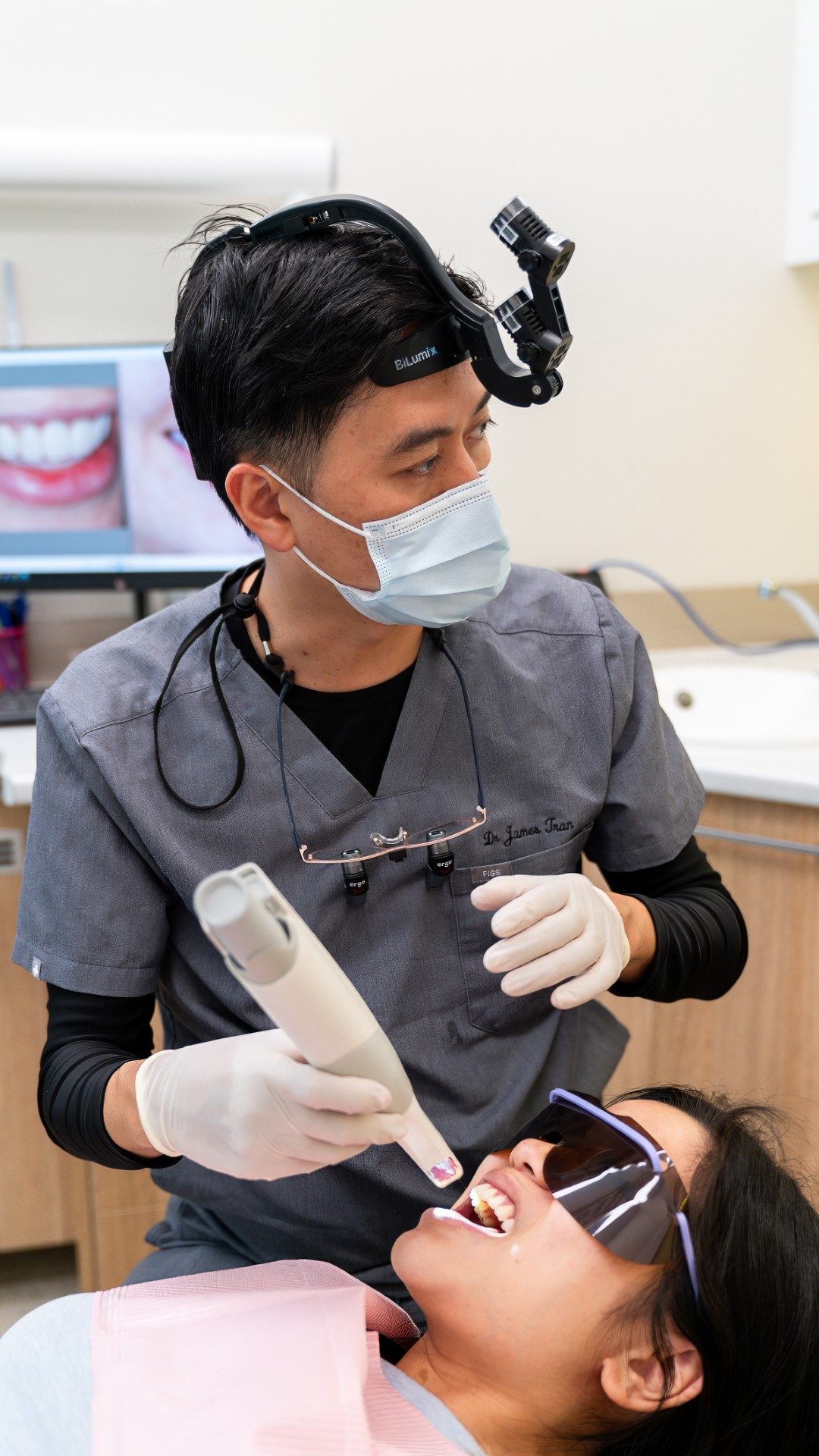
| Sensation | In-chair whitening | Take-home trays | What may help |
|---|---|---|---|
| Something in the mouth | Cheek retractor and gum barrier for the whole session | Thin tray on the teeth for the wear time you are given | A scan instead of putty, trimmed tray edges, a practice fit |
| Taste and texture | Gel placed and removed by the clinician | Small amount of gel you load yourself | Ask about flavour, wipe off excess, rinse after |
| Light | Overhead lamp, often a whitening light | Your own lighting at home | Sunglasses, lamp angled away |
| Sound | Suction and room noise | Your own environment | Headphones, quieter appointment time |
| Tooth sensitivity | Can arrive during or soon after one session | Can build over days, and you can pause | Shorter wear, nights off, a desensitising toothpaste if advised |
| Predictability | One fixed appointment | Your own pace and time of day | A written step plan and an agreed stop signal |
Scans and impressions for trays
Custom trays need a model of your teeth. Traditionally this meant a tray of soft putty held in the mouth while it set. An intraoral scanner instead passes a small wand over the teeth while a computer builds a 3D image. A systematic review of 17 studies found scanning was generally faster than conventional impressions and was generally preferred by patients. The reasons patients gave against impressions included the taste of the material, shortness of breath and triggering the gag reflex.
Tray thickness and edges
Whitening trays are thin and fit closely. Some people feel the edge along the gums more than the tray itself. If an edge catches the lip or tongue, it can usually be smoothed or trimmed at the fitting. A tray that ends just short of the gum line may feel less intrusive. Our article on whitening with a strong gag reflex describes trays trimmed to the teeth that show, which also suits people who dislike a lot of plastic in the mouth.
Gel taste and texture
Whitening gels vary in taste and thickness, and some people mind the slippery feel more than the taste. Only a small amount is needed in each tray, and wiping away any excess reduces both the taste and the chance of gel sitting on the gums.
The tingle: tooth sensitivity during whitening
Teeth.org.au, the consumer site of the Australian Dental Association, lists sensitive teeth as a side effect of whitening and notes that it can occasionally be severe enough that breathing in air hurts. Some people describe short, sharp twinges, often called zingers.
With trays, you can shorten wear time, skip a night, or stop and call the practice. With in-chair whitening, the clinician can remove the gel when you signal. Our guide to how long sensitivity lasts after whitening explains the usual pattern and what tends to ease it.
In-chair whitening, step by step
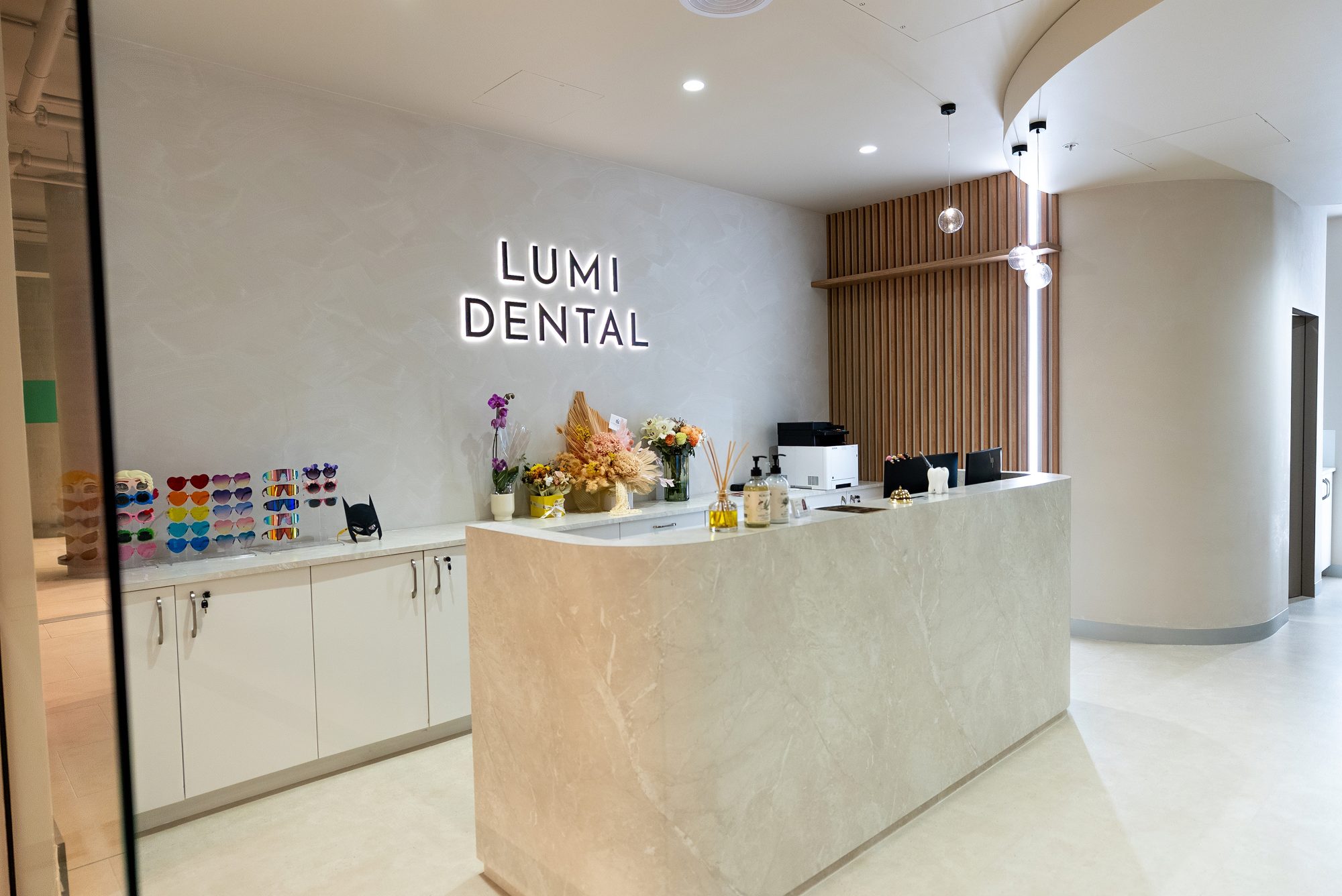
In-chair whitening uses a strong hydrogen peroxide gel. Teeth.org.au notes that a light is often placed over the teeth and that strong gel can cause chemical burns if it touches the lips, gums or tongue. That is why the gums are covered with a barrier and the lips and cheeks are held back with a retractor.
- The retractor holds the lips back for the whole session, and some people find the stretch and dryness the hardest part.
- The gum barrier is painted on and set with a curing light.
- The gel is applied, left for a set time and suctioned away, and the cycle may repeat, with breaks between cycles if agreed beforehand.
Our article on what to expect at in-chair whitening walks through a typical session.
Preparing in a way that suits you
A written step plan
A list of each step, in order, with roughly how long it takes, removes much of the uncertainty. I usually suggest people read it at home before the visit and bring it with them, so you and the clinician can see where you are up to.
A practice or familiarisation visit
A short visit to see the room, sit in the chair and hear the suction can make the real appointment less new, with no treatment planned.
Stop signals and breaks
Agree a clear signal, such as raising a hand, that means stop at once, every time.
Things you can bring
Sunglasses, noise-reducing headphones or earplugs, a weighted item or something familiar to hold are all reasonable. Tell the team if you would rather not be touched without warning, or if you prefer short, plain instructions.
How we approach this at Lumi Dental
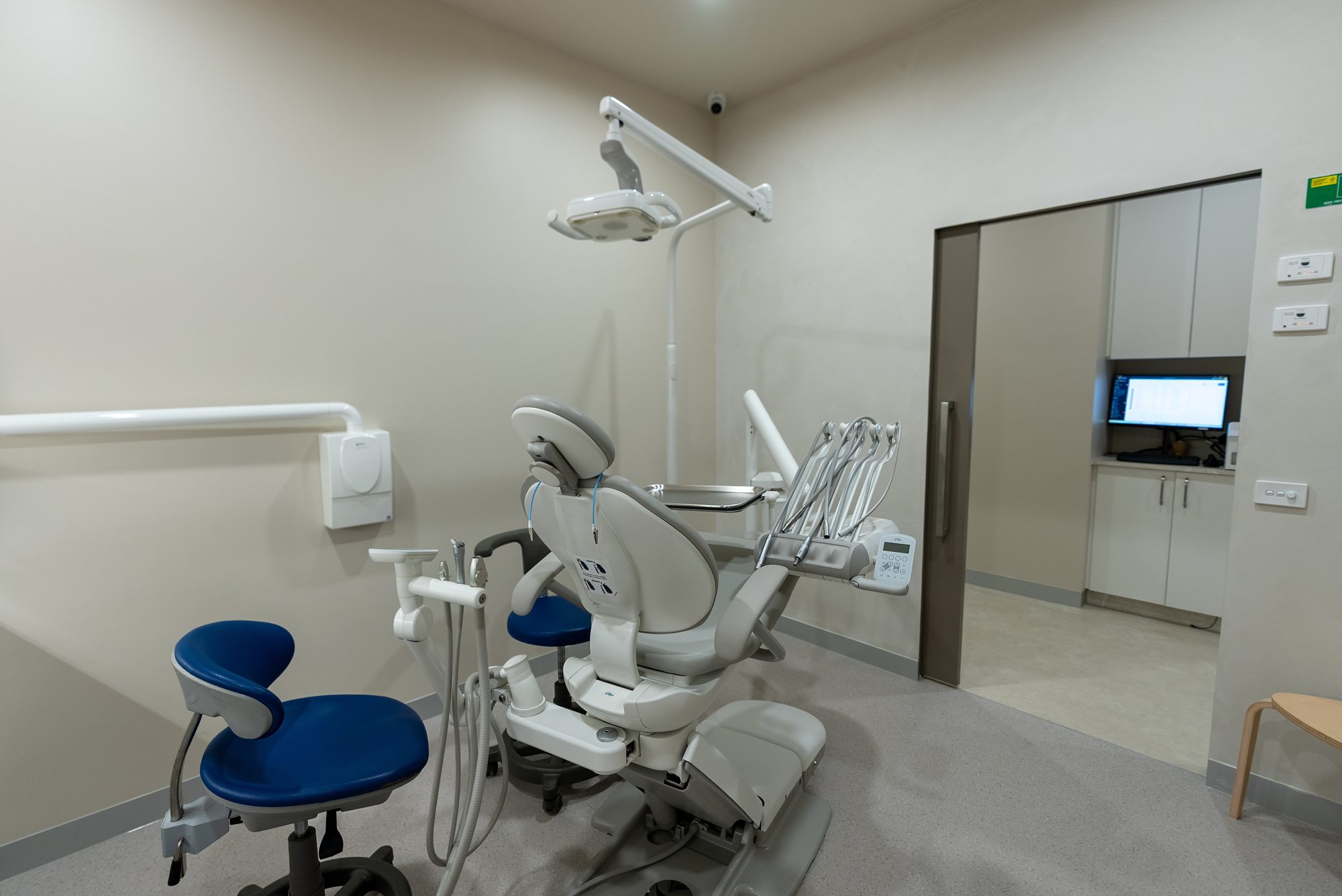
Whitening at Lumi Dental starts with an examination by the dentist, who checks for decay, gum problems and existing fillings or crowns before any gel is used. Lumi Dental is a general and cosmetic practice, not a specialist autism or sensory service, but the team can plan around what you tell them. When you book, say what helps: a quieter time, lights dimmed or angled away, headphones, extra time, written steps, or a practice visit first. Trays are made from an in-house 3D intraoral scan, described on our technology page, and the whitening options are named Lumi Home, Lumi Refresh and Lumi Radiance.
Questions patients ask
Is teeth whitening suitable for autistic adults?
Often, yes. Suitability depends on the health of the teeth and gums, and the format is then chosen around your sensory preferences.
Does whitening gel taste bad?
Some people notice a mild bitter taste, and others mostly notice the texture. Using only a small amount and wiping off the excess helps, and you can ask whether a different gel is an option.
Can I wear sunglasses and headphones during whitening?
Yes, and many people find both helpful. Sunglasses reduce glare from the overhead lamp, and headphones reduce suction and room noise.
Are whitening strips easier than trays if I dislike things in my mouth?
Some people find strips less bulky, but they can slip and leave gel on the gums, and they cannot be shaped to your teeth. Our article on whether whitening strips work compares them with custom trays.
What if I need to stop halfway through in-chair whitening?
The clinician can remove the gel and stop the session. Take-home trays can then be used to continue at your own pace.
Thinking about whitening? Complimentary cosmetic consult in Melrose Park
If you are autistic or live with sensory sensitivities and would like whiter teeth, a conversation is a good first step. Book a complimentary cosmetic consult at Melrose Central in Melrose Park, tell the team what helps, and read more about teeth whitening at Lumi Dental. Patients visit from Ryde, Parramatta, Ermington and Rydalmere, with on-site parking.
Sources
- Australian Dental Association (teeth.org.au): Teeth whitening
- PubMed: Dental experiences of a group of autistic adults based in the United Kingdom
- PMC: Sensory adapted dental environments to enhance oral care for children with autism spectrum disorders, a randomized controlled pilot study
- PMC: Intraoral scanning reduces procedure time and improves patient comfort in fixed prosthodontics and implant dentistry, a systematic review
About the author

Dr James Tran is a general dentist at Lumi Dental in Melrose Park. He holds a BDent from the University of Sydney and a Graduate Diploma in Oral Implants, and is a Member of the International Congress of Oral Implantologists (MICOI).
This article is general information only and is not a substitute for an examination and individual advice from a registered dental practitioner. Suitability for any treatment varies from person to person.








