
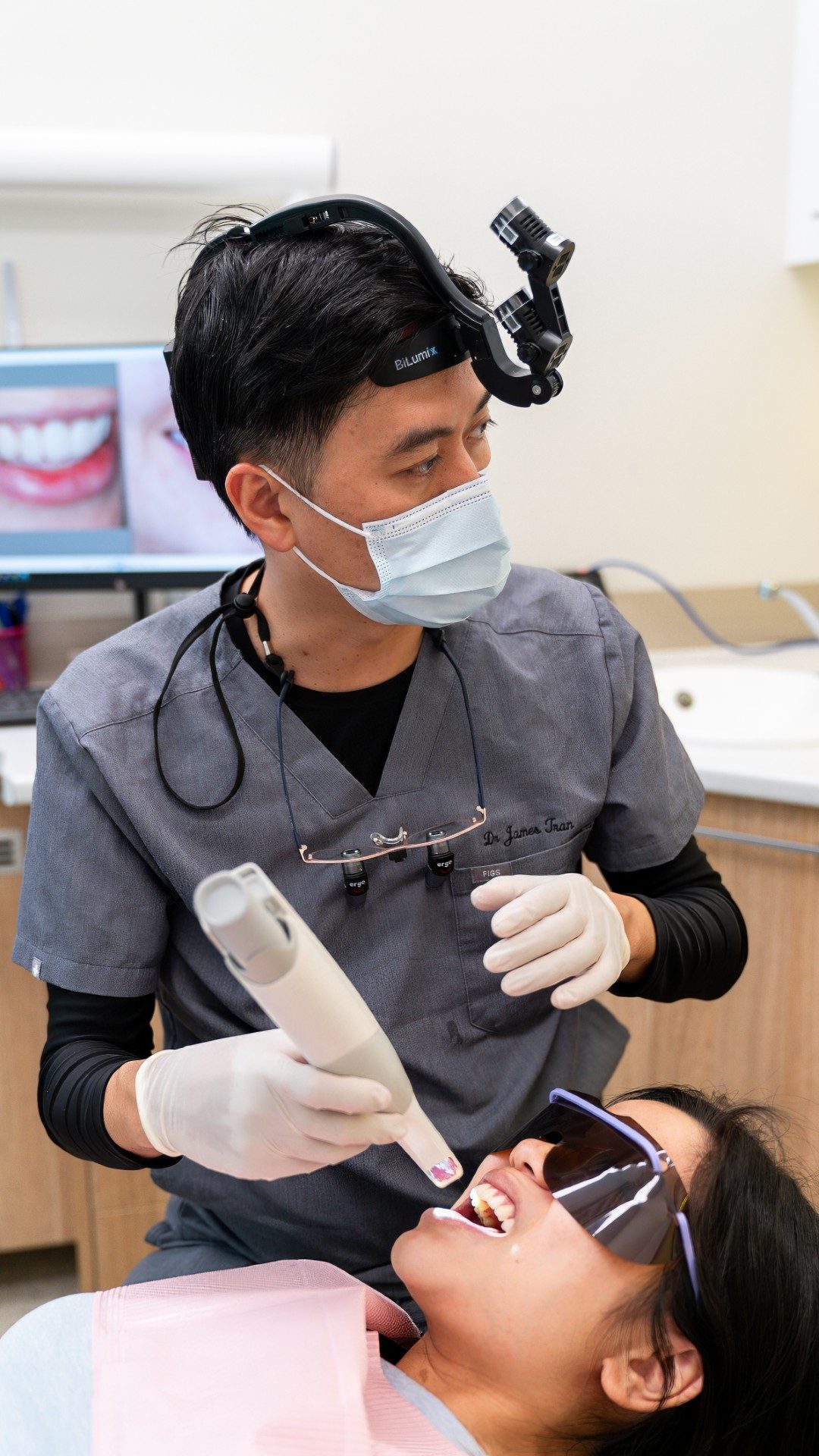

A strong gag reflex does not rule out teeth whitening; it changes which method you start with, and for most people the answer is a digital scan instead of an impression tray, then a custom tray trimmed short of the soft palate. The gag reflex is an involuntary defence that guards the throat, set off when something touches the back of the tongue, the soft palate or the back wall of the throat. A Cochrane review lists impression-taking among the dental procedures that commonly trigger it, and notes research reporting that gagging problems account for around a fifth of dental avoidance. Whitening gel itself touches none of those zones. This guide rates each teeth whitening option for gag triggers and lists what can be changed.
Written by Dr James Tran, BDent (University of Sydney), MICOI, GradDip (Oral Implants), general dentist at Lumi Dental in Melrose Park.
The short version
- The problem is rarely the whitening; it is the tools around it: the impression tray, a tray edge on the palate, pooling saliva and lying flat.
- A 3D intraoral scan replaces the impression tray. In a crossover trial, breathing, nausea and gagging were all rated better with two scanners than with an alginate impression.
- Custom trays can be made with a short back edge, covering the front teeth only, so nothing sits on the palate.
- In-chair whitening suits some gaggers because it is supervised and over in one visit; the retractor and mouth prop can be tried beforehand.
- Nose breathing, salt on the tip of the tongue, sitting upright and distraction are the standard self-help steps. Our general guide to the gag reflex at the dentist covers them in depth.
Why whitening sets off a gag reflex when it should not
The Cochrane review on managing gagging describes five kinds of trigger: mechanical contact with the trigger zones, taste and smell, sound, the sight of instruments, and fear itself. Whitening manages to involve most of them without the gel ever reaching the throat. A conventional impression fills a horseshoe tray with cold, thick material that oozes backwards towards the palate; that is the single worst moment for most people I see. A finished tray that extends behind the last molar presses the same zones every night. Peroxide gel has a taste, saliva pools under a tray, and lying back lets both drift towards the throat. Add fear, which the review notes can start the reflex on its own, and a simple cosmetic treatment becomes something people avoid for years.
The single rule: if the impression tray is the trigger, ask for a digital scan and a shortened tray before giving up on whitening
Most people who tell me they cannot have whitening are describing one bad impression. Separate the two problems. The impression can be replaced by a scan that never touches the palate, and the tray that follows can be trimmed so it covers only the teeth that show when you smile.
Each whitening option, rated for gag triggers
| Option | What reaches the back of the mouth | Gag risk | Notes |
|---|---|---|---|
| Digital scan, then a custom tray with a short back edge | A small scanner wand, briefly; the tray stops at the premolars | Low | Scan can pause at any point; tray holds gel precisely with little overflow |
| Conventional impression, then a full custom tray | A tray of impression material, then a tray that may reach the palate | High | The option most gaggers cannot tolerate |
| In-chair whitening with retractor and prop | A lip retractor and a bite prop; no tray | Low to moderate | Supervised, one visit; mouth open for a set time; both can be tried first |
| Whitening strips | Nothing; strips sit on the front teeth | Low | Fit less well and slip; home-use strength is capped at 6% hydrogen peroxide |
| Pens and paint-on gels | Nothing | Low | Gel washes away quickly, so results are modest |
Custom trays with a short back edge
For a gagger, the dentist can shorten the tray so it ends at the first premolar on each side and sits only on the teeth that show. A published UK case study did exactly this for a patient with a strong gag reflex: the trays were cut back to the first premolars so only the front teeth were whitened, and the patient found the smaller trays easier to tolerate. Less tray also means less gel and less overflow, which removes the taste trigger. Our article on custom whitening trays explains how they are made from the scan.
In-chair whitening
In the chair the gums are protected with a barrier, then, as healthdirect describes, the dental professional applies a stronger hydrogen peroxide gel, often with a light. There is no tray; the trade-off is a lip retractor and a bite prop for the whole session. In the same case study, the patient tried the mouth prop at a visit before treatment, decided he could manage it, and was taught breathing techniques and told to bring headphones. See our guide to what to expect from in-chair whitening.
Strips and pens
Strips avoid the palate entirely, which is their main appeal here. They fit less precisely than a custom tray, can slip, and home-use products sold in Australia are limited to 6% hydrogen peroxide. Pens and paint-on gels avoid everything but are diluted by saliva within minutes. Both suit a modest lift or maintenance, not a stubborn shade.
Why a digital scan changes the picture
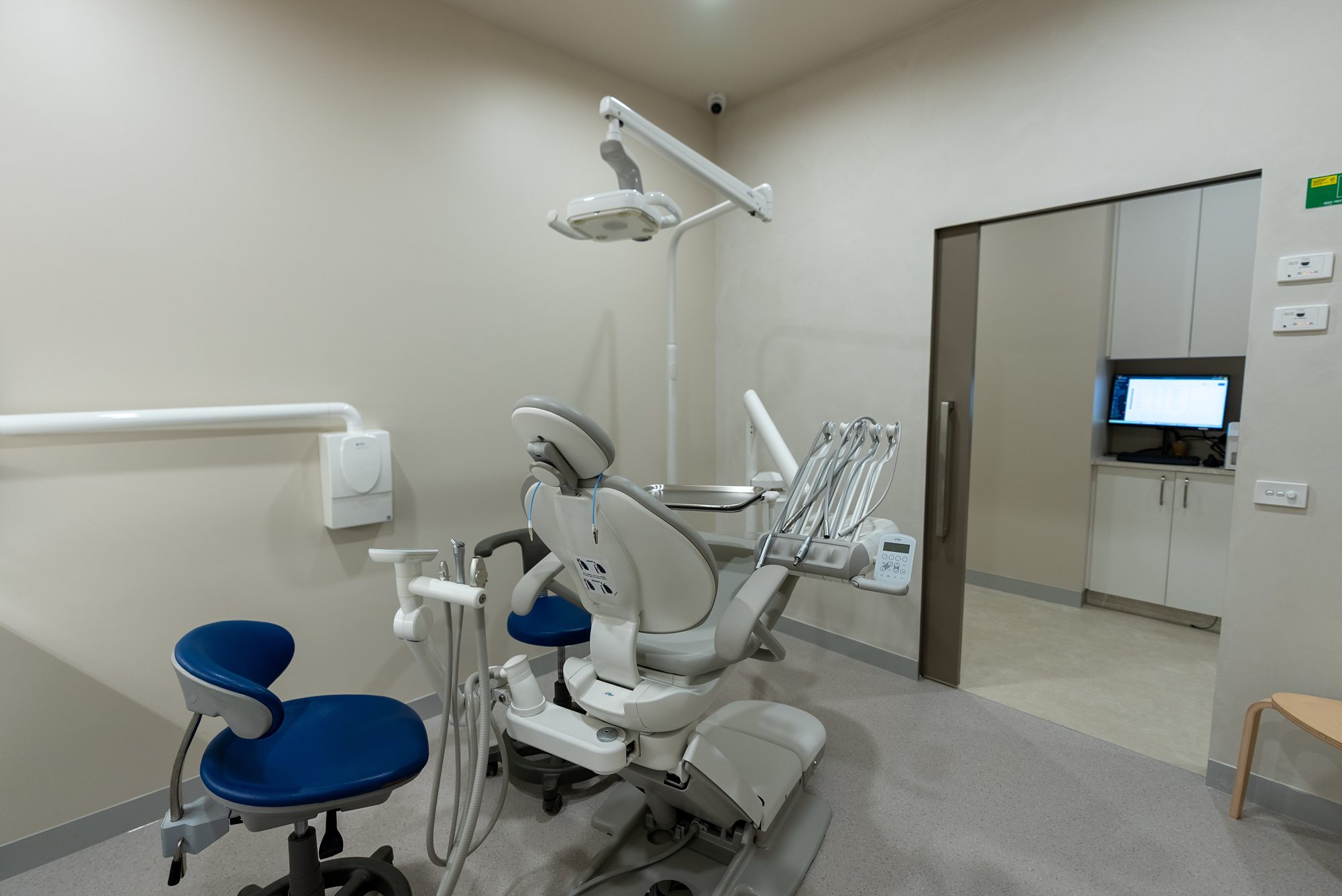
An intraoral scanner is a wand about the size of an electric toothbrush head that photographs the teeth in sections. It never fills the mouth, it can be lifted out at any second, and the upper arch can be scanned with you sitting upright. A crossover trial in 51 children and adolescents compared an alginate impression with two intraoral scanners and found breathing, nausea and the gag reflex were all rated more comfortable with both scanners. Our comparison of a digital scan and a dental impression goes through the differences.
What you can do at home
- Breathe through your nose. Slow nasal breathing is the technique suggested most often; practise it before the appointment with a finger or an empty tray in the mouth.
- Salt on the tip of the tongue. The Cochrane review notes that some clinicians advocate it: salt stimulates taste buds at the front of the tongue, which is thought to dampen the reflex.
- Sit upright with your chin down. Saliva and gel then run forward rather than back. Let saliva dribble into a tissue rather than swallowing against a tray.
- Distract yourself. Music, a screen, counting backwards or a stress ball. The review notes the reflex can be modified by attention, which is why distraction works for many people.
- Build up. Wear the upper tray alone for a few minutes, then the lower, then both for the full time once that is comfortable. Use less gel than you think you need.
- Time it. Avoid whitening straight after a large meal, and try the evening; in my experience the reflex is often quieter when people are tired and relaxed, though not for everyone.
What the dentist can change
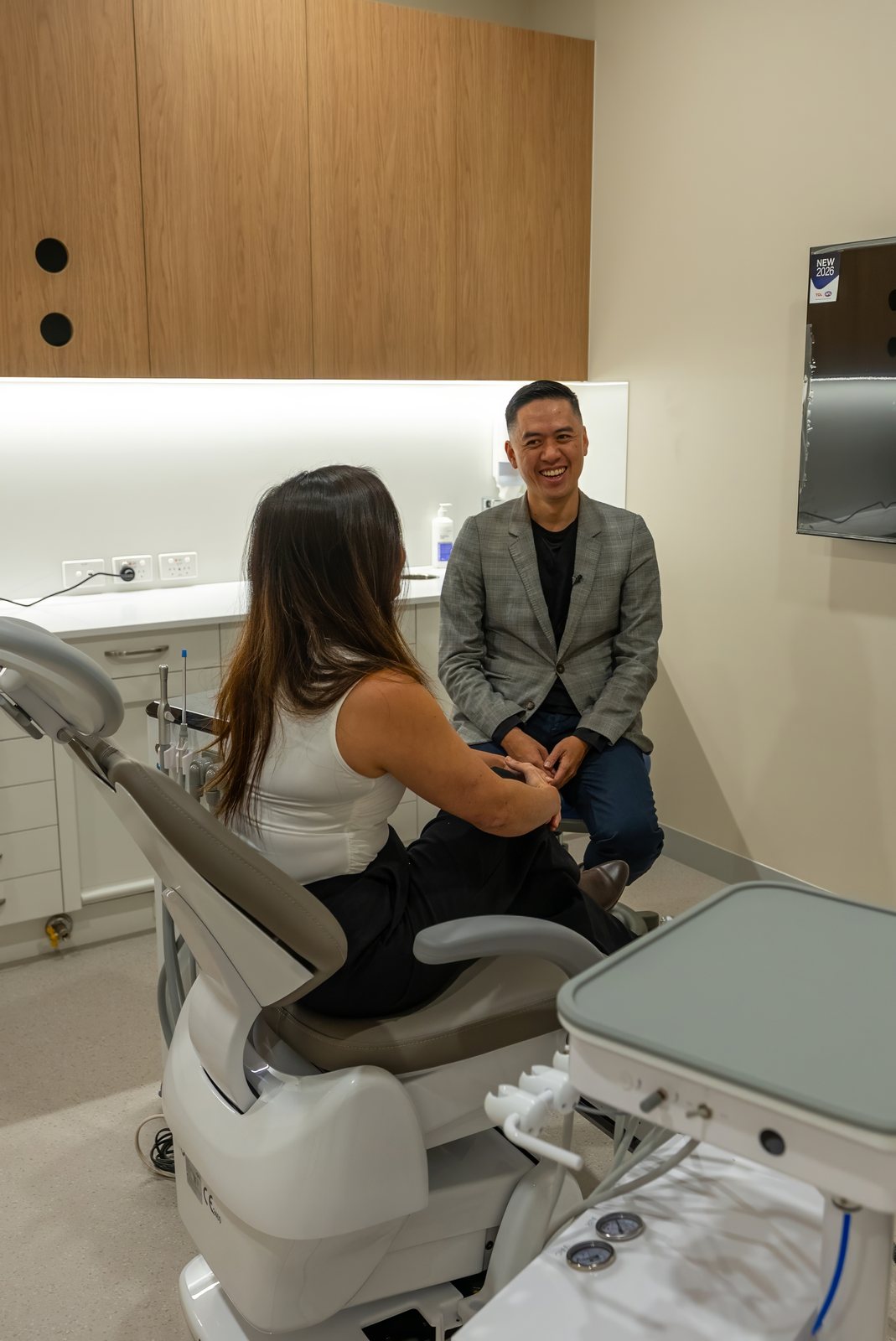
Tell the team about the reflex when you book, not in the chair. Beyond the scan and the shortened tray, the dentist can agree a hand signal to pause, keep the chair more upright, run shorter in-chair sessions, and let you try the retractor and prop at an earlier visit. Nitrous oxide or IV sedation sit at the far end of the list and are rarely needed for whitening; if dental fear is the larger problem, our guide to sedation options for anxious adults sets them out.

How we approach this at Lumi Dental
At Lumi Dental in Melrose Park, whitening starts with an examination by a dentist, and the records for custom trays come from an in-house 3D intraoral scan rather than an impression. The whitening options are named Home, Refresh and Radiance; the teeth whitening page describes how a consult works and the technology page covers the scanner. If you mention a gag reflex at booking, the consult includes a trial of the scanner wand and, for in-chair whitening, the retractor and prop, before anything is decided. The hygiene team of oral health therapists looks after cleans and whitening maintenance.
Questions patients ask
Can you get teeth whitening if you have a bad gag reflex?
Yes. The gel never touches the trigger zones at the back of the mouth, so the task is to remove the tools that do: replace the impression with a digital scan, shorten the tray, and practise nose breathing.
Do whitening trays make you gag?
A full-length tray can, if it reaches the soft palate or far back on the tongue. A tray trimmed to the premolars usually does not, and it still whitens every tooth that shows in a smile. Using less gel also helps, because overflow and taste are triggers on their own.
Is in-chair whitening better than trays for a gag reflex?
It depends on which you tolerate: a retractor and prop for a set time, or a small tray for shorter sessions over several nights. Ask to try the prop first; in a published case study that trial run was what let the patient choose in-chair whitening with confidence.
Can I whiten with strips instead of trays if I gag?
You can. Strips stay on the front teeth and avoid the palate, so they rarely trigger gagging. They fit less well, can slip, and home-use strength is capped at 6% hydrogen peroxide in Australia, so expect a modest result. Our article on whether whitening strips work has more.
Does a digital scan stop gagging?
For most people, yes, because nothing fills the mouth and the wand lifts out the moment you raise a hand. A few people still react to the wand at the back molars; those areas can be scanned last, quickly, and with you sitting up.
Gag reflex making whitening hard? Complimentary cosmetic consult in Melrose Park
If gagging has put you off whitening, the team at Lumi Dental in Melrose Park can show you the scanner, trim a tray to suit, and work out whether in-chair or take-home whitening fits you better. Book a complimentary cosmetic consult or read about teeth whitening at Lumi Dental. Patients visit from Ryde, Parramatta, Ermington, Rydalmere and nearby suburbs.
Sources
- PMC (Cochrane Database of Systematic Reviews): Management of gag reflex for patients undergoing dental treatment
- PMC: Comparative analysis of the comfort of children and adolescents in digital and conventional full-arch impression methods, a crossover randomised trial
- Dentistry.co.uk: Case study, tailoring tooth whitening to a patient's needs (strong gag reflex)
- Colgate Oral Care Center: Getting a dental impression, how to cope with your gag reflex
About the author

Dr James Tran is a general dentist at Lumi Dental in Melrose Park. He holds a BDent from the University of Sydney and a Graduate Diploma in Oral Implants, and is a Member of the International Congress of Oral Implantologists (MICOI).
This article is general information only and is not a substitute for an examination and individual advice from a registered dental practitioner. Suitability for any treatment varies from person to person.








