

Well-controlled asthma is not usually a reason to avoid teeth whitening; the changes are to bring your reliever to every visit, book in-chair sessions when your asthma is settled rather than during a flare, and plan around triggers such as strong smells. The National Asthma Council Australia puts the number of Australians living with asthma at around 2.8 million, so this question comes up often. Whitening gel works on the tooth surface and does nothing to the airways, but an in-chair session asks you to lie back, keep your lips held apart and breathe through your nose for a fair stretch of time.
Written by Dr James Tran, BDent (University of Sydney), MICOI, GradDip (Oral Implants), general dentist at Lumi Dental in Melrose Park.
The short version
- Asthma that is well controlled rarely rules out whitening. A flare-up does, until it has settled.
- Bring your reliever to every appointment and keep it on the tray beside you, not in a bag at reception.
- In-chair whitening depends on breathing through your nose. If your nose is blocked on the day, our guide to whitening with a cold or blocked nose explains when to reschedule.
- Strong scents and chemical smells are a known trigger for some people. Tell the team if they affect you.
- If aspirin or anti-inflammatory painkillers affect your asthma, ask your GP or pharmacist what to use for any whitening sensitivity.
- Your GP or respiratory physician manages your inhalers. Nothing is stopped or changed for the sake of whitening.
The single rule: settled asthma, reliever within reach, no sessions during a flare
Asthma itself is rarely the obstacle. What matters is when you book, what you bring and what you tell the team. In my experience, people whose asthma is well looked after have an ordinary whitening course once these points are covered. If you are in a flare, using your reliever more than usual, unwell with a cold, or have forgotten your reliever, move the appointment.
| Situation | What may help before or during whitening |
|---|---|
| Well-controlled asthma | Go ahead after a dental examination, with your reliever on the tray beside you at each visit |
| A recent flare-up or a course of steroid tablets | Postpone in-chair sessions until your doctor is happy that the flare has settled, then book again |
| Strong smells are a trigger | Mention it when booking, ask for breaks sitting upright, and consider take-home trays |
| Uses a preventer every day | Keep taking it as prescribed, rinse and spit afterwards, and have the mouth checked for thrush before starting |
| Mouth breather or often blocked nose | Short in-chair cycles with breaks, or trays worn while sitting upright at home |
| Aspirin or NSAID-sensitive asthma | Ask your GP or pharmacist which pain relief is suitable, and use a desensitising toothpaste if the dentist suggests one |
Your reliever and your asthma action plan
The National Asthma Council Australia advises health professionals to tell patients to carry their anti-inflammatory reliever at all times and to use it when they have difficulty breathing. It also states that every patient should have a written asthma action plan, which sets out what to do, how much medicine to use and when to be concerned.
For a whitening visit, that means:
- Bring your reliever, and a spacer if you use one, into the treatment room.
- Bring your action plan, or a photo of it.
- Tell the team what your early warning signs feel like.
- Agree on a hand signal before the cheek retractors go in, because you cannot talk easily once they are in place.
If you feel tight during a session, raise your hand. The gel is wiped off, the retractors come out, the chair comes up and you use your reliever the way your plan says. Never hold off on your reliever to finish a session; whitening can wait.
Strong smells, peroxide gel and the treatment room
Asthma Australia lists deodorant, perfume, incense and strong scents, such as those from chemicals, as triggers for some people, and advises avoiding them where you can. Whitening gels contain hydrogen peroxide or carbamide peroxide and usually have only a mild smell. I have not found a reliable source showing that whitening gel itself sets off asthma, but you know your own triggers best.
If chemical smells bother you, say so when you book. Sitting upright between gel applications and taking short breaks can help, and with take-home trays the gel sits inside a close-fitting tray that you can remove whenever you like.
Lying back, cheek retractors and breathing through your nose
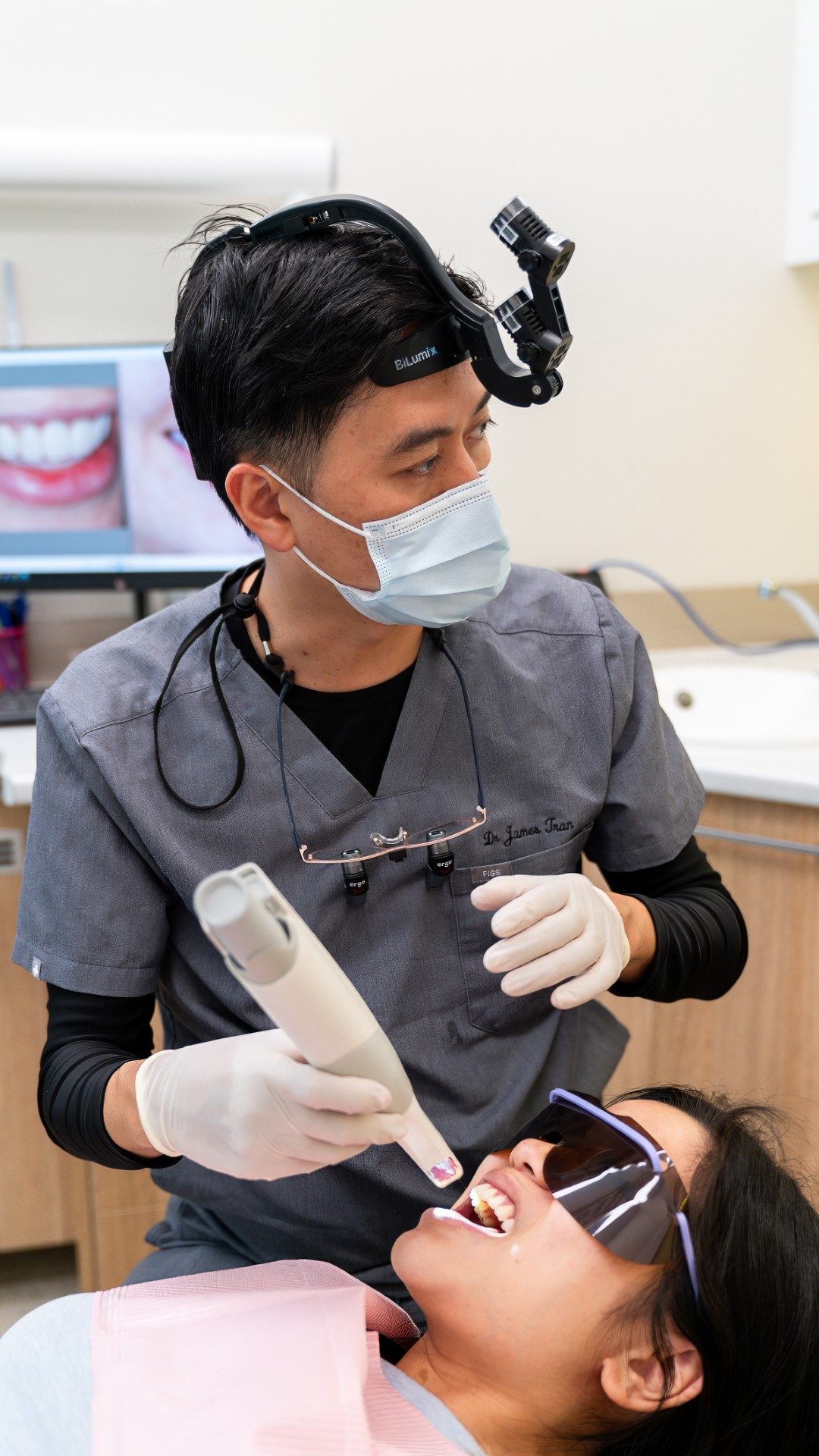
During an in-chair session, a retractor holds the lips and cheeks away from the teeth, a barrier protects the gums, and gel is painted on and left for set periods before being refreshed. Your mouth stays open, but with the tongue and retractor in the way, most of your breathing has to come through the nose.
That suits most people. It is harder if you tend to breathe through your mouth, which is common when the nose is often congested. Our article on mouth breathing in adults explains why it happens and how it dries the mouth. A few changes help:
- Ask for the chair to be tilted less far back.
- Use any nasal spray your doctor has prescribed exactly as you normally would.
- Ask for a short break sitting up between gel cycles.
If long sessions are hard, trays may suit you better
Take-home whitening uses thin custom trays and a lower-strength gel over a number of days. You sit upright, breathe however is comfortable, and take the tray out if you need to. Our guide to custom whitening trays explains how they are made and worn.
Preventer inhalers, thrush and the order of things at home
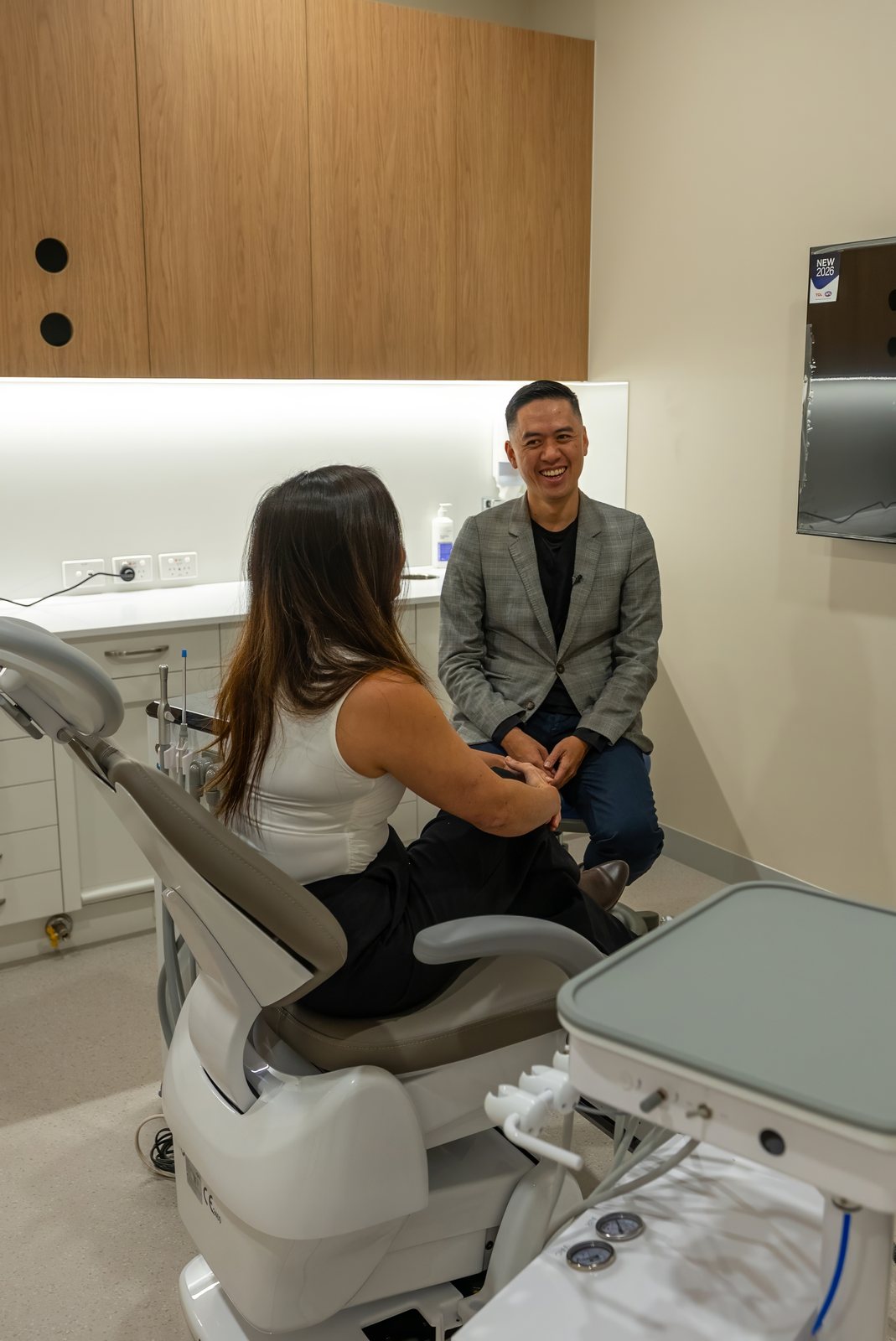
Many asthma inhalers contain a corticosteroid. Thrush, rinsing and spitting, and spacers are covered in our article on asthma inhalers and oral health. For whitening, two points matter.
Settle any thrush or soreness first
Peroxide on a sore mouth stings. The dentist looks for white patches, redness and cracked corners of the mouth first. If thrush is present, it is treated before whitening begins.
A sensible order with take-home trays
Keep taking your preventer exactly as prescribed. A simple sequence is: take your preventer, rinse and spit with water as usual, brush your teeth, then put the trays in. If you need your reliever while wearing trays, take the trays out first and use it straight away. Whitening is never a reason to delay asthma medicine.
Some people with asthma notice a dry mouth. The research I have read does not settle whether that makes whitening sensitivity worse, but a dry mouth is less comfortable under a tray. Our guide to whitening with a dry mouth covers what may help.
Sensitivity, pain relief and aspirin-sensitive asthma
Short-lived tooth sensitivity is a common side effect of whitening. Our article on how long sensitivity after whitening lasts explains the usual pattern.
healthdirect notes that NSAIDs, including aspirin, can trigger asthma symptoms in some people, and advises people with asthma who need an NSAID for pain relief to talk to their doctor first. If aspirin or ibuprofen has ever affected your breathing, ask your GP or pharmacist what to use for sensitivity.
There are also options that do not involve painkillers. An umbrella review of 24 systematic reviews on in-office whitening found that desensitising agents, particularly potassium nitrate and sodium fluoride, consistently reduced sensitivity without affecting the whitening result. The same review found that moderate peroxide concentrations gave comparable whitening with less sensitivity, and that light activation generally did not improve whitening and may increase sensitivity. Spacing out tray days also helps.
How we approach this at Lumi Dental
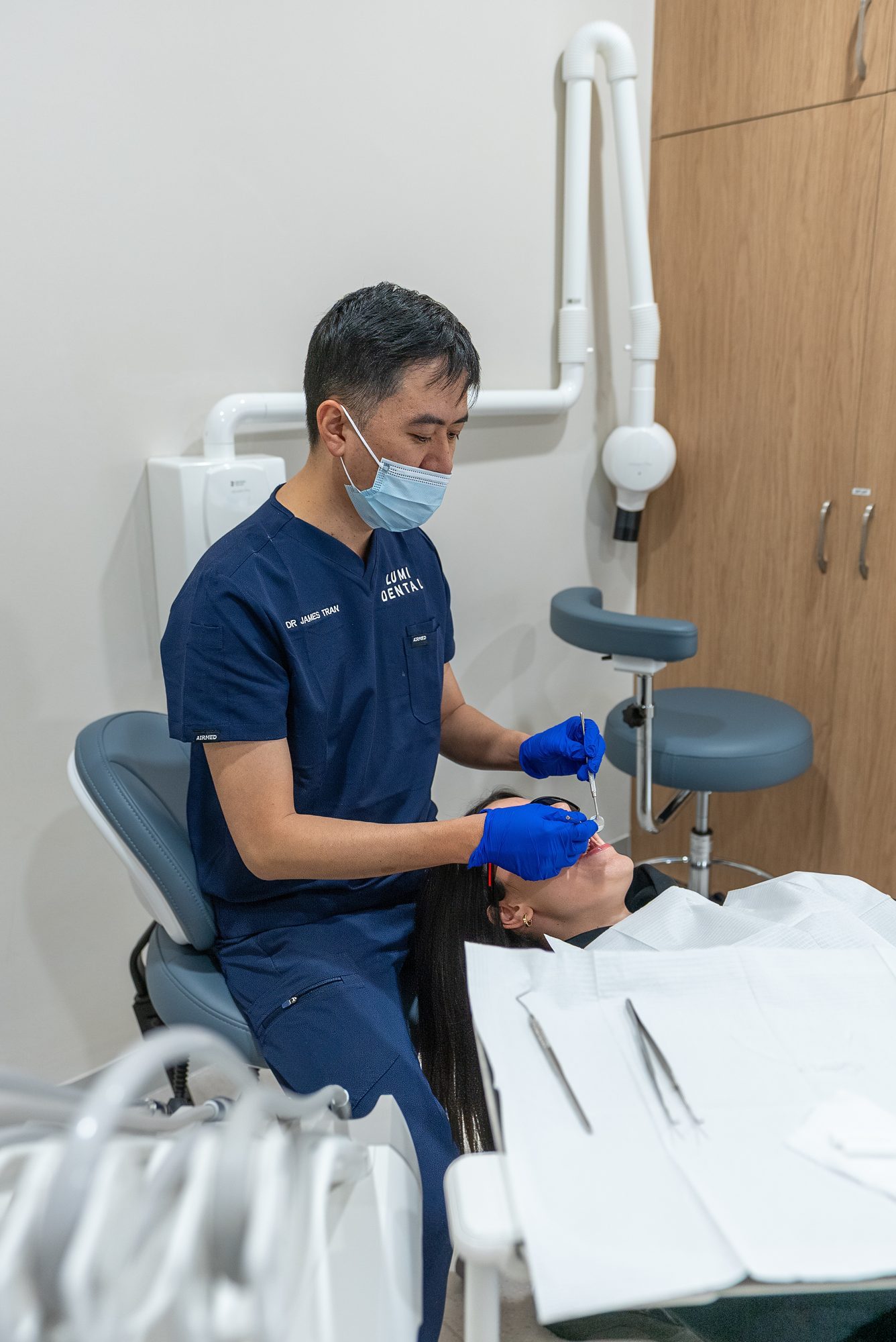
At Lumi Dental, whitening starts with an examination by a dentist, who checks the teeth for decay, worn areas and the type of staining, and looks at the gums, tongue and cheeks for thrush or irritation. The dentist asks which inhalers you use, whether you have an asthma action plan and what your triggers are. Where gums need attention, an oral health therapist (OHT) usually cleans and settles them first. The whitening options are named Lumi Home, Lumi Refresh and Lumi Radiance, and the dentist will explain which may suit you. You can read more on the general dentistry page.
Questions patients ask
Can I get my teeth whitened if I have asthma?
Usually yes, if your asthma is well controlled. The dentist checks your mouth first, and sessions are postponed during a flare-up.
Can the smell of whitening gel trigger an asthma attack?
There is no good evidence that it does, and most gels have only a mild smell. Strong scents and chemical smells are a trigger for some people, though, so mention it if smells affect you.
Should I use my inhaler before teeth whitening?
Use your inhalers exactly as your doctor and action plan say, including on the day of your appointment. Do not skip a preventer dose or take extra reliever just because of whitening. Bring your reliever into the room in case you need it.
What can I take for whitening sensitivity if I have asthma?
Ask your GP or pharmacist, especially if aspirin or anti-inflammatory painkillers have affected your breathing before. A desensitising toothpaste and shorter tray wear often help. Our article on sensitivity after whitening explains what to expect.
Are take-home whitening trays better if I have asthma?
They can be easier if lying back with your mouth open is hard, because you sit upright and can stop at any time. In-chair whitening suits many people with settled asthma too. Our teeth whitening page describes both.
Thinking about whitening? Complimentary cosmetic consult in Melrose Park
If you have asthma and would like a brighter smile, the team at Lumi Dental can check your teeth and mouth, talk through your inhalers and triggers, and suggest whether trays or an in-chair visit may suit you. Book a complimentary cosmetic consult at Melrose Central in Melrose Park, or read about teeth whitening options at Lumi Dental. Patients visit from Ryde, Parramatta, Ermington and Rydalmere, with on-site parking.
Sources
- National Asthma Council Australia: New asthma guidelines, SABA treatment inadequate
- Asthma Australia: Strong smells or scents
- healthdirect: Anti-inflammatory medicines (NSAIDs)
- PMC (The Saudi Dental Journal): In-office tooth bleaching protocols, an umbrella review of systematic reviews and meta-analyses on whitening efficacy and tooth sensitivity
About the author

Dr James Tran is a general dentist at Lumi Dental in Melrose Park. He holds a BDent from the University of Sydney and a Graduate Diploma in Oral Implants, and is a Member of the International Congress of Oral Implantologists (MICOI).
This article is general information only and is not a substitute for an examination and individual advice from a registered dental practitioner. Suitability for any treatment varies from person to person.







