

Teeth whitening with dry mouth is usually possible, but it needs an examination first and a gentler plan than the standard course, because saliva is the mouth's built-in protection against the sensitivity and gum irritation that peroxide gel can cause. Better Health Channel puts dry mouth at about 10% of the general population and around 25% of older people, and most of it comes from everyday medicines rather than disease. Less saliva means less buffering of acid, slower repair of enamel and more root surface on show, all of which change how whitening gel behaves. This guide explains what a dentist checks first, and how the course is adjusted.
Written by Dr James Tran, BDent (University of Sydney), MICOI, GradDip (Oral Implants), general dentist at Lumi Dental in Melrose Park.
The short version
- Dry mouth (xerostomia) does not rule out whitening, but it raises the risk of sensitivity, gum irritation and whitening over undetected decay.
- Saliva neutralises plaque acid, carries calcium and phosphate that repair early enamel damage, and rinses gel off the gums; with less of it, each job is done more slowly.
- A randomised trial in adults with medication-related dry mouth found 10% hydrogen peroxide strips whitened every participant in the peroxide group, with sensitivity and irritation the main side effects.
- Work out the cause first. Medicines are the usual reason; our guide to dry mouth causes and treatment covers the others.
- Whiten more gently: lower strength, shorter wear, nights off, well-sealed custom trays, fluoride and desensitising toothpaste throughout.
- Any change to a medicine stays with the doctor who prescribed it.
Why saliva matters during a whitening course
What saliva does for the teeth
Better Health lists what saliva does all day: it neutralises the acids that plaque bacteria produce, it carries the calcium and phosphate that repair the early stages of decay, it attacks decay-causing bacteria, and it keeps the gums and cheeks moist. It also rinses. Anything that sits on the teeth, a sweet drink or a whitening gel, is diluted and carried away faster in a wet mouth than in a dry one.
What changes when there is less of it
Three things matter for whitening. First, gel that creeps past the edge of a tray stays on the gum for longer, so stinging and white blanching are more likely. Second, enamel that is slower to remineralise between sessions is more likely to feel sharp to cold. Third, and this is the one that concerns me most, dry mouth changes where decay starts. Better Health notes that people with dry mouth are more prone to decay on root surfaces along the gum line, and even on the lower front teeth that saliva normally protects. Gel on an exposed root or an early cavity hurts.
The single rule: treat the dry mouth first, then whiten more gently than usual
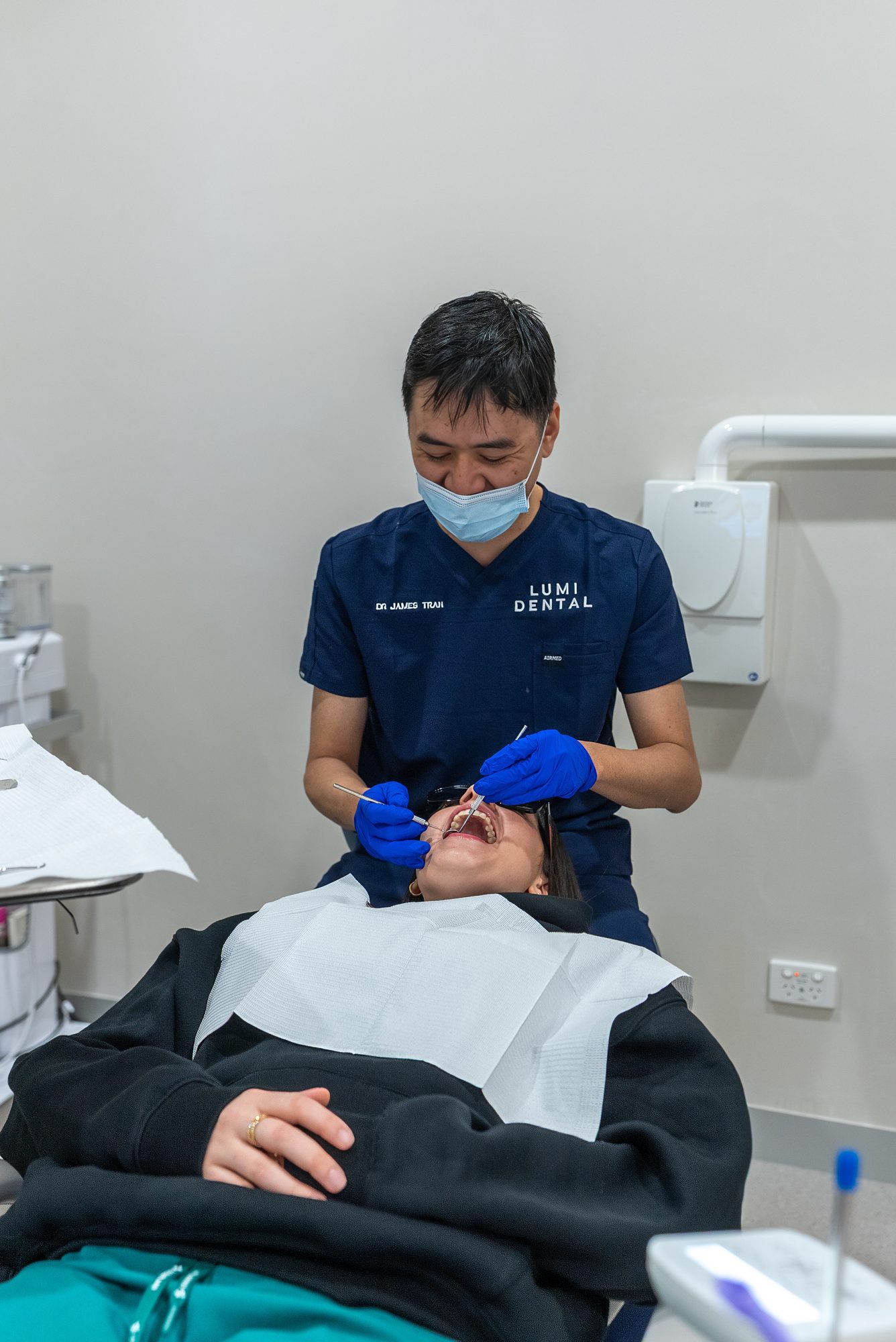
If your mouth is dry, the order is fixed. Find out why, get the dryness managed, have any decay or exposed roots dealt with, and only then start whitening, at a lower strength and a slower pace. Skipping the first steps does not save time; in my experience it produces a sore fortnight and a result that does not hold. Our guide on whitening with cavities or untreated decay explains why gel and an open cavity do not mix.
What the research says about whitening a dry mouth
For a long time people with low saliva were assumed to be poor whitening candidates, partly because enzymes in saliva help break peroxide down and partly because nobody had studied them. A randomised, placebo-controlled trial from Tufts University, reported in the journal Gerontology, tested that. Forty-two adults on medicines known to dry the mouth, all with an unstimulated saliva flow below 0.2 mL a minute, used either 10% hydrogen peroxide strips or placebo strips for 30 minutes twice a day for two weeks. Every participant in the peroxide group had measurable whitening; the most common side effects were oral irritation and tooth sensitivity, and nobody withdrew because of them. The manufacturer employed two of the five authors and two weeks is a short study, but it is the most direct evidence available that whitening can work in a dry mouth once the mouth has been checked.
Check these first: the examination before any gel
At a whitening consult for someone with a dry mouth, the examination runs longer than usual. These are the things I check and ask about.
The cause of the dryness
- Medicines. Better Health notes that around 600 drugs and medications are known to cause dry mouth; healthdirect's list includes antidepressants, antihistamines, decongestants, blood pressure medicines, opioid painkillers and diuretics. Bring the full list.
- Medical conditions. Sjogren's syndrome, diabetes and radiotherapy to the head or neck all reduce saliva. A mouth dried by radiotherapy carries a very high decay risk and may not suit whitening until that is under control.
- Mouth breathing and snoring. A blocked nose or CPAP airflow dries the front teeth overnight, exactly where tray gel sits. Our guide to CPAP machines and dry mouth covers that one.
- Dehydration, alcohol and caffeine. Simple to fix before a course starts.
What the dryness has already done
- Decay, especially along the gum line and on root surfaces, found on examination and X-rays. The cavity is filled first.
- Exposed roots. Root dentine does not whiten the way enamel does and is the usual source of sharp sensitivity.
- Cracks, leaking fillings and gum disease. Healthdirect lists cracks, holes, gum disease and untreated dental problems among the reasons whitening is not recommended; a dry mouth makes them more likely.
- Thrush and ulcers. Both are more common in a dry mouth, and sore tissue does not need peroxide on it.
A gentler whitening protocol for dry mouth
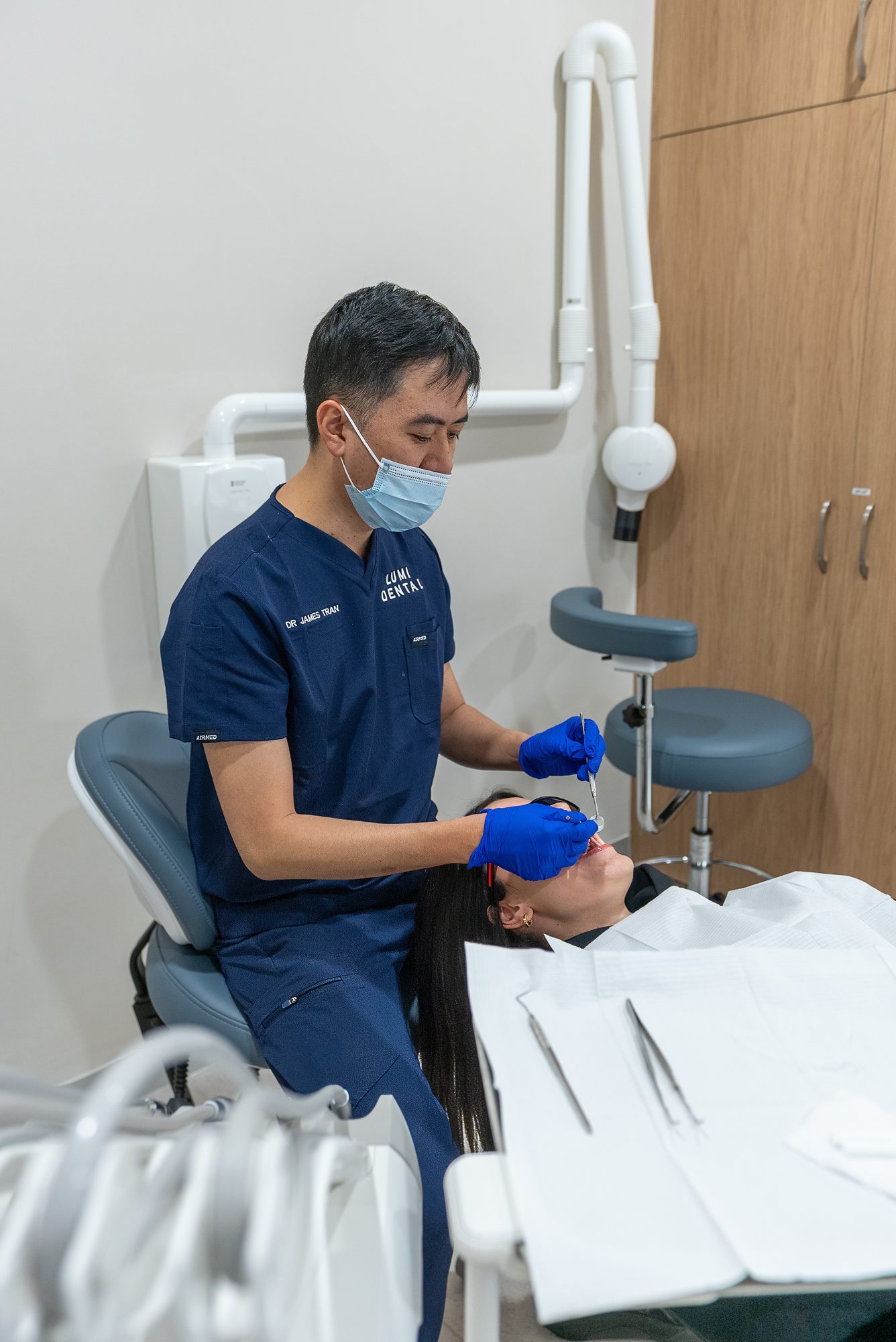
Once the mouth is ready, the changes are practical rather than dramatic. This is how a take-home course is usually adjusted; the exact plan depends on what the examination found.
| Step | Standard course | Dry mouth adjustment | Why |
|---|---|---|---|
| Gel strength | Chosen for the shade change wanted | Lower end of the range; step up only if the first week is comfortable | Less saliva to dilute and clear the gel |
| Wear time | As directed, sometimes overnight | Shorter sessions; no overnight wear at first | Gel sits undiluted for hours |
| Frequency | Consecutive days | Alternate nights, extra nights off if teeth feel sharp | Enamel gets time to recover |
| Trays | Custom trays | Custom trays with a close gum-line seal, less gel per tooth | Keeps gel off the gums |
| Before each session | Brush, then load trays | A mouthful of water, then brush with a desensitising toothpaste | Moist tissue tolerates gel better |
| Toothpaste | Regular fluoride | Higher-fluoride plus a desensitising paste throughout | Healthdirect recommends higher fluoride for dry mouth |
| Mouthwash | Optional | Alcohol-free only, or none | Alcohol rinses aggravate dry tissue |
| Review | End of the course | A check partway through | Problems are caught early |
In-chair whitening cuts both ways. The gum barrier and cheek retractors dry the mouth further during the session, so the first day afterwards can feel sharper than expected; on the other hand the gel is isolated and removed by the clinician rather than left to sit, which suits people whose trays leak. Our guide to custom whitening trays explains why fit matters so much here.
Day-to-day care during the course
Better Health's advice for living with dry mouth fits a whitening course well. Drink water, but do not sip slowly all day, because that washes away the saliva you do have; take a proper mouthful before the trays go in. Chew sugar-free gum between sessions to stimulate flow. Use a saliva substitute or dry mouth gel if one has been recommended, after the trays come out rather than before. Skip alcohol-containing mouthwashes and acidic drinks, which a dry mouth cannot neutralise. Keep taking your medicines as prescribed: healthdirect is clear that doses should not be changed without first talking with your doctor. If your gums are sore or your teeth stay sharp for more than a day or two after a session, stop and ring the practice.
How we approach this at Lumi Dental
At Lumi Dental in Melrose Park, whitening begins with an examination by a dentist, and a dry mouth makes that examination more thorough: medicines and medical history are recorded, root surfaces and gum margins are checked, X-rays are taken where decay is suspected, and the 3D intraoral scan is used to make custom trays that seal well at the gum line. If the dryness has not been looked into, you may be asked to see your GP first. The whitening options are named Home, Refresh and Radiance, and the teeth whitening page explains how a consult works. The hygiene team of oral health therapists looks after cleans and whitening maintenance.
Questions patients ask
Can you whiten your teeth if you have dry mouth?
Usually yes, after an examination. A randomised trial in adults with medication-related dry mouth found hydrogen peroxide strips whitened every participant who used them, with sensitivity and irritation the main side effects. The examination matters because dry mouth raises the chance of decay and exposed roots.
Does teeth whitening make dry mouth worse?
Not permanently, but a session can feel drying, because trays and retractors keep the mouth open and the gel dehydrates enamel for a day or so. Sip water before a session, use a saliva substitute afterwards, and keep sessions short at first.
Why are my teeth so sensitive after whitening when I have dry mouth?
Because saliva's buffering and repair work is in short supply, and because dry mouth often comes with root exposure or gum-line decay, where gel reaches dentine directly. Our article on whitening sensitivity and relief covers what helps.
What strength whitening gel is safe with dry mouth?
The lower end of whatever your dentist prescribes, stepped up only if the first week is comfortable. Healthdirect notes that only registered dental professionals can use or supply products above 6% hydrogen peroxide. Our guide to whitening gel strengths explains the numbers.
Should I stop my medication to whiten my teeth?
No. Healthdirect's advice is not to change a dose without talking to your doctor, and a cosmetic course is not a reason to. If dry mouth is troubling you generally, ask your GP about alternatives; the whitening plan is built around whatever you take.
Dry mouth and whitening questions? Complimentary cosmetic consult in Melrose Park
If a dry mouth has put you off whitening, the team at Lumi Dental in Melrose Park can examine the teeth, check for decay and exposed roots, and plan a gentler course. Book a complimentary cosmetic consult, read about teeth whitening at Lumi Dental, or start with a general check-up if the dryness itself needs attention first. Patients visit from Ryde, Parramatta, Ermington, Rydalmere and nearby suburbs.
Sources
- Better Health Channel: Dry mouth
- healthdirect: Dry mouth syndrome, symptoms, causes and treatment
- healthdirect: Teeth whitening
- DrBicuspid (Reuters Health): Whitening strips are safe and effective in patients with dry mouth
About the author

Dr James Tran is a general dentist at Lumi Dental in Melrose Park. He holds a BDent from the University of Sydney and a Graduate Diploma in Oral Implants, and is a Member of the International Congress of Oral Implantologists (MICOI).
This article is general information only and is not a substitute for an examination and individual advice from a registered dental practitioner. Suitability for any treatment varies from person to person.








