

Teeth whitening with Crohn's disease or ulcerative colitis is usually fine during a settled period, and the main rule is not to start during a flare. Flares can bring mouth ulcers, tiredness and changes to medicines, and peroxide gel stings on broken lining in the mouth. Crohn's & Colitis Australia supports more than 100,000 Australians living with Crohn's disease or ulcerative colitis, so this is a question the team at Lumi Dental hears often.
Written by Dr James Tran, BDent (University of Sydney), MICOI, GradDip (Oral Implants), general dentist at Lumi Dental in Melrose Park.
The short version
- Inflammatory bowel disease (IBD) does not rule out whitening. Timing matters more than the diagnosis.
- The simple rule: whiten in a settled stretch, not during a flare, and only when there are no ulcers or swelling in the mouth.
- Dark stain from liquid iron usually sits on the surface. A professional clean removes it, and whitening comes after, if it is still wanted.
- Your gastroenterologist manages your IBD medicines. Whitening never needs a medicine to be stopped or changed.
- Dry mouth, vomiting and sipping nutrition drinks can all make teeth more sensitive, so they shape the plan.
- Our article on Crohn's disease, IBD and oral health covers the wider picture of how IBD can show in the mouth.
The simple rule: whiten in a settled stretch, not during a flare
healthdirect describes Crohn's disease as bouts of symptoms that flare up and then calm down again, with periods of remission in between, and lists mouth ulcers among its symptoms. That pattern is the key to planning whitening. When the bowel is settled, the mouth is often settled too. When it flares, the lining of the mouth may follow.
A multi-centre study from the Mayo Clinic, which reviewed 116 adults with IBD who had mouth symptoms, found that in many of them the mouth problems ran in parallel with bowel flares. A flare also tends to bring tiredness, extra medical appointments and sometimes a new or stronger medicine. None of that is a good fit for a whitening course, which asks you to sit with your mouth open for a long appointment or wear trays every day for a couple of weeks.
So the rule is simple. Book whitening when you have been well for a while, have no ulcers or swelling in the mouth, and your treatment has been stable. If a flare starts part way through a take-home course, stop and pick it up again later. Nothing is lost by waiting.
Mouth signs that can come with IBD
In the Mayo Clinic study, aphthous ulcers were by far the most common mouth problem, seen in about 80% of the people included. That figure comes from people who already had mouth symptoms, so it does not tell us how common ulcers are across everyone with IBD. Published estimates vary widely, and our IBD and oral health article discusses why.
The same study describes signs more closely tied to Crohn's disease: tags of soft tissue, a cobblestone texture inside the cheeks, deep linear ulcers in the folds of the mouth, and orofacial granulomatosis, which can cause lasting swelling of the lips. In ulcerative colitis, a rare condition called pyostomatitis vegetans, with clusters of small yellowish pustules, is considered highly specific.
For whitening, any of these is a reason to wait and have the area assessed first. Gel on an open ulcer stings, cheek retractors press on swollen lips, and a tray rubbing on tags or cobblestoned tissue can make them sore. Our guide to whitening with a mouth ulcer explains the signs that an area has healed enough to go ahead.
Liquid iron and dark surface stain
Some people with IBD are prescribed a liquid iron supplement. MedlinePlus, the US National Library of Medicine's health site, notes that liquid forms of iron may stain your teeth, and suggests mixing the iron with water or another drink and taking it through a straw. Follow the dose and timing your doctor has given you. Those are not the dentist's decisions.
Iron stain is usually extrinsic, meaning it sits on the outside of the enamel rather than inside the tooth. That changes the order of treatment. A professional clean usually removes it, and many people find their teeth look noticeably lighter afterwards without any gel. Whitening only changes the colour inside the tooth, so starting with it while surface stain is still there wastes part of the effect. Our article on stain removal versus whitening explains the difference, and our guide to teeth staining from medication covers iron alongside other medicines.
For patients I see on liquid iron, stain can build up again within weeks. Using a straw, rinsing with water afterwards and keeping up regular cleans tends to slow it down.
Steroids, immunomodulators and biologics
healthdirect lists the main groups of medicines used to control inflammation in Crohn's disease: 5-aminosalicylates, corticosteroids, immunomodulators that damp down the immune response, biologic medicines that target specific cells or proteins, and antibiotics. Tell the dentist which of these you take and whether anything has changed lately.
Your gastroenterologist manages these medicines, and whitening never needs one to be stopped, paused or changed. What the medicines do change is how the dentist looks at your mouth. Some lower resistance to infection, so any sore area, gum inflammation or broken tooth is checked and treated before whitening. A new steroid course usually means a flare is under way, which is another reason to wait.
Mouth findings can matter to your gastroenterologist too. In the Mayo Clinic study, mouth problems sometimes led the treating doctors to adjust IBD treatment. If the dentist notices new ulcers or swelling, mention them at your next gastroenterology visit.

Dry mouth, vomiting and sipping nutrition drinks
Some medicines and dehydration during a flare can leave the mouth dry. Saliva protects teeth and soothes the lining, so a dry mouth tends to make whitening sensitivity worse and the gums more easily irritated. A slower course with shorter wear times often suits.
Vomiting or reflux bring acid into the mouth, which softens enamel for a while. Rinse with water afterwards and wait before brushing. If acid exposure is frequent, the dentist will look for erosion before suggesting whitening, because worn enamel can be more sensitive.
Liquid nutrition drinks are sometimes part of IBD care. Sipped slowly over hours, they keep teeth bathed in sugar. Where your dietitian allows it, drinking them in one sitting and rinsing with water afterwards is kinder to teeth, before or after whitening.
Before whitening: a guide by situation
This is general guidance only. Your gastroenterologist or surgeon may give you advice that fits your situation better.
| Your situation | What to do before whitening |
|---|---|
| In remission and feeling well | Usually a good time to plan; start with an examination and clean |
| Mild flare | Postpone starting; pause a take-home course if one is under way |
| Active ulcers or swollen lips | Wait until healed, and have anything persistent checked first |
| Taking liquid iron | Have surface stain cleaned off first; keep taking iron as prescribed |
| On steroids, immunomodulators or biologics | Tell the dentist; medicines stay as your gastroenterologist prescribed; gums and lining checked first |
| After bowel surgery | Wait until you have recovered and are eating normally; ask your surgical team if unsure |
In my experience, take-home trays suit many people with IBD better than a single long in-chair visit, because you can stop on a bad day and carry on when you feel well.

How we approach this at Lumi Dental
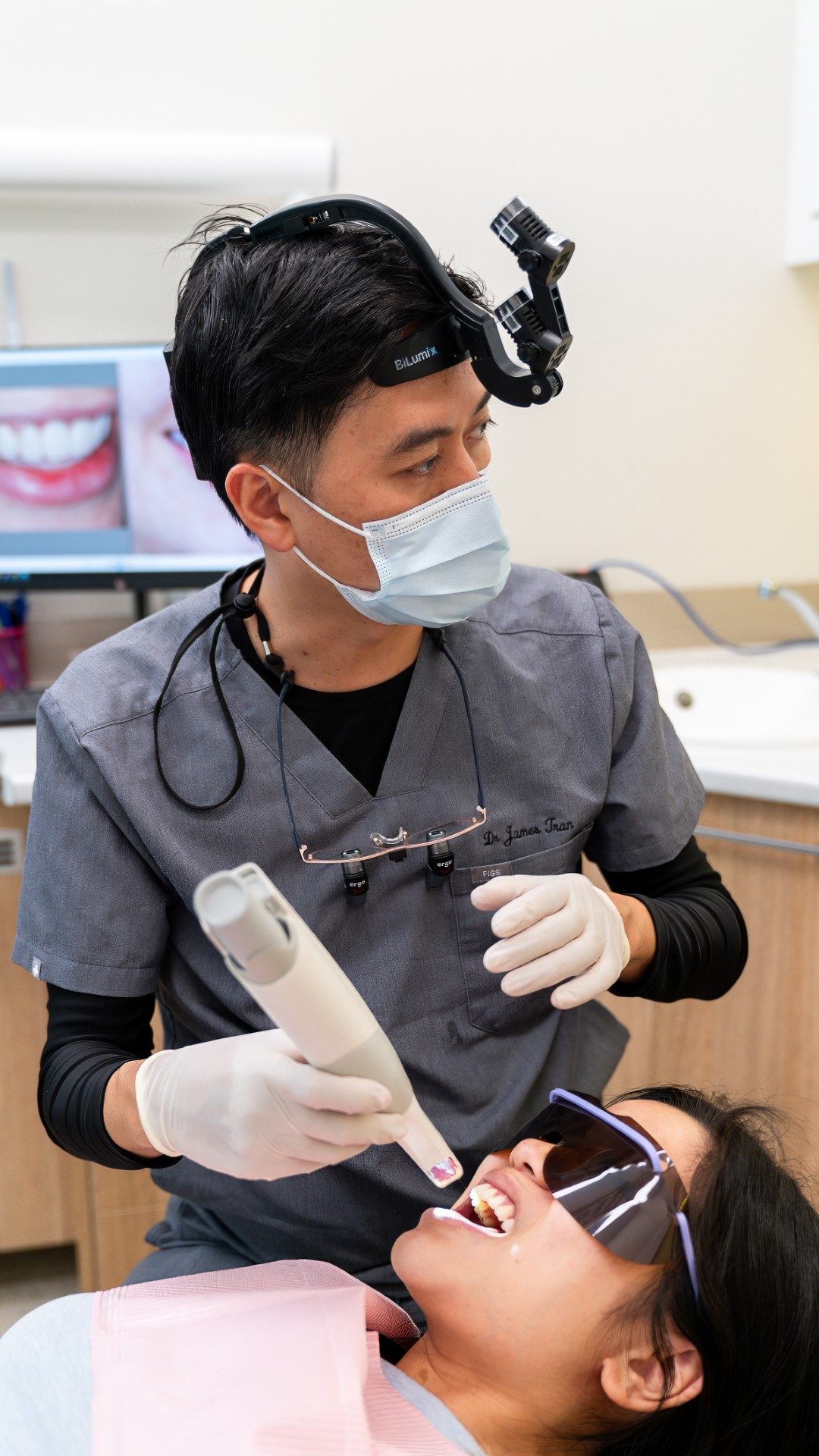
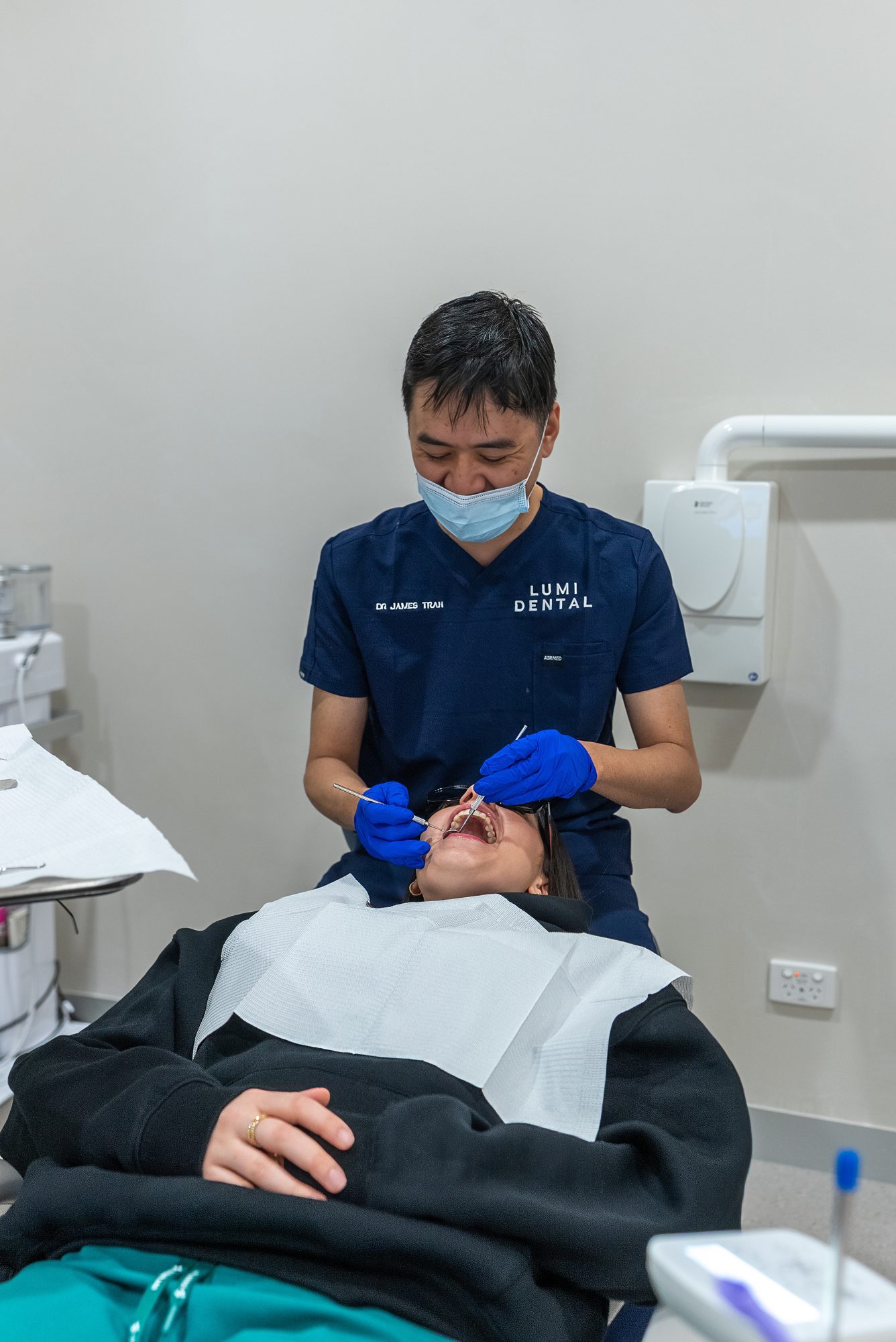
At Lumi Dental, whitening starts with an examination by a dentist, who checks the lips, cheeks, tongue and gums for ulcers, swelling or other changes before any gel is used, and asks about recent flares, surgery and the medicines you take. An oral health therapist then removes surface stain, including iron stain, so the true shade can be seen and you can decide whether you still want whitening. The whitening options are named Lumi Home, Lumi Refresh and Lumi Radiance, and the dentist will explain which may suit you. You can read more on the general dentistry page.
Questions patients ask
Can I whiten my teeth if I have Crohn's disease or ulcerative colitis?
Usually, yes. The best time is a settled period with no ulcers or swelling in the mouth. A dentist checks your soft tissues and teeth first.
Will whitening remove the dark stains from my iron supplement?
Iron stain usually sits on the surface, so a professional clean removes it more effectively than whitening gel. If you are being treated for low iron, our article on iron deficiency and oral health explains the tongue and lining changes it can cause.
Do I need to stop my IBD medicine before whitening?
No. Your gastroenterologist manages your medicines, and whitening never requires a change. Tell the dentist what you take so the plan can allow for it.
Can whitening gel make mouth ulcers worse?
Peroxide gel stings on an open ulcer and can irritate it. Wait until ulcers have healed before starting, and pause a course if new ones appear.
Will whitening hurt more if my mouth is dry?
It can. Saliva helps protect teeth, so a dry mouth often means more sensitivity and a gentler plan. Our guide to teeth whitening with dry mouth covers what helps.
Thinking about whitening? Complimentary cosmetic consult in Melrose Park
If you live with Crohn's disease or ulcerative colitis and would like a brighter smile, the team at Lumi Dental can check your mouth, talk through timing around flares and suggest an approach that fits your health. Book a complimentary cosmetic consult at Melrose Central in Melrose Park, or read more about teeth whitening at Lumi Dental. Patients visit from Ryde, Parramatta, Ermington and Rydalmere, with on-site parking.
Sources
- healthdirect: Crohn's disease
- healthdirect: Crohn's & Colitis Australia
- PMC (Medicina Oral, Patología Oral y Cirugía Bucal): The mouth as a window, oral extraintestinal manifestations of IBD and their management
- MedlinePlus: Taking iron supplements
About the author
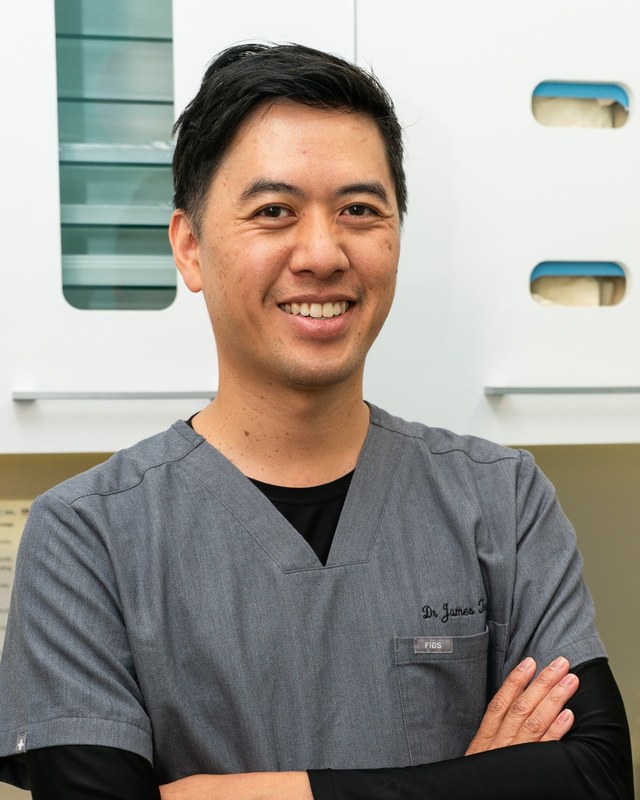
Dr James Tran is a general dentist at Lumi Dental in Melrose Park. He holds a BDent from the University of Sydney and a Graduate Diploma in Oral Implants, and is a Member of the International Congress of Oral Implantologists (MICOI).
This article is general information only and is not a substitute for an examination and individual advice from a registered dental practitioner. Suitability for any treatment varies from person to person.







