


Teeth whitening with dental anxiety is one of the easier treatments to arrange, because whitening involves no drill, no injection and no extraction, and most of it can happen at home at your own pace once a dentist has checked the teeth. Dental anxiety is common: a national survey published in the Australian Dental Journal found high dental fear in between 7.8% and 18.8% of Australian adults depending on how it was measured, with needles and painful procedures among the most feared triggers. Neither is part of a whitening course. This guide explains what whitening actually involves, how to choose between take-home trays and an in-chair session, and what makes the visit calmer.
Written by Dr James Tran, BDent (University of Sydney), MICOI, GradDip (Oral Implants), general dentist at Lumi Dental in Melrose Park.
The short version
- Whitening has no drill, no needle and no extraction. The clinical parts are an examination, a scan for trays, a shade photo, then gel in trays at home or a supervised session in the chair.
- If the chair is the problem, take-home trays after a short scan put you in charge. If being alone with the gel worries you, a supervised in-chair session may suit better.
- The examination comes first. Gum disease, decay and cracks are dealt with before any gel, and for many anxious patients the scale and clean is the real hurdle.
- Better Health Channel lists practical tools: an agreed stop signal, slow breathing, music, a weighted blanket you bring yourself, and short targeted therapy for severe anxiety. Our guide to adult dental anxiety covers them.
- Sedation is rarely needed for whitening itself. It matters more when other dental work has to happen first.
- Sensitivity is the fear most people name. A lower strength gel and a desensitising toothpaste, planned in advance, take most of the worry out.
What whitening does not involve, and what it does
In my experience the fear attached to whitening is borrowed from other dental treatment. People picture the drill, the needle and being tipped back with someone's hands in their mouth, and assume whitening is like that. It is not.
What it does not involve
- No injection. Gel works on the enamel surface, so there is nothing to numb.
- No drill. Nothing is cut, ground or removed from the tooth.
- No extraction, surgery or stitches. No bleeding, no recovery time.
What it does involve
- An examination. The Dental Board of Australia expects an appropriate assessment, examination and history before whitening products are supplied for home use.
- A shade record. A photo beside a shade tab, taken in seconds.
- A scan so custom trays can be made. A wand passes over the teeth; no tray of setting material is needed.
- The whitening itself. Gel you place in trays at home, or an in-chair session where a lip retractor holds the lips back, a barrier is painted on the gums, and the clinician applies and removes the gel.
The single rule: match the method to the thing you fear
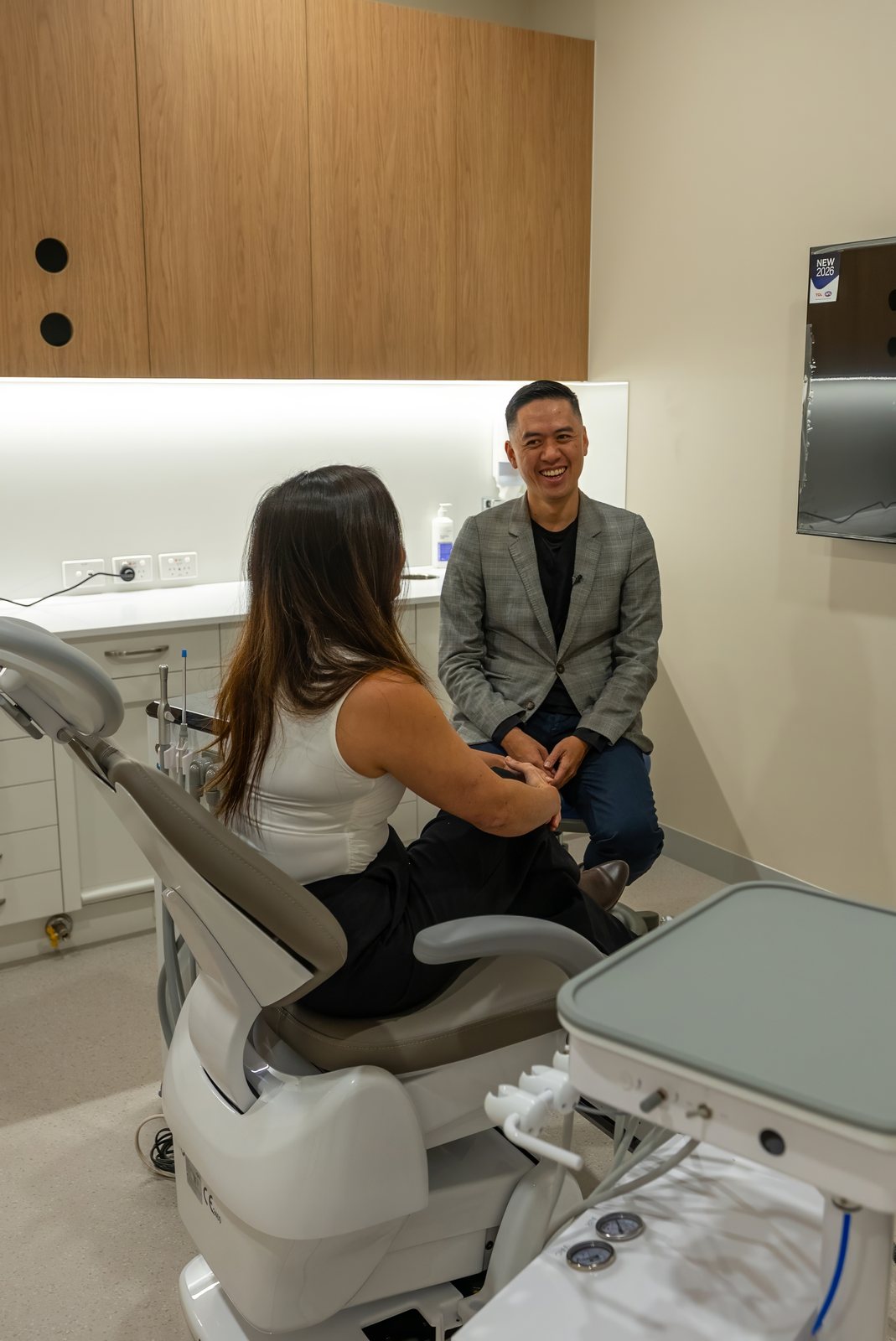
If the chair is the problem, start with take-home trays after a scan. If being alone with the gel is the problem, choose a supervised in-chair session. Most anxious patients I see fall into one group once asked. The first dislikes lying back with the mouth held open; one scan visit and whitening on the couch at home removes almost everything they dread. The second is calm in the chair but worries about doing something wrong at home with nobody to ask; a session with a clinician present, who can stop at any moment, is calmer. Better Health Channel makes the same point: open discussion of your triggers lets the dentist tailor the plan rather than guess.
Comparing the options when anxiety is the deciding factor
| Option | Time in the chair | Someone working in your mouth | Control you keep | Where anxiety tends to bite |
|---|---|---|---|---|
| Consultation only | A short visit, mostly talking | No, unless you agree to a look | Full | Walking through the door |
| Examination and scan | One visit | Yes, briefly: mirror, light, scanner wand | Pause on request | The wand near the back teeth |
| Take-home custom trays | One fitting visit, then none | No, you place the trays yourself | Full: pace, place, nights off | Managing a twinge alone at home |
| In-chair session | One longer appointment | Yes, with a retractor and gum barrier throughout | Stop signal and breaks | Lying back with the mouth held open |
One fact helps here. The Australian Dental Association notes that take-home whitening takes longer than in-chair, but this does not make the result better or worse, so anxiety can drive the decision without costing the outcome. Our guides to what an in-chair session is like and how take-home whitening works describe each path step by step.
A graded path you can stop at any point
Step one: talk first
Book a consultation and say at the start that you are anxious; Better Health Channel's advice is to tell the dentist about any level of anxiety. Name the trigger: a needle phobia, a gag reflex, a bad experience years ago and a fear of losing control each call for different adjustments.
Step two: examination and scan
A mirror, a light, and X-rays where decay is suspected. The scan replaces the impression tray many anxious people dread; our comparison of digital scans and impressions explains why the wand is easier. Ask for it in short bursts with the chair more upright.
Step three: take-home trays, at your own pace
Trays are fitted at one short visit. At home you choose the time and the room. A lower strength gel and shorter wear make the first sessions gentler, and a night off is always allowed. If a tooth feels sharp, stop and ring the practice.
Step four: in-chair, only if you want it
Some people prefer the bulk of the change done in one supervised sitting, keeping the trays for top-ups. The retractor and gum barrier feel odd rather than painful, and the gel comes off the moment you signal.
Why a scale and clean is often the real hurdle
Whitening gel is not applied over gum disease, decay, cracks or leaking fillings. The Australian Dental Association warns that strong peroxide gel touching the lips, gums or tongue can cause chemical burns, and that sensitivity can occasionally be severe enough that breathing cold air hurts; inflamed gums and open cavities make both more likely. So the first appointment involving instruments is usually the scale and clean by the hygiene team, the one anxious people put off. Our guide on whitening before or after a scale and clean explains the order. Better Health Channel describes a 'vicious cycle of dental anxiety', where avoidance lets small problems grow into the complex treatment people feared. Whitening can break that cycle, because it gives a reason to have the mouth checked that is about wanting something.
Tools that make the visit calmer, and where sedation fits
Things you can ask for or bring
- A stop signal. Better Health suggests agreeing one before treatment, such as raising your left hand.
- Breathing and distraction. Slow breathing, music through headphones, or a video.
- A weighted blanket. Bring your own; several patients I see use one throughout.
- A support person in the room, and a say in how much is narrated: every step, or silence.
- Psychological help for severe anxiety; short targeted therapies such as cognitive behavioural therapy can be very successful.
Where sedation fits
For whitening alone, sedation is seldom needed: nothing hurts, and the take-home route avoids the chair almost entirely. It becomes relevant when fillings or gum therapy must be completed before whitening can start. Better Health describes the ladder: relative analgesia (happy gas), which takes effect within minutes and wears off quickly while you stay awake; a small dose of an anxiety relieving tablet an hour beforehand; IV (twilight) sedation from a dental sedationist or anaesthetist; and general anaesthetic in hospital. You should not drive after any of them. Lumi Dental does not provide general anaesthetic itself and refers where it is needed, though IV sedation is available at the practice.
How we approach this at Lumi Dental
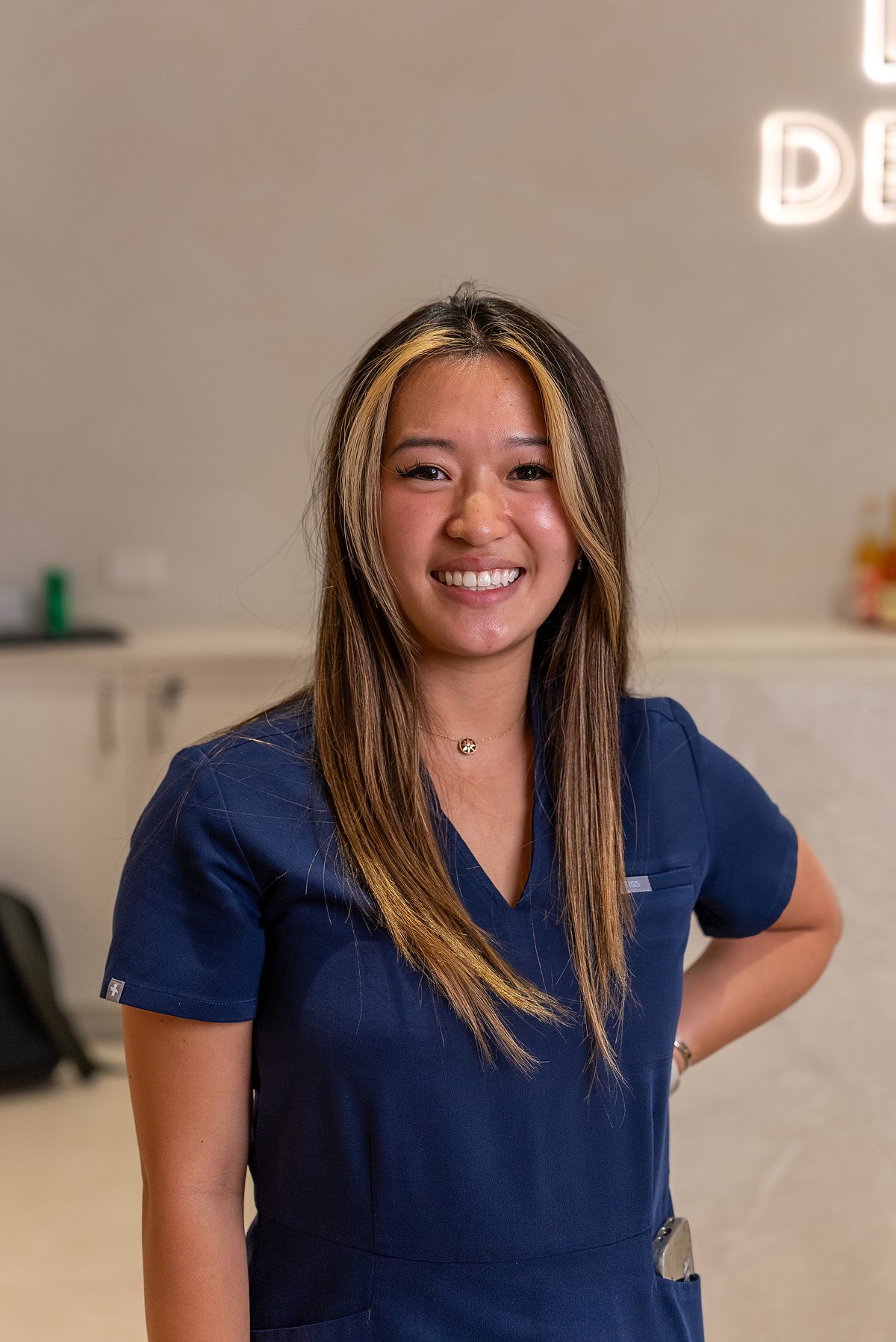
At Lumi Dental in Melrose Park, whitening starts with a dentist's examination and a conversation about what, specifically, makes dental visits hard for you. The 3D intraoral scanner is used in place of impressions, and the scan pauses whenever you ask. The whitening options are named Home, Refresh and Radiance; the teeth whitening page explains how a consult works. The hygiene team of oral health therapists looks after the scale and clean beforehand and whitening maintenance afterwards, and a stop signal is agreed before any appointment that involves instruments.
Questions patients ask
Can I get my teeth whitened if I am scared of the dentist?
Yes. Whitening involves no injection, no drill and no extraction, and the take-home version happens at home after one short scan visit. What needs a clinician is the examination and, if gum disease or decay is found, treating that first.
Does teeth whitening hurt?
No, and no anaesthetic is needed. The common side effect is sensitivity to cold during the course, which the Australian Dental Association notes can occasionally be severe. A lower strength gel, shorter wear and a desensitising toothpaste reduce it; our guide to whitening sensitivity and relief explains what helps.
Can I be sedated for teeth whitening?
Possible, but rarely necessary, because nothing hurts and the take-home route avoids the chair. Sedation is more useful when fillings or gum therapy must be done before whitening. Happy gas wears off within minutes; IV sedation needs someone to take you home.
Do I need impressions taken for whitening trays?
Not where a digital scanner is available. A small wand is passed over the teeth and the trays are made from that scan. People who gag or feel trapped by impression trays usually find it easier.
What happens if I panic during an in-chair whitening session?
You give the agreed signal, the clinician stops, and the gel is wiped off within seconds. The session can resume after a break or stop there, with the course finished in trays at home.
Nervous about whitening? Complimentary cosmetic consult in Melrose Park
If anxiety has kept you from asking about whitening, the team at Lumi Dental in Melrose Park can start with a conversation and go only as far as you choose. Book a complimentary cosmetic consult or read about teeth whitening at Lumi Dental. Patients visit from Ryde, Parramatta, Ermington, Rydalmere and nearby suburbs.
Sources
- Better Health Channel: Dental anxiety and phobia
- Dental Board of Australia: Teeth whitening products
- Australian Dental Association (teeth.org.au): Teeth whitening
- PubMed (Australian Dental Journal): The extent and nature of dental fear and phobia in Australia
About the author

Dr James Tran is a general dentist at Lumi Dental in Melrose Park. He holds a BDent from the University of Sydney and a Graduate Diploma in Oral Implants, and is a Member of the International Congress of Oral Implantologists (MICOI).
This article is general information only and is not a substitute for an examination and individual advice from a registered dental practitioner. Suitability for any treatment varies from person to person.








