


Teeth whitening is often still possible with chronic kidney disease, on dialysis or after a kidney transplant, as long as it is planned around your kidney team's schedule and fluid limits, the mouth is healthy first, and a gentler course is used when the mouth is dry. Dry mouth is the main reason the plan changes. A review of dental care in end-stage kidney disease reports that 48.4% of people on dialysis described a dry mouth, and less saliva means more sensitivity and a higher risk of decay during whitening.
Written by Dr James Tran, BDent (University of Sydney), MICOI, GradDip (Oral Implants), general dentist at Lumi Dental in Melrose Park.
The short version
- Whitening gel works on the tooth surface. The questions for kidney patients are about the mouth the gel goes into: dryness, gums, taste and timing.
- A dry mouth is common with kidney disease and dialysis, so a lower-strength gel, shorter wear or alternate days often suit. Our article on teeth whitening with dry mouth explains those adjustments.
- Your renal team sets any fluid limit. Whitening advice works within it, never around it.
- On haemodialysis, the scale and clean before whitening is usually booked on a non-dialysis day, because of the blood thinner used during dialysis.
- After a transplant, gums and thrush are checked first, and the transplant team is told about any planned treatment.
- No medicine is stopped or changed for whitening.
Why dry mouth is so common with kidney disease
A narrative review in the International Journal of Dentistry links dry mouth in people on haemodialysis to their overall fluid status, since they are advised not to drink excess fluid. Several common medicines add to it. Kidney Health Australia notes that as kidney function falls, waste builds up in the blood, causing a bad taste and bad breath, and the mouth may also feel dry.
A systematic review of 27 studies, most of them cross-sectional, found that reduced saliva, more plaque and calculus, enamel defects, gum disease and oral thrush were among the oral findings reported most often in chronic kidney disease.
What that means for whitening
Saliva buffers acid, carries minerals back into enamel and dilutes any gel that drifts onto the gums. With less of it, teeth usually feel cold more sharply during a course, the gum edge can become tender, and decay can develop quietly around old fillings and the gum line. Gel on an undetected cavity hurts. The dentist checks for decay, with X-rays where needed, before any course is planned. Our guide to sensitive teeth after whitening explains how long that sensitivity usually lasts.
The simple rule: plan around the kidney team's schedule and limits
If you have kidney disease, book whitening around your treatment rather than squeezing treatment around whitening. In practice that means three things: any appointment that might make the gums bleed goes on a non-dialysis day, the mouth is made healthy before gel goes near it, and a gentler course is chosen when the mouth is dry and fluids are limited.
In my experience, people on dialysis are very good at planning, so a whitening plan that fits around their sessions tends to go smoothly. Whitening is elective, so there is never a reason to rush it during an unsettled period, such as starting dialysis or the early months after a transplant.
Easing dryness when you cannot simply drink more water
Kidney Health Australia notes that if you have kidney failure or need dialysis, your healthcare team may tell you how to limit the fluid you eat or drink each day. That limit protects your heart and helps control swelling, so the usual dental advice to sip water often does not apply. Follow your renal team's allowance.
Within that limit, a few things can help during a whitening course:
- Chewing gum, which Kidney Health Australia lists alongside saline spray and ice as ways to ease a dry mouth; sugar-free gum is kinder to teeth. Ice still counts as fluid once it melts, so ask your renal team how to count it.
- Saliva substitute gels or sprays, which a dentist or pharmacist can suggest.
- Avoiding sweet lollies or sweet drinks to keep the mouth moist, since sugar on dry teeth feeds decay.
- A higher-strength fluoride toothpaste, if the dentist suggests one for your decay risk.
Timing around dialysis days
Haemodialysis uses heparin, a blood thinner, to keep the circuit from clotting. The same review advises that dental treatment with a risk of bleeding be postponed to a non-dialysis day, when the heparin effect has gone, waste levels are lower and the person is not tired from the session. Whitening gel itself does not cause bleeding, but the scale and clean before it can make the gums ooze, so that visit is the one to time carefully. Our article on dental care with dialysis covers booking in more detail.
For an in-chair session, a non-dialysis day is also more comfortable: you are likely to have more energy, and you can mention which arm has your fistula or graft so nothing is placed on it. Peritoneal dialysis follows a different routine, and the best time is usually worked out with you and your renal team.
Taste, breath and tooth colour
The review notes that around one third of people on haemodialysis have a characteristic breath odour and a metallic taste, caused by urea in saliva breaking down into ammonia. Whitening does not change this. It is a chemical effect of kidney disease, not a hygiene problem, and our article on chronic kidney disease and gum disease explains why it tends to be worse before dialysis.
Why colour can be harder to shift
Some colour changes in kidney disease sit in the tooth structure rather than on the surface. The same review notes that enamel hypoplasia, thin or patchy enamel that forms while teeth develop, can occur in children with chronic kidney disease, and that erosion can follow frequent regurgitation linked with nausea on haemodialysis. Whitening does not rebuild enamel, and patchy enamel may whiten unevenly.
A small laboratory study tested whitening gels on 40 extracted teeth, half from people with kidney failure before dialysis. The authors concluded that the bleaching effect was less pronounced on teeth from those patients than on teeth from healthy patients. It was a small sample tested outside the mouth, so it only hints that results may be more modest. Surface stain and calculus, which build up more readily when the mouth is dry, are removed by a clean first.
After a kidney transplant
Immune-suppressing medicines protect the new kidney, and they can change the mouth. The review notes that removing plaque and treating gum disease can avoid or reduce gum overgrowth caused by medicines such as ciclosporin, and it cites oral thrush in 13.3% of kidney transplant recipients. Thickened gums trap gel and make trays harder to fit, and thrush leaves the lining of the mouth sore, so both are treated before whitening. Tell the dentist which medicines you take, and the transplant team can be contacted if anything in the plan is uncertain.
Planning by stage or situation
| Your situation | What it can affect | What to plan |
|---|---|---|
| Chronic kidney disease, not on dialysis | Dry mouth from medicines; gum disease risk | Check for decay and gum inflammation; gentler gel if the mouth is dry |
| Haemodialysis | Heparin on dialysis days; fluid limit; tiredness | Clean and in-chair visits on a non-dialysis day; dryness eased within your allowance |
| Peritoneal dialysis | Fluid limit; dry mouth; daily exchanges | Appointments timed around your routine; take-home trays may suit |
| Transplant on immune-suppressing medicines | Gum overgrowth with some medicines; thrush | Treat gums and thrush first; tell the transplant team about the plan |
| Enamel defects or erosion | Uneven or limited colour change | Realistic expectations; bonding may suit some teeth better |

How we approach this at Lumi Dental
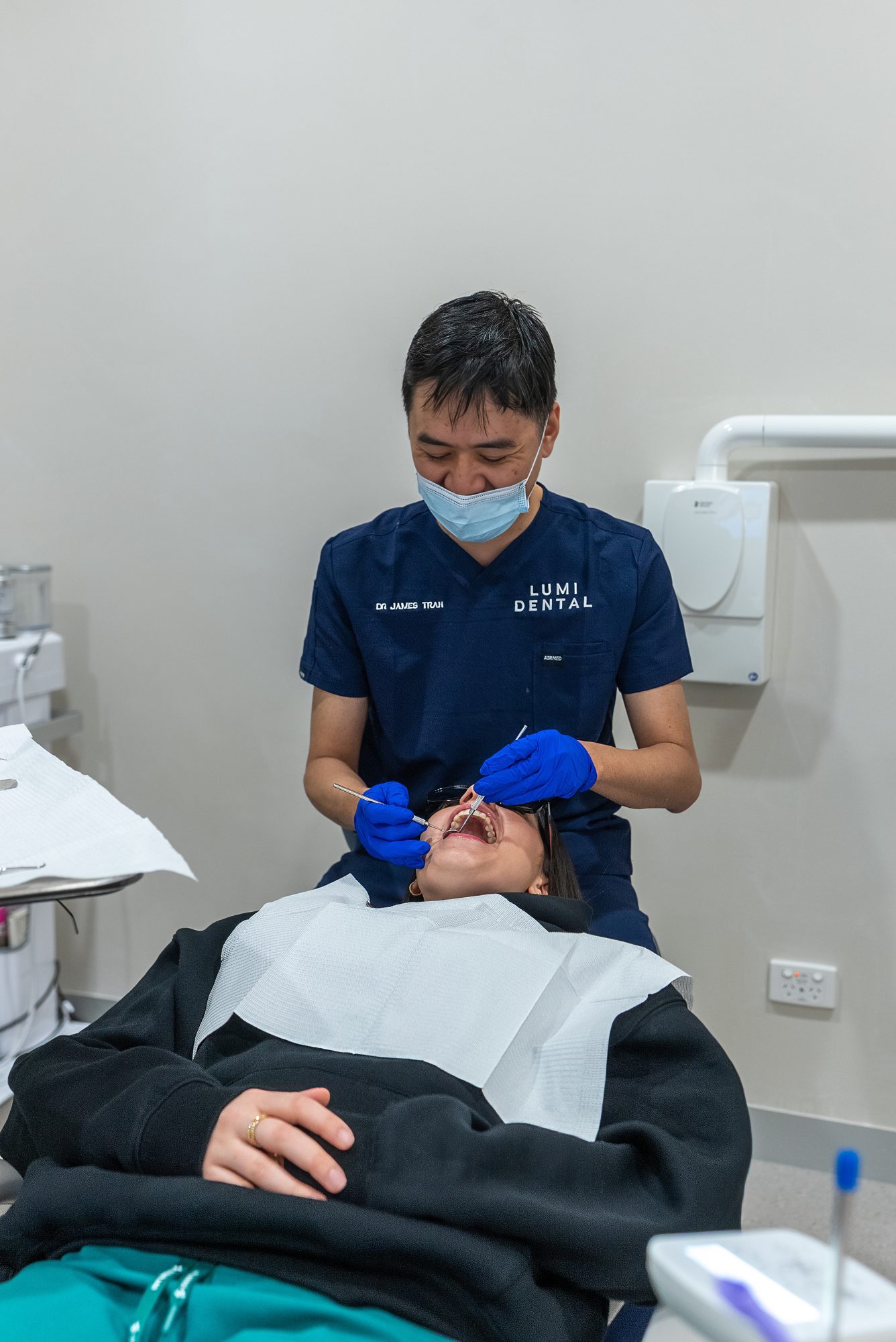
At Lumi Dental, whitening starts with an examination by a dentist, who checks how dry the mouth is, screens for decay and gum inflammation, and reviews your medicines and dialysis days. If the gums need care first, an oral health therapist carries out the clean, booked around your treatment. Where anything is uncertain, the team at Lumi Dental writes to your GP or specialist before planning treatment. No medicine is stopped or changed for whitening. I usually suggest bringing your medicine list and your renal unit's contact details to the first visit. The whitening options are named Lumi Home, Lumi Refresh and Lumi Radiance, and the dentist will explain which suits you. You can read more on the general dentistry page.
Questions patients ask
Can I whiten my teeth if I am on dialysis?
Often, yes, with planning. The clean before whitening is booked on a non-dialysis day, the mouth is checked for decay and gum problems, and the course is usually made gentler if your mouth is dry.
Is teeth whitening bad for your kidneys?
Whitening gel is applied to the teeth and is not meant to be swallowed, and the dentist keeps it off the gums. If you or your renal team have a question about a particular product, the dentist can check with them before you start.
Can I whiten my teeth after a kidney transplant?
Many people can once things are stable. Gum overgrowth and thrush are treated first, and the transplant team is told about the plan.
Why are my teeth so sensitive with kidney disease?
A dry mouth, gum recession or erosion from nausea can all leave teeth more sensitive. Whitening may add to this for a few days, so a lower-strength gel and shorter wear often help; our article on whitening gel strengths explains the options.
Should I drink more water during whitening?
Only within the fluid allowance your renal team has set. Sugar-free gum and saliva substitutes can ease dryness without adding much fluid.
Thinking about whitening? Complimentary cosmetic consult in Melrose Park
If you live with kidney disease, are on dialysis or have had a transplant and would like whiter teeth, the team at Lumi Dental can check your mouth, review your medicines and plan a course around your treatment days. Book a complimentary cosmetic consult at Melrose Central in Melrose Park, or read more about teeth whitening at Lumi Dental. Patients visit from Ryde, Parramatta, Ermington and Rydalmere, with on-site parking.
Sources
- PMC (International Journal of Dentistry): Dental Care for Patients with End-Stage Renal Disease and Undergoing Hemodialysis
- PMC (Journal of Clinical Medicine): Oral Findings Linked to Chronic Kidney Disease: A Comprehensive Systematic Review
- Kidney Health Australia: Managing kidney disease symptoms
- Applied Sciences (MDPI): Comparative In Vitro Studies on the Effect of Bleaching Agents on Dental Structures in Healthy and Predialysis Patients
About the author

Dr James Tran is a general dentist at Lumi Dental in Melrose Park. He holds a BDent from the University of Sydney and a Graduate Diploma in Oral Implants, and is a Member of the International Congress of Oral Implantologists (MICOI).
This article is general information only and is not a substitute for an examination and individual advice from a registered dental practitioner. Suitability for any treatment varies from person to person.







