

Teeth whitening does not change the colour of a silver amalgam filling, so the question is not whether you can whiten but what to do about each filling afterwards: sound fillings hidden at the back can stay, while a failing or visible one can be replaced once the new shade has settled, usually about two weeks later. teeth.org.au, the Australian Dental Association's patient site, states that whitening gel lightens tooth enamel only and will not alter fillings, crowns or veneers. Amalgam adds two questions: the grey shadow a large filling casts, and whether peroxide releases mercury from it.
Written by Dr James Tran, BDent (University of Sydney), MICOI, GradDip (Oral Implants), general dentist at Lumi Dental in Melrose Park.
The short version
- Whitening lightens the enamel around an amalgam filling; the filling stays the same colour, so the contrast grows.
- A large amalgam can make a tooth look grey from inside; whitening the enamel does not remove that shadow.
- Laboratory studies report more mercury released from amalgam exposed to peroxide gel; the clinical meaning is unclear and no harm from supervised whitening has been shown.
- Decide about each silver filling on its own merits. Sound, hidden ones stay. Failing ones are replaced regardless. Visible, sound ones are a cosmetic choice.
- If a filling will be replaced, whiten first, wait about two weeks, then match the composite or onlay to the new shade. Our article on whitening with fillings or bonding covers the white-filling side.
Why a tooth with a large amalgam looks grey, and why whitening will not fix it
Enamel is translucent. Light passes through it and bounces back off the dentine beneath. When a large amalgam sits under that enamel, the light hits dark metal instead and the tooth takes on a grey or blue-grey cast. teeth.org.au notes that amalgam can turn darker over time, which deepens the effect.
Whitening lightens the enamel and dentine, not what sits behind them, so a heavily filled molar often looks more grey after whitening, not less, as its neighbours brighten. In my experience patients notice this most on upper premolars and lower first molars.
Which silver fillings actually show in a smile
Most amalgam sits on the chewing surfaces of molars and is invisible in conversation. The fillings that show are on upper premolars, just behind the canines, and on lower molars in people with a wide smile or a low lip line.
A practical test: smile broadly in a mirror in daylight and note which fillings you can see. Clinical photographs do the same job more reliably, and catch the grey mark sometimes found on the gum beside an old filling. That is an amalgam tattoo, pigment in the gum rather than stain, and no whitening product changes it; our article on the grey gum mark near an old filling explains what can be done.
Does whitening gel release mercury from amalgam?
Patients I see ask this carefully, and the answer has two parts. In the laboratory, yes. A study in the European Journal of Dentistry exposed amalgam discs to a 15 per cent carbamide peroxide take-home gel and a 35 per cent in-chair gel for three weeks; both raised surface mercury levels compared with water, and the authors called for further investigation in living patients. A study in the American Journal of Dentistry found that aged and unpolished amalgam released more mercury under 10 per cent carbamide peroxide than fresh, polished amalgam. Not every study agrees: work in Dental Materials found no significant difference in metal ion release between a 10 per cent carbamide peroxide gel and a placebo gel.
What that means in a mouth is far less clear. These were discs in solution, not fillings bathed in saliva, and none measured a person's mercury exposure. The Australian Dental Association's amalgam policy notes that fillings release very small amounts of mercury, that other sources usually contribute more to a person's mercury levels than fillings do, and that the weight of evidence does not link amalgam to chronic disease in the general population. Sensible precautions: custom trays trimmed so gel sits on the teeth being whitened, and a plan for any filling that is already cracked or leaking. Our article on whether silver fillings are safe covers the wider question.
The amalgam phase-down, and what it means for fillings you already have
Amalgam is being phased down worldwide under the Minamata Convention on Mercury, an environmental treaty. Australia has ratified it; the Australian Dental Association's policy explains that amalgam may now be used only in pre-dosed capsules, that its use is strongly discouraged in children under 15 and in pregnancy, and that a global date has been set to end its manufacture. The same policy is clear: there is no evidence that replacing sound amalgam with another material, without a clinical reason, produces a better health outcome, and fillings should not be removed for non-specific health concerns.
So the phase-down is a reason you will not be offered a new amalgam, not a reason to drill out the ones you have. Our comparison of white and silver fillings sets out how the materials differ, and when amalgam removal is worthwhile covers the safety steps.
The single rule: judge each filling on its own merits
Whitening does not change amalgam, so it should not change your decision about amalgam either. The rule I use: whiten first if whitening is the goal, then sort each silver filling into three groups.
- Sound and hidden: leave it. A well-sealed amalgam on an upper molar is doing its job unseen.
- Failing: replace it, whitening or not. Cracks at the margin, decay on the X-ray, a fractured cusp or pain on biting are reasons in their own right.
- Sound but visible: a cosmetic choice, made after the new shade has settled, once the trade-off of removing a working filling has been explained.
Sequence and timing: whiten first, wait, then match
Order matters for two reasons. The first is colour: a filling matched before whitening ends up too dark, and because the shade rebounds slightly in the first week as the teeth rehydrate, matching too early leaves it too light. The second is adhesion. Peroxide leaves oxygen in the enamel that interferes with the setting of bonding resin. A study in the Journal of Conservative Dentistry cites the usual advice to delay composite for one to three weeks after bleaching, and found restorations placed two weeks after whitening bonded more strongly than those placed straight away. Two weeks is the figure I usually give.
The replacement material depends on the size of the hole. A small or medium amalgam is usually replaced with composite resin matched to the new shade. A large one that has undercut the cusps is often better served by a ceramic onlay or crown made from a 3D scan, because composite that size tends to chip.
What replacement costs: general market ranges
The figures below are general market ranges, which vary with complexity and provider; a written quote follows an examination. They come from the consumer group CHOICE, drawing on the Australian Dental Association's most recent fee survey of general dentists.
| Item | Reported average | Reported range |
|---|---|---|
| Composite filling, back tooth, one surface | $178 | $135 to $248 |
| Composite filling, back tooth, two surfaces | $220 | $171 to $305 |
| Ceramic onlay | Not reported in the survey | Usually priced between a large filling and a full crown |
| Full crown, veneered, indirect | $1,678 | $1,250 to $2,100 |
Health funds with extras cover may rebate part of these items. The current deals page lists any offers running.
How we approach this at Lumi Dental
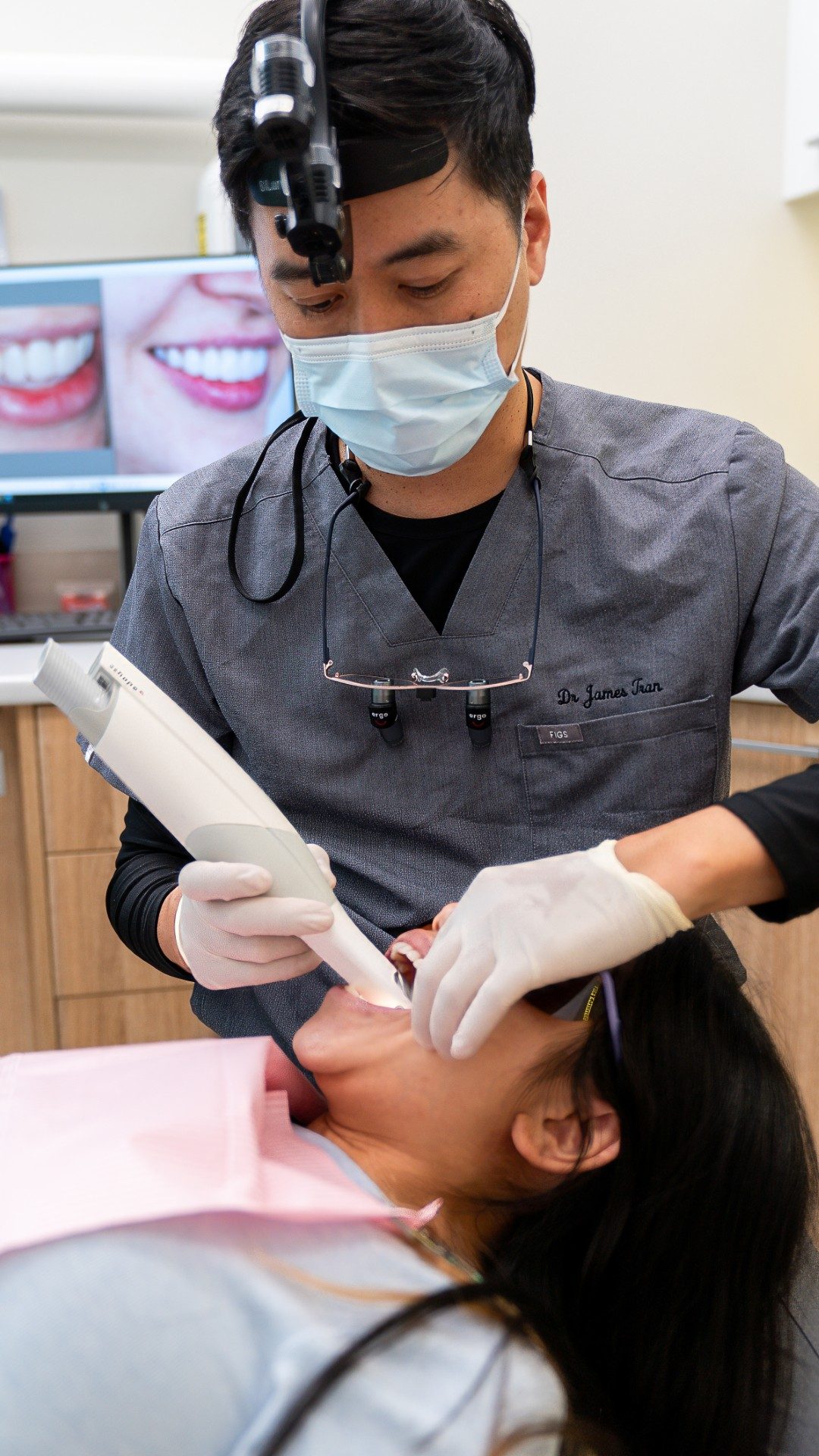
Lumi Dental is mercury-free, so no new amalgam is placed, but the team does not recommend removing sound amalgam for health reasons alone. The dentist examines first, records the smile with clinical photographs and the in-house 3D intraoral scanner, and notes which fillings show and which are failing. Whitening is then planned using Lumi Home, Lumi Refresh or Lumi Radiance, and any replacement, whether composite or a laboratory-made onlay or crown, is matched about two weeks after the final whitening session.
Questions patients ask
Will whitening make silver fillings look darker?
The fillings stay the same colour while the enamel around them lightens, so they can look more obvious. On a back molar nobody sees this; on an upper premolar it may prompt replacement.
Should amalgam fillings be replaced before or after whitening?
After, if they are being replaced for cosmetic reasons. Whiten, wait about two weeks for the shade to settle and the enamel to recover its bonding strength, then match the new material. A failing filling is replaced whenever it is found.
Is it safe to whiten teeth with amalgam fillings?
Laboratory studies show peroxide can increase mercury release from amalgam discs, but no study has shown harm to a person from supervised whitening. Trimmed trays keep gel away from back fillings, and the dentist checks first that no filling is cracked or leaking.
Can a tooth with a big silver filling be whitened at all?
The enamel will lighten, but the grey shadow from the metal underneath remains, so the tooth may still look darker than its neighbours. If that tooth is visible, an onlay or crown that replaces the amalgam is usually what evens the colour. Our article on one tooth darker than the others covers the other causes.
Do all amalgam fillings have to be replaced?
No. The Australian Dental Association's position is that sound amalgam should not be removed for non-specific health concerns, as there is no evidence doing so improves health. Replace the ones that are failing or that you can see and dislike; leave the rest.
Thinking about whitening? Complimentary cosmetic consult in Melrose Park
If you have silver fillings and are weighing up whitening, the team at Lumi Dental can show you which would be visible, which are sound, and the right sequence. Book a complimentary cosmetic consult at Melrose Central in Melrose Park, or read about teeth whitening at Lumi Dental. Patients visit from Ryde, Parramatta, Ermington and Rydalmere, with on-site parking.
Sources
- Australian Dental Association: Policy Statement 6.18, Safety of Dental Amalgam
- Australian Dental Association (teeth.org.au): Dental fillings
- Alizadeh Oskoee P and colleagues. Effects of in-office and home bleaching gels on the surface mercury levels of dental amalgam. European Journal of Dentistry (PMC)
- Nair R and colleagues. A comparative evaluation of three different antioxidant treatments on the bond strength of composite resin to bleached enamel. Journal of Conservative Dentistry (PMC)
About the author

Dr James Tran is a general dentist at Lumi Dental in Melrose Park. He holds a BDent from the University of Sydney and a Graduate Diploma in Oral Implants, and is a Member of the International Congress of Oral Implantologists (MICOI).
This article is general information only and is not a substitute for an examination and individual advice from a registered dental practitioner. Suitability for any treatment varies from person to person.








