Teledentistry can triage, reassure, review healing and answer questions, but an online dental consult cannot diagnose decay between your teeth, measure a gum pocket or replace an examination. That split is the whole story. The Australian Dental Association supports teledentistry where it is clinically safe, and states plainly that it is not acceptable for a patient to receive procedural dental treatment without an in-person examination and a way to contact their dental practitioner directly. Knowing which side of the line your problem falls on saves you time, and occasionally saves a tooth.
Key takeaways
- A teleconsultation is a recognised Australian dental service, listed as item 919 in the Australian Schedule of Dental Services and Glossary.
- Medicare does not fund general dental telehealth; the only dental telehealth items sit with practitioners in the practice of oral and maxillofacial surgery.
- Ahpra telehealth guidelines took effect on 1 September 2023 and require the standard of care to match an in-person consultation as far as possible.
- A systematic review of 19 studies found remote caries detection sensitivity ranging from 48 to 98.3 per cent, so a photo cannot rule decay in or out.
- Facial or neck swelling, trismus, difficulty swallowing or difficulty breathing means the nearest emergency department, not a video call.
- The Australian Dental Association does not recommend do-it-yourself orthodontic treatment without prior diagnosis and supervision by a registered practitioner.
What teledentistry actually is in Australia
Teledentistry is a consultation with a registered dental practitioner delivered by video or phone rather than in the chair. Australia has a formal structure for it. ADA Policy Statement 6.28 supports the development of teledentistry where solutions are clinically safe and legally compliant, and restricts delivery to practitioners registered with the Dental Board of Australia. There is even a billing item: 919 Teleconsultation, defined in the Australian Schedule of Dental Services and Glossary as the remote provision of a consultation in exceptional circumstances that prevent a face to face consultation, and it can be combined with a letter of referral.
The ADA is specific that item 919 is not meant for routine assessments or general oral health instructions. It describes it as a patient-led service, ideally offered to existing patients or people referred from another practice. That framing matters. Teledentistry in Australia is designed as a bridge to care, not a replacement for it.
What an online dental consult can genuinely do
The strongest use of a video consult is deciding how urgent your problem is and what to do next. A dentist can take a full history and medication list, look at visible swelling, an ulcer, a broken tooth or a lost filling, form a working diagnosis, and tell you whether you need care today, this week, or at your next routine visit. The ADA lists orofacial pain, jaw joint pain, disc problems, severe muscle pain, trigeminal neuralgia, facial palsy, oral ulceration, mucosal lumps and white or red patches as conditions suited to remote consultation for working diagnosis and triage.
Follow-up is the other clear win. After an extraction or a surgical procedure, a short video call to check healing, review pain relief and answer questions saves a trip and picks up problems early. Reviewing a treatment plan you have already been given is another good fit, and we cover what those plans contain in our guide to understanding your dental treatment plan.
What it cannot do, and why
The tests simply are not there
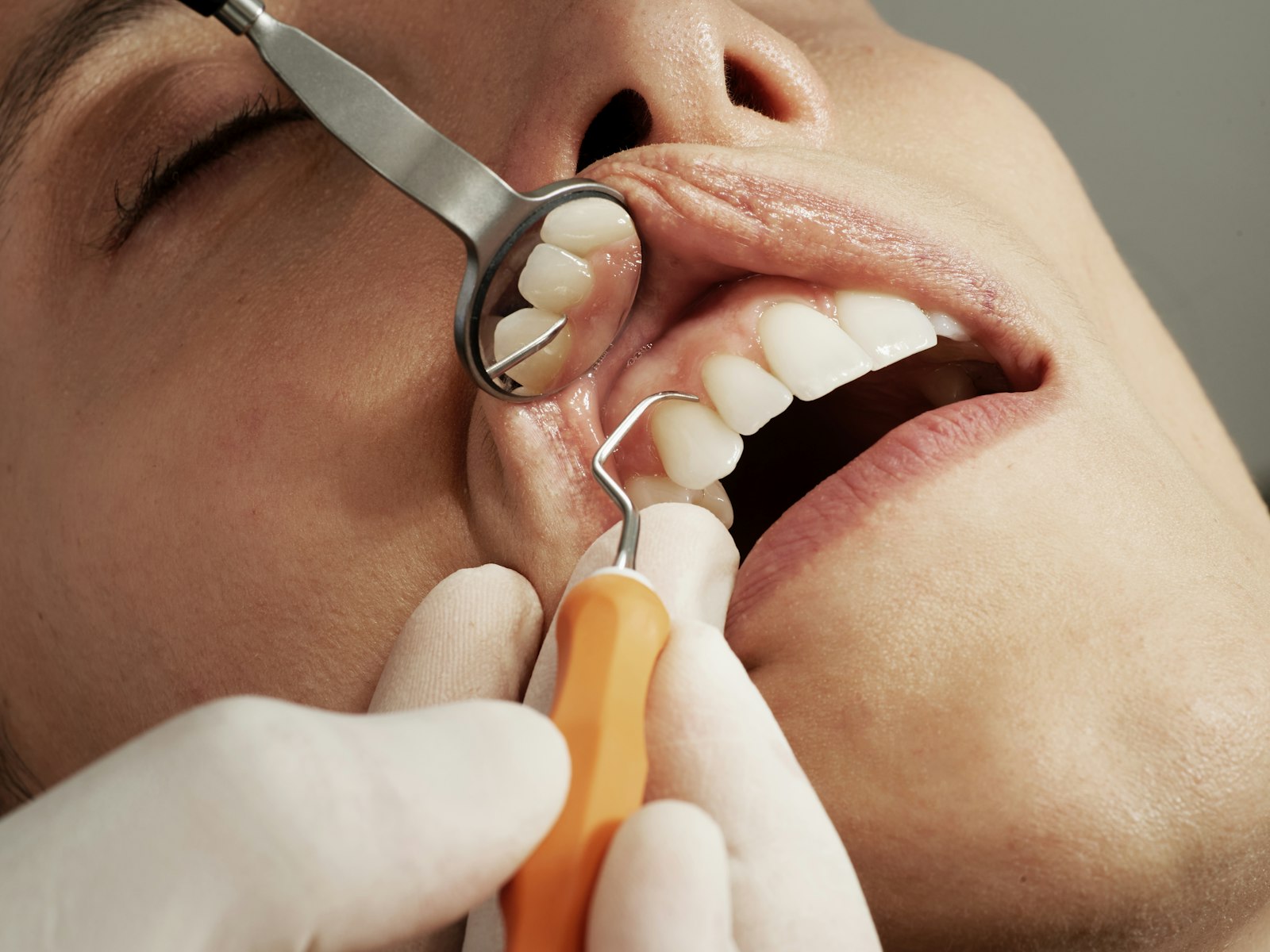
Radiographs, periodontal probing, percussion testing, thermal and electric pulp testing, palpation and tactile examination of a tooth surface do not exist on a video call. That is not a limitation of the technology. Those are physical measurements, and without them decay between teeth, bone loss, a cracked root and a dying nerve are all invisible.
What that rules out in practice
No procedural treatment can be delivered remotely. The ADA also warns against two things people attempt at home: re-cementing your own crown or bridge, because of aspiration risk, and continuing to wear a broken denture that could be inhaled. If your crown has come off, keep it somewhere safe and dry and bring it in.
Can an online consult do what you want it to do?
The table below matches common reasons people book a remote appointment against what is actually possible, and what is needed instead when it is not.
| What you want | Can an online consult do it? | What is needed instead |
|---|---|---|
| Find out whether your pain needs care today | Yes, this is its strongest use | Nothing, though an in-person visit usually follows |
| Have a visible ulcer, swelling or broken tooth looked at | Partly, depending on lighting, camera and reach | An examination if anything looks unusual or persists beyond two weeks |
| Find out if you have decay between your teeth | No | Bitewing radiographs and a clinical examination |
| Know how much bone you have lost around your teeth | No | Periodontal probing and radiographs |
| Find out whether a tooth needs root canal treatment | No | Pulp sensibility testing, percussion and radiographs |
| Get a second opinion on a plan you have been given | Often yes, if you can share records | Your radiographs and written plan from the first practice |
| Have a filling, crown or extraction done | No | An in-person appointment, without exception |
| Straighten your teeth without seeing anyone | No | Diagnosis, radiographs and supervision by a registered practitioner |

How accurate is a remote look at your teeth
Accuracy varies far too much to rely on. A 2024 systematic review published in BMC Oral Health pooled 19 in-vivo studies and found teledentistry caries detection sensitivity ranged from 48 to 98.3 per cent, with specificity from 83 to 100 per cent, measured against visual clinical examination. Sensitivity at the low end means a remote assessment missed more than half the decay in some settings.
The variation is not random. Smooth-surface lesions on front teeth photograph well. Decay between back teeth and under existing fillings does not show at all, because nothing is visible from the outside until it is advanced. A 2025 overview of systematic reviews in the Journal of Medical Internet Research concluded that teledentistry supports timely consultation and expands access in underserved regions, while noting most included studies were cross-sectional. No review has shown fewer teeth lost or less pain as a result. If you want to understand what the missing images would have shown, our guide to dental X-ray types explains what each view is for.
Does Medicare cover an online dental consult?
No. Medicare Benefits Schedule telehealth items available to dental practitioners are restricted to those in the practice of oral and maxillofacial surgery. General dental practitioners have no MBS telehealth item, and general dental care sits outside Medicare regardless of whether it happens in person or on screen. Item 919 is a dental schedule item, not a Medicare item, and whether a private health fund pays a rebate on it varies by fund and by policy. Ask your fund before assuming.
Antibiotics and prescriptions over the phone
A dentist can prescribe within their scope after a genuine real-time consultation, but not from a form. Ahpra guidance states that prescribing or providing health care without a real-time direct consultation, whether in person, by video or by telephone, is not good practice. That explicitly includes requests made by text, email, live chat or an online questionnaire where the practitioner has never spoken with the patient.
There is a clinical reason as well as a regulatory one. Australian Therapeutic Guidelines position is that most dental infections are resolved by operative measures, meaning drainage, extraction or root canal treatment, with antibiotics indicated as an adjunct where there is systemic involvement, rapid spread or reduced immunity. A course of antibiotics posted out after a phone call may quieten a tooth for a few days while the underlying problem continues. If the pain is keeping you up, our article on toothache at night covers what actually helps until you can be seen.
When to skip the video call entirely
Some situations need a hospital, not a screen. The ADA sets a clear threshold: a patient with spreading infection or cellulitis, meaning facial swelling, trismus, neck swelling, difficulty swallowing, difficulty breathing or a compromised airway, should present to the nearest emergency department, and the dentist should phone ahead with referral details.
Other situations need an in-person appointment the same day rather than a call: a knocked-out adult tooth, uncontrolled bleeding after an extraction, or a facial injury. Our emergency dentist guide sets out what to do first in each case, and Lumi Dental has an emergency dentist page with contact details. For out of hours advice, healthdirect provides free registered nurse advice on 1800 022 222, and NSW public dental triage is on 1800 679 336, Monday to Friday.
Mail-order aligners are a different thing
Sending photographs to a company that posts you aligners is not teledentistry, and the ADA treats it separately. Policy Statement 2.2.10 states the ADA does not recommend do-it-yourself orthodontic treatment, warns of potential pain, injury and permanent damage to teeth, gums and jaw joints, and notes that consumers carry the health and financial risk when there has been no prior diagnosis and treatment planning by an Australian registered dental practitioner.
The commercial risk is not theoretical either. When a large direct-to-consumer aligner company entered bankruptcy and ceased operations, patients mid-treatment were left without a clinician to finish the job while some payment obligations continued. Clear aligner systems are regulated in Australia as medical devices on the Australian Register of Therapeutic Goods, with Class IIa applying to non-implantable long-term use in the mouth. Regulation of the device is not the same as supervision of your treatment.
Where teledentistry already works well in Australia
The most credible Australian proof is not commercial. The NSW Audit Office recorded virtual care rising from about 3 per cent of prison health care in 2018 and 2019 to about 5 per cent by 2021, with dental among the specialties delivered virtually, alongside the blunt observation that virtual care cannot replace all health services and that physical assessment and in-person treatment are often necessary. Justice Health NSW used expanded teledentistry as one part of a redesign that cut urgent dental waiting at one centre substantially. Used as triage inside a system that can then deliver treatment, it works.
How to get the most out of a video consult
Prepare before you dial in
Write down when the problem started, what makes it worse, what you have taken and your full medicine list. Have a torch and a mirror handy, and sit somewhere with a plain background and good light.
Take photographs in advance
Clear, close, well-lit photographs taken by someone else are usually better than anything captured live. Pull the cheek back gently and take one from the front and one from each side.
Ask what the call cannot tell you
A good remote consult ends with a plan and a limitation, in plain words. If you are weighing a big treatment plan, our article on getting a second opinion covers what records to bring.
Common questions
Can you see a dentist online in Australia?
Yes, a practitioner registered with the Dental Board of Australia can provide a teleconsultation, itemised as 919 in the Australian Schedule of Dental Services and Glossary. It is intended for triage, advice and referral in circumstances that prevent a face to face visit. It cannot replace an in-person examination for treatment.
Does Medicare cover online dental appointments?
No. MBS telehealth items for dental practitioners are restricted to those practising oral and maxillofacial surgery. General dental care sits outside Medicare regardless of format, and any private health fund rebate on a teleconsultation depends on your fund and policy.
What can a dentist actually tell from a video call?
They can take a history, look at visible swelling, ulcers, broken teeth and soft tissue changes, form a working diagnosis, judge urgency and refer. They cannot take radiographs, probe gums or test whether a tooth nerve is alive. That is why a video consult usually ends with a recommendation rather than a diagnosis.
Can a dentist prescribe antibiotics over the phone in Australia?
A dentist can prescribe within their scope after a genuine real-time consultation, but Ahpra states that questionnaire-only prescribing without a real-time consult is not good practice. Australian guidelines also position most dental infections as needing drainage or operative treatment rather than antibiotics alone.
When should I go to hospital instead of doing a video consult?
Go to the nearest emergency department for facial or neck swelling, difficulty swallowing, difficulty breathing, or a jaw you cannot open. That is the ADA threshold for spreading infection. Call 000 if breathing is affected.
A video call is a useful first step, and for many problems it is the fastest way to find out what you are dealing with. When it is time for the examination and images that a screen cannot provide, the team at Lumi Dental in Melrose Park can take it from there. See what a first visit includes on our current deals page, ask for a written quote before anything is booked, or book online.
This article is general information only and is not a substitute for personal dental or medical advice. Remote advice depends entirely on what can be seen and described, so please see a dental or medical professional about your own situation, and call 000 if you have difficulty breathing or swallowing.