
A tooth sensitive to hot but not cold, especially when the ache lingers for minutes after a hot drink, usually means the nerve inside the tooth is badly inflamed or dying, and it needs a dentist within days rather than a tube of sensitive toothpaste. Cold sensitivity is common and often harmless; heat sensitivity is the less common pattern and the more serious one. Healthdirect advises seeing a dentist as soon as possible if a toothache lasts more than 2 days or does not improve with pain relief, and sooner if there is fever, swelling or pain on biting.
Written by Dr James Tran, BDent (University of Sydney), MICOI, GradDip (Oral Implants), general dentist at Lumi Dental in Melrose Park.
The short version
- Short sharp pain with cold that stops within seconds usually comes from exposed dentine or mild, reversible inflammation of the nerve.
- Pain brought on by heat that lingers, throbs or starts by itself is the classic pattern of irreversible pulpitis, an inflamed nerve that will not recover, or a dying nerve.
- Some people find cold water relieves the pain. That is a sign the nerve is in trouble, not improving.
- Antibiotics do not fix pulpitis. Once the nerve is irreversibly inflamed or dead, the tooth needs root canal treatment or removal.
- See a dentist within days, the same day if there is swelling or fever. Our guide to reversible versus irreversible pulpitis explains the two stages.
Why heat and cold tell different stories
The pulp, the nerves and blood vessels inside each tooth, sits in a rigid chamber with no room to swell. The stage of its inflammation shows in how the tooth responds to temperature.
Early on, the nerve is simply over-reactive: cold produces a sharp jolt that fades within seconds. This is reversible pulpitis, or plain exposed dentine, and it often settles once the cause is dealt with. As inflammation advances, heat begins to trigger pain, the pain outlasts the trigger by minutes, and it may throb or start on its own, especially at night. That is irreversible pulpitis. When the nerve dies it may stop responding to cold while still hurting with heat and on biting.
One explanation often given for the heat response in a dying nerve is that gases and fluids in the degenerating pulp expand when warmed, raising pressure inside the sealed chamber, and contract with cold. Whatever the mechanism, a tooth relieved by cold and provoked by heat is telling us the nerve is unlikely to recover.
Symptom patterns and what they usually mean
| Symptom pattern | Likely meaning | Usual next step |
|---|---|---|
| Sharp twinge with cold, gone within seconds | Exposed dentine or reversible pulpitis | Routine appointment: desensitising treatment, a filling or treating the cause |
| Pain with hot drinks that lingers for minutes | Irreversible pulpitis | Dentist within days; root canal treatment or extraction likely |
| Heat provokes it, cold relieves it, throbbing at night | Irreversible pulpitis or a dying nerve | Dentist within days; do not wait for it to pass |
| Swollen gum or face, pimple on the gum, bad taste, fever | Abscess | Same day; emergency department if swallowing or breathing is affected |
| Severe pain that then stopped on its own | The nerve has probably died; infection may follow | Dentist within days, even though it feels better |
Healthdirect lists throbbing pain that worsens on biting, sensitivity to hot or cold drinks, swelling of the face or gums, a bad taste, fever and a loose tooth as signs of a tooth abscess, and advises urgent care. Our article on tooth abscess signs and treatment covers that stage.
What usually causes a tooth to be sensitive to hot
In my experience the history usually points to one of these.
- Deep decay. A cavity close to the pulp, sometimes under an intact-looking surface or between the teeth where only an X-ray shows it.
- A large or old filling. Healthdirect lists a deep filling among the risk factors for a tooth abscess. Each time a tooth is drilled the pulp is irritated, and a filling that has leaked at the edges lets bacteria in.
- A crack. Often in a heavily filled back tooth. Pain on releasing a bite is a typical clue; see cracked tooth syndrome.
- An old injury. A knock to the tooth, even years earlier, can leave a nerve that dies slowly and quietly, sometimes with the tooth darkening.
Gum disease and sinus problems can mimic some of this, which is why testing matters more than guessing.
If hot drinks cause pain that lingers, see a dentist within days; the same day if there is swelling or fever
That is the rule. An emergency department is for spreading swelling, an eye closing, or trouble swallowing or breathing, which healthdirect lists as reasons for emergency care. Everything else belongs with a dentist, and soon. An irreversibly inflamed nerve does not recover with time, and a dead nerve becomes a sealed space that bacteria colonise, leading to infection at the root tip. The pain stopping on its own is not reassurance: it often means the nerve has died, and the quiet period before an abscess can last weeks or months.
What the dentist tests
Pulp pain often refers to a neighbouring tooth or even the other jaw, so the appointment is partly detective work.
- Cold test: a cold pellet on each suspect tooth, timing the response. A pain that fades quickly, one that lingers, and no response at all each mean something different.
- Heat test: warmed material isolated on one tooth, used when heat is the complaint.
- Tapping and biting: tenderness to a tap or to biting on a stick points to inflammation around the root tip, or to a crack.
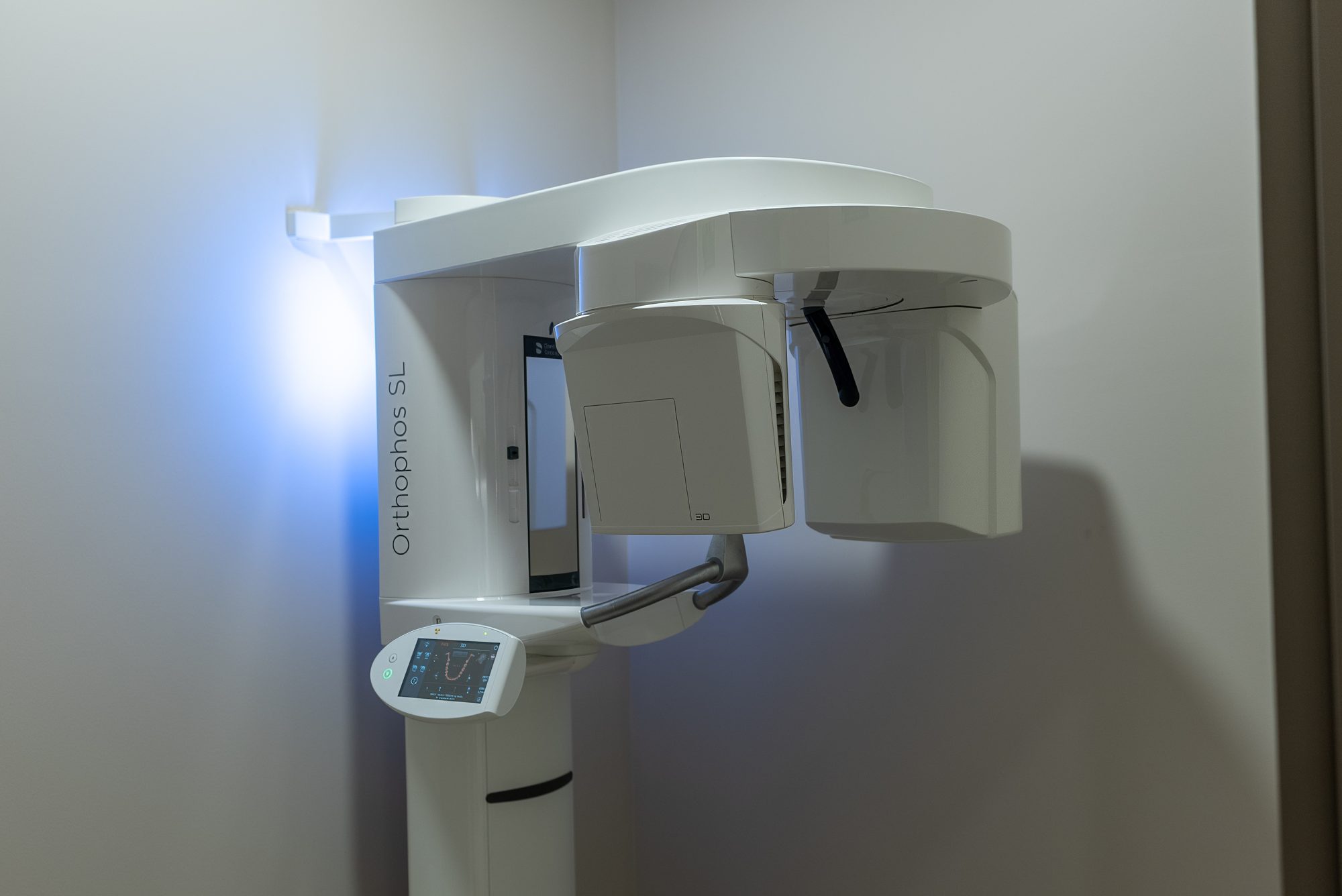
- X-rays: a small film shows decay near the pulp, a leaking filling or a dark area at the root tip. A 3D scan is used where a crack or unusual root shape is suspected.
- Electric pulp test: a small current to check whether the nerve responds at all.
Together these separate reversible pulpitis, irreversible pulpitis, a dead nerve and an abscess.
What the diagnosis means for treatment
Reversible pulpitis or exposed dentine
Treat the cause: a filling for decay, replacement of a leaking filling, a desensitising varnish, or a bite adjustment. The nerve is then given time and the tooth is reviewed.
Irreversible pulpitis or a dead nerve
Two choices: root canal treatment or extraction. Root canal treatment removes the inflamed or dead pulp, then cleans, shapes and seals the canals; healthdirect notes the tooth is then restored with a filling or crown, usually over more than one visit. Extraction removes the tooth and is followed by a decision about replacing it. Our root canal treatment guide and our comparison of root canal versus extraction weigh the two.
Why antibiotics are not the answer
Pulpitis is inflammation inside a sealed tooth, not an infection antibiotics can reach. Healthdirect states that antibiotics are usually not used for a toothache unless there is a clear infection, and that antibiotics alone do not cure root canal infections. A systematic review for the American Dental Association found the trial evidence for antibiotics in pulpitis and localised abscess showed both benefit and harm at low certainty, with a large potential for harm from antibiotic use. Where there is spreading swelling or fever, antibiotics are used alongside treatment of the tooth, never instead of it.
Managing the pain until you are seen
- Paracetamol or ibuprofen as directed on the packet, which healthdirect lists for toothache. Our guide to ibuprofen versus paracetamol for tooth pain covers how they are combined.
- Avoid very hot and very cold food and drink. Sipping cool water may ease a throbbing tooth for a short time.
- Sleep with your head raised; healthdirect notes lying flat can make dental pain worse.
- Do not put anything on the gum, and do not exceed the packet dose.
How we approach this at Lumi Dental
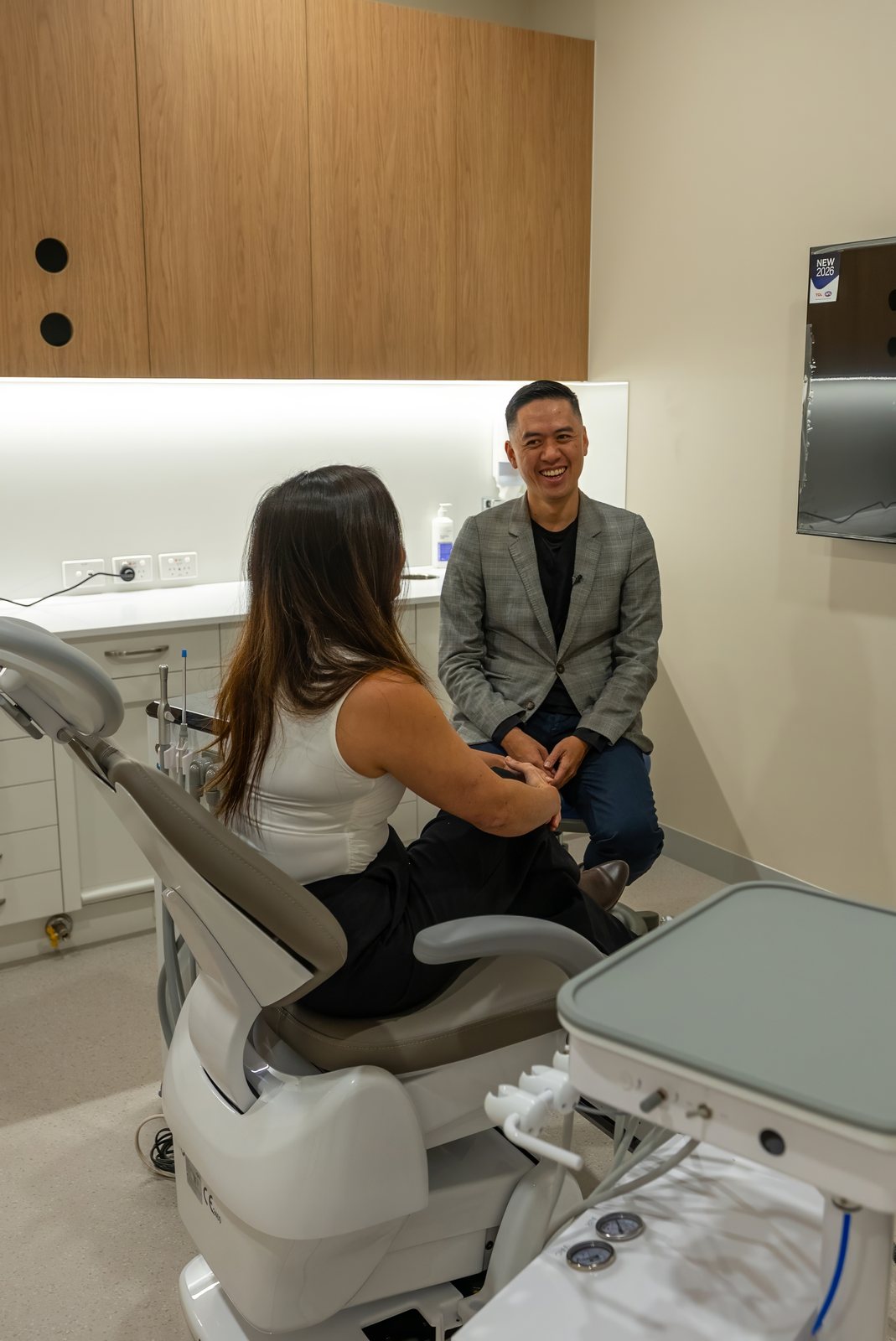
At Lumi Dental in Melrose Park, a tooth that hurts with heat is treated as a priority: emergency appointments are kept for toothache, and the dentist examines and tests the tooth, with an X-ray or 3D scan taken in-house where it changes the plan. If the nerve is irreversibly inflamed, the first visit aims to relieve the pain by removing the inflamed pulp and dressing the tooth, with root canal treatment completed over later visits or an extraction arranged if that is the better choice. Complex cases are referred to a registered endodontist. The emergency dentist in Melrose Park page explains how to book.
Questions patients ask
Why does my tooth hurt with hot but not cold?
Because the nerve inside it has moved past the early, over-reactive stage. Cold sensitivity marks exposed dentine or mild inflammation; a lingering ache with heat marks advanced inflammation or a dying nerve. It is the pattern I take most seriously at an emergency appointment.
Can a tooth that is sensitive to heat heal on its own?
Usually not. Reversible pulpitis can settle once the cause is treated, but heat sensitivity with lingering pain is the classic sign of irreversible inflammation. The pain may fade when the nerve dies, but the tooth is not healed and infection tends to follow.
Why does cold water make my toothache feel better?
One explanation often given is that cold shrinks the fluids and gases inside an inflamed or dying pulp and briefly lowers the pressure. It is a useful clue for the dentist and a reason to book promptly, not a treatment.
Will antibiotics fix a tooth that hurts with hot drinks?
No. Pulpitis is inflammation sealed inside the tooth, and healthdirect notes antibiotics are usually not used for toothache unless there is a clear infection. They may be added for swelling or fever, but the tooth still needs root canal treatment or removal.
How long can I wait before seeing a dentist?
Days, not weeks. Healthdirect advises seeing a dentist as soon as possible if a toothache lasts more than 2 days or does not improve with pain relief. Swelling, fever or a bad taste mean the same day; trouble breathing or swelling around the eye or neck means emergency care.
Tooth hurting with hot drinks? Same-day emergency appointments in Melrose Park
If a hot drink sets off an ache that will not settle, the team at Lumi Dental in Melrose Park can test the tooth and find the cause. Book an emergency dental appointment, contact the practice for the next available time, or see the current offers page before you visit. Patients come from Ryde, Parramatta, Ermington, Rydalmere and nearby suburbs.
Sources
- healthdirect: Toothache and gum swelling
- healthdirect: Tooth abscess
- healthdirect: Root canal treatment
- PMC (Journal of the American Dental Association): Antibiotics for the urgent management of symptomatic irreversible pulpitis, symptomatic apical periodontitis, and localized acute apical abscess
About the author
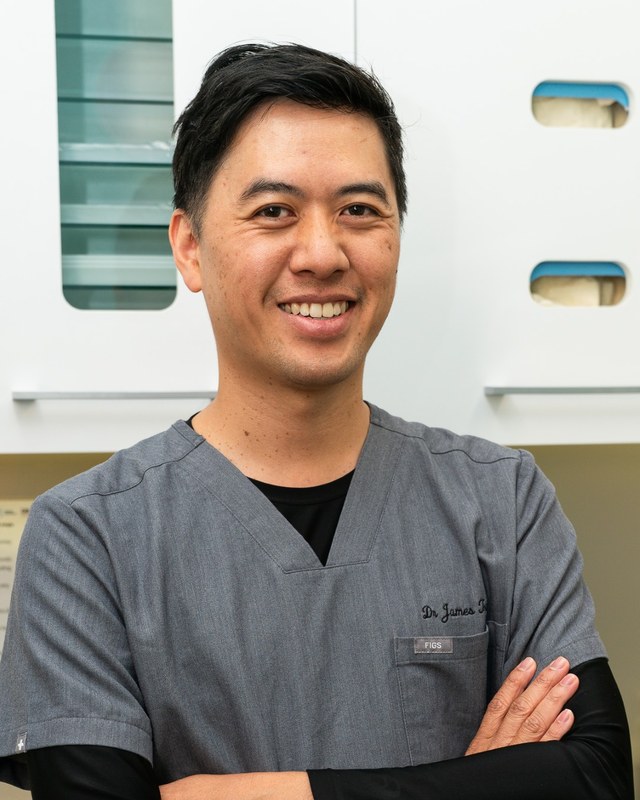
Dr James Tran is a general dentist at Lumi Dental in Melrose Park. He holds a BDent from the University of Sydney and a Graduate Diploma in Oral Implants, and is a Member of the International Congress of Oral Implantologists (MICOI).
This article is general information only and is not a substitute for an examination and individual advice from a registered dental practitioner. Suitability for any treatment varies from person to person.