

Teeth whitening does not create white spots on teeth; it lightens the enamel around patches that were already there, so marks you had never noticed can stand out after a course. Part of that contrast is temporary, because peroxide gel dries enamel for a day or two and a dehydrated patch looks chalkier than it will once saliva soaks back in. The rest is the true colour of the spot against a brighter background. Better Health describes one common kind, dental fluorosis, as fine pearly-white mottling, flecking or lines that are usually very hard to see; whitening makes them easier to see. This guide to white spots after teeth whitening explains why the marks look worse, how the causes are told apart, and the order of treatment.
Written by Dr James Tran, BDent (University of Sydney), MICOI, GradDip (Oral Implants), general dentist at Lumi Dental in Melrose Park.
The short version
- Whitening gel lightens healthy enamel but barely changes a porous white spot, so the gap between the two widens.
- Gel also dehydrates enamel, which makes patches look whiter for a short time, often quoted as settling within 24 to 48 hours.
- The four usual causes are early decay (demineralisation, often around old braces brackets), fluorosis, enamel hypoplasia and molar incisor hypomineralisation.
- Wait two weeks after your last whitening session before judging the spots or treating them.
- Treatment runs in a fixed order: finish whitening, let the colour settle, then remineralise, microabrade, infiltrate or bond. Our guide to white spots on teeth, their causes and treatment covers each option.
- A spot that is growing, rough or brown at the edge needs an examination, not more gel.
Why white spots look worse straight after whitening
Contrast
A white spot is enamel whose subsurface has lost mineral or never formed it properly. The pores fill with air and saliva, and a systematic review of resin infiltration explains that this scatters light more strongly than healthy enamel, which is why the patch reads as chalky white. Peroxide works on the coloured molecules in sound enamel and dentine; it does not refill pores. So the healthy enamel goes lighter while the spot stays where it was, and a mark that was a touch brighter than its surroundings is now the brightest thing on the tooth. Some patients I see are convinced a new spot has appeared; in the consult photographs it was there all along.
Dehydration
Whitening gel, and in the chair a dry working field, pull water out of enamel. Dry enamel looks whiter and more opaque, most of all where it is already porous, so faint spots turn stark for a few hours. A review of tooth whitening research notes that aggressive regimens can dehydrate and demineralise a tooth so that it temporarily appears whiter than it is. The window is often quoted as 24 to 48 hours, and in my experience the morning after an in-chair session is when the mottling looks its worst and when patients ring.
The single rule: wait two weeks before you judge the spots or treat them
If a white patch appears or looks worse after whitening, do nothing to it for two weeks. Keep brushing, skip the gel, and let the shade settle. Two weeks covers the rehydration period with room to spare and lets the whitened shade stabilise, which matters because every white spot treatment is matched to the enamel around it. Treat on day two and you are matching to a colour the tooth will not keep. If the spot is still obvious at two weeks, book an examination.
The four common causes, and how a dentist tells them apart
White spots are a sign, not a diagnosis, so the examination comes before any plan. Four causes account for most of what I see.
Demineralisation (early decay)
Plaque acid dissolves mineral from beneath the enamel surface and leaves a chalky patch, classically a crescent along the gum line or a square outline where a braces bracket sat. These lesions look dull when the tooth is dried and can progress to cavities. The same review noted that white spot lesions can persist for more than ten years, so they do not fade just because the braces came off. Our article on teeth whitening after braces come off explains the timing.
Dental fluorosis
Too much fluoride while the adult teeth were forming, most often from swallowed toothpaste in early childhood. Better Health describes fine, pearly-white mottling, flecking or lines, usually very hard to see, that cannot develop once the teeth are fully formed. Fluorosis is symmetrical, diffuse and glossy rather than chalky.
Enamel hypoplasia
Here the enamel never formed to full thickness, leaving a line, pit or groove that is often white or cream. Better Health lists injury, certain medications and childhood infections among the causes of mottling that is not fluorosis. Run a fingernail across a hypoplastic spot and you can usually feel the step.
Molar incisor hypomineralisation (MIH)
The enamel is full thickness but soft and poorly mineralised, on the first adult molars and often the front incisors. The marks are creamy to yellow-brown, asymmetric and sharply bordered. MIH spots whiten unpredictably, which is why I ask about chipped or sensitive six-year molars before any whitening plan. See our article on molar incisor hypomineralisation.
| Cause | Where it sits | What it looks like | Surface | Usual first treatment |
|---|---|---|---|---|
| Demineralisation | Gum line, old bracket outlines | Chalky, matte, often one side | Dull when dried | Plaque control, remineralising agents, then infiltration |
| Fluorosis | Same teeth both sides | Diffuse flecks or lines, no sharp edge | Smooth and glossy | Often nothing; microabrasion or infiltration |
| Enamel hypoplasia | A band or pit across teeth that formed together | White to cream, sometimes a groove | Stepped or pitted | Composite bonding |
| MIH | First adult molars and incisors, asymmetric | Creamy to yellow-brown, sharp borders | Soft, may chip | Protect molars; infiltration or bonding on incisors |
Treatment order: whiten first, then treat the spots
Every white spot treatment is colour-matched to the enamel next to it, and composite resin does not change colour with peroxide. Bond a spot first and whiten later, and the patch stays at the old shade while the tooth lightens around it. So: finish whitening, wait for the shade to settle, then treat. A laboratory study on resin infiltration noted that external bleaching is usually recommended before infiltration, and a meta-analysis of eleven clinical studies found that in fluorosis, bleaching before infiltration did not improve the masking effect compared with infiltration alone. Whitening is not a white spot treatment, but doing it first sets the target shade.
- Remineralising agents. Fluoride varnish or casein phosphopeptide products applied over months may reduce the visibility of early demineralised spots. They do little for fluorosis or hypoplasia.
- Microabrasion. A mild acid and abrasive paste polishes away a very thin surface layer, which suits shallow fluorosis. See our guide to enamel microabrasion.
- Resin infiltration. The spot is etched, dried and soaked with a very runny resin that fills the pores, so the patch blends in without drilling. The meta-analysis reported significantly better masking than leaving the spot alone or applying fluoride varnish, though from few well-run trials. Our article on resin infiltration for white spots walks through the visit.
- Composite bonding. For hypoplasia, deeper MIH defects or anything with missing enamel, tooth-coloured resin rebuilds the surface, shade-matched on the day.
What to do at home in the first two weeks
Stop the gel if the spots alarm you; a few missed nights will not undo the result. Drink water and let the teeth rehydrate. Brush twice a day with a fluoride toothpaste and clean between the teeth, because a demineralised spot is a plaque problem first. Skip abrasive stain removers, which can roughen a soft patch. Photograph the teeth in daylight on day one and at day fourteen. If the spot is brown at the edge, feels rough or is sensitive to cold, do not wait the two weeks: those are signs of active decay rather than a cosmetic contrast.
How we approach this at Lumi Dental
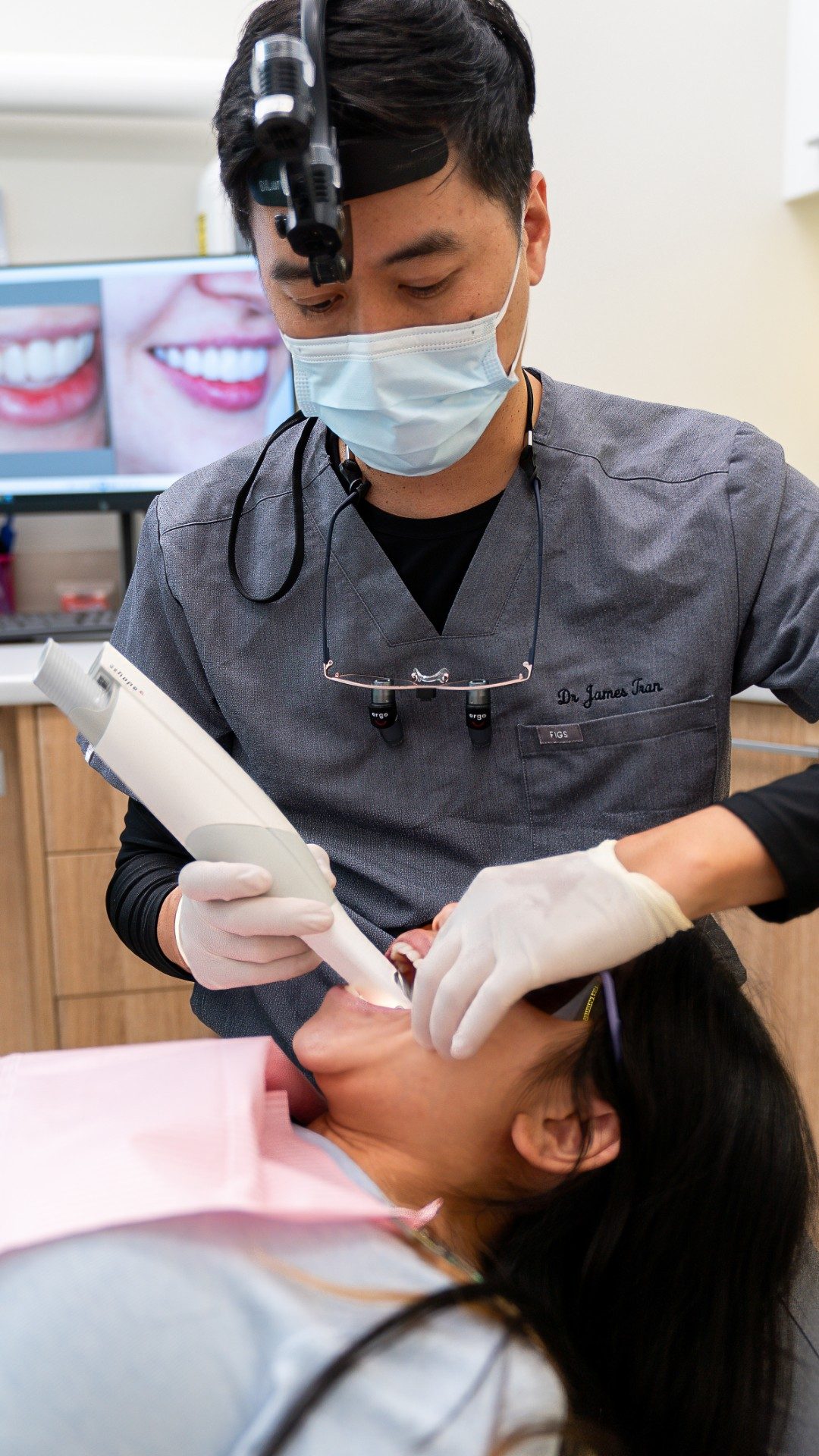
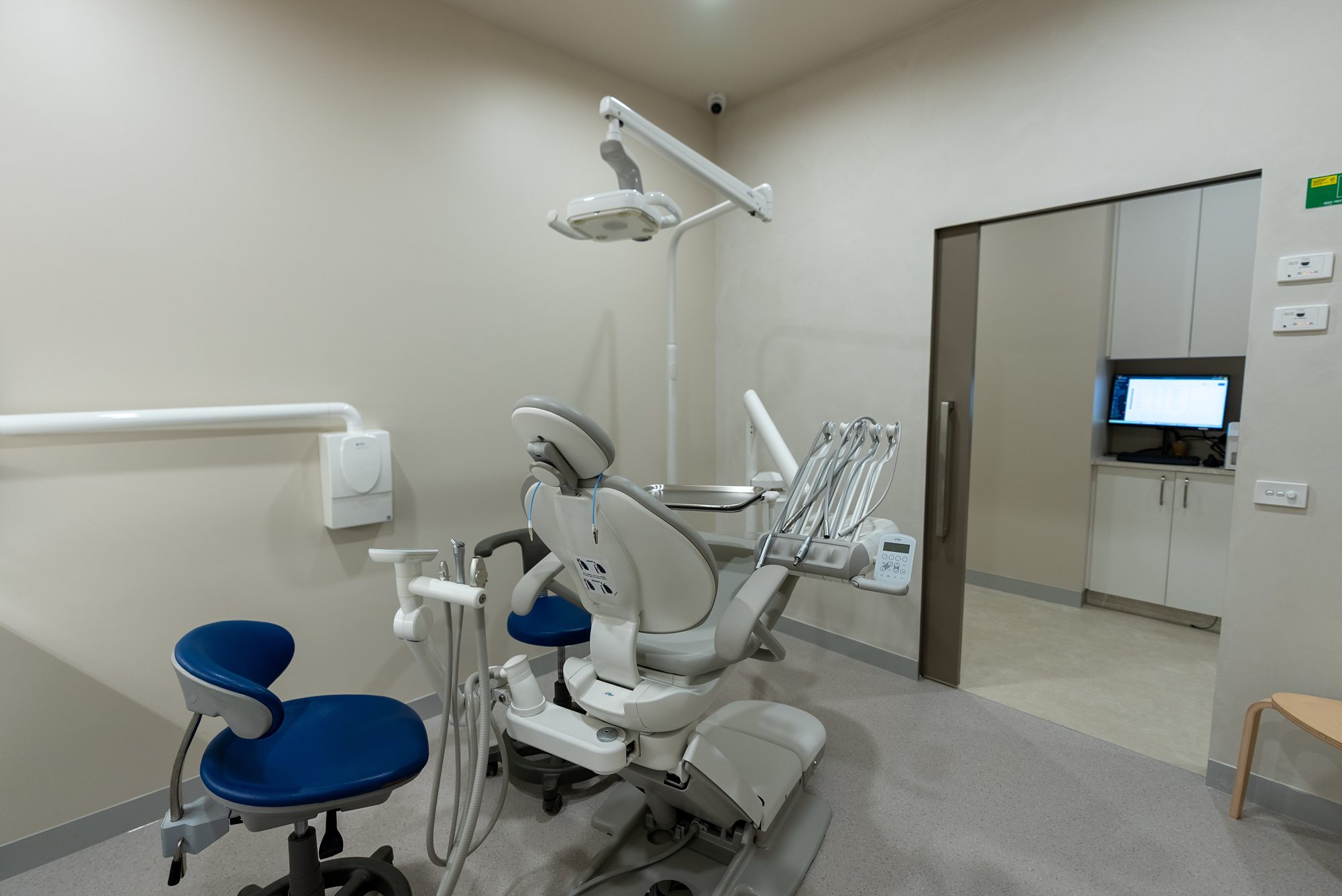
At Lumi Dental in Melrose Park, whitening starts with an examination by a dentist, and part of that examination is looking for white spots before any gel goes near the teeth. Existing marks are photographed and recorded alongside the 3D intraoral scan, so a patch that looks brighter after the course can be compared with where it started. The whitening options are named Home, Refresh and Radiance, and the teeth whitening page describes how a consult works. If a spot still shows at the two-week review, the dentist confirms the cause and talks through the options; the hygiene team of oral health therapists looks after cleans and maintenance.
Questions patients ask
Why do I have white spots on my teeth after whitening?
Because the spots were already there and the enamel around them became lighter. Gel barely changes a porous white patch, and it dries the teeth for a day or two, which makes the patches look starker still. What remains after rehydration is the spot's true colour against a whiter tooth.
Do white spots from whitening go away?
The dehydration part does, usually within 48 hours. The underlying spot does not disappear on its own, although early demineralisation can become less visible over months with good plaque control and fluoride. Anything still obvious at two weeks is worth an examination.
Can I whiten my teeth again to cover the white spots?
Not to cover them. More gel lightens the surrounding enamel further and often widens the contrast, and in fluorosis the research found that bleaching before infiltration did not improve the masking. The spot needs its own treatment.
How long after whitening can I get the white spots treated?
Two weeks is the usual minimum, so the shade has settled before resin infiltration or composite bonding is colour-matched. For microabrasion or remineralisation the timing matters less.
Are white spots after whitening strips a sign of enamel damage?
Usually not; the strips revealed spots that were already there. Overusing strips can dry and roughen enamel so it looks chalky for a while, one reason to follow the pack instructions. Our guide to whether teeth whitening damages enamel covers the research.
White patches showing after whitening? Complimentary cosmetic consult in Melrose Park
If white spots have appeared or look worse after whitening, the team at Lumi Dental in Melrose Park can examine the teeth, work out the cause and plan treatment in the right order. Book a complimentary cosmetic consult, read about teeth whitening at Lumi Dental, or see how composite bonding rebuilds missing enamel. Patients visit from Ryde, Parramatta, Ermington, Rydalmere and nearby suburbs.
Sources
- Better Health Channel: Dental care, fluoride (including dental fluorosis)
- PMC: Efficacy of resin infiltration to mask post-orthodontic or non-post-orthodontic white spot lesions or fluorosis, a systematic review and meta-analysis
- PMC: Effect of bleaching on resin-infiltration-masked artificial white spots in vitro
- PMC: Tooth whitening: what we now know
About the author

Dr James Tran is a general dentist at Lumi Dental in Melrose Park. He holds a BDent from the University of Sydney and a Graduate Diploma in Oral Implants, and is a Member of the International Congress of Oral Implantologists (MICOI).
This article is general information only and is not a substitute for an examination and individual advice from a registered dental practitioner. Suitability for any treatment varies from person to person.








