

Teeth usually look a little darker a week after whitening because the first result was partly borrowed: peroxide gel dries the enamel, dry enamel looks whiter than it really is, and the colour settles back as the teeth take up water again. The American Academy of Cosmetic Dentistry describes this whitening rebound plainly: dehydrated teeth can appear whiter immediately after bleaching, and as rehydration occurs, usually within about a week, the colour rebounds to a darker shade. The shade you have at two weeks is the real one, and it is still lighter than where you started. This guide explains what happens day by day and when to judge the result.
Written by Dr James Tran, BDent (University of Sydney), MICOI, GradDip (Oral Implants), general dentist at Lumi Dental in Melrose Park.
The short version
- Two things get called rebound. Dehydration rebound happens in the first week and is not new stain. Relapse is the slow return of stain over months; see how long teeth whitening lasts.
- Dry enamel is more opaque and hides the yellower dentine underneath; as water returns, the dentine shows through again.
- A randomised split-mouth trial found take-home and in-chair whitening lightened teeth equally, but the in-chair side lost colour faster.
- Lights and heat dry teeth further, so light-accelerated sessions show the steepest fall.
- Judge the shade at two weeks, in daylight, against the same shade tab. Do not restart gel at day five to chase a shade you never really had.
- Whitening is not permanent. Diet, smoking and regular cleans decide how long the settled shade holds.
Two different things people call whitening rebound
The teeth look brilliant leaving the appointment, still bright the next morning, and then around day three to five they slip back a shade. Nothing has stained them: water is returning to enamel the gel dried out. That is dehydration rebound, and in my experience almost everyone notices it. Stain relapse is different: the gradual darkening over months as tea, coffee, red wine, tobacco and ageing put colour back into the enamel. Better Health Channel is blunt that whitening is not permanent. Relapse is slow and depends on habits; rebound is fast, depends on water and needs no treatment.
The single rule: judge the shade at two weeks, not two days
The colour at the end of the appointment is inflated, the colour at day five is mid-fall, and the colour at about two weeks is the one you have actually bought. Take the comparison photo then, in daylight, with the same shade tab as in the before photo. The randomised trial above recorded shade immediately after bleaching and again at two weeks for this reason. I usually tell patients to put the two-week date in their phone and ignore the mirror until then.
Why a dehydrated tooth looks whiter
Enamel is a lattice of mineral crystals with water in the tiny spaces between the prisms. A prospective study in Cureus sets out the physics: when a tooth dries, air replaces that water, light scattering falls, and the enamel turns more opaque and white. That opaque layer masks the dentine beneath, which carries most of a tooth's yellow and grey, so the tooth reads as whiter even though nothing has been bleached.
The study measured the upper front teeth of 25 adults with a spectrophotometer while a rubber dam dried them for half an hour. Lightness rose above the threshold at which people can see a difference, and the longer the teeth stayed dry the larger the shift. Whitening dries teeth far more thoroughly: peroxide makes teeth porous enough for fluid to flow out of them, the AACD notes, so recovery takes days rather than minutes. As the Cureus authors put it, dehydration exaggerates the bleaching effect, the patient is pleased at first, and a week later partial colour rebound is noted.
The first 14 days, day by day
Gel strength, wear time and saliva shift the timing, but this is the usual shape of the fortnight.
| Days after whitening | What you usually see | What is happening | What to do |
|---|---|---|---|
| Day 0 | Brightest the teeth will look; often chalky; white patches obvious | Enamel at its driest and most opaque | Treat the day-0 photo as a ceiling, not the result |
| Days 1 to 2 | Still very bright; twinges to cold | Water starting to return; peroxide still leaving the tooth | Pale food and drink, desensitising toothpaste |
| Days 3 to 5 | A drop of around a shade; white patches softening | Rehydration under way; dentine showing through again | Nothing. Expected fall, not failure. Do not restart gel |
| Days 6 to 9 | Colour levels off | Rehydration mostly complete, usually within about a week per the AACD | Normal care |
| Days 10 to 14 | Stable shade, still clearly lighter than before | The true post-whitening colour | After photo in daylight; book the review |
Many people have faint developmental white spots that are invisible day to day. Dehydration whitens them faster than the enamel around them, so they stand out on day 0 and melt back in over the week; our article on white spots after whitening explains why. While the enamel is still dry, strongly coloured food and drink is best avoided; our guide to what to eat and drink after whitening gives the list.

Why in-chair whitening shows the most rebound and take-home the least
In the chair
Better Health describes in-clinic whitening as a high-concentration gel painted onto the teeth for about an hour. For that hour a retractor holds the lips back and the teeth sit exposed to air with a strong gel drawing fluid out of them. If a lamp is used, the AACD notes that the light converts to heat inside the tooth and more fluid is pushed out. In the randomised split-mouth trial in the European Journal of Dentistry, 20 adults had one side of the mouth whitened with 38% hydrogen peroxide in the chair and the other with 15% carbamide peroxide in trays. Both produced the same whitening and sensitivity, but colour regression was faster on the in-chair side; by six months both had settled to the same point. Our guide to why in-chair whitening alone is often not enough explains how a take-home follow-on evens this out.
At home in trays
Take-home whitening uses a lower-strength gel in a custom tray worn for a few hours or overnight over around one to two weeks, in Better Health's description. Between sessions the teeth are bathed in saliva, so each night's drying is small and largely reversed by morning; the colour you see across the course is close to the truth, and most people I see who are upset about rebound had a single in-chair session with no trays afterwards.
What not to do in the first week
- Do not re-whiten to chase the day-0 shade. You cannot stop water returning to enamel; more peroxide on dry, sensitive teeth adds discomfort without a lasting result.
- Do not judge in the bathroom. Warm light yellows everything; a tan, dark lipstick or a white shirt shifts the comparison. Daylight, same shade tab.
- Do not stop the sensitivity care early. Better Health lists temporary sensitivity and gum irritation as the common side effects; both settle.
Holding the real result once it has settled
From week two the job changes from waiting to maintaining. Better Health's advice: brush twice a day and floss once a day, do not smoke, limit strongly coloured food and drink such as black coffee and red wine, and see the dentist every six to twelve months for professional cleaning. Surface stain picked up over the following months comes off with a scale and polish, and when the settled shade drifts, a short top-up in the existing trays, agreed with your dentist, usually beats another full course. Fillings, crowns and veneers do not lighten, so if any were matched to your old shade, raise them at the review.
How we approach this at Lumi Dental
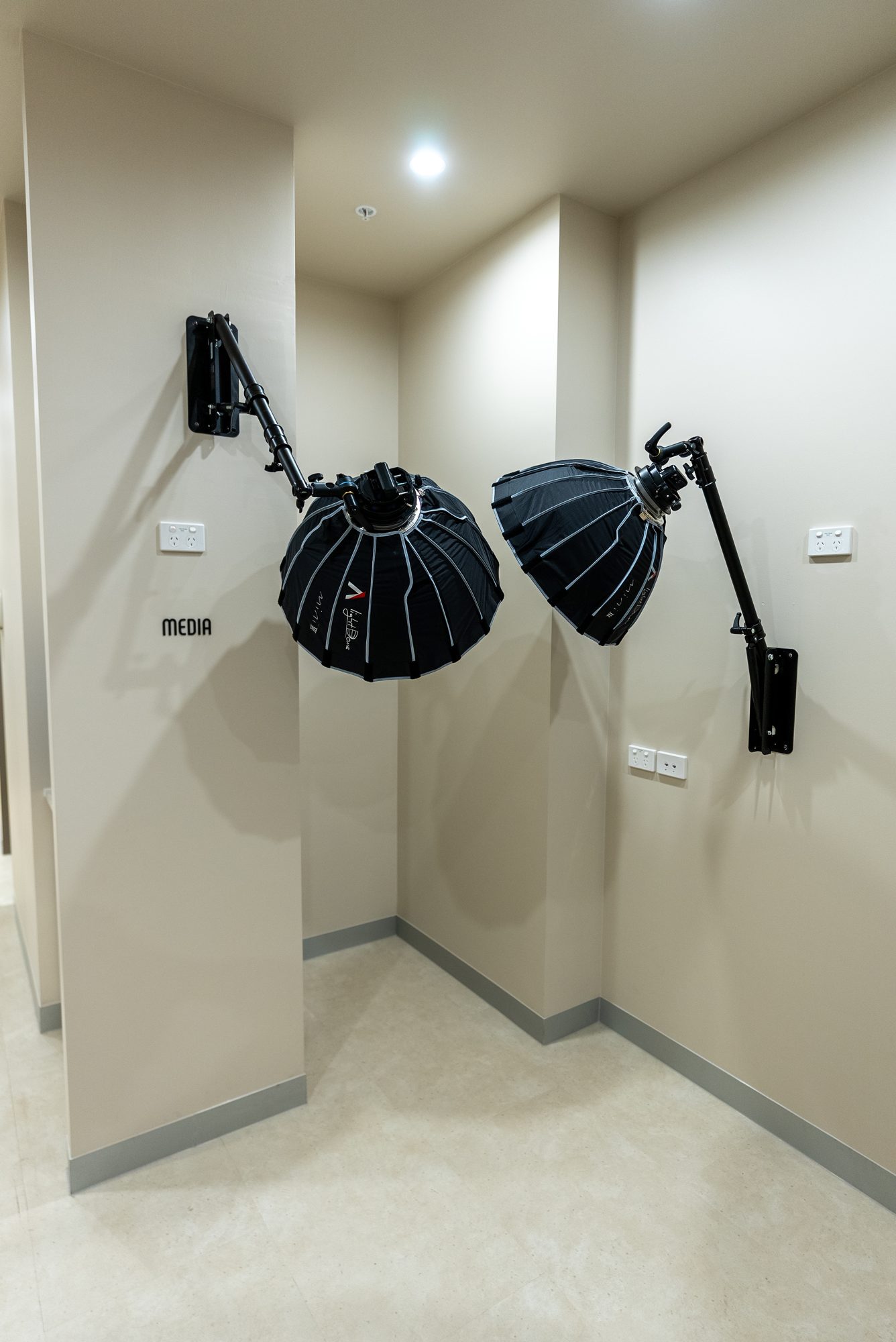
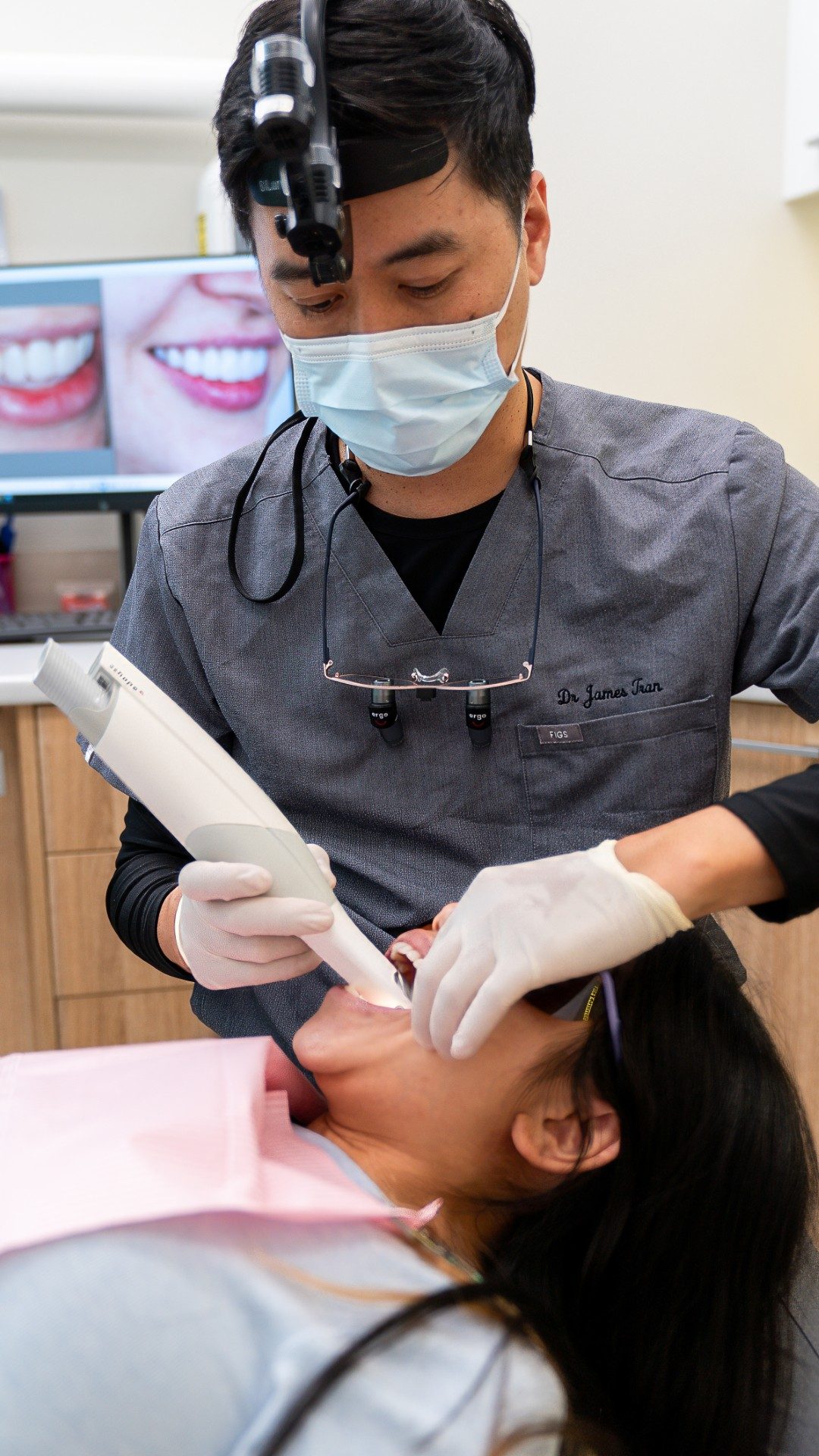
At Lumi Dental in Melrose Park, whitening begins with an examination by a dentist, because decay, cracks and inflamed gums need attention before any gel. The starting shade is recorded in the clinical photography studio under consistent lighting, and the comparison photo is taken once rebound has settled. Custom trays are made from a 3D intraoral scan taken in house. The whitening options are named Home, Refresh and Radiance; the teeth whitening page explains how a consult works and the technology page describes the scanner and studio. The hygiene team of oral health therapists looks after cleans and whitening maintenance.
Questions patients ask
Why do my teeth look darker a week after whitening?
Because the gel dried the enamel and it is taking water back up. Dry enamel is more opaque and hides the yellower dentine; as it rehydrates, usually within about a week according to the AACD, the colour settles to its true shade. It is not new stain.
Is whitening rebound permanent, or will my teeth keep getting darker?
Rebound stops once the teeth are fully rehydrated, generally by about two weeks, and the shade then holds. Later darkening is slow stain relapse from diet, smoking and age, managed with cleans and occasional top-ups.
How long after whitening should I judge the final shade?
About two weeks, in daylight, against the shade tab used before treatment. For a wedding or event, finish at least two weeks before the day; our guide to whitening before a wedding or event sets out the timeline.
Can I whiten again straight away to get the day-one colour back?
No. The day-one colour was dehydration, and no amount of gel keeps enamel dry; whitening again in the first week mostly adds sensitivity. If the settled shade disappoints, ask about a take-home follow-on; our article on how often you can whiten safely explains the spacing.
Did drinking coffee in the first week cause the rebound?
Almost certainly not. The first-week fall happens whether or not you drink coffee, because it is water returning to the enamel. Coffee matters for the long term, but a cup on day four did not undo your whitening.
Want a result that holds? Complimentary cosmetic consult in Melrose Park
If your teeth looked brilliant on the day and ordinary a week later, the team at Lumi Dental in Melrose Park can record the shade properly and plan a take-home course or top-up that holds. Book a complimentary cosmetic consult or read about teeth whitening at Lumi Dental. Patients visit from Ryde, Parramatta, Ermington, Rydalmere and nearby suburbs.
Sources
- American Academy of Cosmetic Dentistry: Is Light-Accelerated Whitening Worth the Pain?
- PMC (Cureus): The Effect of Dehydration on Tooth Color, a prospective in vivo study
- PMC (European Journal of Dentistry): Colour change, rebound effect and sensitivity of bleached teeth with at-home and power bleaching, a randomised clinical trial
- Better Health Channel: Cosmetic dentistry and teeth whitening
About the author

Dr James Tran is a general dentist at Lumi Dental in Melrose Park. He holds a BDent from the University of Sydney and a Graduate Diploma in Oral Implants, and is a Member of the International Congress of Oral Implantologists (MICOI).
This article is general information only and is not a substitute for an examination and individual advice from a registered dental practitioner. Suitability for any treatment varies from person to person.








