

Children under 13 should not have their teeth bleached with peroxide products such as strips, gels, LED kits or pens, and a whitening toothpaste adds little for a child; if your child's teeth look yellow, the safer first step is to have the cause checked. New adult teeth often look darker simply because they sit next to whiter baby teeth. European cosmetics rules go further: tooth whitening products containing or releasing more than 0.1 per cent hydrogen peroxide must be labelled "Not to be used on a person under 18 years of age".
Written by Dr James Tran, BDent (University of Sydney), MICOI, GradDip (Oral Implants), general dentist at Lumi Dental in Melrose Park.
The short version
- Peroxide whitening products (strips, LED kits, pens, gels) are not for children.
- Yellow-looking new adult teeth are usually normal. Our article on why a child's new adult teeth look yellow explains the contrast with baby teeth.
- Whitening toothpaste works mainly on surface stain and does not change the natural colour of a tooth much.
- Children from 18 months to 6 years use a smear of children's toothpaste with less fluoride. Most whitening pastes are adult products.
- A professional clean can often remove surface stain, and the dentist can refer to a paediatric dentist for developmental enamel problems.
Why new adult teeth often look yellow next to baby teeth
Parents often notice the change at around six or seven, when the first adult front teeth come through looking large and slightly yellow beside the remaining baby teeth.
Most of that difference is built into the teeth. Adult teeth have a thicker layer of dentine under the enamel, and dentine is naturally more yellow than enamel. Baby teeth are smaller and whiter, so the contrast is strongest during the years when both sets sit side by side. As more baby teeth are replaced, the smile usually looks more even.
In my experience this is the most common reason a parent asks about whitening for a primary school child, and the examination usually shows healthy teeth of a normal colour.
The single rule: no bleaching for children, find the cause first
If your child is under 13 and their teeth look yellow or stained, do not start a whitening product. Book an examination instead, because the colour is either normal or has a cause that bleaching will not fix.
The American Academy of Pediatric Dentistry, in its policy on bleaching for child and adolescent patients, discourages full-arch cosmetic bleaching in the primary and mixed dentitions, that is, while a child still has baby teeth. The same policy calls for more research on whitening agents in children.
There is also a practical reason. Between about six and twelve, new adult teeth keep arriving, so a bleached tooth can end up next to an unbleached one that erupts later.

Whitening toothpaste and children
Whitening toothpaste is the product children are most likely to pick up from a parent's side of the basin. teeth.org.au, the Australian Dental Association's patient site, explains that most whitening toothpastes act on the tooth surface, using abrasive particles such as silica, alumina or calcium carbonate, a low level of peroxide, and ingredients that stop stain settling into plaque. It notes that these toothpastes do not tend to make a large difference to the colour of the teeth.
Fluoride strength matters more for young children
teeth.org.au advises that children from 18 months to 6 years use a children's toothpaste with fluoride, which has about 500 ppm of fluoride, and only a smear on the brush. Toothpaste for children over 6 and adults usually has 1000 to 1450 ppm. Children under 6 should spit out the excess but not rinse with water.
Most whitening toothpastes are sold as adult pastes. For a child under 6, using one means a stronger fluoride paste than recommended, and young children swallow much of what goes in their mouth. Our guide to how much fluoride toothpaste children need sets out the amounts by age.
What about children over 6?
From 6, children move to a standard fluoride toothpaste. A whitening paste from a reputable brand is not known to be harmful, but it adds little. I usually suggest an ordinary fluoride toothpaste, a soft brush and good technique, which remove the plaque that picks up stain in the first place. Our article on whether whitening toothpaste works covers the adult side.
Strips, LED kits, pens and other products seen online
Children and tweens see whitening products on social media long before anyone asks a dentist. None of the bleaching products below has been shown to be suitable for children.
| Product type | What it usually contains | Suitable for children under 13? | Notes |
|---|---|---|---|
| Children's fluoride toothpaste | Lower fluoride, about 500 ppm | Yes, from 18 months to 6 years | A smear only; spit, do not rinse |
| Standard fluoride toothpaste | 1000 to 1450 ppm fluoride | Yes, from 6 years | Pea-sized amount |
| Whitening toothpaste | Abrasives, low peroxide, stain blockers | Not needed | Surface stain only; adult fluoride strength |
| Peroxide whitening strips | Hydrogen peroxide gel on a flexible strip | No | Designed and tested for adults |
| LED light kits | Peroxide or other bleaching gel plus a light | No | The gel is the active part |
| Whitening pens | Bleaching gel painted on | No | Easy to overuse; uneven on mixed teeth |
| Peroxide-free gels (for example PAP) | Other bleaching or optical agents | No | Very little research in children |
| Professional clean and polish | Polishing paste used by the dental team | Yes | Removes surface stain after an examination |
For teenagers the picture is different and depends on the individual. Our article on teeth whitening for teenagers covers 13 to 17 year olds.
What else makes children's teeth look discoloured
When a child's teeth really are a different colour, the treatment depends on the cause, not on bleach.
- Surface stain. Liquid iron supplements, some mouthwashes such as chlorhexidine, and dark drinks can leave brown or black marks along the gum line. These usually polish off.
- Molar incisor hypomineralisation (MIH). Soft, creamy or brown patches on the first adult molars and sometimes the front teeth. Our article on MIH in children explains why these teeth need protection rather than whitening.
- Fluorosis. Fine white lines or flecks from too much fluoride while the teeth were forming. Mild cases are often barely visible from a normal distance.
- A grey tooth after a knock. A single darker front tooth weeks or months after a fall needs a check, not a whitening product.
- Decay. Chalky white bands near the gum or brown spots can be early decay, which needs treatment and prevention.
Our guide to staining in children's teeth goes through each cause and what usually helps.
What a dentist can do instead
A visit for tooth colour is a normal check-up with a specific question attached. The dentist examines the teeth, looks for decay and enamel defects, and asks about medicines, supplements, drinks and toothpaste. Where there is surface stain, an oral health therapist can usually remove it with a professional clean and polish, then show your child how to brush the areas that pick up stain.
Developmental enamel problems such as marked MIH may need protective fillings, monitoring or referral to a paediatric dentist. Cosmetic changes, if ever needed, are planned once the adult teeth are through.
Talking to a child or tween who wants whiter teeth
Patients I see in the tween years often ask about whitening because of something they saw online. Taking the question seriously works better than a flat no.
- Explain that adult teeth are meant to be a little more yellow than baby teeth, and that most smiles on screen are filtered or lit.
- Agree on what they can do now: brush twice a day, cut back on dark fizzy drinks, and keep up their check-ups.
- Let the dentist or oral health therapist explain at the check-up; children often accept it more easily from someone outside the family.
How we approach this at Lumi Dental
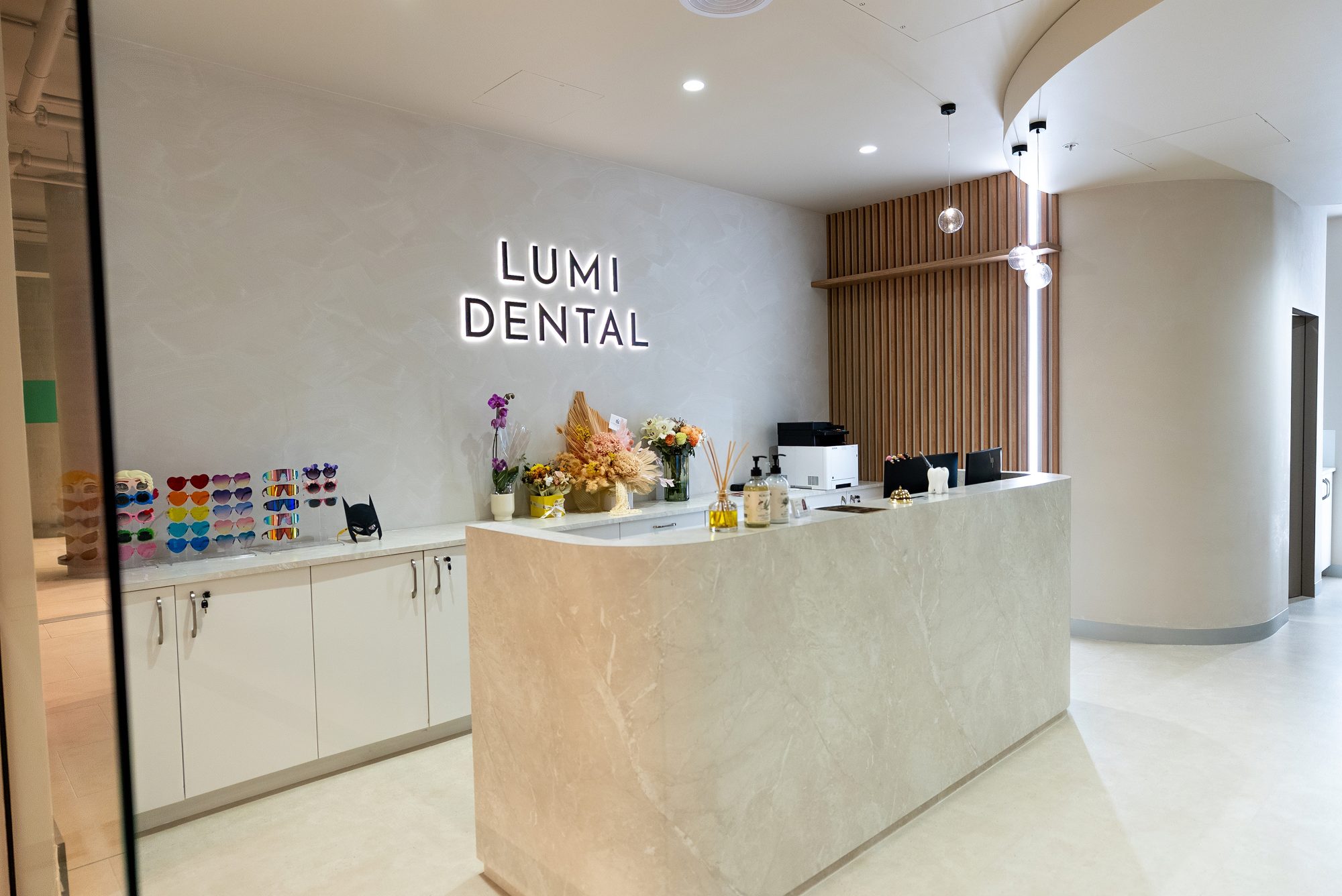
When a parent asks about a child's tooth colour, the dentist at Lumi Dental examines the teeth first and explains what is causing the colour. The oral health therapists carry out cleans and stain removal and go through brushing and toothpaste choices with the family. Children with complex enamel defects are referred to a paediatric dentist. Lumi Dental does not offer whitening to children. The whole practice accepts the Child Dental Benefits Schedule for eligible children; see the CDBS page to check eligibility. For parents, Lumi's whitening options are named Home, Refresh and Radiance.
Questions patients ask
Can a 10 year old use whitening toothpaste?
It is not needed. At 10, a standard fluoride toothpaste used twice a day does the job, and whitening pastes mostly remove surface stain that brushing and a professional clean also remove. If the teeth look yellow, have the cause checked first.
Are whitening strips safe for kids?
Whitening strips are designed for adults and are not recommended for children. European rules state that tooth whitening products with more than 0.1 per cent hydrogen peroxide must not be used on anyone under 18.
Why are my child's adult teeth more yellow than their baby teeth?
Adult teeth have more dentine, which is naturally yellower, so they look darker next to the whiter baby teeth. The contrast usually becomes less obvious as more adult teeth come through.
At what age can you whiten your teeth?
There is no single age that suits everyone. Bleaching is discouraged while baby teeth are still present, and teenagers need an individual assessment by a dentist first. See teeth whitening at Lumi Dental for the adult options.
Can a dentist clean the stains off my child's teeth?
Often, yes. Surface stain from iron supplements, mouthwash or drinks can usually be polished off at a check-up and clean. Colour inside the tooth, such as MIH or fluorosis, needs a different plan.
Questions about your child's tooth colour? Children's dental care in Melrose Park
If your child's teeth look yellow, stained or patchy, or they are asking about whitening, the team at Lumi Dental can examine their teeth, explain the cause and remove surface stain where it is present. Read about children's dentistry at Lumi Dental and check whether your child is eligible under the Child Dental Benefits Schedule. Parents interested in their own whitening can read about teeth whitening for adults. Families visit Melrose Central from Melrose Park, Ryde, Parramatta, Ermington and Rydalmere, with on-site parking.
Sources
- Australian Dental Association (teeth.org.au): Tips for choosing toothpaste
- Australian Dental Association (teeth.org.au): Whitening toothpaste
- American Academy of Pediatric Dentistry: Policy on the use of dental bleaching for child and adolescent patients
- legislation.gov.uk: Council Directive on hydrogen peroxide in cosmetic products, including tooth whitening products
About the author

Dr James Tran is a general dentist at Lumi Dental in Melrose Park. He holds a BDent from the University of Sydney and a Graduate Diploma in Oral Implants, and is a Member of the International Congress of Oral Implantologists (MICOI).
This article is general information only and is not a substitute for an examination and individual advice from a registered dental practitioner. Suitability for any treatment varies from person to person.








