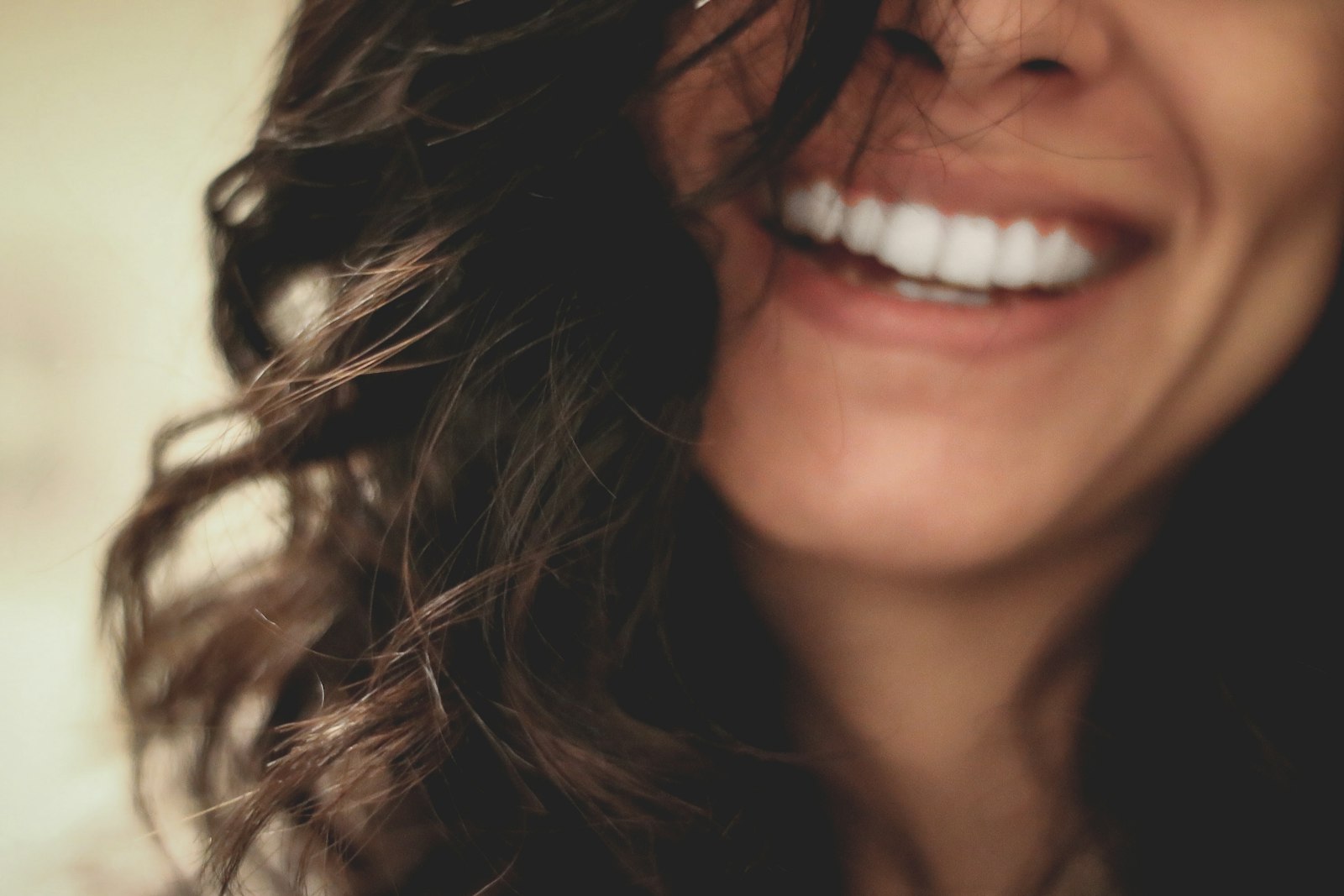

The reason why teeth look different in the mirror is that a mirror hands you a left to right reversed face, lit by a warm and fairly dim bathroom globe, and your brain has spent years treating that reversed version as the correct one. Nothing about the enamel changes between the bathroom, a phone photo and the dental chair. What changes is the geometry, the light and the observer. Most of what people notice in a mirror is perceptual, and the few findings that are not are the ones with clinical weight. A single tooth that has quietly gone darker sits firmly in that second group.
Key takeaways
- A mirror reverses your face left to right, so the version of your smile you know best is the version almost nobody else ever sees.
- Mita and colleagues, in the Journal of Personality and Social Psychology in 1977, found people preferred their mirror image while close friends preferred the true photograph.
- Facial asymmetry is normal. Around 18% of healthy adults show substantial jaw asymmetry, and a survey of 1,460 patients at a dentofacial clinic found 34% had clinically apparent asymmetry.
- Reliable visual shade judgement needs light of roughly 5,500 to 6,500 kelvin with a colour rendering index above 90, while a typical home vanity is warm white at about 2,700 to 3,000 kelvin.
- Under EN ISO 9680, a dental operating light must deliver at least 15,000 lux with a colour rendering index above 85, which is why the chair reveals detail a bathroom cannot.
- The 50:50 perceptibility threshold in dentistry is a colour difference of 0.8, so a change other people also notice is far more likely to be real.
What a mirror is actually showing you
A mirror shows a reversed image, not a false one. Every feature sits on the opposite side from where an onlooker sees it, and because faces are not symmetrical, that swap changes how the whole smile reads. The tooth that overlaps on your left in the mirror overlaps on your right in real life. Nothing has moved.
Mirror reversal and the smile line
Reversal matters most for anything off centre. A midline that sits a fraction to one side, a canine that is a little more prominent, a lip that lifts higher on one side, all read differently when flipped. Patients often call a smile crooked in the mirror, then look at a photo and call it crooked in the other direction. Both are the same smile.
Facial asymmetry is the norm
Asymmetry is measurable in almost everyone. In a study of 600 healthy children aged 6 to 12, mean facial fluctuating asymmetry was just under one millimetre. In healthy adults with no syndrome or pathology, around 18% showed substantial asymmetry of the jaw ramus. Among people presenting to a dentofacial clinic, roughly a third had clinically apparent asymmetry. These are different populations measured against different thresholds and none is an Australian estimate, but the pattern is clear. A perfectly symmetrical face is the rare one.
Why the mirror version feels like the correct one
The mirror feels right because you have seen it thousands of times. Mita, Dermer and Knight showed participants a true print and a mirror flipped print. Participants reliably preferred the mirror image, while their close friends preferred the true image. The authors put this down to the mere exposure effect, in which repeated exposure to something increases how much we like it without changing the thing itself.
That study is small and has not been repeated at modern scale, so it supports the general preference rather than telling us how large the effect is for the front teeth. It still explains a common experience. Your reflection is your default, and every other view has to compete with it.
Bathroom light is the wrong instrument for tooth colour
Tooth colour cannot be judged fairly under a warm domestic globe. Dental colour science has a defined reference condition and a home bathroom sits well outside it. The bathroom simply answers a different question from the one you are asking it.
Colour temperature and colour rendering index
The accepted condition for visual shade matching is a source of about 5,500 to 6,500 kelvin with a colour rendering index above 90. The reference illuminant used by colour measuring instruments, CIE D65, sits at 6,500 kelvin. Most Australian bathroom vanities run warm white at roughly 2,700 to 3,000 kelvin, the range lighting designers themselves call poor for colour accurate grooming. Warm light pushes everything in the frame yellower, teeth included.
Mixed light sources also encourage metamerism, where two surfaces match under one light and visibly differ under another, which is why shade is assessed under a single dominant source.
What the light above a dental chair is designed to do
A dental operating light is a specified instrument. Under EN ISO 9680 it must deliver at least 15,000 lux, a colour rendering index above 85, and a colour temperature between 3,600 and 6,400 kelvin. Ambient treatment room light is usually around 500 to 1,000 lux, and a domestic vanity is dimmer again by an order of magnitude.

Magnifying mirrors and detail nobody else sees
A magnifying mirror exaggerates detail rather than distorting colour. Consumer vanity mirrors typically magnify three to ten times, and at that scale every craze line, stain edge and tiny chip becomes a feature. None of it is visible to a person sitting across a table from you.
There is no good research on magnifying mirrors and tooth appearance, so it is worth saying only what geometry supports. Magnification enlarges. It does not invent. That makes it useful for spotting plaque at the gum margin and close to useless for judging a smile.
Why teeth look whiter straight after an appointment
Teeth look lighter after treatment because they have been dehydrated. Isolation, rubber dam and air drying replace water in the microscopic spaces within enamel with air. The refractive index shifts, opacity rises, and the tooth looks lighter than it truly is. The genuine shade returns as the tooth rehydrates, usually over a day or two, with reported timings ranging from about half an hour to 72 hours.
This is why shade is recorded before isolation, and why a whitening result is best judged a few days later. Both things can be true at once. Dehydration inflates the immediate appearance, and a real colour change may also have occurred.
What you notice, and whether it is perception or a finding
Most mirror observations have a perceptual explanation, but not all of them do. The table separates the two and gives a sensible next step for each.
| What you notice in the mirror | Likely perceptual cause | When it is a real dental finding | What to do |
|---|---|---|---|
| My smile looks crooked | Mirror reversal combined with everyday facial asymmetry | A tooth that has visibly moved, a new space, or teeth that no longer meet the way they used to | Book a check up and describe the change |
| My teeth look yellow tonight | Warm vanity light around 2,700 to 3,000 kelvin pulling the scene warmer | Colour that stays darker in daylight and does not shift after a professional clean | Ask for a shade assessment under a corrected light |
| One tooth looks darker than the others | Rarely perceptual | Usually real. A single darker tooth can mean the nerve has died, often years after a knock | Book promptly, even with no pain |
| My gum line looks darker or notched | Shadow cast by an overhead vanity light | A notch you can catch with a fingernail, or a root surface that reacts to cold | Have it assessed for wear or recession |
| My teeth look whiter after the dentist | Enamel dehydration from isolation and air drying | Only after whitening, once the shade settles | Judge any result a few days later |
| Every chip and line looks enormous | A three to ten times magnifying mirror | A rough edge that catches the tongue, or a fracture line that has changed | Have the edge checked and smoothed if needed |
| A front tooth has a grey tinge | Not usually perceptual | Real. Grey generally comes from inside the tooth rather than from surface stain | Book an assessment, usually with a radiograph |
| Fine in the mirror, wrong in photos | Lens perspective at arm's length plus the camera's own white balance | Neither view is a dental finding by itself | Compare in daylight, or ask someone across the table |
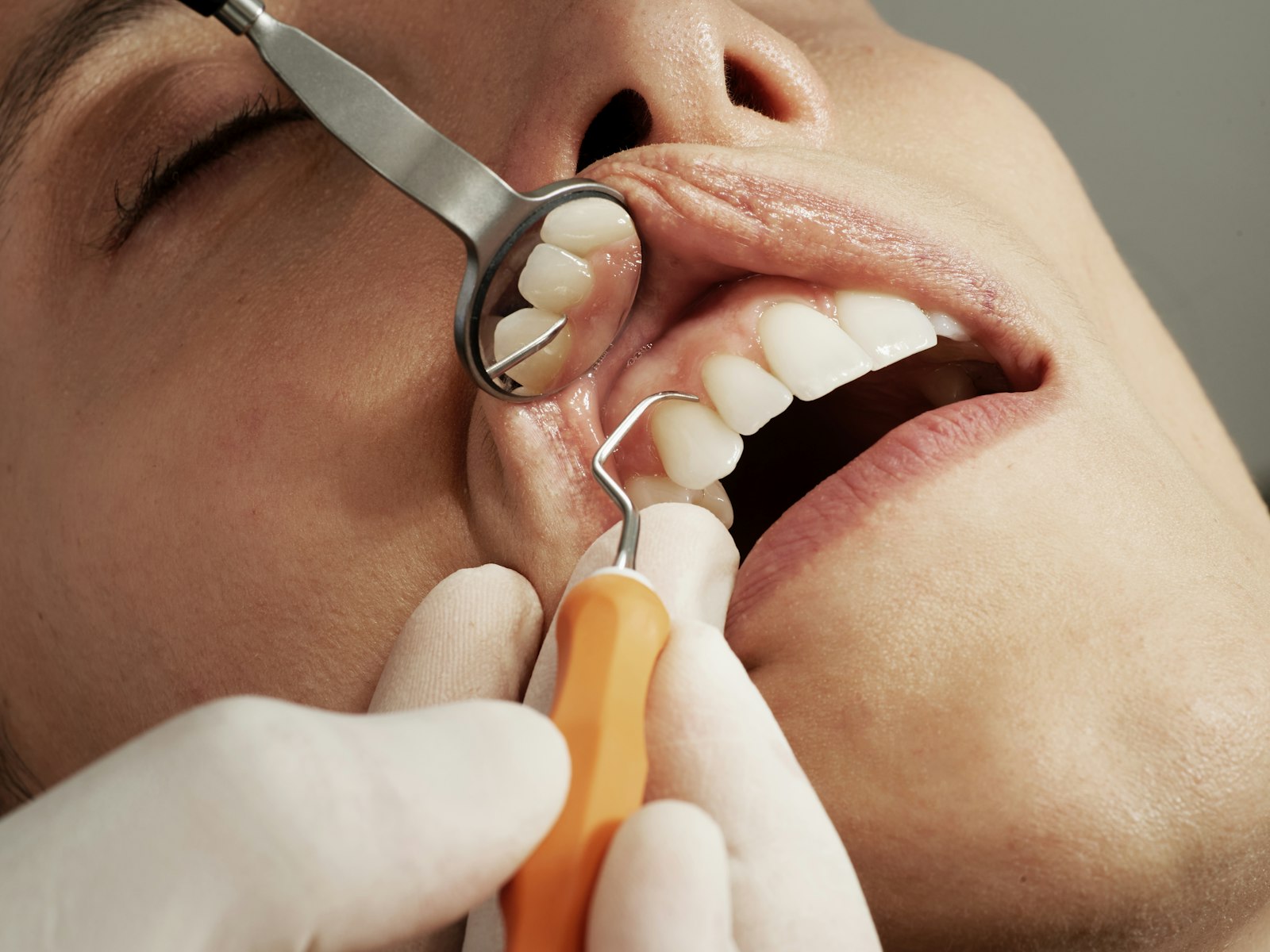
Telling a perceptual difference from a real change
A real change survives a change of conditions. Paravina and colleagues established 50:50 thresholds for dentistry, with perceptibility at a colour difference of 0.8 and acceptability at 1.8. Below 0.8, the average observer cannot see a difference at all. You cannot measure that at home, but the principle translates. If a difference only appears under one globe, at one angle, at the end of a long day, it is probably below the threshold anyone else would notice.
Three practical tests help. Does anyone else see it. Does it show up in different light on different days. Does it persist after a professional clean, which removes surface stain rather than lightening the tooth.
Findings worth a look regardless
Some observations should be checked even if you suspect the lighting. One tooth darker or greyer than its neighbours is the clearest example, because a nerve can die quietly and painlessly after an old injury and the colour change may be the only sign. A notch at the gum line, a tooth that has visibly moved, a new gap, a chip with a sharp edge, and a stain that does not budge after a clean belong on the same list. None is an emergency. All are easier to manage early.
When mirror checking stops being useful
Checking your teeth becomes counterproductive when it stops giving you information. Research into mirror gazing has shown that prolonged, repeated checking focuses attention on an internal felt impression rather than on the reflection, and that longer gazing tends to increase distress rather than settle it. Nobody can be diagnosed from an article, and being unhappy with your smile is not a problem in itself. If checking the mirror is taking up a meaningful part of your day, that is worth raising with a GP. In Australia, healthdirect on 1800 022 222 offers 24 hour registered nurse advice.
How this fits with the rest of the site
Our piece on why teeth look different in photos covers the camera side of the problem, meaning lens perspective, flash and white balance, where this one covers the mirror. Our guide to tooth shade matching explains how shade is recorded clinically rather than perceived at home. If a colour change looks genuine, types and causes of tooth discolouration explains why teeth darken from within and from the surface. Two narrower pieces cover common mirror discoveries: translucent or see through edges and a chipped tooth that does not hurt.
Common questions
Do mirrors or photos show what I really look like?
Neither is ground truth, because both are transformations. A mirror reverses the image left to right, and a phone camera adds lens perspective at close range plus its own white balance. The view that matches how other people see you is the one from across a table.
Why do my teeth look yellower in photos than in the mirror?
Because the two views use different light and your brain treats them differently. Most bathroom globes are warm white and your visual system partly corrects for that while you look, whereas a photo freezes whatever white balance the camera chose. Flash adds a cool, blue leaning light as well.
Is my face really that asymmetrical?
Almost certainly yes, and almost certainly within the normal range. Around 18% of healthy adults have measurable jaw asymmetry and rates run higher among people attending a dentofacial clinic. Asymmetry becomes a clinical question when it is new, progressive, or comes with pain or a change in the way the teeth meet.
What light is best for judging tooth colour?
Roughly 5,500 to 6,500 kelvin with a colour rendering index above 90, ideally from one dominant source. Indirect daylight near a window is the most accessible approximation at home. Mixing a warm ceiling globe with a cool ring light is the setup most likely to mislead you.
When is a change in my teeth real rather than perceptual?
When other people notice it, when it appears in different lighting on different days, or when it persists after a professional clean. A colour difference below the perceptibility threshold of 0.8 is invisible to the average observer. One exception overrides all of this: a single tooth that has gone darker or grey is a real finding and should be checked, because a dead nerve can be completely painless.
If something you noticed in the mirror has been on your mind, the next step is a check up under a proper light. The team at Lumi Dental in Melrose Park can talk you through what is perceptual and what needs treating, with a written quote before anything is booked. New patient offers are listed on current deals, and you can book online or read our general dentistry page.
This article is general information only and is not a diagnosis or personal advice. Tooth appearance has many causes and only an in person examination can tell you which applies to you. Please see a dental or medical professional about your own situation.