


Most reactions to teeth whitening are irritation from peroxide touching the gums, lips or skin rather than a true allergy, and they usually settle once the gel is wiped away and you take a break. In a practice-based study of 171 whitening patients, gum irritation was reported by 14% of people after at-home whitening and about 36% after in-chair whitening, while allergic reactions inside the mouth are described by dermatology references as uncommon. Hives, swelling of the lips or face, or a rash away from where the gel sat point to something different, and a swollen tongue, throat tightness or difficulty breathing needs a 000 call.
Written by Dr James Tran, BDent (University of Sydney), MICOI, GradDip (Oral Implants), general dentist at Lumi Dental in Melrose Park.
The short version
- A white, stinging patch on the gum exactly where gel touched is usually irritation. Our guide to gum irritation after teeth whitening covers the first 24 hours.
- Hives, a tingling mouth, or swelling of the lips, face or eyes suggest an allergic reaction. Stop the product and get medical advice the same day.
- A swollen tongue, swelling or tightness in the throat, wheeze, or difficult or noisy breathing are signs of anaphylaxis. Use an adrenaline autoinjector if you have one and call triple zero (000).
- Besides peroxide, a kit can involve trays, strips, flavours, gloves and the gum barrier.
- Keep the box and ingredient list, and take a photo of the reaction before it fades.
- Allergy testing goes through your GP and a clinical immunology or allergy specialist; Lumi Dental does not do allergy testing.
Irritation and allergy are two different reactions
Irritation is a direct chemical effect. Peroxide that sits on the gum or lip for long enough will sting and turn the surface white in almost anyone, and stronger gel or longer contact makes it worse. The British Dental Journal study above found that gel strength and contact between the tray and the gum predicted side effects. A review of peroxide whitening safety describes tooth sensitivity and gum irritation as the most common side effects, usually mild to moderate and short-lived.
An allergy is the immune system reacting to a substance it has already been sensitised to. It depends less on dose, and it can appear where the product never touched. DermNet, a dermatology reference, describes allergic reactions inside the mouth (allergic contact stomatitis) as uncommon, possibly because saliva dilutes chemicals quickly. The usual culprits it lists are flavourings, metals and other components of oral hygiene products, foods, dental materials and medicines.
Fast and slow allergic reactions
Immediate reactions, such as hives, a tingling mouth or swelling of the lips, tend to appear quickly. Delayed contact reactions develop over hours and look more like burning, redness, small blisters, peeling or white patches spread across the mouth. DermNet notes they can take up to two weeks to settle once the cause is avoided.
The single rule: where the reaction sits tells you most
If the reaction is a white, stinging patch exactly where gel touched, start with irritation care and a pause. If there are hives, swelling of the lips or face, wheeze, or a rash away from where the gel sat, treat it as a possible allergy and get medical care first.
| What you notice | More likely | What to do |
|---|---|---|
| White, stinging gum edge within minutes, only where gel sat | Irritation | Remove the tray, wipe off gel, rinse with water, skip the next session |
| Sore red line along the edge of a tray | Irritation from rubbing or trapped gel | Stop and have the tray fit and gel amount checked |
| Itchy, rough or weeping skin where gloves touched, 12 to 48 hours later | Irritant or allergic contact dermatitis | See your GP and tell your dentist before any further treatment |
| Burning, redness, peeling or small blisters spread across the mouth, hours later | Possible delayed contact allergy | Stop every new product and see your dentist and GP |
| Hives, tingling mouth, swelling of the lips, face or eyes | Allergic reaction | Stop, follow your action plan if you have one, get same-day medical advice |
| Swollen tongue, throat tightness, difficult or noisy breathing, wheeze, hoarse voice, dizziness | Anaphylaxis | Adrenaline autoinjector if prescribed, then call 000 |
The parts of a whitening kit that can cause a reaction
When someone tells me they reacted to whitening, the first job is to work out which part of the kit was involved.
Peroxide gel
Hydrogen peroxide, or carbamide peroxide that releases it, is the main irritant. Gel on the lips or swallowed by accident has its own guide: swallowed whitening gel or gel on your lips.
Tray and strip plastics
Custom trays are thin, soft plastic, and strips carry gel on a flexible film. A rough or overlong tray edge can rub the gum, and a loose tray lets gel leak over it. In my experience, a sore line that follows the outline of a tray is nearly always rubbing or trapped gel rather than a reaction to the plastic itself.
Flavours, preservatives and other additives
Many gels, desensitising pastes and toothpastes are flavoured. DermNet lists flavourings such as cinnamon, spearmint, menthol and carvone, along with some preservatives, among the major sources of allergens in the mouth. Our article on whitening with perioral dermatitis or eczema around the mouth covers toothpaste ingredients linked to rashes around the lips.
Gloves, rubber and the gum barrier
In-chair whitening adds gloves, a lip retractor and a light-cured resin barrier along the gum line. The Australasian Society of Clinical Immunology and Allergy (ASCIA) notes that most skin reactions to latex are irritant, that allergic contact dermatitis usually appears 12 to 48 hours after contact and is mostly due to chemicals added to rubber, and that immediate latex allergy can cause itching and hives. DermNet also lists acrylates among dental allergens, so mention any past reaction to acrylic nails or dental acrylic. Our guide to allergic reactions to dental materials covers latex, chlorhexidine and acrylic in more depth.
What to do in the moment
For a reaction only on the gums or lips:
- Take the tray or strip out and wipe visible gel off with a damp tissue.
- Rinse your mouth a few times with plain water.
- Take a photo in good light, because reactions fade.
- Note the product, the time and how long the tray was in.
- Leave the kit alone until someone has looked at the reaction.
Hives or swelling of the lips, face or eyes need same-day medical advice, as healthdirect notes these can come before anaphylaxis. For swelling of the tongue or throat, difficult or noisy breathing, wheeze, a hoarse voice or persistent dizziness, use an adrenaline autoinjector if you have one and call triple zero (000). Healthdirect advises lying flat and keeping still, or sitting with legs outstretched if breathing is difficult. Follow an ASCIA action plan if you have one.
Who to tell, and what to bring
- Your dentist checks the gums and lips, the tray fit and the gel amount, and decides whether whitening can continue.
- Your GP assesses allergy signs, sees your ASCIA action plan if you have one, and can refer you to a clinical immunology or allergy specialist. ASCIA notes testing can include skin prick or blood tests, with patch tests for contact allergic dermatitis.
DermNet notes that patch testing for mouth reactions often includes the person's own products, and that false negatives are common. Bring the gel box or syringe label with its ingredient list, the tray or strips, any desensitising paste, your toothpaste and lip balm, and your photos.
Whitening again after a reaction
After plain irritation, most people can usually return to whitening once the gums and lips have settled, with practical changes: a better-fitting tray, less gel, a lower strength or shorter wear. Our checklist on who should not whiten their teeth explains the other checks a dentist runs first.
After a suspected allergy, wait until your doctor has had a chance to work out the cause. If a flavour or additive is identified, a product without it may be an option. Peroxide-free products are sometimes raised, but they are a different chemical with a smaller body of evidence, and they still contain additives. No product can be promised to cause no reaction, and deciding not to whiten is a reasonable choice too.
How we approach this at Lumi Dental
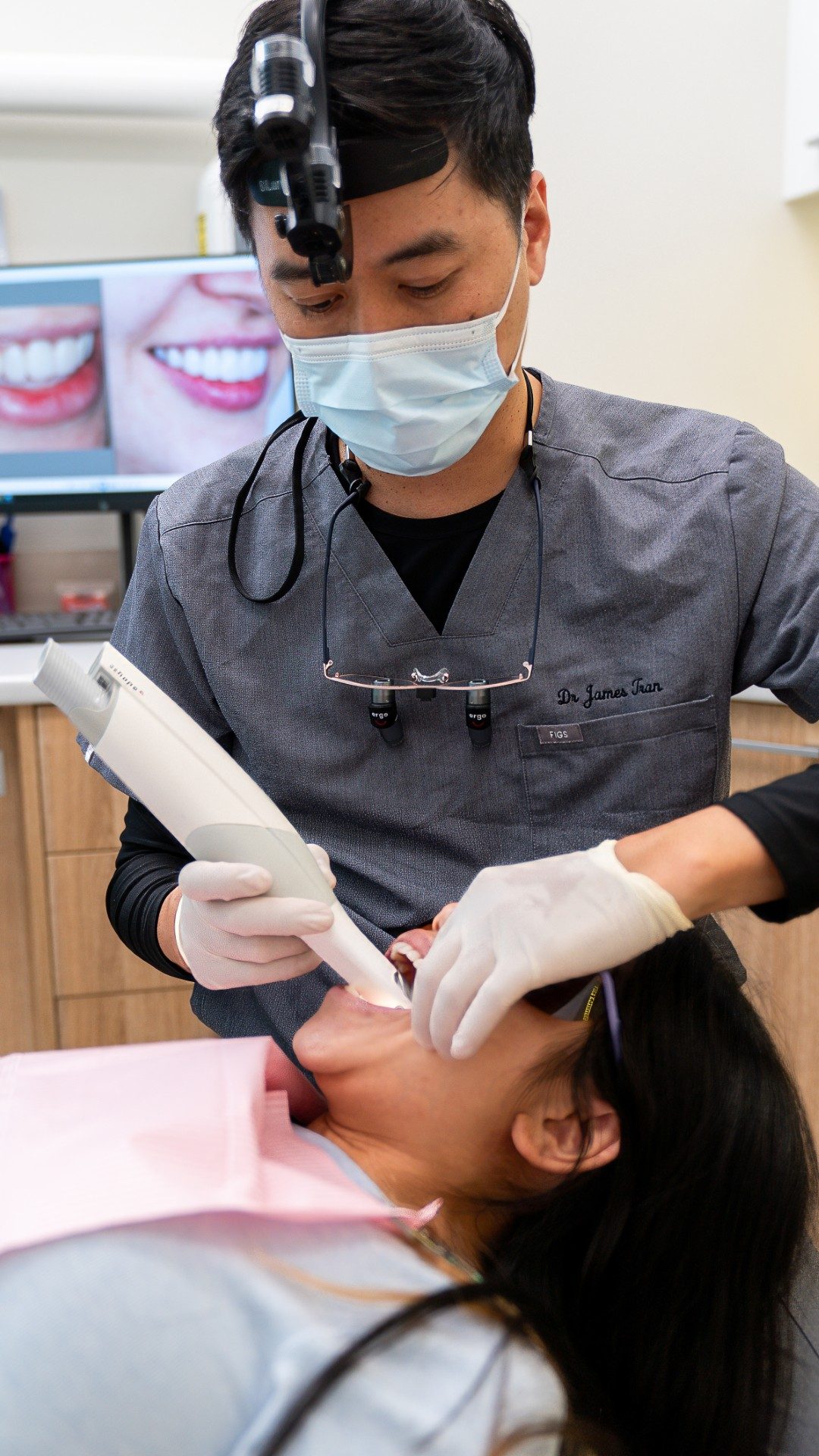
Whitening at Lumi Dental starts with an examination by a dentist, who asks about allergies, past reactions, skin conditions and medicines. If you have reacted to a whitening product before, the team will want to see the ingredient list and any photos. Take-home trays can be made from a 3D scan so they sit closely against the teeth. Lumi Dental does not do allergy testing; where an allergy is suspected, I usually suggest seeing your GP first. Whitening options are named Lumi Home, Lumi Refresh and Lumi Radiance, and the dentist will explain whether any suit you. Questions can go through the contact page.
Questions patients ask
Can you be allergic to teeth whitening?
Yes, but it is uncommon. Most reactions are irritation from peroxide on the gums or lips, which settles with a break. A true allergy may involve a flavour, preservative or glove rather than the peroxide.
Is it an emergency if my lips swell after whitening?
Swollen lips on their own call for prompt medical advice, because healthdirect notes this kind of sign can come before anaphylaxis. Swelling of the tongue or throat, wheeze or difficult breathing is an emergency: use an adrenaline autoinjector if you have one and call 000.
Can I be allergic to my whitening trays?
It is possible, but a sore line along a tray edge is far more often rubbing or trapped gel. Bring the tray so the fit can be checked.
Can I still have teeth whitening if I have a latex allergy?
Usually, yes. ASCIA advises telling dentists well before treatment so latex is not used, so mention it when you book through the contact page.
Is peroxide-free whitening safer if I reacted to peroxide gel?
Not automatically. Peroxide-free products contain other actives and additives, and the evidence on them is more limited. Our article on peroxide-free whitening and PAP compares them with peroxide gel.
Thinking about whitening? Complimentary cosmetic consult in Melrose Park
If you have reacted to a whitening product before, the team at Lumi Dental can look at what happened, check your gums and teeth, and talk through whether whitening suits you. Book a complimentary cosmetic consult at Melrose Central, Melrose Park, or read about teeth whitening at Lumi Dental. Patients visit from Ryde, Parramatta, Ermington, Rydalmere and nearby suburbs, and there is on-site parking.
Sources
- Healthdirect Australia: Anaphylaxis
- Australasian Society of Clinical Immunology and Allergy (ASCIA): Latex allergy
- DermNet: Contact stomatitis
- British Dental Journal (PubMed): Side effects of external tooth bleaching, a multi-centre practice-based prospective study
About the author

Dr James Tran is a general dentist at Lumi Dental in Melrose Park. He holds a BDent from the University of Sydney and a Graduate Diploma in Oral Implants, and is a Member of the International Congress of Oral Implantologists (MICOI).
This article is general information only and is not a substitute for an examination and individual advice from a registered dental practitioner. Suitability for any treatment varies from person to person.







