
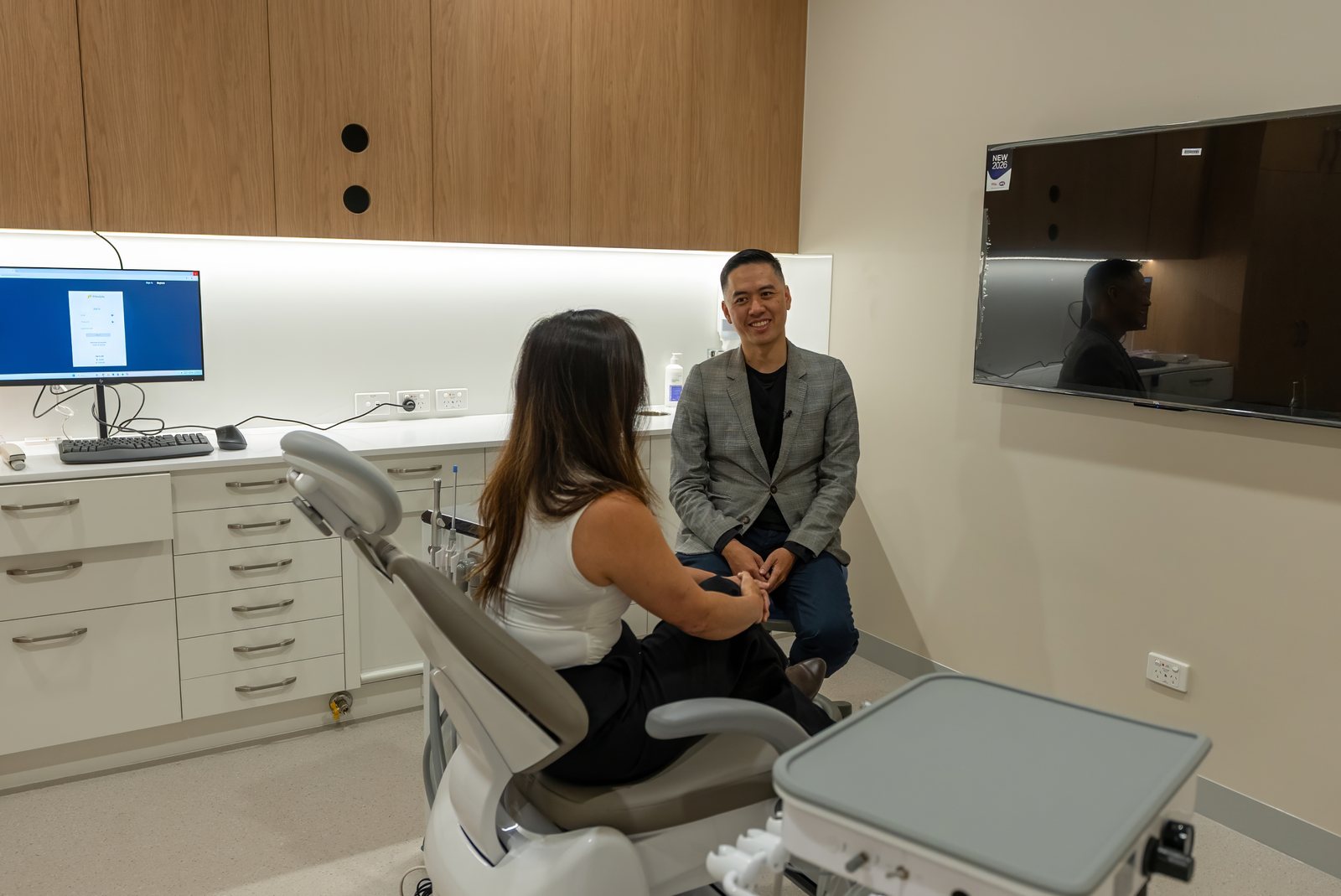

Teeth whitening is usually still possible with perioral dermatitis or eczema around the mouth, but it goes better once the skin has settled, and with well-fitted trays and a small amount of gel so peroxide does not sit on inflamed skin. The skin condition itself is managed by your GP or dermatologist. DermNet, the dermatology reference, lists steroid use by any route, including creams, inhalers and nasal sprays, as the most common association with perioral dermatitis.
Written by Dr James Tran, BDent (University of Sydney), MICOI, GradDip (Oral Implants), general dentist at Lumi Dental in Melrose Park.
The short version
- Perioral dermatitis and lip eczema are skin conditions. Your GP or dermatologist diagnoses and treats them, not your dentist.
- The simple rule: settle the skin first, then whiten with custom trays, a small amount of gel and the excess wiped away.
- Peroxide on skin can sting and leave a temporary white patch, and inflamed or cracked skin may react more.
- Toothpaste flavourings such as mint and cinnamon, and the detergent SLS, are reported causes of lip and perioral reactions. Fluoride is debated.
- Strips tend to put gel closer to the lips and gum edge than a well-made tray.
- If gel does end up on your lips, our guide to gel on your lips or swallowed whitening gel covers what to do.
Perioral dermatitis and eczema around the mouth are different problems
Perioral dermatitis
DermNet describes perioral dermatitis as a relatively common, long-running rash of clustered small red bumps, sometimes with tiny pustules, dry flaky skin, burning or tightness. It most often affects women aged about 20 to 45, though children get it too. A narrow band of skin right next to the lip line is often spared, and the StatPearls medical reference notes the lips themselves are typically not involved.
The cause is not fully understood. Both references describe a strong link with steroids used on or near the face, and list cosmetics, heavy moisturisers, some sunscreens, toothpaste and dental materials among possible contributors.
Eczema of the lips and nearby skin
Here eczema usually means atopic dermatitis, or contact dermatitis, where something touching the skin causes the reaction, either by irritating it directly or through an allergy to one ingredient. Contact reactions often affect the lips themselves, which is called cheilitis.
I cannot tell these apart for you at a dental visit, and you should not rely on a dentist to try. What I can do is look at the lips and skin before whitening, note what is there, and suggest a GP review if it has not been assessed.
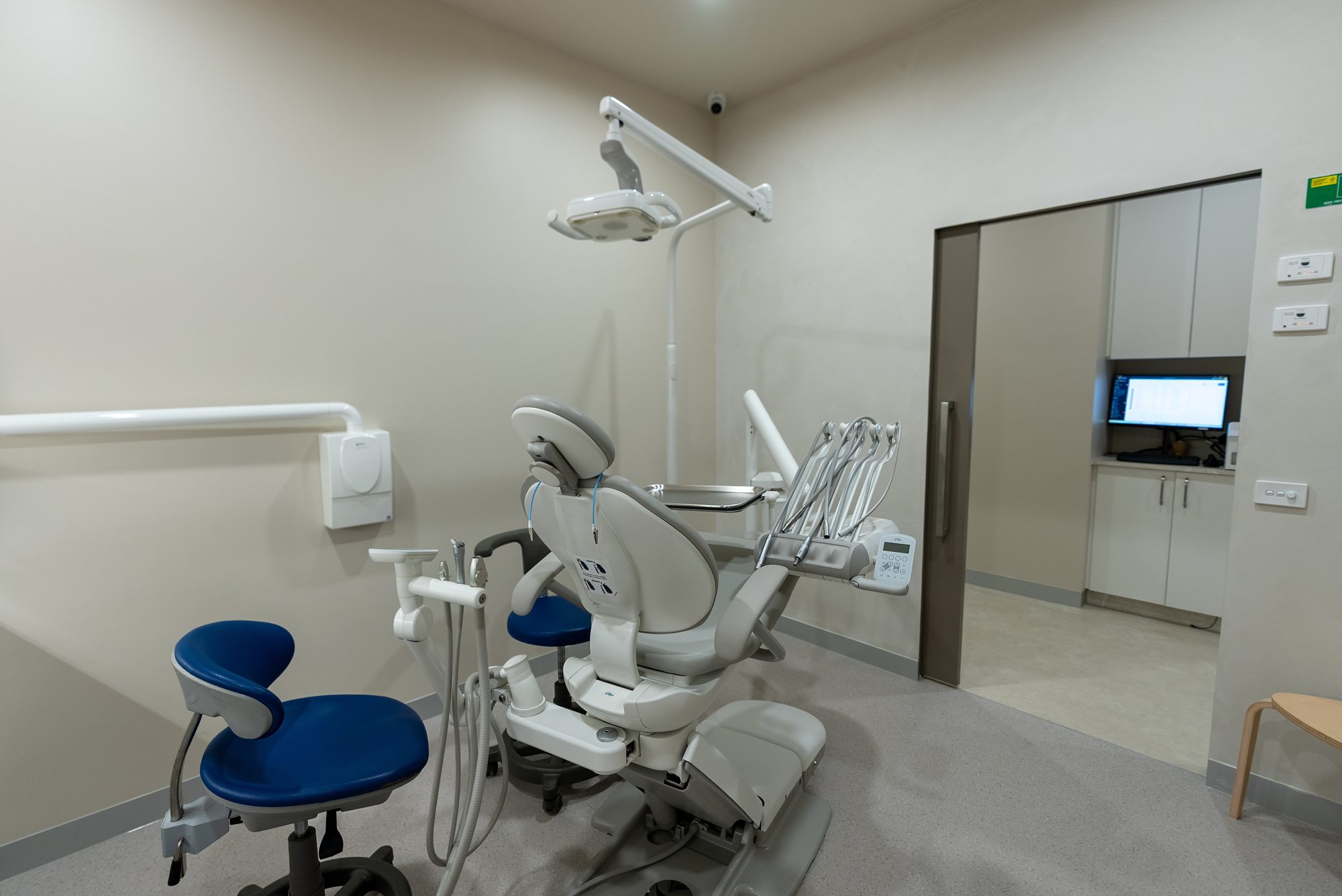
What whitening gel can do to skin that is already inflamed
Whitening gels contain hydrogen peroxide, or carbamide peroxide, which breaks down into hydrogen peroxide. DermNet's hydrogen peroxide page notes that skin contact can cause irritation and temporary bleaching of the skin, and that concentrated solutions can burn. It gives over-the-counter whitening products as up to 6% hydrogen peroxide, and some clinic-only products as up to 35%.
Teeth.org.au, the Australian Dental Association's consumer site, warns that strong gel on the lips, gums or tongue can cause chemical burns that often become ulcers before healing. Skin in a flare is dry, cracked or already reacting, so the same smear of gel is more likely to sting and slower to settle.
Delivery matters too. In a small trial of adolescents comparing custom trays with over-the-counter strips, gum and lip burning was reported mostly in the strip group, which the authors linked partly to how hard strips were to position.
The simple rule: settle the skin first, then whiten with trays
If the skin around your mouth is in a flare, see your GP or dermatologist and wait until it is calm. Then whiten with well-fitted trays, a small amount of gel and the excess wiped off, so peroxide does not sit on sensitive skin.
Calm means no longer weeping, cracked or freshly inflamed, and your doctor is comfortable with you adding a new product near it. Keep using whatever your GP or dermatologist has prescribed unless they tell you otherwise; decisions about creams, including steroid creams, sit with them, not with the dental team.
A custom tray finishes at the gum line, so gel stays on enamel. Our article on how custom whitening trays work explains the fit, and our guide to how much gel to put in your trays shows the small dot per tooth and how to wipe off what squeezes out.
Toothpaste ingredients sometimes linked to rashes around the mouth
DermNet notes that toothpaste reactions are rare given how often toothpaste is used, but that toothpaste is the second most common cause of contact cheilitis after lipstick, and the most common in men. Perioral dermatitis and eczema around the mouth are among the reactions it lists.
Flavourings
Flavourings are described as the main cause of allergic reactions to toothpaste, most often those from mint: spearmint, peppermint, menthol and carvone. Cinnamal, a cinnamon flavouring, and anethole, from star anise and fennel, are also reported.
SLS and tartar-control ingredients
Sodium lauryl sulfate (SLS), the foaming detergent in many toothpastes, can cause irritant dermatitis, especially of the skin around the mouth, according to DermNet. High levels of pyrophosphates in tartar-control toothpaste are also listed as a cause of irritant cheilitis. Our article on SLS-free toothpaste covers the research on SLS.
Fluoride
StatPearls says fluorinated toothpaste has been associated with perioral dermatitis, citing an Australian case report involving a high-fluoride toothpaste. The evidence is thin compared with steroids, and fluoride is one of the most effective protections against decay. If your dermatologist suspects it, talk to your dentist about protecting your teeth before you change anything.
| Possible trigger | What it may do | What to try, with your doctor's guidance |
|---|---|---|
| Steroid creams, inhalers or nasal sprays | The most common association with perioral dermatitis | Keep using prescribed medicines and ask your GP about the rash; DermNet notes rinsing the face and mouth after inhaled or nasal steroids may help |
| Mint or cinnamon flavourings | Allergic cheilitis or eczema around the mouth | Patch testing through a dermatologist, then products without the culprit |
| SLS or tartar-control toothpaste | Irritation of the lips and nearby skin | A milder toothpaste that still contains fluoride |
| Whitening gel on the skin | Stinging and temporary white patches | Wait for calm skin, use trays, load less gel, wipe off the excess |
| Thick, occlusive balms and creams | DermNet notes these can worsen perioral dermatitis | Ask your dermatologist which balm suits your skin |

Strips, trays or in-chair whitening on sensitive skin
Whitening strips
Strips are one size for everyone. The gel often reaches the gum edge and can press against the inside of the lips, which makes them the least controlled option for reactive skin.
Take-home trays
Trays made from a scan of your teeth hold gel on the enamel. In my experience, people who get skin irritation from trays have usually overfilled them, so loading matters more than gel strength. Keep a tissue nearby and check the corners of your mouth once the trays are in.
In-chair whitening
In-chair whitening uses stronger gel, so the gums are covered with a protective barrier and the lips are held back with a retractor. The gel should not reach the skin, but having dry or cracked lips stretched for a session can be uncomfortable, especially at the corners. Our article on what to expect from in-chair whitening describes the set-up.
Lip balm, barriers and patch testing
DermNet notes that occlusive creams and ointments, including petroleum-based ones, can worsen perioral dermatitis, so a thick balm that soothes chapped lips may not suit everyone. Ask your GP or dermatologist which product suits your skin, and bring it to your dental visit.
If an allergy is suspected, patch testing through a dermatologist is the usual first test. DermNet notes the standard series often misses toothpaste allergens, so an extended toothpaste series and your own products are commonly added. Bring your toothpaste, mouthwash and whitening product with their ingredient lists. Once a culprit is avoided, the reaction usually settles within a few weeks.

How we approach this at Lumi Dental
At Lumi Dental the dentist examines the teeth and gums and looks at the lips and skin around the mouth before whitening is planned. If there is an active rash, the usual suggestion is a review with your GP or dermatologist and whitening timed for when the skin is calm. Trays are made from an in-house 3D intraoral scan, and the team shows you how much gel to load. The whitening options are named Lumi Home, Lumi Refresh and Lumi Radiance. You can read more about cosmetic dentistry at Lumi Dental.
Questions patients ask
Can I whiten my teeth if I have perioral dermatitis?
Often, yes, once the rash has settled and your doctor is comfortable with it. Trays with a small amount of gel keep peroxide on the teeth and off the skin.
Can teeth whitening cause a rash around the mouth?
Gel on the skin can sting and leave a temporary white patch, and a reaction to a flavouring or other ingredient is possible. If a rash appears, stop the product and see your GP with the packaging.
Should I stop my steroid cream before whitening?
Not on a dentist's advice. Any change to a cream or other medicine is a decision for your GP or dermatologist, so tell your dentist what you use and whitening can be timed around it.
Is my toothpaste causing my perioral dermatitis?
It can be one factor, though not the most common. Flavourings and SLS are the ingredients most often reported, and patch testing is the reliable way to find out. If you are also on acne treatment, our article on whitening during isotretinoin treatment covers dry lips.
Are whitening strips gentler than trays for sensitive skin?
Usually not. In a small trial, gum and lip burning was reported mostly with strips. Custom trays give more control, which a complimentary cosmetic consult can help you plan.
Thinking about whitening? Complimentary cosmetic consult in Melrose Park
If you have perioral dermatitis or eczema around your mouth and would like whiter teeth, the team at Lumi Dental can check your lips and skin, talk through timing and show you how to use trays safely. Book a complimentary cosmetic consult at Melrose Central in Melrose Park, or read more about teeth whitening at Lumi Dental. Patients visit from Ryde, Parramatta, Ermington and Rydalmere, with on-site parking.
Sources
- DermNet: Periorificial dermatitis
- DermNet: Contact reactions to toothpaste and other oral hygiene products
- StatPearls (NCBI Bookshelf): Perioral Dermatitis
- PMC: Controlled clinical trial addressing teeth whitening with hydrogen peroxide in adolescents, a 12-month follow-up
About the author

Dr James Tran is a general dentist at Lumi Dental in Melrose Park. He holds a BDent from the University of Sydney and a Graduate Diploma in Oral Implants, and is a Member of the International Congress of Oral Implantologists (MICOI).
This article is general information only and is not a substitute for an examination and individual advice from a registered dental practitioner. Suitability for any treatment varies from person to person.







