


You pass floss around your implant crown and it comes out smelling sour, or you notice a salty, metallic taste on one side of your mouth that keeps coming back. The titanium post in the bone is rarely the problem. The odour usually comes from bacteria sitting on the crown, the connecting parts or the gum around them, and most of the causes can be found in a single visit and treated.
Written by Dr James Tran, BDent (University of Sydney), MICOI, GradDip (Oral Implants), general dentist at Lumi Dental in Melrose Park.
healthdirect describes waking with bad breath as normal, while breath that does not go away may point to another problem. The same applies to an implant. A smell that clears after a proper clean is a home care issue. A smell or taste that is back within hours, or comes with bleeding, swelling or movement, needs a dentist to look at it. The clues below can help you work out which group you are in before you book.
If the floss smells but the gum looks healthy, food is probably trapped
An implant crown sits on a narrower post than the root of a natural tooth, so there is often a small ledge just under the gum where food can pack in. The contact between the crown and the tooth next to it can also open up slightly over time as natural teeth move, and fibrous food such as meat then wedges in with every meal.
The pattern is fairly typical: the smell appears a few hours after eating and goes away once you floss or use a water flosser. If that is what you notice, careful daily cleaning in that spot often settles it. If food keeps packing in, the crown can sometimes be adjusted or remade to close the gap. Our article on food getting stuck around an implant crown covers this in more detail.
If the gum bleeds or looks puffy, the tissue is inflamed
Plaque collects on an implant crown and on the connecting part just under the gum in the same way it does on a tooth. When it is left there, the gum around the implant becomes red, shiny or swollen and bleeds when brushed. This is called peri-implant mucositis. There is inflammation but no loss of the supporting bone, and it can usually be reversed with a professional clean and better home care.
It is common. A systematic review and meta-analysis for the American Academy of Periodontology and Academy of Osseointegration (Galarraga-Vinueza and colleagues, Journal of Periodontology, 2025) pooled 102 studies and estimated that about 46 per cent of implant patients had mucositis. Bleeding around an implant is not a reason to panic, but it is a reason to act.
If there is pus, swelling or the gum is shrinking, the bone may be affected
When inflammation around an implant continues, it can spread to the bone that holds the implant in place. This is peri-implantitis. The same 2025 review estimated it in about 21 per cent of patients, and named a history of gum disease, smoking, diabetes and alcohol consumption as risk indicators.
Signs to look for include pus when you press the gum, a swelling or small pimple on the gum, a bad taste that never fully clears, gum that is pulling back so more of the crown or metal shows, and sometimes a dull ache. Peri-implantitis is easier to manage when it is found early, so these signs are worth a prompt appointment rather than a wait-and-see approach. Treatment options are set out in our guide to peri-implantitis treatment.
If the taste is sour or salty and nothing shows, check the connection
Most implants are made in two parts: the implant in the bone and an abutment that carries the crown, held together by a small screw. A narrative review in Materials (Lauritano and colleagues, 2020) looked at 33 studies of this join and concluded that every connection type showed some micro-gap and bacterial leakage, although some designs performed better than others.
If the screw loosens, the crown can move very slightly when you bite. Some people notice a click, a sense that the crown feels different, or an unpleasant taste on that side with no food trap to explain it. Do not try to tighten or wiggle the crown yourself. A loose screw-retained crown can usually be removed, cleaned and refitted with a new screw. Our comparison of screw-retained and cement-retained implant crowns explains how each type is handled.
If it began months after a cemented crown, leftover cement is a suspect
Crowns that are cemented onto an abutment can leave a thin rim of excess cement under the gum, where it is hard to see and easy for plaque to cling to. A study using a dental endoscope (Wilson, Journal of Periodontology, 2009) found excess cement at 34 of 42 implants with signs of peri-implant disease, and none at 20 healthy control implants. Thirty days after the cement was removed, 25 of 33 treated sites showed no clinical or endoscopic signs of inflammation.
The study was small and came from a single periodontal practice, so it does not tell us how often this happens overall. It does show why a dentist checks the crown margin carefully when bleeding and odour persist despite good cleaning.
In the first couple of weeks after surgery, some odour is expected
While the gum heals after implant surgery, a mild smell or taste from the site can occur and should fade as healing progresses. Follow the aftercare instructions you were given, and contact the practice if the smell gets stronger, or you notice increasing pain, swelling or discharge.
Other sources of bad breath still apply to people with implants. healthdirect lists a dry mouth among the things that can contribute, and a white coating on the tongue can go along with bad breath, so an implant is not always the cause of the smell even when it is the first thing you suspect.
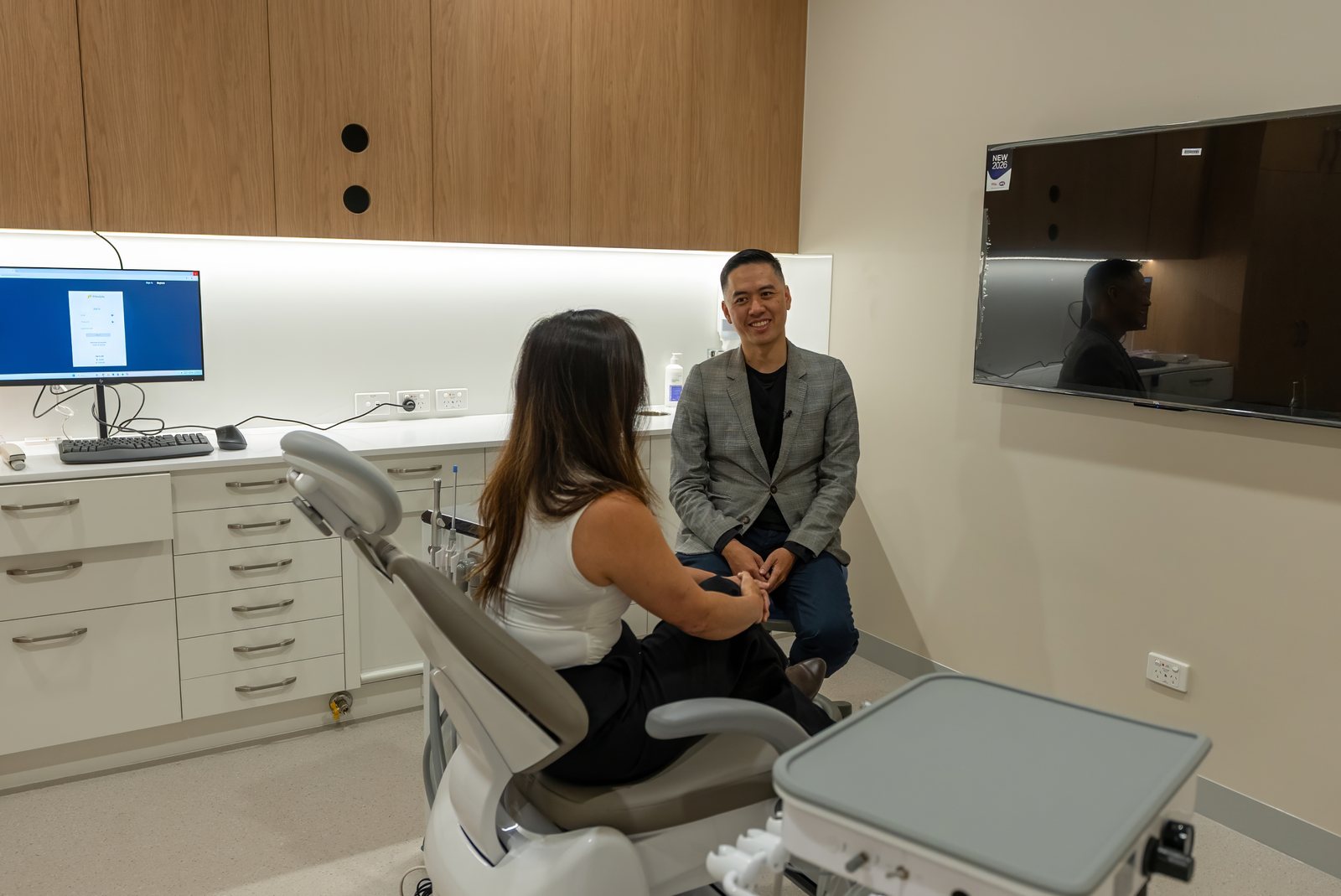
Cleaning around an implant at home
An implant crown needs different tools rather than harder brushing. The tools most often recommended are:
- a single-tufted brush, which has one small bundle of bristles and can follow the edge of the crown where it meets the gum
- interdental brushes in the size your dentist or OHT recommends, for the space beside the implant
- a floss threader or thicker implant floss for bridges and areas a brush cannot reach
- a water flosser as an extra rinse, not a replacement for brushing
Avoid metal picks or anything sharp along the crown edge. healthdirect suggests sugar-free gum to help saliva flow and, if you use a mouthwash, one containing peppermint, zinc or chlorhexidine. Chlorhexidine can stain teeth when used for long periods, so check with your dentist or pharmacist before using it for more than a short course. healthdirect also notes that tongue cleaning does not treat halitosis on its own, although it can reduce bacteria; our article on tongue cleaning and bad breath shows a gentle technique. Our guide on how to clean dental implants at home walks through each tool.
What happens at an implant check
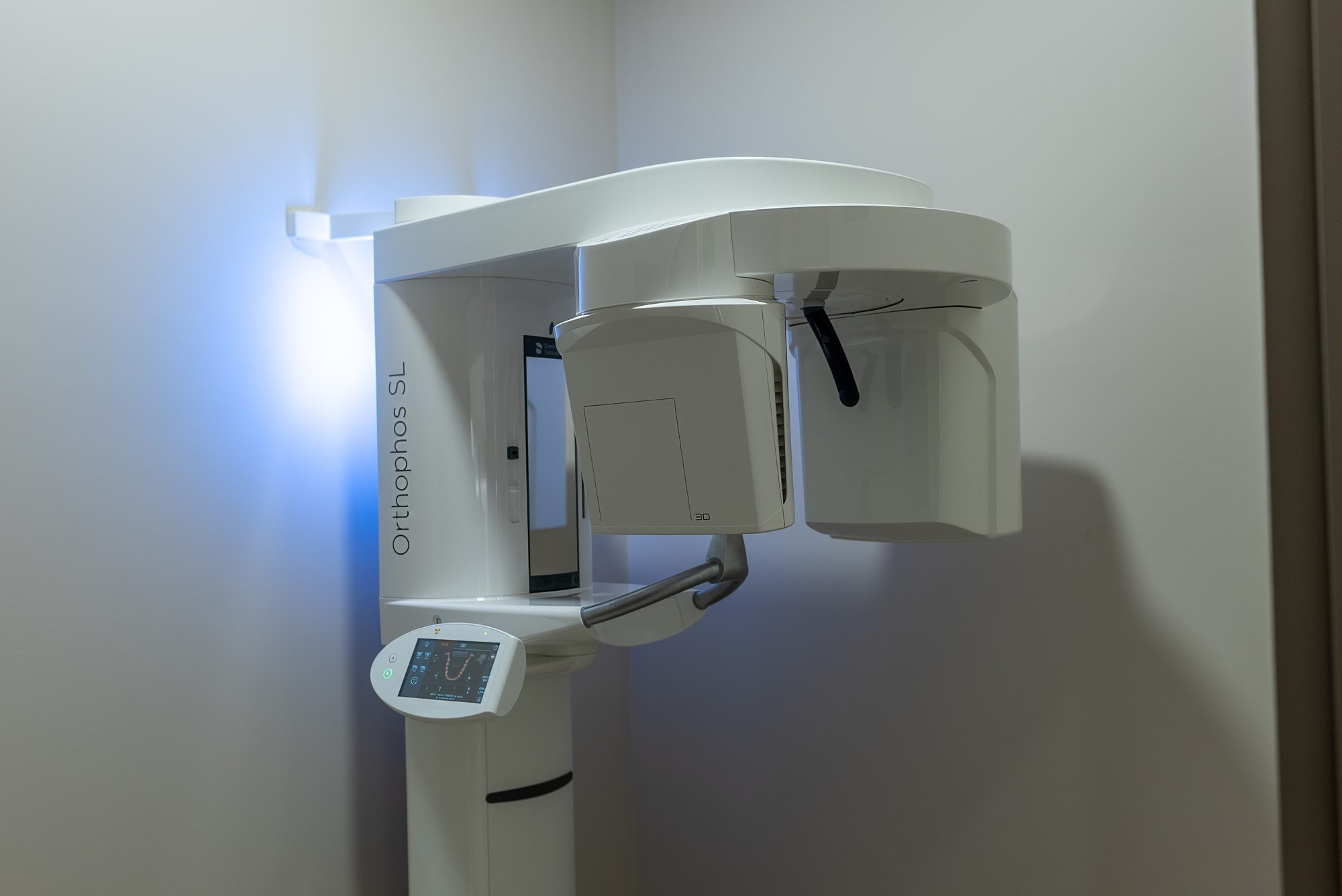
The dentist will look at the colour and shape of the gum around the implant, gently measure the space between gum and crown with a probe, and note any bleeding or discharge. They will check the contact with the neighbouring tooth, test whether the crown moves, and look at the crown edge for tartar or cement. An X-ray shows the bone level around the implant and can sometimes reveal cement or a gap at the connection. A 3D X-ray may be taken when more detail is needed.
Treatment depends on the finding. Plaque, tartar and mucositis are usually managed with a professional implant clean using instruments suited to implant surfaces, plus changes to home care. Peri-implantitis may need deeper cleaning of the area, sometimes surgery, and closer follow-up, and more complex cases may be referred to a registered periodontist. A loose screw is replaced and tightened to the manufacturer's setting. Cement is removed, and a crown that traps food may be reshaped or replaced.
A bad smell does not usually mean the implant is failing
Most odour around implants comes from trapped food, plaque or inflamed gum while the implant itself stays firm. An implant that is failing tends to show different signs, such as the implant itself moving, ongoing pain or bone loss seen on an X-ray. Our article on dental implant failure signs explains how the two differ.
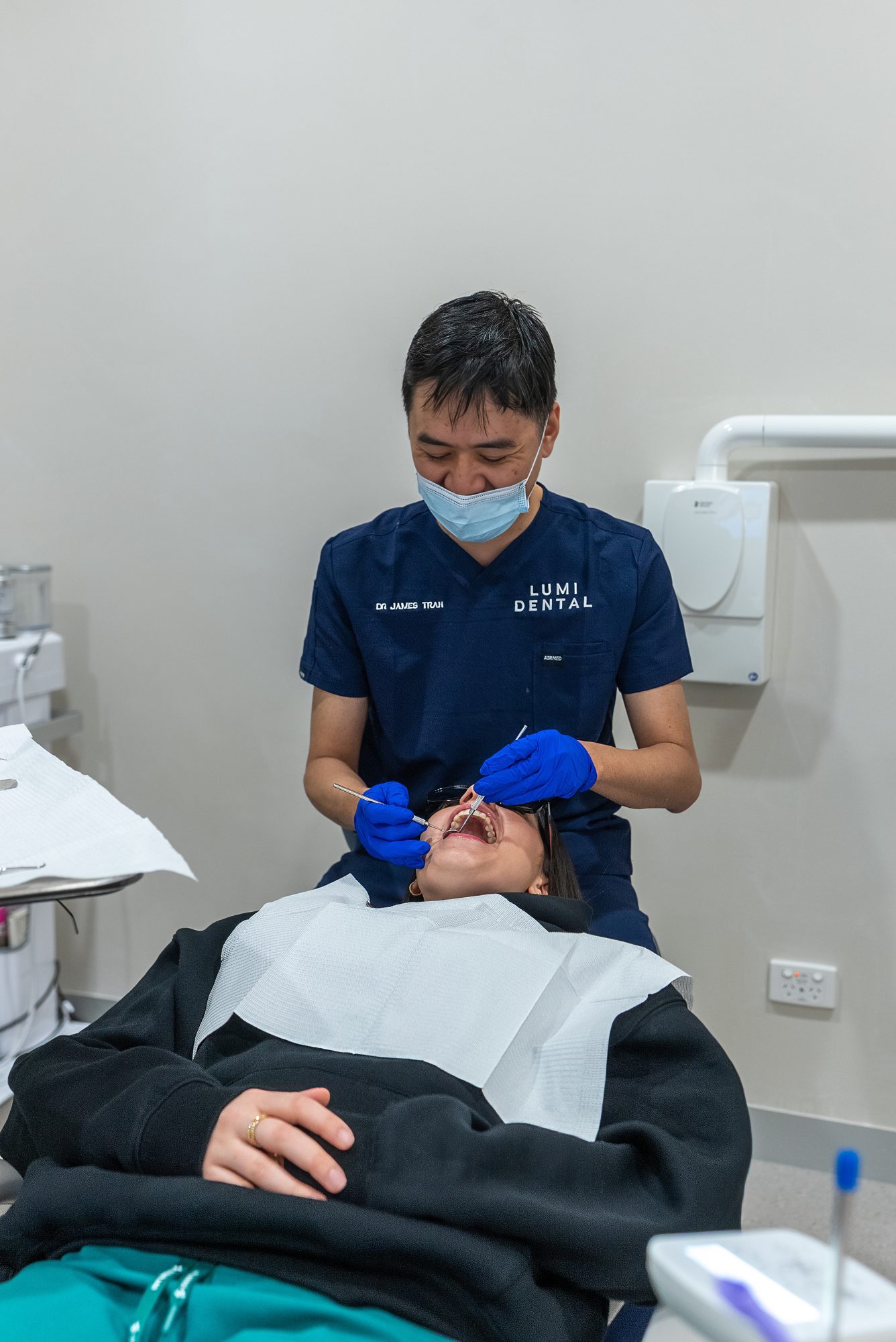
Book a check if any of these apply
Make an appointment if the smell or taste has lasted more than a week despite careful cleaning, if the gum around the implant bleeds, if you see pus or a swelling, if the crown feels loose, clicks or sits differently when you bite, if biting is painful, or if the gum seems to be pulling away. None of these automatically means the implant will be lost, and earlier attention gives more options.
Implant care at Lumi Dental
At Lumi Dental a dentist examines an implant that smells or tastes wrong and makes the diagnosis, using our in-house 3D X-ray when the bone needs a closer look. Our oral health therapists provide implant maintenance cleans and gum care and show you which brushes fit your spaces. If your implant was placed at another practice, bring any paperwork that records the implant system, as the parts and tools differ between systems.
If your implant has started to smell, taste sour or bleed, contact Lumi Dental in Melrose Park to arrange a check, or read more about dental implants at the practice. Free consults are available for implant treatment; see our current offers for details.
Sources
- healthdirect: Halitosis (bad breath)
- Galarraga-Vinueza ME and colleagues. Prevalence, incidence, systemic, behavioral, and patient-related risk factors and indicators for peri-implant diseases: an AO/AAP systematic review and meta-analysis. Journal of Periodontology, 2025
- Lauritano D and colleagues. The impact of implant-abutment connection on clinical outcomes and microbial colonization: a narrative review. Materials, 2020
- Wilson TG Jr. The positive relationship between excess cement and peri-implant disease: a prospective clinical endoscopic study. Journal of Periodontology, 2009
About the author

Dr James Tran is a general dentist at Lumi Dental in Melrose Park. He holds a BDent from the University of Sydney and a Graduate Diploma in Oral Implants, and is a Master of the International Congress of Oral Implantologists (MICOI).
This article is general information only and is not a substitute for an examination and individual advice from a registered dental practitioner. Suitability for any treatment varies from person to person.








