
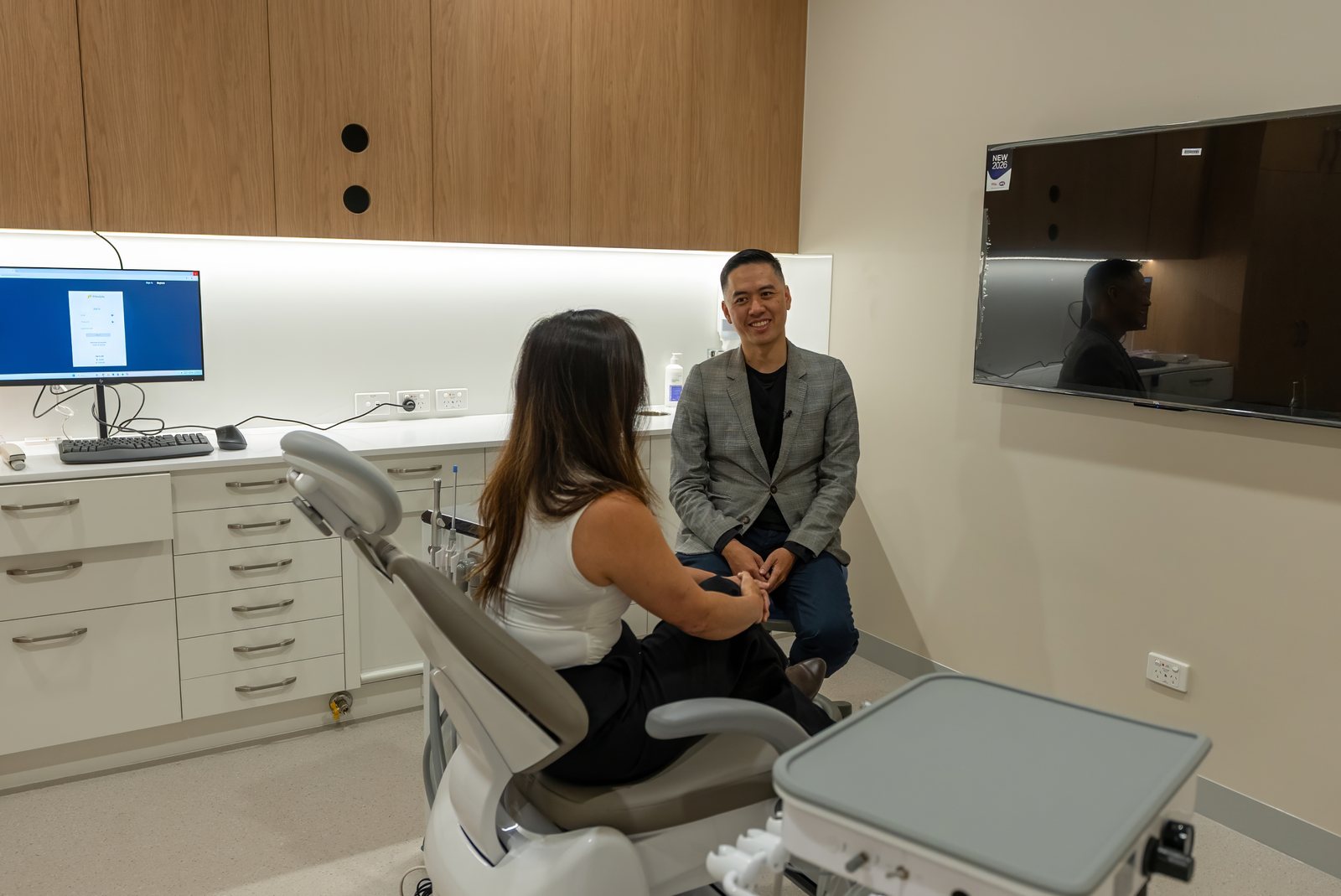

Children with eczema should keep using a fluoride toothpaste, but if the skin around the mouth flares after brushing, a milder flavour or a toothpaste without a strong foaming agent is often worth trying. Eczema, also called atopic dermatitis, is common: ASCIA, the Australasian Society of Clinical Immunology and Allergy, reports that it affects around 1 in 5 children under two. Small changes to the brushing routine, and a word with the dental team before each visit, can make a child with eczema more comfortable at home and in the chair.
Written by Dr James Tran, BDent (University of Sydney), MICOI, GradDip (Oral Implants), general dentist at Lumi Dental in Melrose Park.
The short version
- Fluoride toothpaste protects teeth and should not be stopped because of eczema. Change the toothpaste, not the fluoride.
- Mint and cinnamon flavourings and the foaming agent sodium lauryl sulfate (SLS) are the toothpaste ingredients most often linked with lip and skin reactions.
- Wiping the mouth with a soft wet cloth and applying your child's usual moisturiser after brushing can help protect the skin.
- Asthma, hay fever and mouth breathing often come with eczema and can dry the mouth.
- Food allergies, latex and action plans are covered in our article on children with food allergies at the dentist.
- Your child's GP, dermatologist or allergist manages the skin. The dental team plans around their advice.
Eczema basics for parents
ASCIA describes eczema as a condition in which the skin does not hold moisture well, so it dries out easily and becomes more open to irritants and allergens. Itching leads to scratching, which leads to more itch, and that cycle can disrupt sleep. Infantile eczema usually improves by five years of age, though childhood eczema may follow or start between two and four.
The Royal Children's Hospital Melbourne notes that babies tend to get a dry, red rash on the face, while older children more often have patches in the creases of the elbows, knees, wrists and ankles. The face matters for dental care because the skin around the mouth is exactly where toothpaste, saliva and food land every day.
Eczema runs with asthma and hay fever in families, a tendency the RCH calls atopy, and ASCIA notes that many people with eczema have or develop other allergies such as hay fever, asthma or food allergy.
Eczema around the mouth and lips
Inflamed, dry, scaly lips are called cheilitis. DermNet, the New Zealand dermatology resource, lists atopic dermatitis itself and irritant or allergic contact reactions as the major causes of eczematous cheilitis. The skin just outside the lip line and the edge of the lip are affected most often, and the corners of the mouth can crack as well.
Lip licking
DermNet names lip licking as the main cause of irritant lip dermatitis. Children with dry lips lick them for relief, saliva dries the skin further and a red ring can form around the mouth. A thick plain moisturiser and gentle reminders usually help more than telling a child to stop.
Toothpaste reactions
DermNet's page on contact reactions to toothpaste says flavourings are the main cause of allergic reactions to toothpaste. The most frequent come from the mint family, including spearmint, peppermint, menthol and carvone, with cinnamal, a cinnamon flavouring, also reported. SLS, the detergent that makes toothpaste foam, can cause irritant dermatitis, especially of the skin around the mouth. DermNet stresses that such reactions are rare.
The RCH lists toothpaste among common irritants for children with eczema, alongside dummies, dribbling and food around the mouth, and suggests a product without SLS. Our article on SLS-free toothpaste explains how to read the label.
The single rule: keep the fluoride, change the toothpaste
If the skin around your child's mouth flares after brushing, start by switching to a fluoride toothpaste with a milder flavour or without SLS, and let the GP or dermatologist manage the skin itself. Do not stop fluoride toothpaste, and do not stop or change any cream your child's doctor has prescribed.
In my experience, parents sometimes drop toothpaste altogether when the lips are sore, and a few months later we find early decay. A toothpaste swap is a much smaller change, and it keeps the protection fluoride gives.
A brushing routine for sensitive skin
- Use the right amount for your child's age, a smear for younger children and a pea-sized amount for older ones, as set out in our guide to how much fluoride toothpaste children need.
- Choose a mild or unflavoured fluoride toothpaste, and avoid strong mint or cinnamon flavours if they seem to sting.
- Keep the paste on the brush and teeth rather than smeared over the lips.
- Spit out the excess, then wipe the skin around the mouth with a soft wet cloth.
- Apply your child's usual moisturiser around the mouth afterwards.
That last step mirrors RCH advice for food and dribble: wash the mouth area with a soft, wet towel after eating and reapply a thick moisturiser, or put a barrier ointment on beforehand. If a rash keeps returning, DermNet notes that patch testing, arranged by a doctor, is the first test for a suspected toothpaste allergy.
Asthma, hay fever, mouth breathing and a dry mouth
Because eczema, asthma and hay fever so often appear together, many children with eczema also use inhalers or have a blocked nose. Breathing through the mouth dries the teeth and gums, and saliva is one of the mouth's main defences against decay. Our articles on mouth breathing in children and asthma inhalers and oral health cover what to look for and how to rinse after a preventer.
Some children take antihistamines for itch or hay fever, and healthdirect lists dry mouth among the side effects of sedating antihistamines. Never stop a medicine because of dry mouth; mention it to the dental team and the prescriber instead.
A small Brazilian study of 92 children and teenagers with atopic dermatitis linked decay with inhaled steroid use and poorer plaque control. It shows an association, not a cause, but supports good brushing and regular checks.
Itchy nights, snacks and drinks
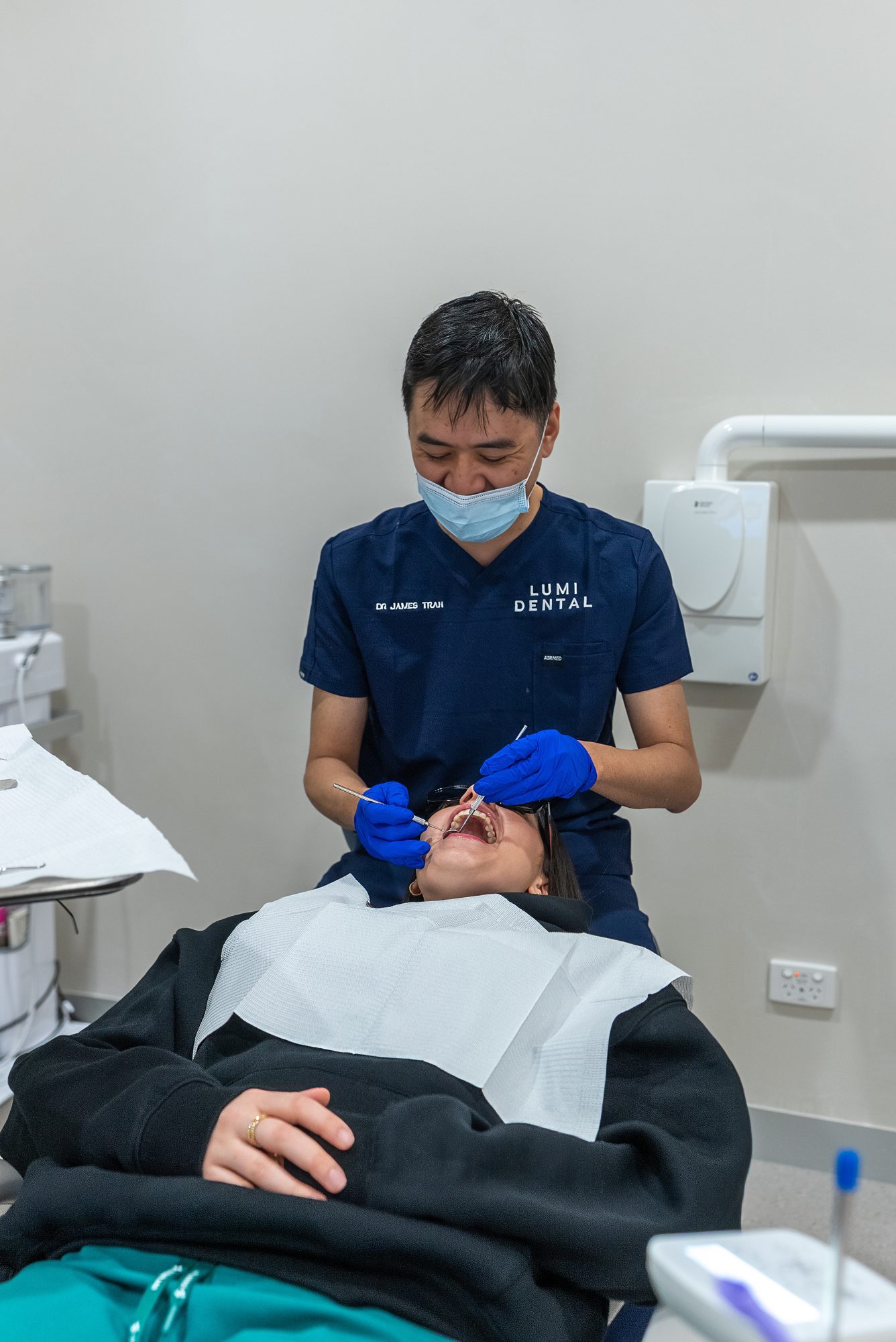
The RCH notes that eczema can keep babies awake at night. A child who wakes scratching may be offered a drink or snack to settle, and over time that adds up for teeth. Water is the safest drink after the evening brush, and a dental visit is a good time to talk about easing night-time milk or juice. Our guide to your child's first dental visit explains when checks should begin.
What helps at home and what to mention at the visit
| Eczema-related issue | What helps at home | What to mention at the visit |
|---|---|---|
| Dry, cracked lips or corners of the mouth | Thick plain moisturiser; fewer lip licks | Ask for lip balm or ointment before instruments touch the lips |
| Rash around the mouth after brushing | Milder flavour or SLS-free fluoride toothpaste; wipe and moisturise | Bring the toothpaste tube so the team can read the label |
| Dry mouth from mouth breathing or antihistamines | Sips of water; keep up brushing | List every medicine, including antihistamines |
| Asthma preventer inhaler | Rinse and spit after each dose | Name the inhaler and how often it is used |
| Waking at night with itch | Water only after the evening brush | Any night-time milk or juice |
| Food or latex allergy | Follow the ASCIA Action Plan | Every allergen, the action plan and any adrenaline device |
At the dental visit
Tell the team about the eczema and any allergies when you book, and again in the chair. A few points help:
- Bring your child's own moisturiser or lip ointment. Applying it to the lips before the check helps when the skin is cracked.
- Lip retractors and cheek stretchers, used for photos or some treatments, can pull on sore lips. Ask whether they are needed, and for extra lubrication if they are.
- If your child has a latex allergy, say so clearly so that non-latex gloves, such as nitrile, are used.
- Polishing pastes and fluoride varnishes come in different flavours. Ask for a mild option if mint has caused trouble before.
- If the skin is badly flared or weeping, ask whether a routine check can wait a week or two, while urgent problems are seen straight away.
DermNet describes a reported case in which a person who had reacted to mint toothpaste later had immediate lip swelling after a mint-flavoured dental cleaner. That is rare, but it shows why naming a suspected flavour reaction matters.
How we approach this at Lumi Dental
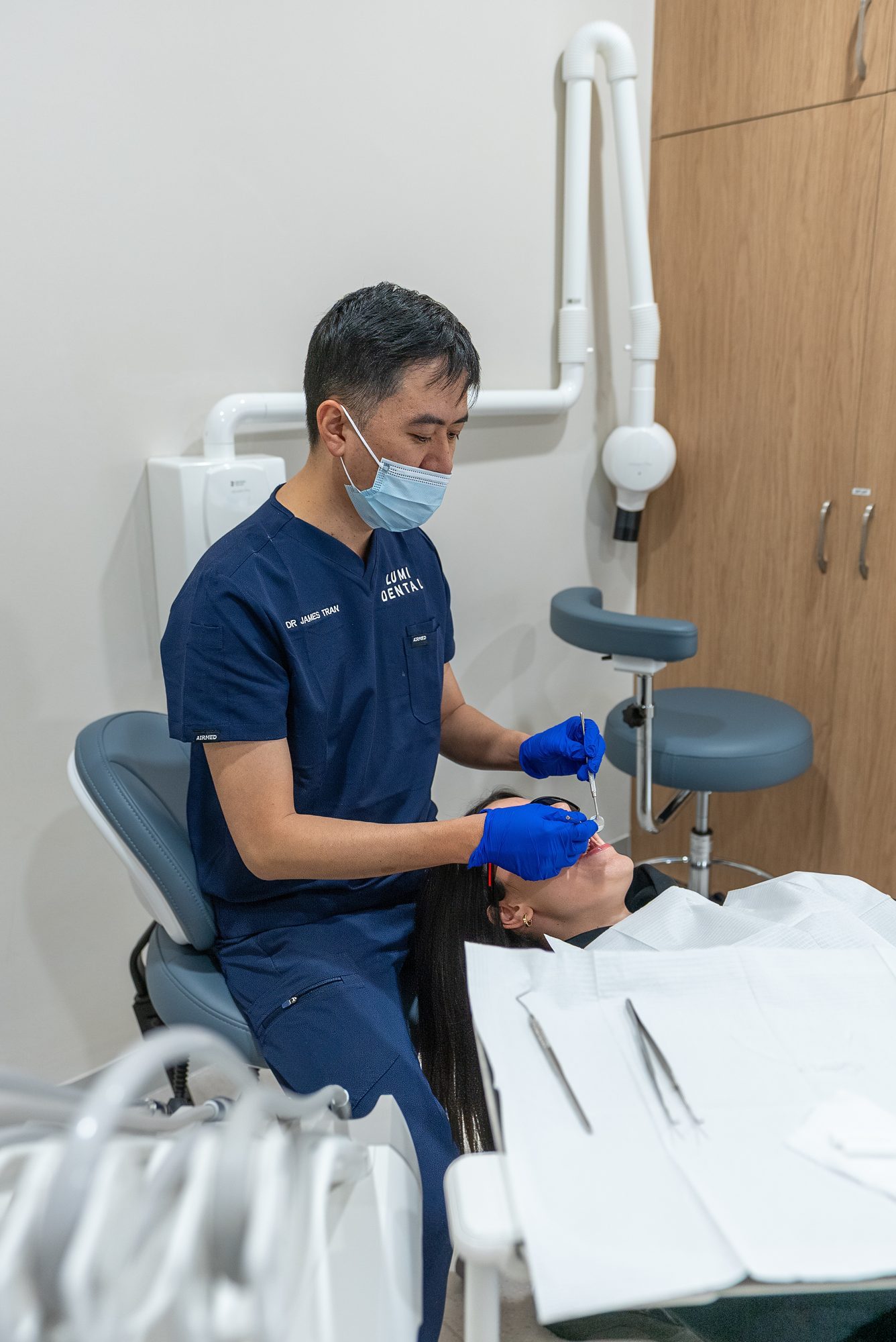
At Lumi Dental in Melrose Park, the dentist examines your child's teeth, gums and lips, and the oral health therapists help families choose a toothpaste and routine that suits sensitive skin while keeping the fluoride. The team checks product ingredients against your child's allergies and works around the treatment set by the GP, dermatologist or allergist. For children who need treatment under general anaesthetic, Lumi Dental refers to a paediatric dentist or hospital service. The whole practice accepts the Child Dental Benefits Schedule for eligible children. Read more about children's dentistry at Lumi Dental.
Questions patients ask
Can toothpaste cause eczema around the mouth?
It can, though it is uncommon. DermNet lists flavourings, especially mint, and the foaming agent SLS as the usual culprits. A doctor can arrange patch testing if a reaction keeps returning.
What toothpaste is best for a child with eczema?
A fluoride toothpaste with a mild flavour, and often one without SLS, suits many children with eczema. Use the amount recommended for your child's age.
Should my child stop fluoride toothpaste if their lips are sore?
No. Fluoride protects against decay, so change the flavour or brand instead. Ask your GP or dermatologist about the lips themselves.
Why does my child with eczema always have chapped lips?
Eczema can affect the lips directly, and lip licking makes it worse. A thick plain moisturiser applied often, and a check with your GP if it persists, usually help.
Are dental check-ups for children with eczema covered by Medicare?
Eligible children can use the Child Dental Benefits Schedule for check-ups and many treatments. See how the CDBS works at Lumi Dental.
Book your child's check-up at Lumi Dental, Melrose Park
If your child has eczema, the team at Lumi Dental can check their teeth and lips, help you choose a toothpaste that suits their skin and note any allergies before treatment. Read about children's dentistry in Melrose Park and the Child Dental Benefits Schedule. Families visit from Ryde, Parramatta, Ermington and Rydalmere, with on-site parking at Melrose Central.
Sources
- ASCIA: Eczema (atopic dermatitis) fast facts
- The Royal Children's Hospital Melbourne: Eczema (atopic dermatitis)
- DermNet: Contact reactions to toothpaste and other oral hygiene products
- healthdirect: Antihistamines
About the author

Dr James Tran is a general dentist at Lumi Dental in Melrose Park. He holds a BDent from the University of Sydney and a Graduate Diploma in Oral Implants, and is a Member of the International Congress of Oral Implantologists (MICOI).
This article is general information only and is not a substitute for an examination and individual advice from a registered dental practitioner. Suitability for any treatment varies from person to person.







