


Clear aligners during pregnancy are not the problem: the trays themselves carry no known risk to a pregnancy, and the Australian Dental Association's consumer site teeth.org.au says it is safe to have dental treatment while pregnant. What changes is the plan around the trays: gum care, nausea, scans and X-rays, and the timing of appointments. A review in a PubMed Central journal found no reports of orthodontic force harming a mother or baby, while warning that tooth movement should ideally not continue through active gum inflammation. The real question is how to keep the gums healthy enough to keep the trays in.
Written by Dr James Tran, BDent (University of Sydney), MICOI, GradDip (Oral Implants), general dentist at Lumi Dental in Melrose Park.
The short version
- Aligners are thin shells of medical-grade polymer, usually polyurethane or PET-G; a systematic review found them generally safe.
- Pregnancy hormones make gums react more strongly to plaque; pregnancy gingivitis has been reported in up to 60 to 75 per cent of pregnancies, and a tray holds plaque against the gum.
- After vomiting: tray out, rinse mouth and tray with water, no brushing for about an hour, as teeth.org.au advises.
- A 3D scan is a camera, not an X-ray. Dental X-rays can be taken in pregnancy where needed, according to teeth.org.au, and the second trimester is usually the most comfortable time for longer visits.
- Already in treatment: tell your provider and usually keep going. Starting: possible, but bleeding gums come first. Our guide to dental care during pregnancy covers the wider picture.
- Breastfeeding is not a barrier to aligners or retainers; whitening is the part teeth.org.au says to leave until after both.
The single rule: the aligner is fine, the plan changes
In my experience most pregnant patients who ring about their aligners are worried about the plastic, which is the part that needs the least worry. A pregnancy changes the gums, the stomach, the gag reflex and how long anyone wants to lie flat in a chair. The trays stay in; the review schedule, hygiene plan and timing of scans get adjusted around you.
What aligners are made of, and what pregnancy does not change
A clear aligner is a thermoformed or printed shell of medical-grade polymer, most often polyurethane or polyethylene terephthalate glycol (PET-G), according to a systematic review of aligner materials in a PubMed Central journal. That review found aligners generally safe, with mild irritation of the lining of the mouth the most reported side effect. It notes that many aligners are now made with plastics described as BPA-free, while adding that small amounts of other compounds can leach under heat or acid. The practical lessons are old ones: never clean a tray in hot water, and rinse it after vomiting.
On the force itself, a review of hormonal changes and orthodontic treatment in pregnancy and lactation found no reports of adverse effects on mother or fetus. Most of the data come from animal studies, so the fair summary is that nothing suggests harm, not that harm has been ruled out by large human trials.
What pregnancy changes: the gums come first
teeth.org.au explains that hormonal changes in pregnancy make the gums more sensitive to the bacteria in the mouth, so they become inflamed more easily. A narrative review in a PubMed Central journal puts the prevalence of pregnancy gingivitis as high as 60 to 75 per cent, most often noticed in the second trimester and peaking in the third. For an aligner wearer this matters twice over: the tray sits against the gum margin for 22 hours a day, and anything left on the teeth stays there. The orthodontic review is direct: tooth movement should ideally not continue during active gum inflammation because of the raised risk of a gum abscess, and for patients with bleeding gums, pocketing and poor hygiene it may be more sensible to postpone treatment until after the pregnancy. Our post on gum disease and pregnancy gingivitis explains what to look for.
At the chair that means brushing before the tray goes back in, cleaning between the teeth daily, and a hygiene visit early in the pregnancy. Some patients develop a pyogenic granuloma, which teeth.org.au describes as a red, lumpy growth in the mouth; these usually resolve after birth. If one appears under a tray edge, the tray may need trimming; our guide to a pyogenic granuloma in pregnancy covers when removal is considered.
Nausea, vomiting and the gag reflex with trays in
Vomiting and reflux are common in pregnancy, and teeth.org.au says the stomach acid they bring up can wear away tooth surfaces if it reaches the teeth too often. Its advice is not to brush straight after vomiting but to wait an hour, and meanwhile to rinse with water or rub a little fluoride toothpaste on the teeth with a finger. With aligners: tray out first if you can, rinse mouth and tray with cool water, tray back in once the mouth feels settled, brushing after the hour. Our guide to cleaning clear aligners covers the daily routine. teeth.org.au also notes the back of the mouth can be more sensitive in pregnancy; a small-headed brush, slow nasal breathing and seating the tray from the front teeth backwards all help. If the gag reflex makes trays unbearable, tell your provider rather than quietly stopping.
Scans, X-rays, attachments and IPR
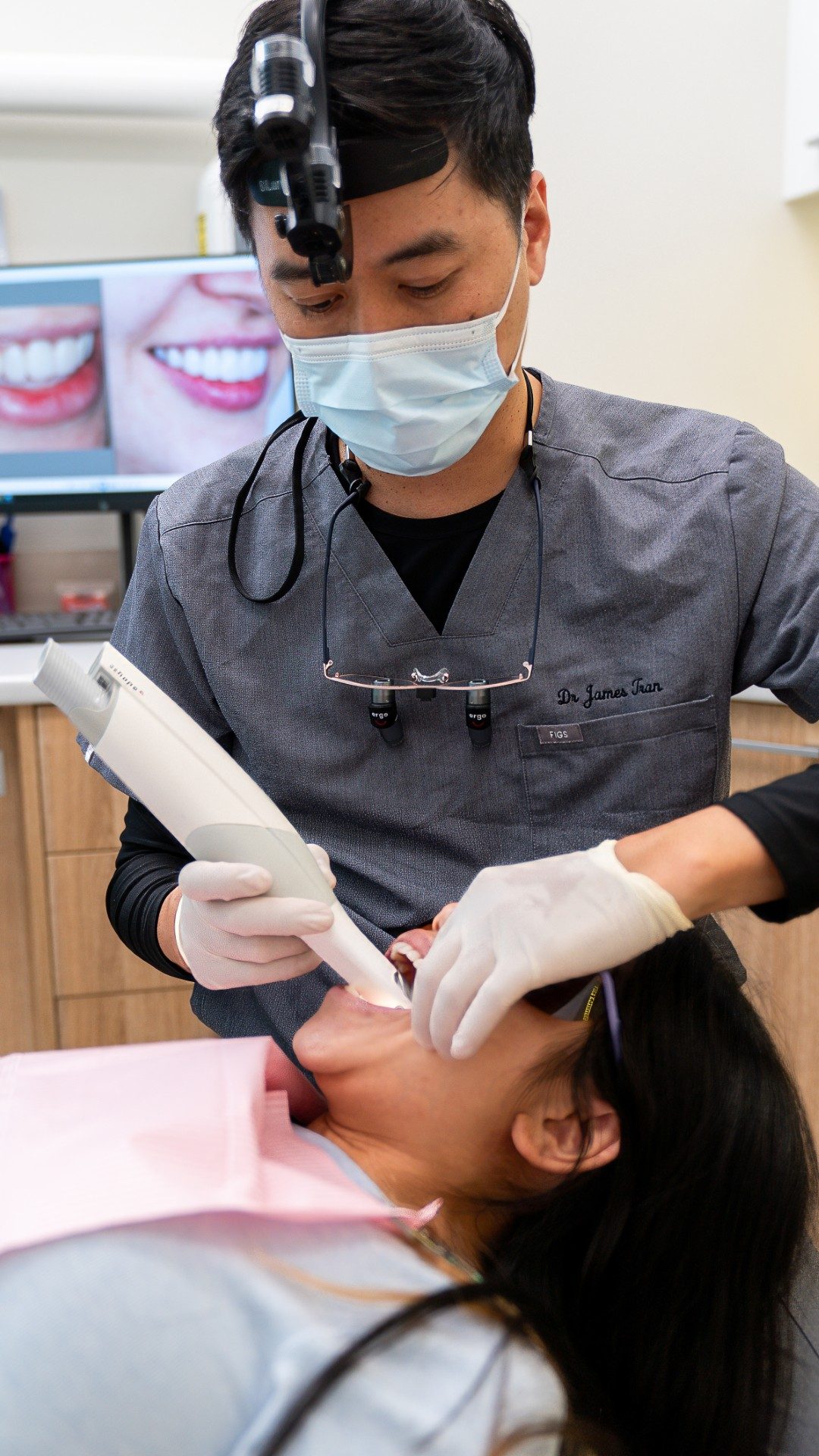
An intraoral 3D scan is an optical camera moved around the teeth; it involves no radiation, so planning or re-scanning for refinement trays is unaffected by pregnancy. X-rays are different, and teeth.org.au is clear: dental X-rays can be taken during pregnancy where they are needed for safe care, which it notes is the advice of the Australian Radiation Protection and Nuclear Safety Agency, and a lead apron may be used. In aligner treatment the X-rays usually belong at the planning stage, so having them done before conceiving removes the question. Our post on dental X-ray safety during pregnancy goes through the doses.
Attachments, the small tooth-coloured bumps bonded to some teeth, and IPR, the light polishing between teeth to create space, need no medicine; where local anaesthetic is used, teeth.org.au says it is safe in pregnancy and breastfeeding. Timing is about comfort: the second trimester is often the easiest time to visit, and the orthodontic review suggests shorter appointments and avoiding a fully flat position late in the third trimester.
Trimester by trimester
| Stage | Usually fine | Often deferred | Why |
|---|---|---|---|
| Planning a pregnancy | Check-up, clean, X-rays, 3D scan, starting aligners | Nothing in particular | teeth.org.au recommends a check-up before pregnancy |
| First trimester | Wearing trays, hygiene visit, 3D scan, refinements | Elective X-rays, long appointments | Nausea, vomiting and gagging most common now, per teeth.org.au |
| Second trimester | Attachments, IPR, new tray sets, hygiene, needed X-rays | Little | Usually the most comfortable trimester |
| Third trimester | Wearing trays, short reviews, hygiene | Long appointments, lying flat for long | Comfort in the chair; gingivitis tends to peak |
| After birth, breastfeeding | Everything, including starting treatment and retainers | Whitening, per teeth.org.au | Animal studies hint tooth movement may change during lactation; human evidence is lacking |
General guidance only; each decision is made at a review, with your GP or obstetrician where relevant.

Starting, continuing or pausing
Already in treatment and pregnant
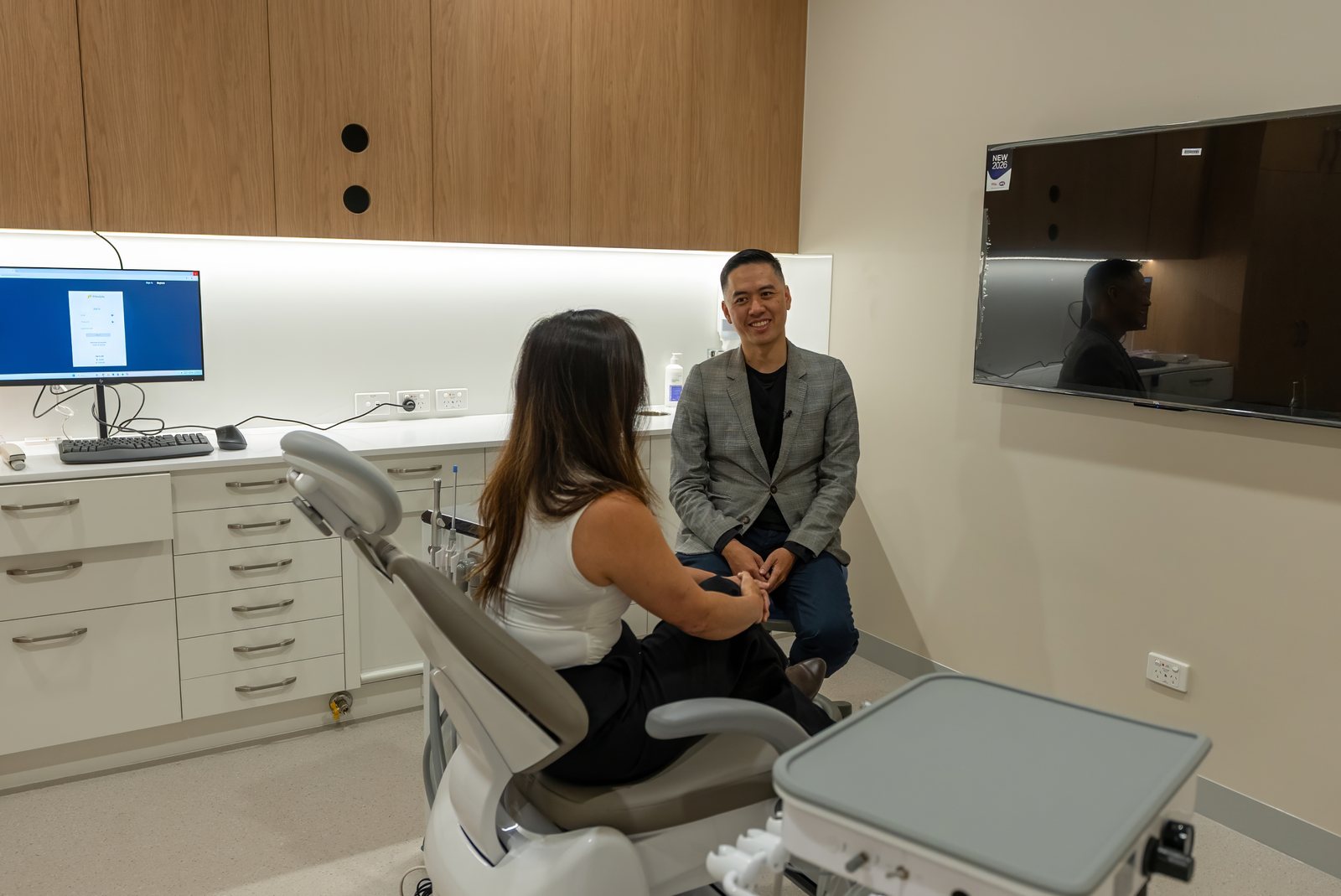
Usually keep going. Tell your provider, because the review interval and hygiene plan may change. If your gums bleed when you brush, say so; that is the finding that can turn "keep going" into "pause the trays until the gums settle".
Thinking of starting while pregnant
It can be done. I usually suggest waiting for the second trimester so the planning scan, attachments and IPR fall in the comfortable window, and I will not start anyone whose gums are inflamed, pregnant or not.
After the birth
Breastfeeding is not a barrier to aligners or retainers. The harder problem is wear time: 22 hours a day is difficult with a newborn, and a tray left out through a day of feeds stops fitting. Patients finishing just before a birth are often moved to retainers a little early so that a slipped week costs nothing.
Tell your orthodontic provider
- That you are pregnant, or trying, even if no one else knows yet; teeth.org.au notes your dentist cannot share this.
- How far along you are and when the baby is due.
- How often you are vomiting, and any bleeding, swelling or a lump on the gums.
- Any pregnancy complication your GP or obstetrician is managing, and any medicines or supplements you take.
How we approach this at Lumi Dental
Clear aligner treatment at Lumi Dental in Melrose Park is planned by a dentist from a 3D intraoral scan taken in house, so a pregnant patient can be scanned and re-scanned without radiation, and X-rays are taken only where needed. The hygiene team of oral health therapists looks after cleans and gum therapy through the pregnancy. Specialist orthodontic cases are referred to registered specialists. Read more about clear aligners at Lumi Dental.
Questions patients ask
Can I start Invisalign or other clear aligners while pregnant?
Yes, if your gums are healthy. The trays are not the issue; inflamed gums are. Many people start in the second trimester or after the birth so the planning visits fall at a comfortable time.
Do teeth move faster or slower during pregnancy?
Nobody can say for your mouth. Animal studies have reported changes in the rate of tooth movement with pregnancy and lactation hormones, but human evidence is lacking, so no promises either way.
Is it safe to have the 3D scan and X-rays while pregnant?
The 3D scan uses a camera and no radiation. Dental X-rays can be taken in pregnancy where needed, according to teeth.org.au, with a lead apron where appropriate; elective ones are usually deferred.
What do I do with my aligners if I vomit?
Tray out if you can, rinse your mouth and the tray with cool water, and wait about an hour before brushing, as teeth.org.au advises. Contact the practice if vomiting is making wear time impossible.
Can I whiten my teeth or wear aligners while breastfeeding?
Aligners and retainers, yes. Whitening is the part teeth.org.au says to avoid during pregnancy and breastfeeding, so a whitening course planned for the end of treatment waits; see our post on teeth whitening while pregnant or breastfeeding.
Thinking about aligners? Complimentary aligner consult in Melrose Park
If you are in Melrose Park, Ryde, Parramatta, Ermington, Rydalmere or nearby and are pregnant, planning to be, or newly home with a baby, book a complimentary aligner consultation and the team will plan the timing around you, or read more about clear aligners at Lumi Dental.
Sources
- Australian Dental Association, teeth.org.au: Oral health and pregnancy
- PubMed Central: Consideration of hormonal changes for orthodontic treatment during pregnancy and lactation, a review
- PubMed Central: Effects of pregnancy on oral health, a narrative review
- PubMed Central: Do clear aligners release toxic chemicals? A systematic review
About the author

Dr James Tran is a general dentist at Lumi Dental in Melrose Park. He holds a BDent from the University of Sydney and a Graduate Diploma in Oral Implants, and is a Member of the International Congress of Oral Implantologists (MICOI).
This article is general information only and is not a substitute for an examination and individual advice from a registered dental practitioner. Suitability for any treatment varies from person to person.








