

Clear aligners can often work well in your 60s and 70s, provided the gums and roots are healthy first, the goal is modest, and there is a retainer plan you can keep up for life. Teeth keep shifting as we age. A Swedish study that followed 30 people with untreated, normal bites from age 13 to 62 found that the lower front teeth became steadily more irregular across the whole period, which is why crowding that was never there at 40 can appear at 65.
Written by Dr James Tran, BDent (University of Sydney), MICOI, GradDip (Oral Implants), general dentist at Lumi Dental in Melrose Park.
The short version
- Age alone rarely rules out clear aligners. Our article am I too old for braces explains why bone keeps remodelling throughout life.
- The simple rule: gums and roots first, then a modest goal, then a retainer plan you can keep for life.
- Crowns and bridges change how teeth can be gripped and moved, and implants do not move at all.
- Dry mouth from common medicines matters more with trays in, because saliva cannot reach the covered teeth.
- Some osteoporosis medicines may slow tooth movement. Your doctor manages those medicines; the aligner plan adjusts around them.
- Teeth that have moved once will tend to move again, so night-time retainer wear is usually advised long term.
Why people start aligners later in life
The reasons are usually practical rather than purely cosmetic. In the Swedish study, published in Progress in Orthodontics, the length of both dental arches shortened over time, the width between the lower canines narrowed, and space for the lower front teeth shrank. The result was a gradual increase in crowding of the lower incisors, even in people whose teeth had been straight as teenagers. Overlapping teeth are also harder to clean.
Other common reasons include:
- Worn or chipped front teeth, where straightening first can leave more room for bonding or crowns and mean less tooth needs to be removed.
- Spaces or tipped teeth after a tooth has been lost, where moving teeth back into position may make an implant or bridge possible.
The same study found that the visible crown of the teeth grew longer over the decades, which the authors linked mainly to gum recession. That is a reminder that gums are part of the story at this age.
The simple rule: gums and roots first, then a modest goal, then retainers for life
If your gums are healthy and stable, start with an honest conversation about what you would like to change. If they are not, start with gum therapy, and come back to aligners once things have settled. In my experience, people in their 60s and 70s are often happiest with a focused result: lower front teeth aligned, a gap closed, or room made for a new tooth, rather than a full repositioning of every tooth.
| Later-life situation | What it changes in an aligner plan |
|---|---|
| Past gum disease or bone loss | Gum therapy and a stable period first; lighter, slower movements; more frequent cleans |
| Gum recession | Small dark gaps may show as teeth straighten; recession is measured and photographed before starting |
| Crowns, veneers or bridges | Attachments may bond less well to porcelain; bridged teeth move as one unit |
| Dental implants | Implants stay where they are and become a fixed point the plan works around |
| Dry mouth from medicines | Higher decay risk under trays; fluoride and diet advice become central |
| Osteoporosis medicines | Movement may be slower; a more modest goal and a longer timeframe may be planned |
| Arthritis in the hands | Removing trays may need a technique or a simple tool; the dentist checks this at the start |
Gums, recession and black triangles
Teeth move through the bone and ligament that hold them, so active gum disease must be treated first. Our article on clear aligners after gum disease covers the order of steps and why maintenance cleans continue throughout.
Even with healthy gums, older teeth often sit in a little less bone and gum than they did at 30. When overlapping teeth are straightened, the gum between them may not fill the new space fully, leaving small dark gaps near the gumline. Our guide to black triangles between teeth explains why they form and what can be done. I usually point out where they are likely before treatment starts, using photographs, so nobody is surprised.
Crowns, bridges and implants
Most people in their 60s and 70s have some dental work, and each type behaves differently. A crowned tooth still has its root and ligament, so it moves like any other tooth, though the small tooth-coloured attachments aligners grip on may bond less reliably to porcelain. Teeth joined by a bridge move as one unit. An implant has no ligament around it, so it does not move at all; instead it becomes a fixed point the rest of the plan works around. Our article on clear aligners with crowns, veneers or implants goes through each type in detail.
Sequence matters here. Where a tooth is to be replaced, the teeth are usually moved first and the implant or bridge placed afterwards, so the new tooth is built for the final position.
Dry mouth, root decay and medicines
Why trays and a dry mouth are a risky mix
An Australian Institute of Health and Welfare (AIHW) report on ageing and dental health notes that healthy older adults who take no medicines do not have reduced saliva simply because of age, while medicines have been implicated in reduced saliva and dry mouth in some older adults. The same report explains that root decay develops on root surfaces exposed by gum recession or wear, and that people with more recession, poorer cleaning and less regular dental visits are at higher risk.
Aligner trays cover the teeth, so the saliva that would normally rinse and protect them cannot reach the covered surfaces. Anything sweet or acidic sipped with trays in sits against the teeth for hours. For a dry mouth, the usual advice is water only with trays in, brushing before they go back, and extra fluoride where the dentist recommends it. Our article on clear aligners and a dry mouth has more practical tips.
Osteoporosis medicines and the pace of tooth movement
Bisphosphonates are a group of medicines often used for osteoporosis. A review in Clinical, Cosmetic and Investigational Dentistry reports that bisphosphonates have been consistently associated with slower orthodontic tooth movement, and describes a marked reduction in the rate of movement in people taking one of them for osteoporosis. The authors also note that most of the evidence comes from animal studies, so the effect in any one person is hard to predict. Your doctor decides about these medicines, and they are never stopped or changed for the sake of straighter teeth. What changes is the plan, which may aim for a more modest goal over a longer time.
Hands, hearing aids, glasses and speech
Aligners need to come out to eat and to clean, often several times a day. If arthritis or a tremor makes fine finger work hard, tray removal is worth practising in the chair before treatment starts. Working from the back teeth forward usually helps, and simple removal tools are available. Hearing aids and glasses should not be affected by the trays, though many people find their speech sounds slightly different for the first few days, especially sounds such as s and sh. This usually settles as the tongue adjusts.
Retainers for life
A Cochrane review of retention after orthodontic treatment explains that without a phase of retention, teeth tend to relapse towards their old positions. Its authors found the evidence was not strong enough to say which retainer type is best. Combined with the evidence that teeth keep drifting with age, this is why long-term, usually night-time, retainer wear is advised after aligners. Retainers wear out, and one that no longer fits is a reason to book in rather than stop. Our guide to retainer types and how long to wear them compares the options.
How we approach this at Lumi Dental
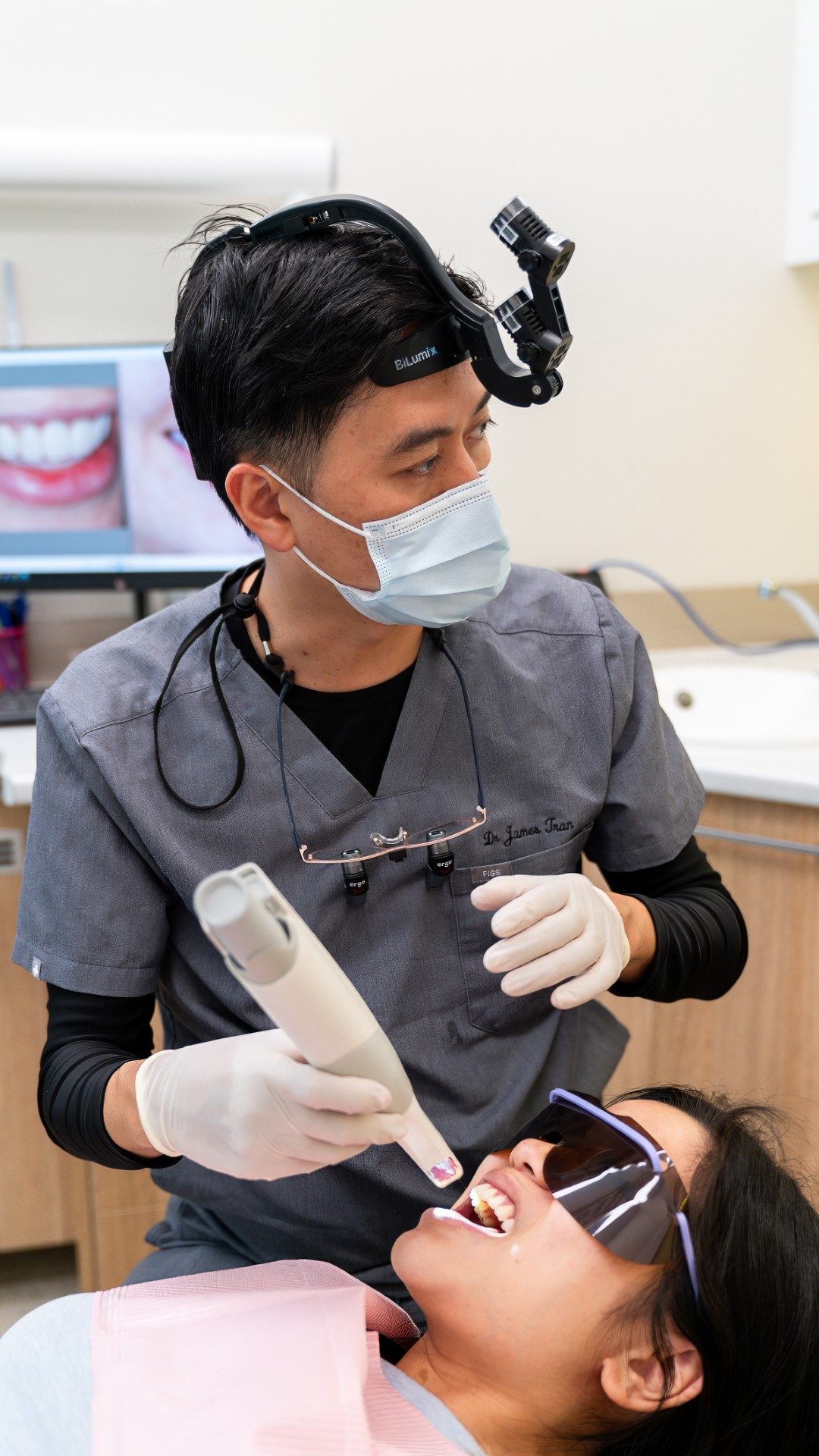
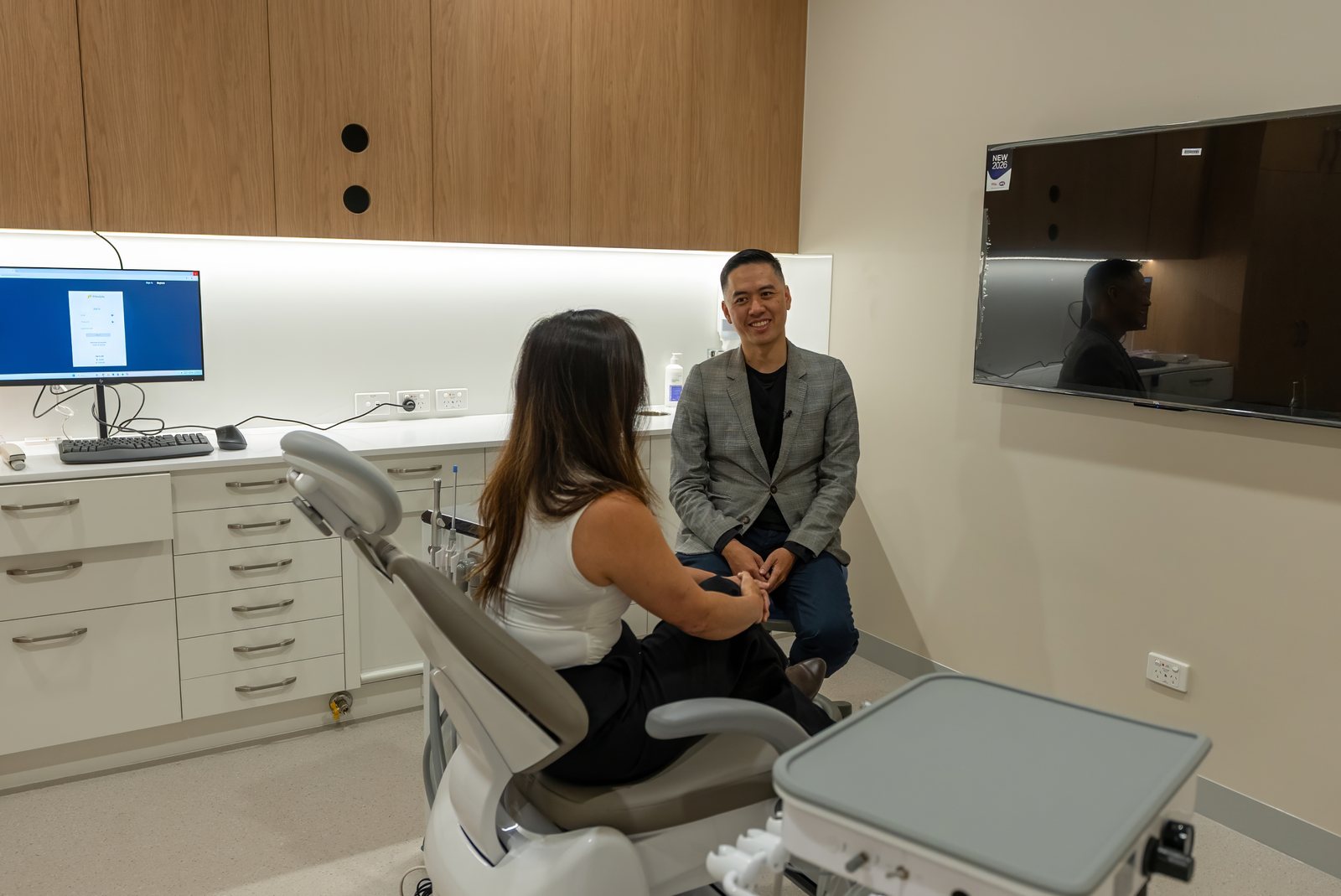
At Lumi Dental, an aligner consultation starts with a dentist examining the teeth and gums, taking X-rays where needed, including 3D imaging, and reviewing your medicines and existing dental work. If the gums need attention, the oral health therapists provide gum therapy before any trays are made. Teeth are recorded with a 3D intraoral scanner, which you can read about on our technology page. Lumi Dental offers clear aligners rather than braces, and where a case needs a registered specialist, such as an orthodontist or periodontist, the team at Lumi Dental refers you.
Questions patients ask
Am I too old for clear aligners at 70?
Usually not. The health of your gums, roots and bone matters far more than your age, and many people in their 70s can be suitable for a focused plan.
Can clear aligners move teeth that have crowns or implants?
Crowned teeth can be moved, though attachments may need extra care. Implants cannot be moved, so the plan works around them.
Will straightening my teeth make my gums recede?
Straightening can make existing recession and small gaps near the gumline more visible. The gums are measured and photographed before treatment so these can be discussed in advance.
Do I have to wear a retainer forever?
Long-term wear, usually at night, is advised because teeth keep drifting with age. Stopping retainer wear is a common reason teeth move again.
Can I have aligners if I take medicine for osteoporosis?
Often yes, though some of these medicines may slow tooth movement. Tell the dentist what you take, and keep taking it as your doctor has advised.
Thinking about clear aligners? Free aligner consultation in Melrose Park
If your teeth have started to crowd or shift, the team at Lumi Dental can check your gums, look at your existing dental work and talk through a realistic goal. Book a free aligner consultation at Melrose Central in Melrose Park, or read more about clear aligners at Lumi Dental. Patients visit from Ryde, Parramatta, Ermington and Rydalmere, with on-site parking.
Sources
- PMC (Progress in Orthodontics): Digital analysis of age-related dentoalveolar changes, a 50-year longitudinal study
- Australian Institute of Health and Welfare: Aging and dental health
- PMC (Clinical, Cosmetic and Investigational Dentistry): Pharmacological modulation of orthodontic tooth movement, a review
- Cochrane: What is the best method for maintaining the correct position of teeth after orthodontic treatment?
About the author

Dr James Tran is a general dentist at Lumi Dental in Melrose Park. He holds a BDent from the University of Sydney and a Graduate Diploma in Oral Implants, and is a Member of the International Congress of Oral Implantologists (MICOI).
This article is general information only and is not a substitute for an examination and individual advice from a registered dental practitioner. Suitability for any treatment varies from person to person.







