


Asthma does not usually stop you having clear aligners, and the one firm rule is simple: never delay or skip your reliever because your trays are in, while a daily preventer can often be fitted around the times the trays come out anyway. Asthma is common, with the Australian Institute of Health and Welfare estimating that around 2.8 million people in Australia, or about 11%, live with it. This guide covers clear aligners with asthma: trays and puffers, rinsing, dry mouth and appointments.
Written by Dr James Tran, BDent (University of Sydney), MICOI, GradDip (Oral Implants), general dentist at Lumi Dental in Melrose Park.
The short version
- Your reliever comes first. Use it straight away when you need it, trays in or out, whichever is quicker.
- Keep taking every asthma medicine exactly as prescribed. Your doctor manages your asthma; the dental team works around it.
- With a corticosteroid preventer, many people take the trays out, use the inhaler, rinse and spit, then put the trays back.
- Thrush, dry mouth and rinsing with inhalers are covered in our guide to asthma inhalers and oral health. This article is about aligners.
- Bring your reliever to every appointment and tell the team about your asthma when you book.
Why asthma and aligners need a plan
Clear aligners only work if they are worn. Orthodontics Australia says trays need to be worn for 20 to 22 hours a day, for at least a week before moving to the next set, and taken out to eat or drink, with plain cold water the safest drink while they are in. That leaves only a couple of hours a day when the trays are out, so anything else you do with your mouth, including taking inhaled medicines, has to fit around them.
Most asthma medicines are inhaled through the mouth. The National Asthma Council Australia explains that the right device and technique help the medicine work and can reduce side effects, and that the instructions differ for each type of inhaler.
In my experience, many people starting aligners have not thought about how the two routines fit together until the first tray is in. It is easier to sort out at the consultation.
The single rule: your reliever comes first
If you are short of breath, wheezy or tight in the chest, use your reliever as your asthma action plan says, straight away. Do not stop to take trays out first if that slows you down, and do not hold off because you have just put a fresh tray in. A few minutes out of trays, or an inhaler used with trays in, is very unlikely to matter to tooth movement. Delaying a reliever can matter a great deal to you.
Once things settle, rinse if you can and carry on. The AIHW reports that only about a third of people with asthma have a written asthma action plan. If you do not have one, ask your GP before treatment starts.
Preventers, rinsing and the trays
The National Asthma Council says people who take preventers containing inhaled corticosteroids should rinse their mouth with water and spit after each dose, if possible. Healthdirect adds that these preventers can cause a sore throat, a hoarse voice or oral thrush, and that using a spacer with your puffer, and rinsing or gargling afterwards, can reduce the chance of these side effects.
A routine that often works
Many people find a preventer fits into the times their trays are already out, such as when they brush in the morning and at night. Keep to the timing your doctor prescribed; the aim is to fit the trays around the inhaler, not the other way round.
- Take the trays out and put them in their case.
- Use your preventer exactly as you have been shown, with your spacer if you use one.
- Rinse with water and spit, as the National Asthma Council advises.
- Brush if it is your usual brushing time, then put the trays back in.
If a dose falls when the trays are in, use it as prescribed and rinse when you can.
Relievers that also contain a corticosteroid
Healthdirect describes anti-inflammatory relievers, which combine budesonide and formoterol in one inhaler. If your reliever is one of these, the reliever rule still comes first: use it when you need it. Rinse and spit afterwards when you can, and ask your pharmacist about your device.
Inhalers and aligners, situation by situation
| Inhaler or situation | What to do with trays | Why |
|---|---|---|
| Reliever during symptoms | Use it straight away, trays in or out, whichever is quicker | Breathing comes first; a short gap in wear is very unlikely to matter |
| Daily corticosteroid preventer | If your routine allows, trays out, inhaler, rinse and spit, trays back | Rinsing after each dose is advised to reduce thrush and hoarseness |
| Anti-inflammatory reliever | Use it when needed without waiting; rinse afterwards when you can | It works as a reliever but also contains a corticosteroid |
| Exercise or sport | Keep your reliever with you and follow your action plan; ask about mouthguards | Trays are not designed as sports protection |
| Asthma flare or chest infection | Follow your doctor's plan; tell the team if you miss wear time | Your health comes first; treatment can usually be adjusted |
| Dental appointment | Bring your reliever and spacer; mention recent flares | The team can plan breaks and keep it within reach |
Mouth breathing, dry mouth and night wear
Trays are usually worn overnight, which is also when a dry mouth is most noticeable, especially for people who breathe through their mouth because of asthma, hay fever or a blocked nose.
Our article on clear aligners and a dry mouth explains why trays trap odour and what helps at night, and our guide to wearing aligners with a cold or blocked nose covers the days when nose breathing is hard. A few points matter more with asthma:
- Water is the safest drink with trays in. Sugary or acidic drinks sit against the teeth under the plastic.
- If you use a preventer at night, rinse before the trays go back in, then avoid eating or drinking anything but water.
- Tell your doctor if night-time symptoms are increasing.
Keeping trays clean and watching for thrush
Trays should be cleaned every time they come out, and our guide to cleaning clear aligners covers the method. Orthodontics Australia also recommends brushing your teeth each time you remove your aligners, because plaque and food can get trapped under them.
Oral thrush often shows as white patches that can be wiped away, or a burning feeling in the mouth. If you notice this, see your GP or pharmacist, who manages the treatment, and let the dental team know so they can check the mouth and the fit of your trays. Do not stop or reduce your preventer to avoid thrush; your doctor or pharmacist can check your technique, spacer and rinsing.
Scans, attachments and appointments with asthma
Aligner treatment starts with a 3D scan of the teeth, and many plans add small tooth-coloured attachments that help the trays grip. Our article on aligner attachments and IPR explains what is involved.
For people with asthma, a few things make these visits easier:
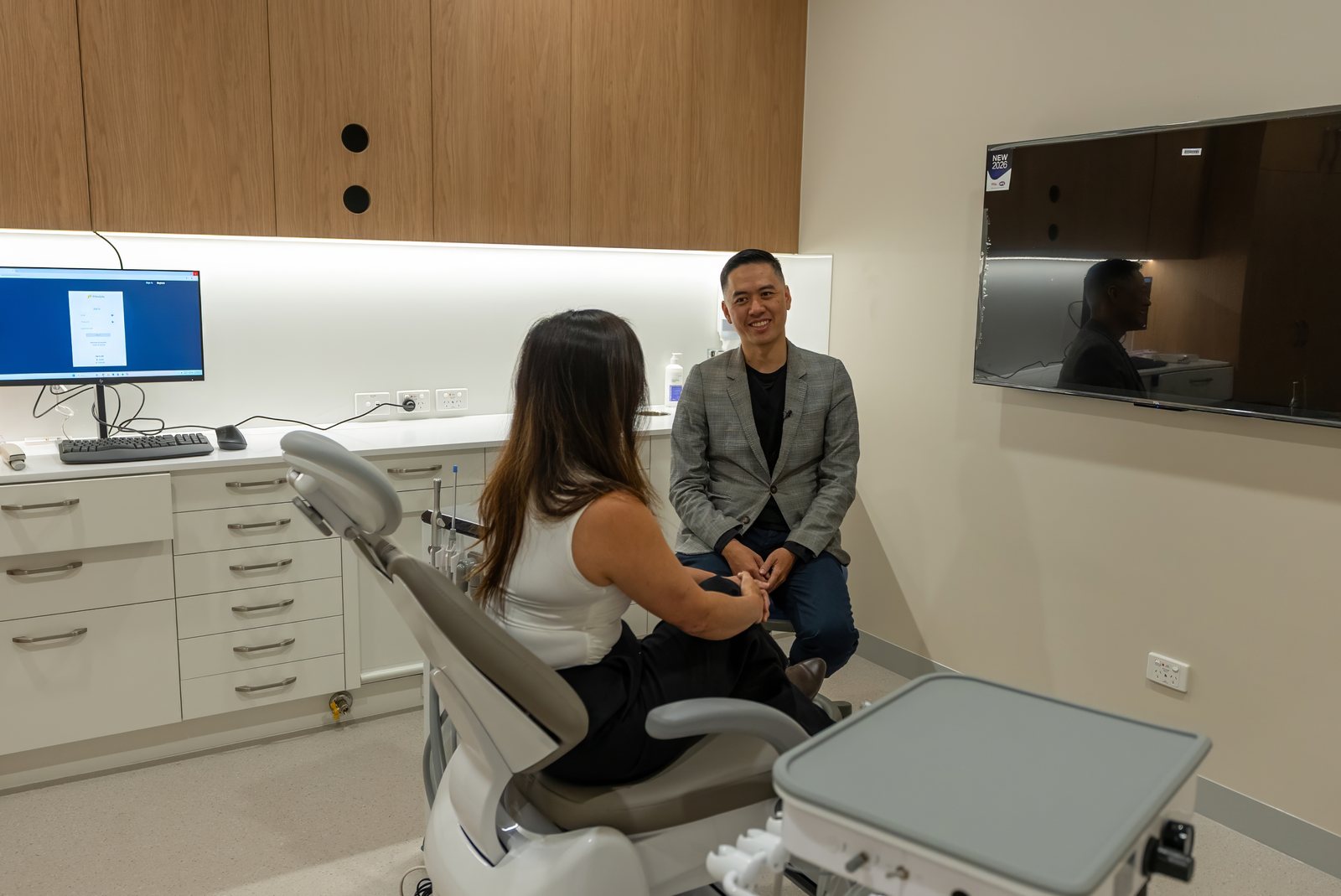
- Bring your reliever and spacer and keep them within reach, not in a bag at reception.
- Mention any recent flare or chest infection. If your asthma is not settled on the day, rescheduling is sensible.
- Ask to sit more upright and take breaks. A scan can be paused at any point.
- Ask your pharmacist or doctor which pain relief suits you, in case a new tray feels tight.
I usually ask patients with asthma to put their reliever on the bench beside the chair before we start.
Teenagers with asthma
AIHW data show asthma is more common in boys than girls under 15. For teenagers, the practical issues are carrying a reliever at school and parents knowing the plan. Our article on clear aligners for teenagers covers wear time and school.

How we approach this at Lumi Dental
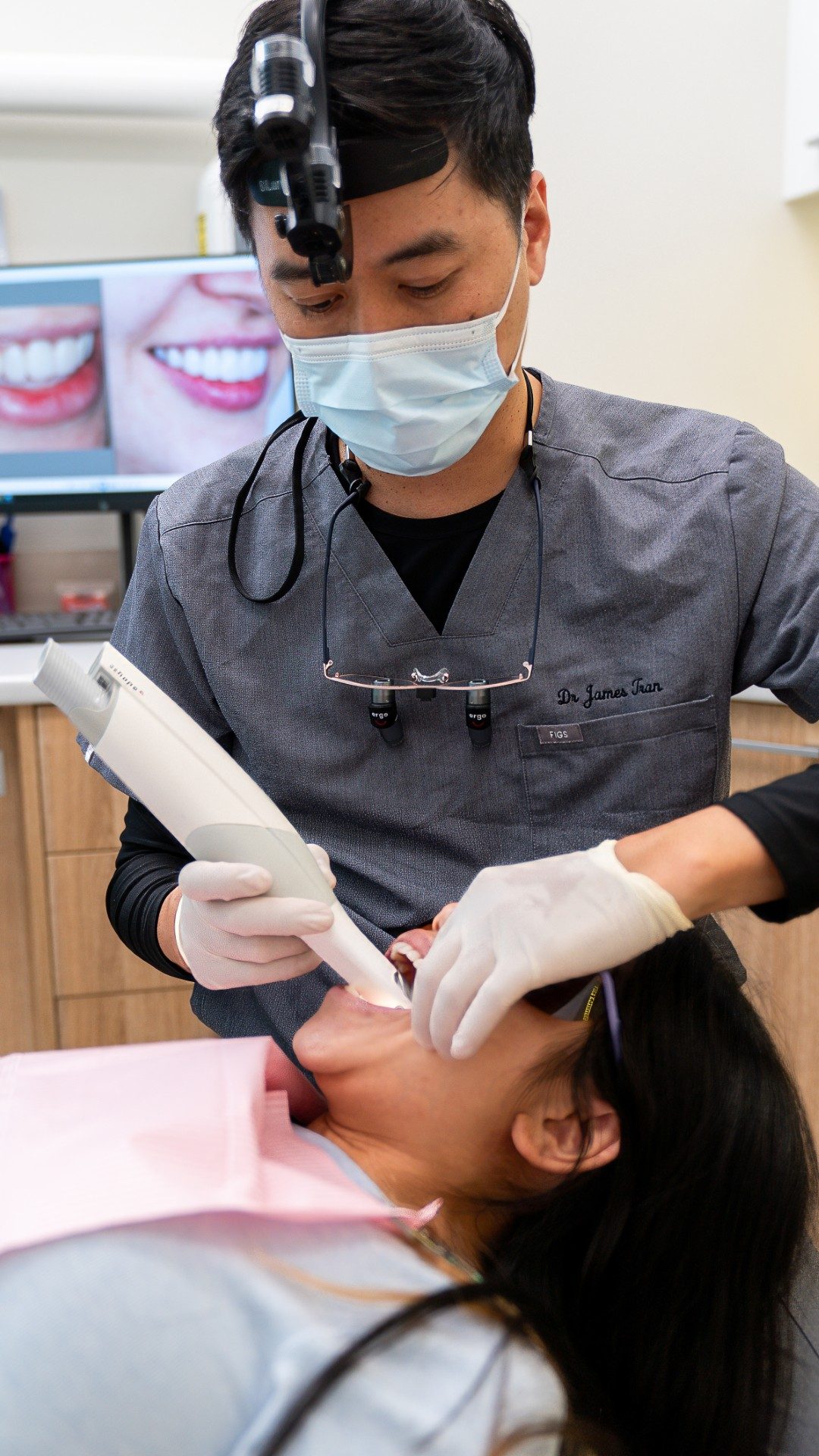
Lumi Dental offers clear aligners, planned with an in-house 3D intraoral scanner. The dentist examines your teeth and gums, asks about your asthma and medicines, and talks through how trays and inhalers will fit into your day. Where a case needs a registered specialist orthodontist, the team refers you. You can read more about clear aligners in Melrose Park.
The oral health therapists help with cleaning, dry mouth and thrush prevention during treatment, and your GP or respiratory doctor remains in charge of your asthma.
Questions patients ask
Can you use an inhaler with aligners in?
Yes. If you need your reliever, use it straight away with the trays in or out. For a daily preventer, many people take the trays out, use the inhaler, rinse and spit, then put the trays back.
Should aligners come out to rinse after a preventer?
It is usually easier, because you can rinse the whole mouth. If you cannot, rinse and spit with the trays in and clean them at the next chance.
Should I use a spacer while I have aligners?
That is a decision for your doctor or pharmacist, and aligners do not change it. Healthdirect notes that a spacer helps more medicine reach the lungs and can reduce side effects such as thrush.
Can you wear aligners if you breathe through your mouth at night?
Usually, yes, though a dry mouth can make trays feel stale by morning. Our article on aligners and a dry mouth explains what helps.
Will an asthma flare set aligner treatment back?
A few hours or a day of reduced wear is usually manageable. Look after your breathing first, then let the team know, and they can advise whether to stay on the same tray a little longer.
Thinking about clear aligners? Free aligner consultation in Melrose Park
If you have asthma and are weighing up clear aligners, a free aligner consultation is a chance to talk through your inhalers, wear time and appointments before you start. You can also read about clear aligners at Lumi Dental. Patients visit from Melrose Park, Ryde, Parramatta, Ermington and Rydalmere, with on-site parking at Melrose Central.
Sources
- Australian Institute of Health and Welfare: Chronic respiratory conditions, asthma
- National Asthma Council Australia: Using your medicines correctly
- Healthdirect: Medicines for asthma
- Orthodontics Australia: Clear aligners
About the author

Dr James Tran is a general dentist at Lumi Dental in Melrose Park. He holds a BDent from the University of Sydney and a Graduate Diploma in Oral Implants, and is a Member of the International Congress of Oral Implantologists (MICOI).
This article is general information only and is not a substitute for an examination and individual advice from a registered dental practitioner. Suitability for any treatment varies from person to person.







