


A front tooth crown can look very natural when the shade, shape and gum line are planned carefully, although matching one crown to the natural teeth beside it is one of the most demanding colour tasks in dentistry. A crown covers the whole visible part of the tooth, so it is usually reserved for a front tooth that is heavily filled, broken, weakened after root canal treatment or badly discoloured. With good care, a crown is commonly reported to last around 10 to 15 years, and often longer. This guide explains when a crown on a front tooth makes sense, what happens at each appointment and what affects how natural the result looks.
Key Takeaways
- A front tooth crown covers the entire visible tooth and is chosen when the tooth is too weak or too damaged for a smaller repair.
- If enough healthy tooth remains, bonding or a veneer is more conservative. Our guide to bonding vs veneers vs a crown compares all three.
- Matching a single crown to natural neighbours relies on shade photos, layered ceramic and sometimes a visit to the dental laboratory.
- Crowns do not respond to whitening, so any whitening should be done before the crown shade is chosen.
- Lithium disilicate and layered zirconia are common choices for front teeth because they let light through in a similar way to enamel.
- Healthy gums and a well-fitted margin are as important to a natural look as the crown itself.
When a Front Tooth Needs a Crown
A crown is a full-coverage restoration. The tooth is shaped down by a small, even amount on all sides and a custom ceramic cap is bonded or cemented over it. On a back tooth, strength is usually the main goal. On a front tooth, appearance carries just as much weight, which changes how the crown is planned.
The situations where I most often recommend a crown on a front tooth are:
- Large or multiple fillings. When much of the tooth is already filling material, the remaining enamel is thin and prone to chipping. A crown holds the tooth together.
- A broken tooth. A fracture that takes away a large part of the edge or a corner may be beyond what bonding can reliably rebuild.
- After root canal treatment. A root-treated front tooth can become more brittle and may darken over time. Where a lot of tooth has been lost, a post and core is sometimes placed first to give the crown a stable foundation.
- Severe discolouration. Some deep stains, such as those from an old injury or certain medications, are too dark for a thin veneer to mask. A crown has more thickness to block the colour underneath.
Keep as Much Natural Tooth as the Problem Allows
The simple rule I use is this: choose the smallest repair that will reliably solve the problem. A crown removes more tooth structure than bonding or a veneer, and that tooth cannot be put back. If a chip is small, bonding is often enough. If the tooth is sound but the colour or shape needs changing, a veneer may do the job. For many people with one discoloured tooth, a single veneer on one front tooth is worth discussing before a crown.
A crown becomes the right choice when the tooth itself needs protection, not just a new surface.
| Option for a front tooth | Tooth removed | Strength | Ability to change colour | Typical lifespan |
|---|---|---|---|---|
| Composite bonding | None to very little | Moderate, can chip or stain | Limited for dark teeth | Around 5 to 7 years |
| Porcelain veneer | Around 0.3 to 0.7 mm on the front surface | Good once bonded to sound enamel | Good, limited for very dark teeth | Around 10 to 15 years |
| Ceramic crown | Around 1 to 2 mm on all surfaces | High, protects a weakened tooth | Very good, can mask dark teeth | Around 10 to 15 years, often longer |
These are typical figures. Bite, grinding habits and home care all change how long any restoration lasts.
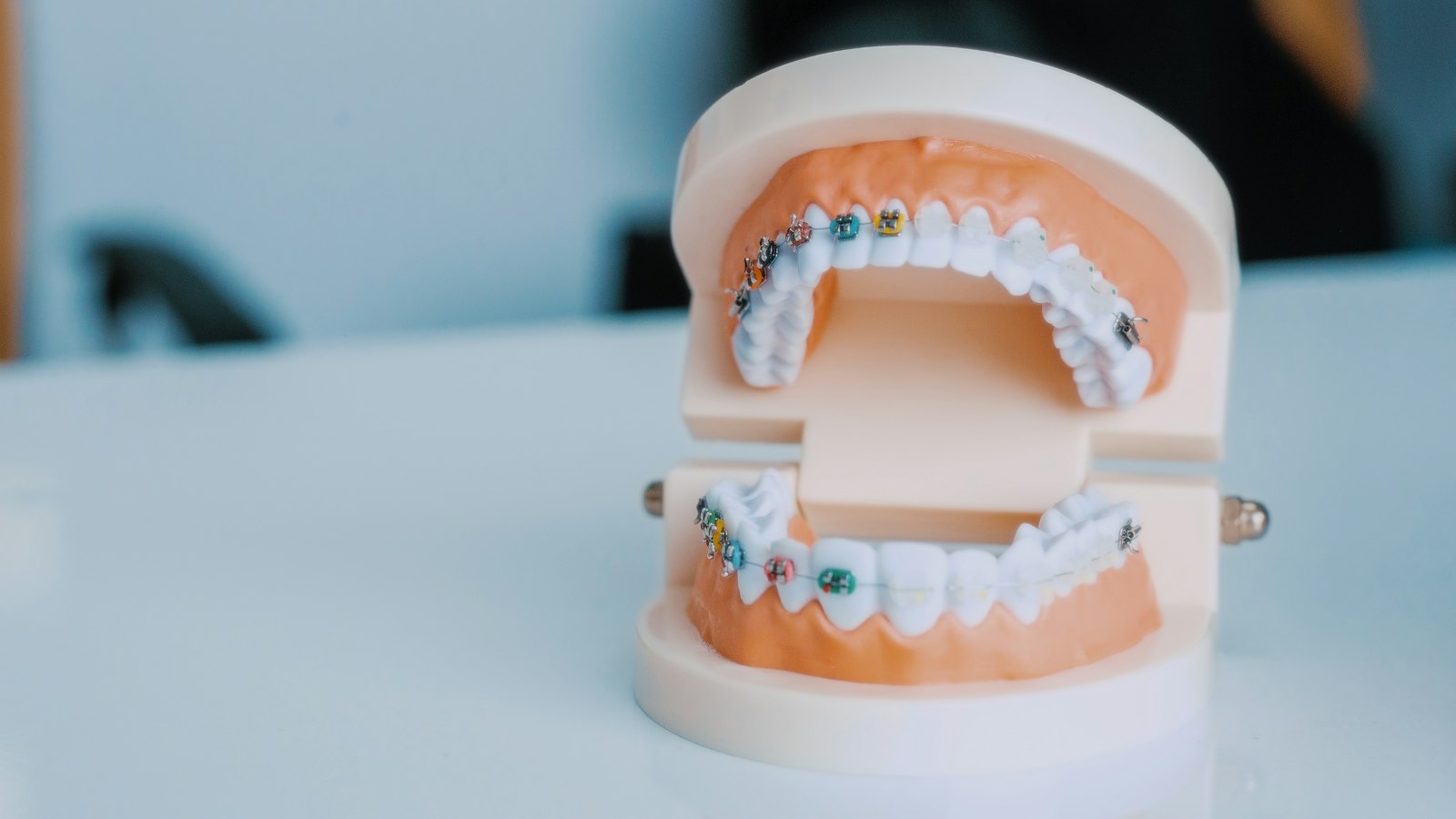
Why Matching One Front Crown Is So Demanding
Replacing all six upper front teeth gives the dentist and technician freedom to set a new colour. Replacing one tooth does not. The crown has to sit beside natural teeth that have their own translucent edges, subtle colour bands, surface texture and small imperfections. Even a slight mismatch is noticeable when it sits in the middle of a smile.
Natural enamel is not a flat colour. It is usually warmer near the gum, lighter through the middle and more see-through at the biting edge. A good front crown copies those layers. To get there, the planning often includes:
- Shade photos taken with shade tabs held next to the neighbouring teeth, under consistent lighting, so the laboratory can see the real colour and translucency.
- A shade consultation with the laboratory in more complex cases, where the technician views the teeth directly.
- Layered ceramic, where the technician builds up porcelain in several shades rather than using a single block colour.
- Whitening first, if you would like brighter teeth. A crown keeps the colour it was made in, so whitening afterwards would leave it looking darker than its neighbours. Our article on whether veneers and crowns can be whitened explains this in more detail.
Which Materials Look Most Natural on a Front Tooth
Material choice affects both strength and appearance. For front teeth, the main options are:
Lithium disilicate
Lithium disilicate (often known by the e.max-type name) is a glass ceramic that lets light pass through in a way similar to enamel. It is widely used for front crowns because of its lifelike translucency and good strength when bonded to the tooth.
Layered zirconia
Zirconia is very strong. When a zirconia core is covered with layered porcelain, it can look natural while giving extra strength, which may suit someone who grinds or has a heavy bite.
Monolithic zirconia
Solid zirconia without a porcelain layer is extremely tough, but it can look more opaque than natural enamel. It tends to suit back teeth better than a highly visible front tooth.
Porcelain fused to metal
These crowns have a metal base under porcelain. They have a long track record, but the metal can show as a grey or dark line at the gum, particularly if the gum recedes over time. Many patients asking about a dark line at the gum around a crown have this type. For a full comparison, see ceramic vs zirconia crowns.
What to Expect, Step by Step
- Examination and X-ray. The dentist checks the tooth, nerve health, gums and bite. If the nerve is damaged, root canal treatment may be needed first, sometimes followed by a post and core.
- Shade and smile planning. Shade photos are taken and any whitening is completed and allowed to settle before the shade is finalised.
- Preparation. Under local anaesthetic, the tooth is shaped by around 1 to 2 mm so the crown has room to be strong and natural in colour without looking bulky.
- Scan or impression. A digital scan or impression records the prepared tooth and bite for the laboratory.
- Temporary crown. A temporary crown protects the tooth, lets you see the planned shape and helps the gum settle around the margin.
- Laboratory fabrication. The crown is usually made over around 1 to 2 weeks.
- Try-in and fitting. The crown is checked for colour, shape, fit and bite before it is cemented or bonded in place.
Some sensitivity to cold or biting pressure for a few days after preparation or fitting is common and usually settles on its own. If it lingers or worsens, let your dentist know.

The Gum Line Makes or Breaks the Result
A crown can be the right shade and still look artificial if the gum around it is red, swollen or uneven. Before a front crown is made, any gum inflammation is treated so the tissue is healthy and stable. The edge of the crown, called the margin, is then placed so it fits closely and sits comfortably with the gum.
Over the years, gums can recede, particularly with aggressive brushing or gum disease. When that happens, the margin of the crown may become visible. Gentle brushing with a soft brush, cleaning between the teeth daily and regular check-ups help keep the gum where it should be.
General Market Costs for a Front Tooth Crown
Costs vary with the material, laboratory, whether a root canal or post and core is needed and how much shade work is involved.
| Treatment | General market range in Sydney |
|---|---|
| Ceramic crown on a front tooth | Often around $1,500 to $2,500 per tooth |
| Crown with post and core or root canal treatment | Higher, depending on the extra treatment required |
These are general market ranges, which vary with complexity and provider; a written quote follows an exam. For any current offers at Lumi Dental, see current deals.
Common Questions
Does a front tooth crown look natural?
A front tooth crown can look very natural when it is made from a translucent ceramic, matched with careful shade work and fitted against healthy gums. A single crown next to natural teeth takes more planning than several crowns at once.
Does getting a crown on a front tooth hurt?
The preparation is done under local anaesthetic, so most people feel pressure rather than pain. Mild sensitivity for a few days afterwards is common.
Can I whiten my teeth after getting a front crown?
Whitening will lighten your natural teeth but not the crown, so the crown may then look darker. If you are considering whitening, it is usually done first and the crown shade is matched to the whitened result.
How long does a crown on a front tooth last?
A front crown is commonly reported to last around 10 to 15 years with good care, and many last longer. Grinding, biting hard objects and gum disease can shorten that.
Is a veneer better than a crown for a front tooth?
A veneer is more conservative and may be better when the tooth is strong and only the colour or shape needs to change. A crown is usually better when the tooth is weakened, heavily filled or root treated.
Talk to the Team at Lumi Dental About a Front Tooth Crown
If a front tooth is broken, heavily filled or discoloured, the team at Lumi Dental in Melrose Park can examine it, explain whether bonding, a veneer or a crown suits the situation and take shade photos to plan a natural match. You can book a complimentary cosmetic consultation to talk through your options and receive a written quote, or learn more about our cosmetic dentistry in Melrose Park.


