A dental implant for a missing canine (eye tooth) is planned differently from any other single implant, because the canine is the cornerstone of the arch: it carries the longest root in the mouth, shapes the corner of the smile and the lip, and guides the jaw during side-to-side chewing, so the plan is about bite forces and the bone at the corner, not just filling a gap. Dental anatomy describes the upper canine as the longest tooth in the mouth from root tip to biting edge, built to withstand heavy sideways pressure. When it is lost, the implant that replaces it inherits that job.
Written by Dr James Tran, BDent (University of Sydney), MICOI, GradDip (Oral Implants), general dentist at Lumi Dental in Melrose Park.
The short version
- The canine has the longest root of any tooth, a ridge of bone over it (the canine eminence) that supports the lip, and a role in guiding the bite sideways.
- Canines usually go missing through impaction that cannot be brought down, trauma or gum disease. Being born without one is rare.
- Before an implant, the dentist weighs orthodontic canine substitution, a resin-bonded bridge, a conventional bridge, or keeping a healthy baby canine.
- The outer bone over the upper front teeth is often under 1 mm thick, so grafting is frequently part of the plan.
- The crown is longer, more pointed and slightly darker than an incisor crown.
- Our guide to a lateral incisor implant covers the neighbouring tooth, where the trade-offs differ.
What makes the canine different
Anatomy texts call the canines the cornerstones of the mouth: they sit three teeth from the midline, separating incisors from premolars, and they are the only front teeth with a true cusp. The upper canine erupts at around 11 to 12 years and its root is not complete until about 13 to 15. The root is usually the longest of any tooth, and the bone housing it forms a visible ridge, the canine eminence, that holds up the corner of the lip.
When the lower jaw slides sideways, in many people the canines touch first and lift the back teeth apart, a pattern called canine guidance, so the canine takes the sideways load. An implant has no ligament to cushion that load, so the bite on the new crown is designed rather than left to chance.
Why canines go missing
Impaction is the common story. Research has reported that upper canines are impacted in around 1% to 3% of people, two to three times more often in women, and that roughly half of impacted canines cause root resorption of the teeth beside them. Many can be pulled into line by an orthodontist; some cannot, and are removed. Our impacted canine guide explains how that decision is made.
Trauma is the second cause. Gum disease and failed root canals account for most of the rest. Being born without a canine is rare: hypodontia reviews report that, excluding wisdom teeth, around 1.6% to 6.9% of people are missing at least one tooth from birth, most often a second premolar or an upper lateral incisor, and describe the canine as one of the most stable teeth in the dentition.
The single rule: plan around the bite and the bone, not the gap
If you are missing a canine, start with two questions: what will the bite do to the new tooth, and how much bone is left at the corner. The first decides how the crown is shaped and whether a night guard is part of the plan. The second, answered by a 3D X-ray (CBCT), decides whether a graft is needed and when the implant can go in. Patients I see are often surprised that these two points take up most of the consultation.
The alternatives weighed before an implant
An implant is often the preferred replacement for a canine, but in a teenager it cannot be placed until facial growth has finished, and it is not the only option. Canine substitution moves the first premolar forward into the canine position with braces or aligners, then reshapes it: no surgery and nothing artificial, but a premolar is a smaller tooth with a smaller root. A resin-bonded bridge glues a false canine to the back of a neighbouring tooth with little or no drilling. A conventional bridge crowns the teeth either side and costs them their enamel. A healthy, firm baby canine can sometimes be kept for years, with an implant held in reserve.
| Option | Bone at the site | Neighbouring teeth | Sideways bite |
|---|---|---|---|
| Implant and crown | Preserved around the implant; graft often needed first | Untouched | Crown shaped to share guidance; night guard if grinding |
| Canine substitution (orthodontics) | Premolar root keeps the bone alive | Whole arch moves; premolar reshaped | Premolar takes the canine role with a smaller root |
| Resin-bonded bridge | Ridge slowly shrinks under the false tooth | Minimal; bonded to the back surface | Weak against sideways load; can debond |
| Conventional bridge | Ridge slowly shrinks under the false tooth | Both neighbours crowned | Strong; load shared by two teeth |
Bone at the canine corner
The canine eminence looks substantial from outside, but the bone on the cheek side of the upper front teeth is thin. A systematic review of 45 studies covering more than 25,000 teeth measured the outer plate at the crest at an average of about 0.76 mm in the upper front region, from central incisor to canine, and found it under 1 mm in about 74% of those sites. The authors advised careful assessment, planning a graft, and using immediate placement selectively.
When a canine is extracted, the thin plate often resorbs and the long socket takes time to fill, so the ridge can end up narrower and lower than the one next door. And the implant cannot simply follow the old root: the canine root often angles outward, and an implant on that line would emerge through the front of the crown. The dentist plans a position that puts the screw access behind the crown while keeping bone on both sides, and often grafts to rebuild the eminence. Our guide to a front tooth implant covers the gum and bone shaping both sites share.
The crown: longer, pointed, and a shade darker
A canine crown is not an incisor crown made wider. It is longer from gum to tip, has a single point rather than a flat edge, a more convex face, and in most people a natural colour a shade or so darker than the incisors beside it. The shade is therefore matched to the opposite canine, not the front teeth; our article on why canines look darker explains the anatomy behind it.
The bite is the other design choice. Limiting sideways force on an implant reduces complications, and a young patient with steep canine guidance makes this hard. In my experience the usual compromise is to shape the crown so the sideways load is shared with the premolars behind it, to use a screw-retained crown so it can be removed and adjusted, and I usually recommend a night guard for anyone who grinds.
Timing and what to expect at each stage
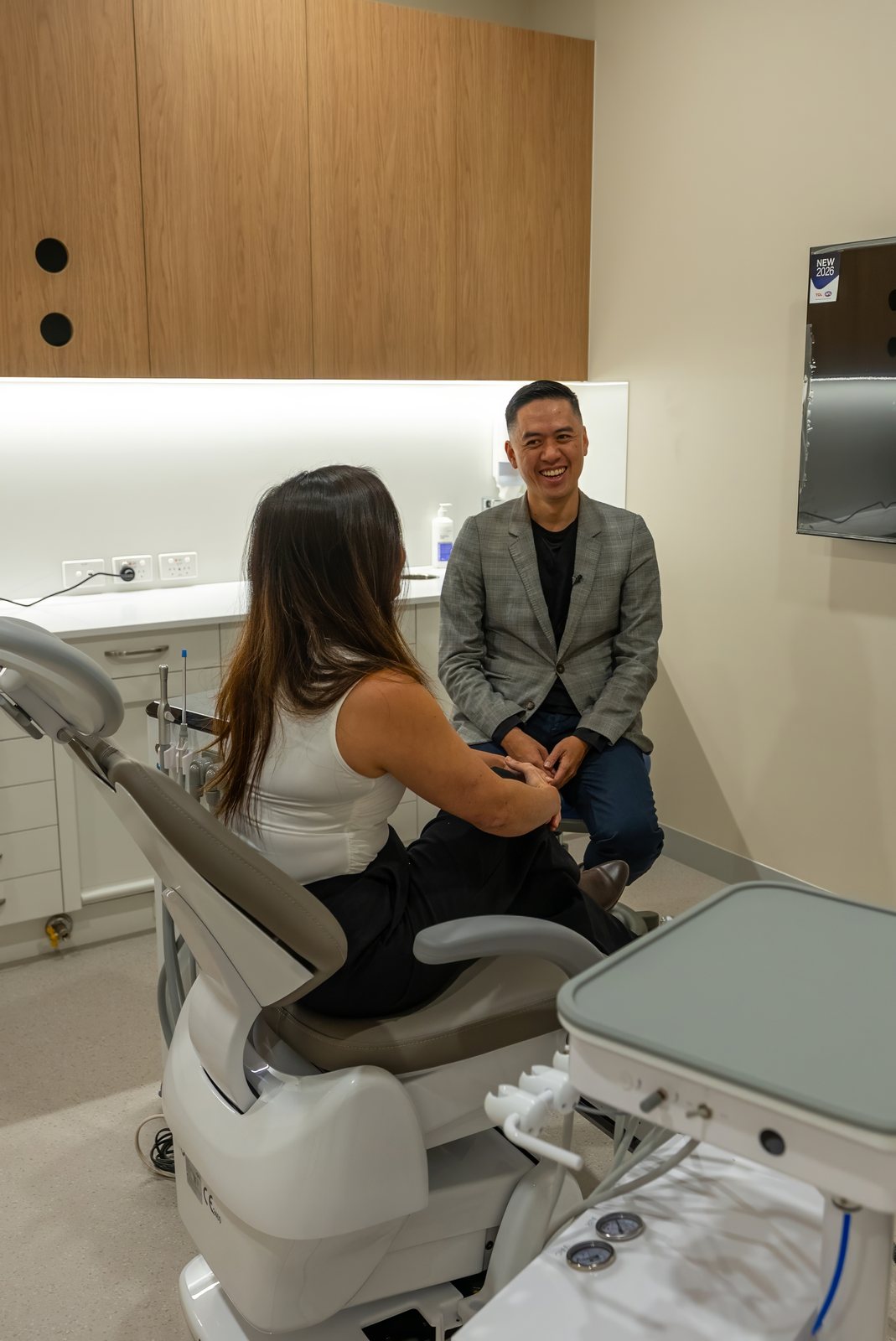
- Consultation and CBCT scan. The dentist examines the bite, photographs the smile, takes a 3D intraoral scan and a 3D X-ray, and measures the bone at the corner.
- Extraction, if the canine is still present. Sometimes the implant goes in the same day; more often the socket is grafted and left to heal for a few months because the plate is thin.
- Implant placement. Usually under local anaesthetic, with IV sedation available. Most people are back at work within a day or two.
- Healing. Three to six months for bone to bond to the implant, longer after a large graft. A removable or bonded temporary tooth fills the gap.
- Abutment and crown. The gum is shaped with a temporary crown, the final crown is matched to the opposite canine, and the bite is checked at a review visit.
How we approach this at Lumi Dental
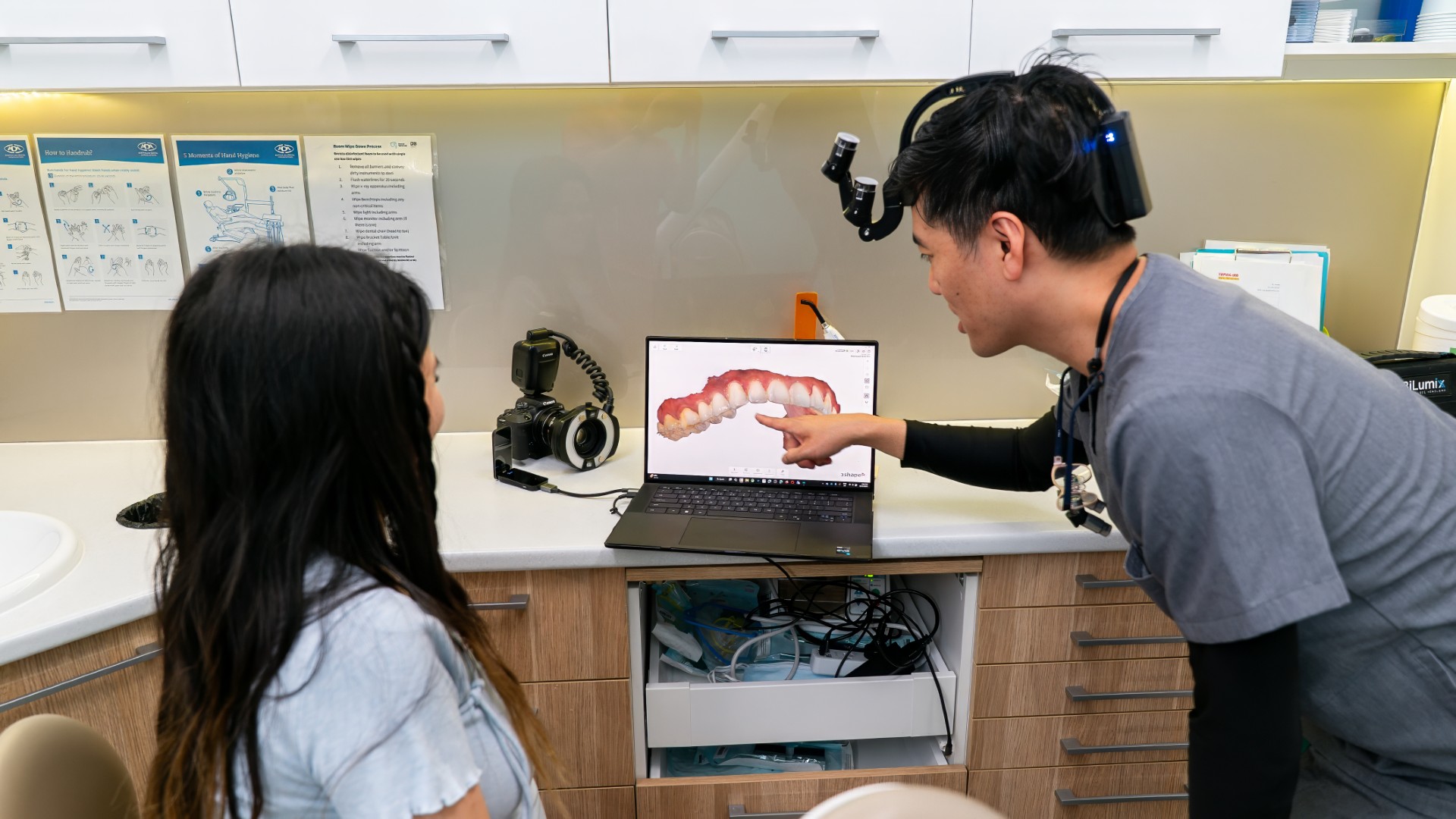
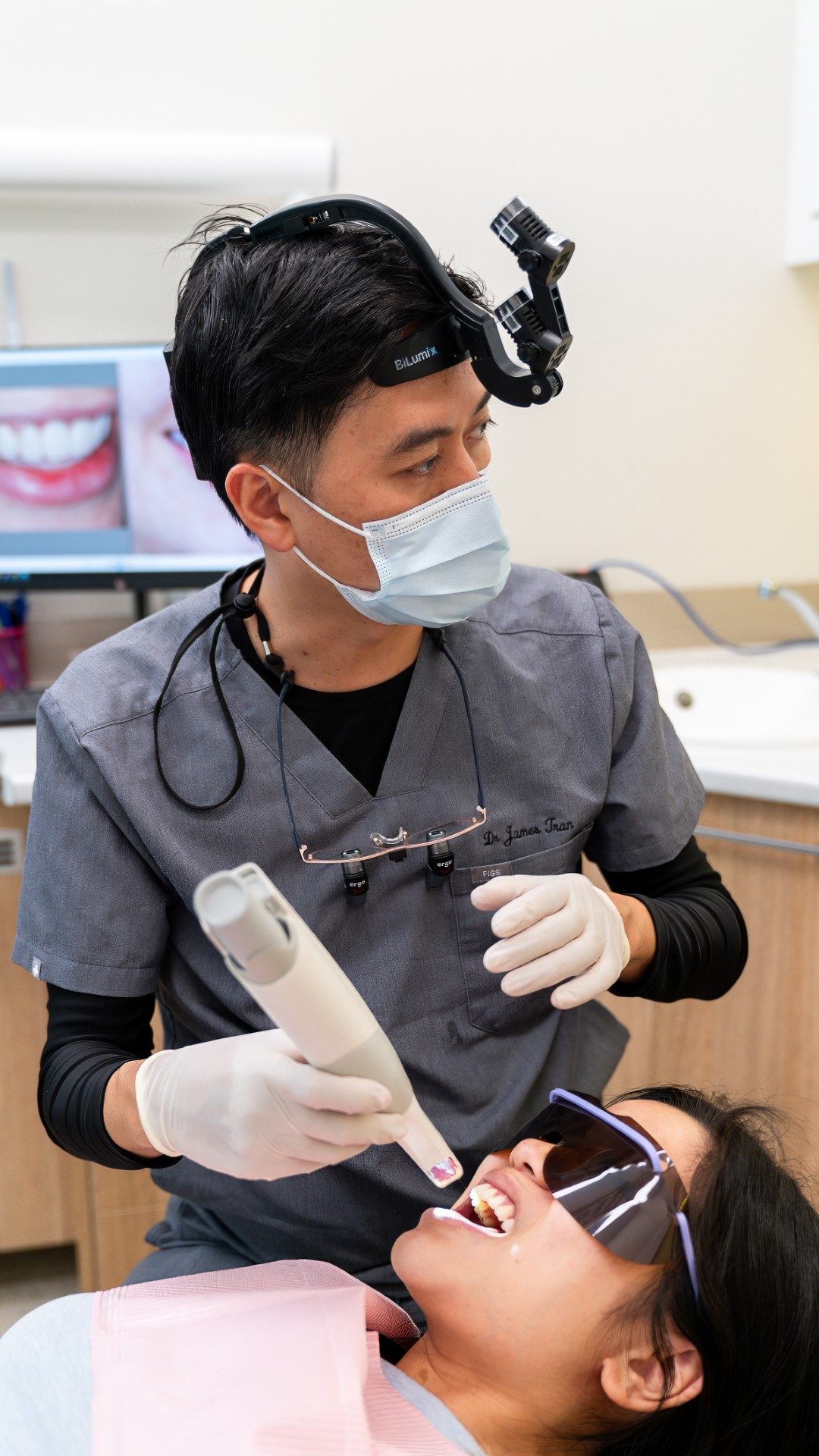
At Lumi Dental in Melrose Park, planning a canine implant starts with a 3D intraoral scan and an in-house 3D X-ray (CBCT) so the dentist can see the thickness of the outer plate and the angle of the old root before deciding on grafting and timing. The dentist does the examination and diagnosis, and where a case calls for orthodontic canine substitution or specialist surgery, the team at Lumi Dental refers to a registered specialist. Read about dental implants at the practice and the scanning and imaging used in planning.
Questions patients ask
Can you get an implant for a missing canine tooth?
Usually, yes, once facial growth has finished and the bone has been assessed. The site often needs a graft first because the outer plate at the front of the upper jaw is thin.
Is a canine implant harder than other implants?
It is more demanding to plan rather than harder to place. The root angle, the thin bone over the eminence, the visibility of the tooth and the sideways bite all have to be handled.
Should the implant go in on the day the canine is removed?
Sometimes, when the socket walls are intact and infection is controlled; often the site is grafted and the implant placed after healing. Our article on immediate versus delayed implant placement explains how that call is made.
How much does a canine implant cost?
It varies with grafting, the temporary tooth and the crown material, so a written quote follows the examination and scan. Our dental implant cost guide explains what goes into the figure.
Will the implant crown look pointed like a real canine?
It is made to. The crown is shaped with a single tip and a convex face, in a shade matched to your other canine rather than your incisors.
Considering an implant? Complimentary implant consult in Melrose Park
If you are missing a canine, the team at Lumi Dental in Melrose Park can scan the site, assess the bite and talk through an implant and the alternatives. Contact Lumi Dental to book a complimentary implant consult, or read about dental implants at the practice. Patients visit from Ryde, Parramatta, Ermington and Rydalmere, with on-site parking at Melrose Central.
Sources
- Wikipedia: Maxillary canine
- PMC: Orthodontic treatment in impacted maxillary canines, a review of the literature
- PMC: Buccal bone thickness in anterior and posterior teeth, a systematic review
- PMC: Hypodontia, an update on its etiology, classification, and clinical management
About the author
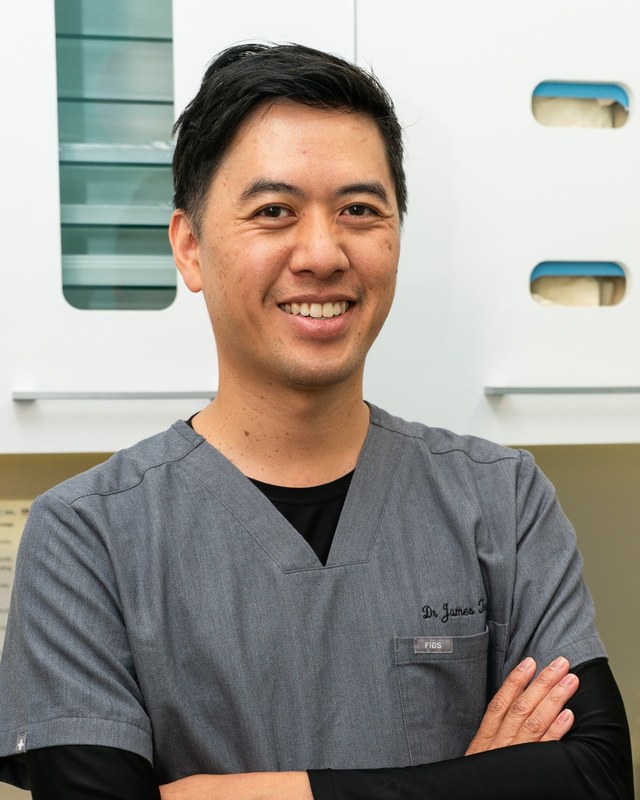
Dr James Tran is a general dentist at Lumi Dental in Melrose Park. He holds a BDent from the University of Sydney and a Graduate Diploma in Oral Implants, and is a Member of the International Congress of Oral Implantologists (MICOI).
This article is general information only and is not a substitute for an examination and individual advice from a registered dental practitioner. Suitability for any treatment varies from person to person.