

A dental implant for a missing lateral incisor is placed only after jaw growth has finished, which is why most teenagers who have the space opened during braces wear a retainer with a false tooth on it for a few years first. An implant fuses to bone and stays exactly where it was put, while the teeth around it keep drifting down and forward as the face grows; place it too early and it ends up short of its neighbours, a problem dentists call infraocclusion. Around 1.7% of people never develop one or both upper lateral incisors, so this is a common conversation at the end of orthodontic treatment. This guide explains how growth completion is judged and what holds the space meanwhile.
Written by Dr James Tran, BDent (University of Sydney), MICOI, GradDip (Oral Implants), general dentist at Lumi Dental in Melrose Park.
The short version
- Implants do not move with growth. Placed too early, an implant crown slowly ends up shorter than the teeth beside it.
- Age alone is not the test; side-on X-rays six months to a year apart are compared to confirm growth has stopped.
- Orthodontics opens the right amount of space, often quoted as 6 to 7 mm with the roots splayed apart, and can use the canine to build bone in the gap.
- While you wait, a retainer with a tooth on it or a resin-bonded bridge holds the space.
- Closing the space and reshaping the canine is a real alternative for the right bite. Our guide to congenitally missing and peg lateral incisors explains why these teeth go missing.
- The single rule: hold the space until growth has stopped, then place the implant.
Why the implant has to wait for growth to finish
Natural teeth are held in the jaw by a ligament and keep erupting slowly throughout life, moving with the bone as the face lengthens. An implant has no ligament. It is fused to bone, so it behaves like a tooth welded in place. A review of lateral incisor agenesis describes what follows: over the years the gum and biting edges of the implant crown and its neighbours drift out of line, leaving the implant in infraocclusion because it cannot follow the eruption of the teeth beside it. An oral surgery reference page says the same: placed before growth is complete, the implant stays in its original, more apical position. The gum line steps up and the tooth looks short. It cannot be moved with braces; it can only be re-crowned or replaced. The review also notes evidence of inherited causes, so a parent missing a lateral incisor should have their child's X-rays checked early.
The single rule: hold the space until growth has stopped, then place the implant
If the plan is an implant, the sequence is fixed: open and hold the space during orthodontics, keep it held with a retainer or bonded bridge after the braces come off, confirm on X-rays that growth has stopped, then place the implant. In my experience the families who understand this at the start of braces are far calmer three years later than those who expected the implant the week the brackets came off.
How a dentist tells that growth has finished
Chronological age is a poor guide. Growth has been reported to continue to around 17 in females and around 21 in males, with no agreed cut-off, so the question is answered with X-rays rather than birthdays. The oral surgery page lists two accepted techniques: serial cephalometric radiographs, the side-on skull X-ray orthodontists use, taken six months to a year apart and compared for any change; or a cervical vertebral maturation reading from the neck vertebrae on the same film. Two sequential films with no measurable change is the usual threshold. Our article on age limits for dental implants covers both ends of that question.
What orthodontics does before the implant
Opening the right amount of space
The gap must fit a matching crown and leave room between the roots for the implant. A UK restorative dentistry review on hypodontia gives the threshold: if the space is less than 7 mm wide at crown level, or the roots of the neighbouring teeth converge to less than 7 mm apart, an implant is unlikely to be possible. The oral surgery page sets a minimum goal of 6 mm, with 1.5 to 2 mm of clearance on each side. Parallel roots matter as much as even crowns, so root angulation is checked on small X-rays as the gap is opened.
Using the canine to build bone
One technique needs early planning. When the lateral incisor never forms, the canine often erupts forward into its space. If it is allowed to come through there and is then moved back with braces, it leaves behind a wider ridge of bone than would otherwise have developed, and that width seems to remain stable. In older patients the site is often atrophic and needs grafting, with the implant placed five to six months later. Our guide on bone grafts for dental implants covers what that involves.
What holds the space while you wait
This is the part families underestimate. The UK review is frank: bridges are unlikely to be possible until the late teenage years and implants possibly later, so if orthodontics finishes early the patient needs a removable retainer prosthesis for an extended period. If growth continues or the retainer is not worn, the result relapses and treatment has to be repeated.
- Retainer with a tooth on it. A removable Hawley-style plate carrying an acrylic lateral incisor. The review recommends wire stops either side of the gap, so that if the false tooth snaps off the central incisor and canine still cannot drift; I usually ask for those stops. Our guide to life with a retainer after braces covers wear and care.
- Resin-bonded bridge. A false lateral incisor on a thin wing glued to the back of a neighbouring tooth. No drilling, as few as two appointments, and it does not rule out a later implant. The oral surgery page suggests it when the implant is several years away.
- Bonded wire alone. Not enough; the review advises a removable retainer in that arch when a bonded bridge is planned, because the composite holding a wire contaminates the enamel the bridge needs.
Implant, bridge or close the space: the comparison
| Option | What it involves | When it suits | Trade-offs |
|---|---|---|---|
| Implant crown | Titanium implant placed under local anaesthetic once growth is complete; crown after around three months of healing | Enough bone, a 7 mm gap with parallel roots, growth confirmed finished | More appointments and surgery; the crown may need remaking as natural teeth change shade over decades |
| Resin-bonded bridge | False tooth bonded to a neighbouring tooth, no drilling | Teenagers and young adults; the holding phase before an implant | Can debond; relies on good enamel on the supporting tooth |
| Canine substitution (space closure) | Braces move the canine into the lateral position and reshape it | A Class II bite, balanced profile, no lower crowding, canine similar in shade and size to the central incisor | Permanent; a bonded retainer stops spaces reopening; a large or dark canine looks wrong |
| Removable denture | Plate with a tooth | Short-term holding only | Now unusual as a final option |
The agenesis review puts the case for closing the space: it keeps the natural teeth and gum architecture and avoids losing bone height and thickness in the gap while waiting. Where the canine is large, dark or already in its correct position, an implant usually wins.
The implant appointments once growth is confirmed
Healthdirect describes the general sequence: X-rays first, placement of the titanium implant under local anaesthetic as a minor operation, around three months for bone to grow around it, then the crown. For a front tooth there is often an extra step: a provisional crown that shapes the gum for at least three months before the final impression, so the finished crown appears to emerge from the gum like a natural tooth.
How we approach this at Lumi Dental
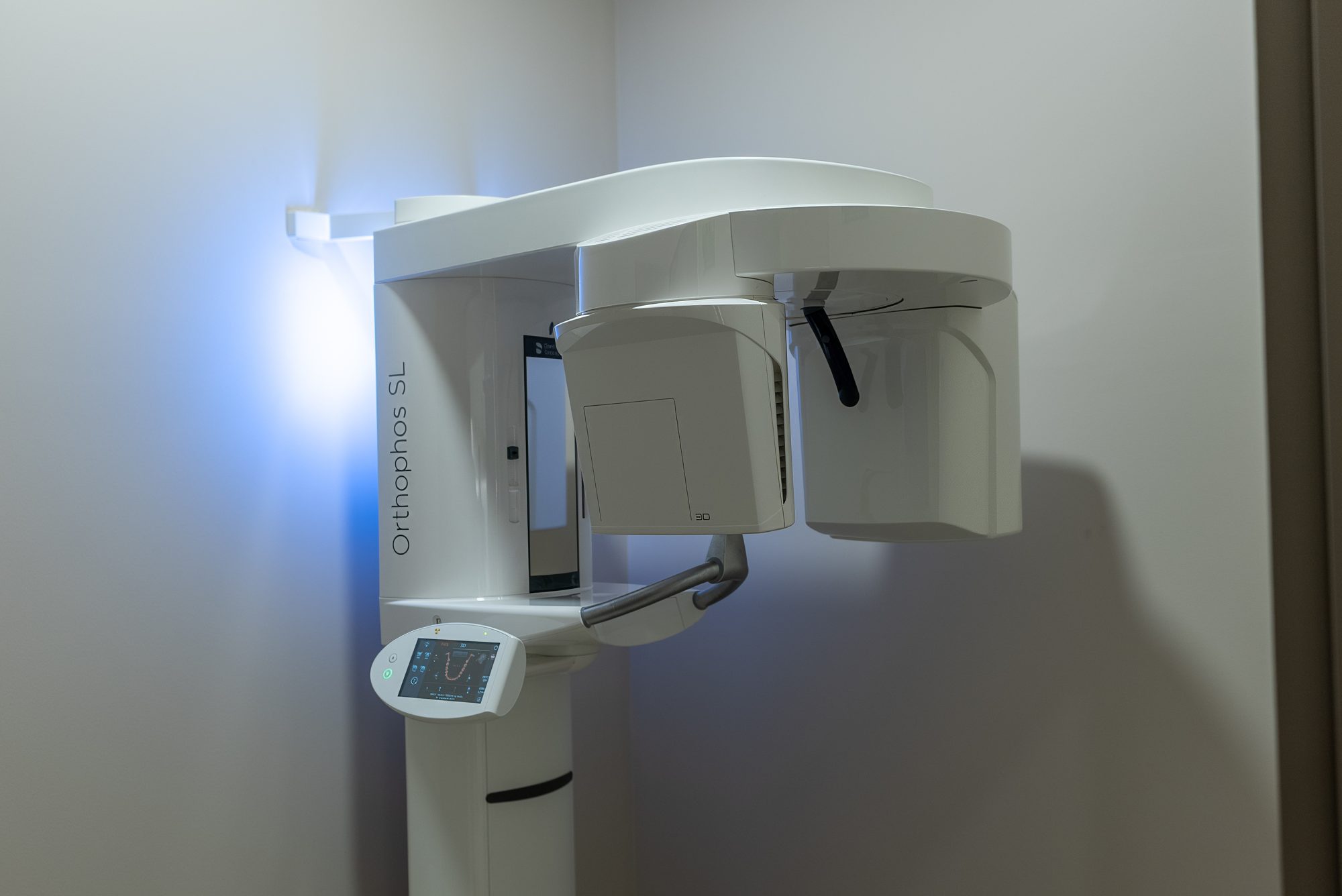
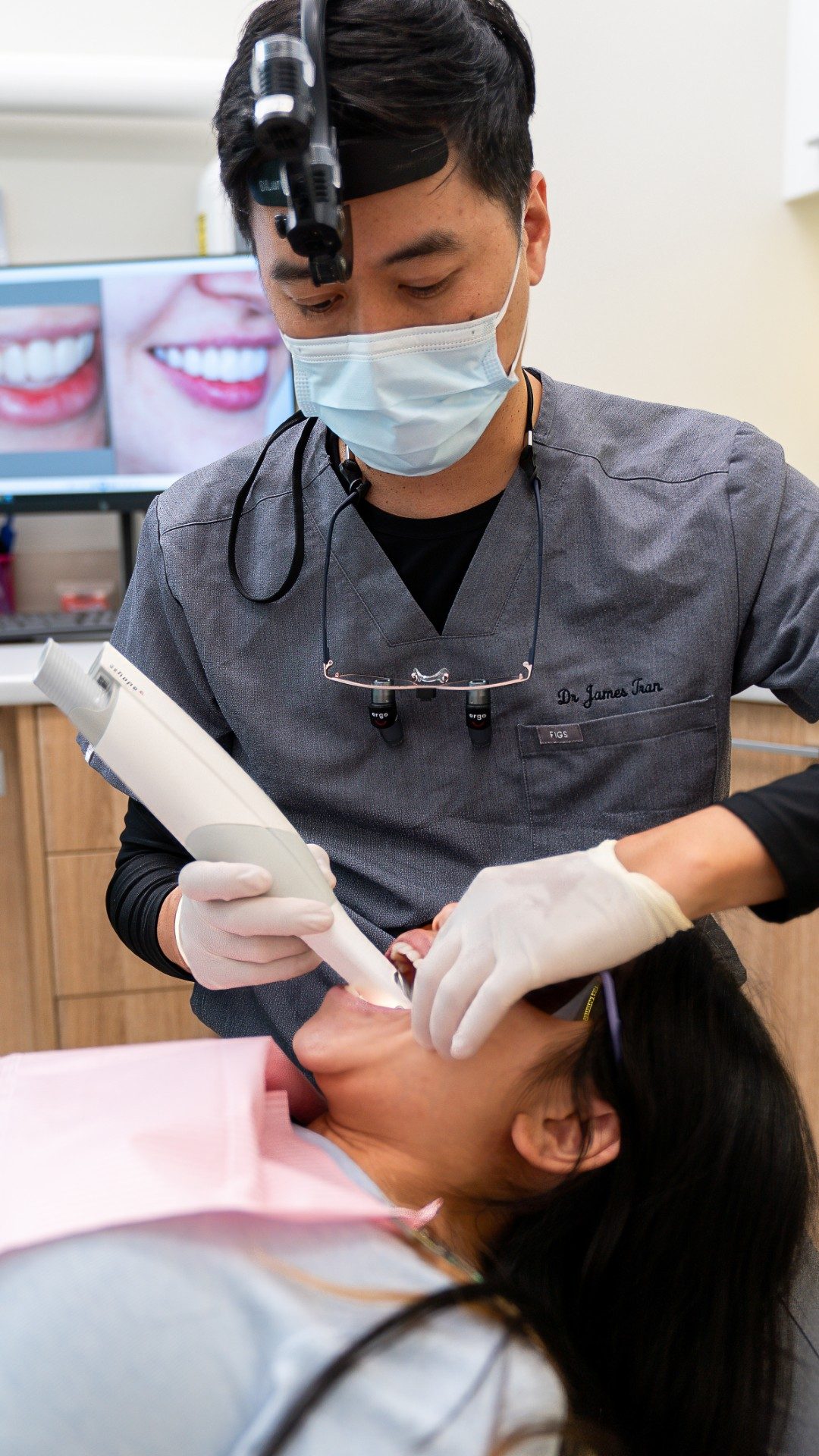
At Lumi Dental in Melrose Park, a missing lateral incisor is planned by a dentist from the first orthodontic consult, not after the braces. The in-house 3D X-ray and intraoral scan measure the gap, the root positions and the bone width. Where the orthodontic phase suits clear aligners it can be done at the practice; otherwise the team refers to a registered orthodontist and plans the implant around that treatment. The space is held, growth is checked on serial X-rays, and the implant is placed only when nothing is still changing. Complex cases are referred to registered specialists.
Questions patients ask
How long after braces can you get an implant for a missing lateral incisor?
As soon as two X-rays six months to a year apart show no further growth, which for many people means the late teens to early twenties. The braces do not set the timing; growth does.
What happens if an implant is placed before growth stops?
It stays put while the teeth around it keep erupting, so the crown ends up short with a gum line higher than its neighbours, and it can only be re-crowned or replaced. Our guide to front tooth implants explains why the front of the mouth is so unforgiving.
Can a 16-year-old get a dental implant?
Usually not yet. Growth has been reported to continue to around 17 in females and around 21 in males, so a 16-year-old is normally still in the holding phase. The X-rays, not the age, decide.
What is a flipper tooth and is it enough to hold the space?
A flipper is a removable acrylic plate with a false tooth on it. With wire stops it holds the neighbouring teeth, but it has to be worn consistently or the space closes. Our article on flipper teeth and temporary partial dentures covers the care.
Is it better to close the gap with the canine or open it for an implant?
It depends on the bite and the canine. A Class II bite, a balanced profile, no lower crowding and a canine similar in colour and size to the central incisor favour closing the space; a large or dark canine, or a Class III tendency, favours an implant.
Missing lateral incisor after braces? Complimentary implant consult in Melrose Park
If you or your teenager has finished braces with a gap where a lateral incisor should be, the team at Lumi Dental in Melrose Park can check the space, assess growth and bone on the 3D X-ray, and map out the holding phase and the implant. Contact Lumi Dental to book a complimentary implant consult, or read about dental implants at Lumi Dental. Patients visit from Ryde, Parramatta, Ermington, Rydalmere and nearby suburbs.
Sources
- healthdirect: Dental implant procedure
- Kazemi Oral Surgery (facialart.com): Missing lateral incisors, implant site development and timing
- PMC: Restorative dentistry clinical decision-making for hypodontia: peg and missing lateral incisor teeth
- PMC: Agenesis of maxillary lateral incisors: diagnosis and treatment options
About the author

Dr James Tran is a general dentist at Lumi Dental in Melrose Park. He holds a BDent from the University of Sydney and a Graduate Diploma in Oral Implants, and is a Member of the International Congress of Oral Implantologists (MICOI).
This article is general information only and is not a substitute for an examination and individual advice from a registered dental practitioner. Suitability for any treatment varies from person to person.








