

Using cannabis does not automatically rule out a dental implant, but the way you use it matters, so tell the implant team what you use, how often and in what form at the first consult. Smoked or vaped cannabis brings smoke, heat and suction to a fresh surgical site, much like tobacco, while edibles and prescribed products avoid that but can still affect sedation and dry the mouth. The research on dental implants and cannabis is thin: in a US records study of more than 50,000 implants, cannabis use was not linked with implant loss once other patient factors were taken into account.
Written by Dr James Tran, BDent (University of Sydney), MICOI, GradDip (Oral Implants), general dentist at Lumi Dental in Melrose Park.
The short version
- Cannabis use is not, by itself, a reason to rule out an implant. What changes is the planning around surgery, sedation and healing.
- The single rule: tell the team what you use and how. Smoked or vaped cannabis is treated like smoking around surgery; edibles and oils avoid the smoke but still matter for sedation and dry mouth.
- Studies of cannabis and implants are few, small or based on records, so nobody can give you a precise risk figure.
- If cannabis is prescribed for you, keep taking it as prescribed and tell the team. Any change is your prescriber's decision.
- Dry mouth and gum inflammation matter for the implant in the long run. Our article on cannabis and oral health covers saliva, gums and decay.
Prescribed and non-prescribed cannabis in Australia
Healthdirect describes medicinal cannabis as a product prescribed by a registered healthcare practitioner to relieve the symptoms of some medical conditions, most often chronic pain. It is regulated by the Therapeutic Goods Administration (TGA), and because most products are unregistered, the doctor needs TGA approval through the Special Access Scheme or the Authorised Prescriber Scheme. In most states and territories, cannabis that has not been prescribed remains illegal to use, possess, grow or sell.
From the dental chair, both groups raise the same clinical questions: how it is taken, how often, and what else is in the mix. The answers go into your medical history like any other medicine or habit.
What the implant research shows so far
There are no large trials of implants in people who use cannabis. The biggest data set comes from dental records at ten US dental schools, analysed by Chatzopoulos and Wolff: 20,842 patients and 50,333 implants, with a failure rate of around 1.4% per implant. Marijuana use was linked with implant loss in the first, simpler analysis, but not in the fuller analysis that allowed for other patient factors. A systematic review in Cureus reported it as no significant difference.
That is reassuring, but limited. Records depend on what people disclose, and cannot separate smoking from edibles or light from heavy use. An animal study found that rats exposed to cannabis smoke had less bone growing against titanium implants in the spongy inner bone.
The gum evidence is firmer. The Cureus review found 11 studies on cannabis and gum disease, and nine found a negative link. That matters because the gum around an implant can become inflamed in a similar way, as our guide to peri-implantitis treatment explains.
The single rule: tell the team what you use and how
If you use cannabis in any form, start by telling the implant team at the first consult, not on the morning of surgery. Mention the form (smoked, mixed with tobacco, vaped, eaten, or a prescribed product), how often you use it, when you last used it, and who prescribes it if it is prescribed.
A review in Anesthesia Progress, written for dental and oral surgery teams, includes these questions in its pre-sedation checklist. It notes that THC commonly speeds up the heart rate, and that medicines which also raise heart rate, including adrenaline, should be used with caution soon after use. Many dental local anaesthetics contain adrenaline, which is one reason the team would rather move an appointment than treat someone who has just used. A small pilot study summarised in the Cureus review found no significant difference in how well a standard dental local anaesthetic worked in cannabis users.
In my experience, the conversation takes a minute or two and is handled like any other part of the medical history.
Smoked, vaped or mixed with tobacco: the first days of healing
A review of illegal drugs and gum health notes that cannabis smoke contains much the same as tobacco smoke apart from nicotine, including carbon monoxide and tar. Around a new implant, that means hot smoke at the wound, and drawing on a joint or vape creates suction while the clot and gum seal are still forming. Our article on vaping and dental implants explains that mechanism.
When cannabis is mixed with tobacco, the tobacco risks apply as well; our guide to dental implants and smoking covers them. The Anesthesia Progress review recommends at least 24 to 72 hours without smoking tobacco or cannabis before anaesthesia, mainly for the airway. For implant surgery, your dentist will advise how long to stay off smoked or vaped cannabis before and after.
Edibles and prescribed oils: no smoke, but still worth mentioning
Edibles, capsules and oils avoid the heat, smoke and suction, which is a real advantage at the surgical site. They are not neutral, though:
- Dry mouth. Healthdirect lists dry mouth, drowsiness and dizziness among the common side effects of medicinal cannabis containing CBD and THC.
- Fasting before sedation. The Anesthesia Progress review notes that cannabinoids can slow stomach emptying, so the time of your last edible matters.
- Getting home. Healthdirect advises against driving while using medicinal cannabis containing THC, noting the effect can last up to 8 hours after oral THC. After sedation you need someone to take you home anyway.
Sedation, local anaesthetic and pain relief
Implants are usually placed under local anaesthetic, often with IV sedation as well. A meta-analysis in the British Journal of Anaesthesia pooled 11 studies of 4,199 patients and found that cannabis users needed more propofol, a common sedation medicine. The authors judged the difference of limited clinical relevance, because propofol is adjusted to each person anyway, and found no studies of people using prescribed cannabis.
The Anesthesia Progress review adds that cannabis may change responses to some pain medicines, that regular users often report more pain after surgery, and that cannabinoids can reduce platelet clumping, which matters for bleeding control. What you take for pain afterwards, and whether it interacts with your cannabis, is for your prescriber or pharmacist to decide. Our guide to IV sedation for implant surgery explains fasting, monitoring and the first 24 hours.
What to check first, by how you use cannabis
| How you use it | Main implant concern | What to check first |
|---|---|---|
| Smoked joint, cannabis only | Smoke, heat and suction at the site; gum inflammation | How long to stay off it before and after surgery |
| Mixed with tobacco | Tobacco risks to bone healing as well | Support to cut down tobacco well before surgery |
| Vaped | Suction and heat on the clot and gum seal | The same break as for smoking, as your dentist advises |
| Edibles or drinks | Slower stomach emptying; sugar; dry mouth | Time of your last edible before sedation |
| Prescribed oil, capsules or spray | Dry mouth, drowsiness, interactions with sedation | Keep taking it; bring the product name to the consult |
| Prescribed dried flower, vaporised | Suction and heat, as with any vaping | Ask your prescriber about options around surgery |
Prescribed cannabis: keep taking it and tell the team
If a doctor prescribes cannabis for pain, sleep, nausea or another condition, do not stop or reduce it because you are having an implant. The Anesthesia Progress review notes that stopping regular use can bring withdrawal symptoms, which nobody needs in a surgery week. Bring the product name to the consult. Where it is relevant, the team at Lumi Dental writes to your GP or prescriber before planning surgery, and any change to the medicine is their decision, not the dentist's. I usually find prescribers are glad to be asked.
How we approach this at Lumi Dental
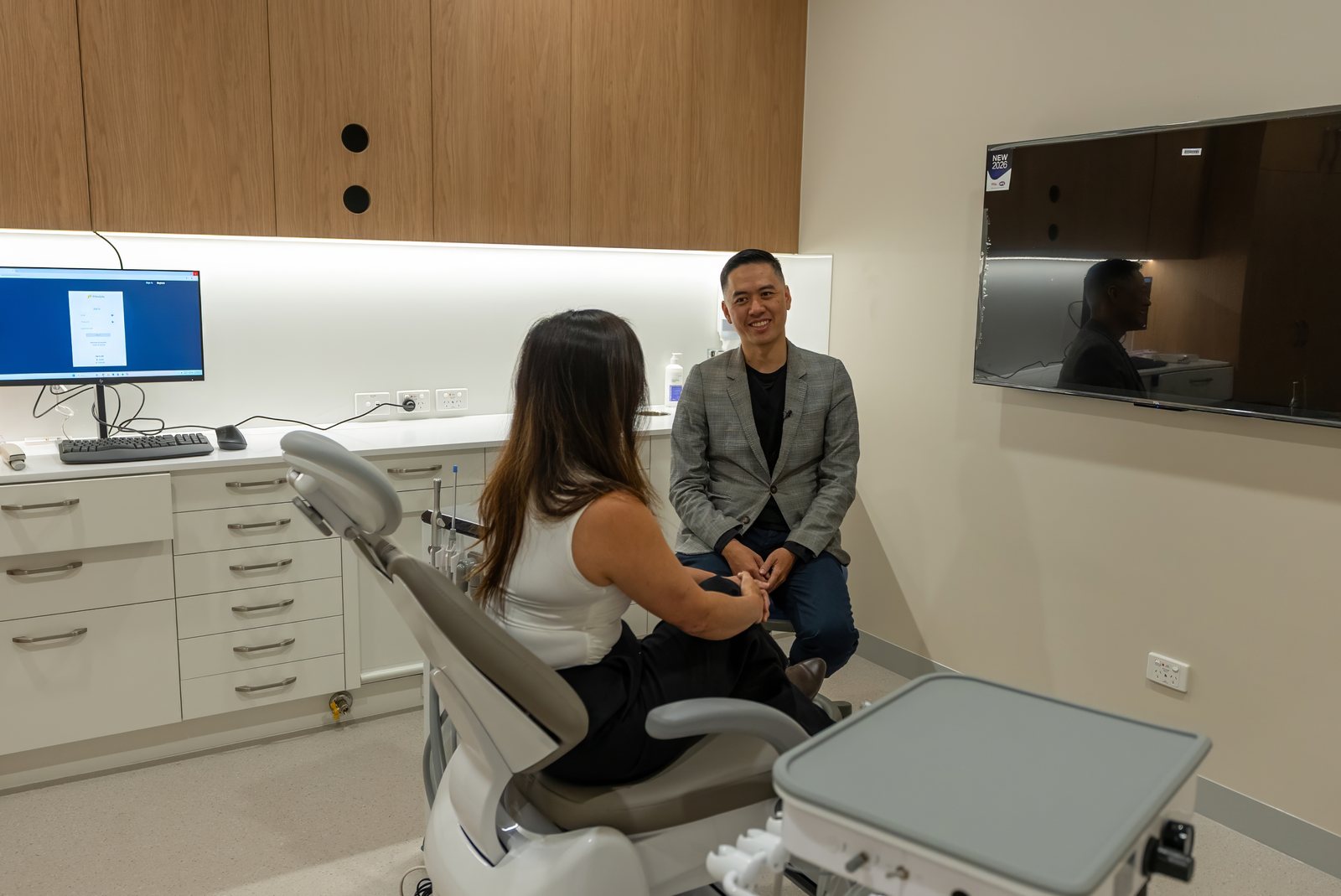
At Lumi Dental, a dentist takes your medical history and medicines list confidentially, including cannabis in whatever form you use it, examines your teeth and gums, and takes a 3D X-ray in house to plan the implant. Where cannabis use affects sedation or healing, the plan is built around it from the start.
IV sedation is available at the practice after assessment. Lumi Dental does not provide general anaesthetic itself and refers where it is needed. Read more about IV sedation at Lumi Dental.
Questions patients ask
Can I get dental implants if I smoke weed?
Usually, yes. The team will ask how often you smoke and whether you mix it with tobacco, and will ask you to stay off smoking for a period around surgery. Gum health is checked first.
How long after implant surgery can I smoke cannabis?
There is no agreed figure specific to cannabis. Your dentist will advise based on your surgery, with the aim of keeping smoke and suction away until the gum has sealed. If that will be hard, say so beforehand.
Are edibles safer than smoking after dental implant surgery?
For the surgical site, they avoid smoke, heat and suction, which helps. They can still dry the mouth and many are sugary, so they are better in some ways rather than risk-free.
Should I stop my medicinal cannabis before implant surgery?
No, not on your own. Keep taking it as prescribed and tell the team; your prescriber decides whether anything changes.
Does cannabis affect IV sedation?
It can. Pooled studies suggest regular users may need somewhat more of a common sedation medicine, and sedation is adjusted to each person. Signs to watch for afterwards are covered in our guide to infection versus normal healing.
Considering an implant? Complimentary implant consult in Melrose Park
If you use cannabis, recreationally or on prescription, the team at Lumi Dental can examine your teeth and gums, take 3D scans and plan your implant and any sedation around how you use it. Contact Lumi Dental to book a complimentary implant consult, or read more about dental implants in Melrose Park. Patients visit from Ryde, Parramatta, Ermington and Rydalmere, with on-site parking at Melrose Central.
Sources
- Healthdirect: Medicinal cannabis
- Cureus: Cannabis use and risk of periodontitis and adverse oral health outcomes, a systematic literature review (PMC)
- Anesthesia Progress (Mann and colleagues): Marijuana use and its impact on outpatient anesthesia (PMC)
- British Journal of Anaesthesia: Effect of cannabinoid consumption on propofol dosage, a systematic review and meta-analysis (PMC)
About the author

Dr James Tran is a general dentist at Lumi Dental in Melrose Park. He holds a BDent from the University of Sydney and a Graduate Diploma in Oral Implants, and is a Member of the International Congress of Oral Implantologists (MICOI).
This article is general information only and is not a substitute for an examination and individual advice from a registered dental practitioner. Suitability for any treatment varies from person to person.







